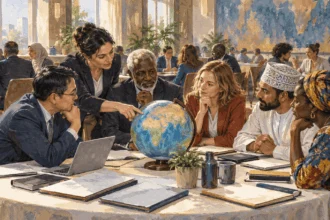
Global order and geopolitics shape how nations interact, compete, and cooperate on the world stage. From trade agreements to military alliances to international institutions, these decisions determine America’s influence, economic prosperity, and security. Understanding how the United States navigates its role in the world—and how that role is changing—is essential to understanding the future of American power and global stability.
America’s Position and Influence
The United States has long anchored the global order through multiple channels: economic leadership like how the U.S. leads the IMF, military alliances like NATO, and participation in international organizations. But that position faces real challenges. Rival powers are rising, with China, Europe, and de-dollarization challenging U.S. leadership, while questions about whether America will exit NATO create uncertainty about America’s commitment to its oldest alliance.
Foreign Policy and Global Role
Americans themselves debate what role the nation should play. The fundamental question of what role the United States should play in the world sits at the heart of foreign policy—from isolationism vs. interventionism to whether America should go it alone or work together with others. Related debates cover America’s military role in the world and the tension between human rights and state sovereignty.
Security, Strategy, and Cooperation
How nations maintain peace and security reflects deeper strategic choices. Understanding collective security vs. balance of power helps explain why alliances matter, while threats like nuclear proliferation and nuclear deterrence shape geopolitical strategy. High-stakes diplomacy, like the Trump-Putin Alaska summit potentially reshaping the Ukraine war and global order, demonstrates how bilateral relationships continue to reshape international stability.
Economic Power and Democratic Credibility
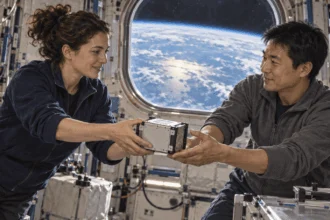
Economic relationships matter too. Free trade agreements and their pros and cons for America affect both domestic workers and international partnerships. However, America’s ability to lead globally is increasingly tied to how it functions at home. With political scientists now rating the U.S. closer to “illiberal” than “strong democracy”, concerns about the health of American democracy have real implications for how allies view U.S. reliability and credibility. Similarly, international cooperation in space falling apart illustrates how broader geopolitical tensions affect even emerging frontiers of human achievement.
Economic blocs are groups of countries that reduce trade barriers among themselves to promote closer…
Global governance institutions provide the frameworks and rules through which countries cooperate to address shared…
A group of political scientists has delivered a stark assessment of American democracy. Bright Line Watch, composed of academics from…
The enduring image of international space cooperation is one of unity above Earth. American astronauts and Soviet cosmonauts shaking hands…
An August 15, 2025 summit between U.S. President Donald Trump and Russian President Vladimir Putin in Alaska represents one of…
The North Atlantic Treaty Organization has been the cornerstone of transatlantic security for over 75 years, binding the United States…
The International Monetary Fund stands as a central pillar of the global economy. Founded in 1945 as a specialized agency…
For over seven decades, the world has operated within a framework known as the "rules-based international order." This system of…
Free trade agreements shape how nations buy and sell from each other. These legally binding contracts between countries establish rules…
At the heart of this debate lies "polarity"—how power gets distributed among countries in the global system. The structure of…