Global Governance Institutions

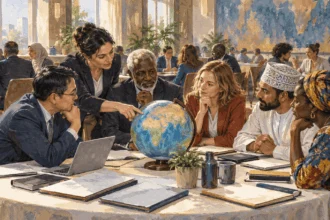
Global governance institutions provide the frameworks and rules through which countries cooperate to address shared global challenges, from economic stability to human rights and international peace. These institutions arose after World War II, recognizing that complex issues crossing national borders require collective action. Key organizations like the United Nations, World Trade Organization, and International Monetary Fund play central roles in this system. Understanding International Organizations: Your Guide to the UN, WTO, IMF, and More offers a clear overview of these major players and their functions.

How Institutions Evolved and Who Leads Them

The United States has been a principal architect and leader within global governance, especially in financial institutions like the IMF and World Bank. While these organizations include many member nations, American influence remains substantial, shaping global economic policies. How the US Leads the IMF explains this leadership role and its impact. Over time, global governance has adapted to include emerging powers, though expanding membership can challenge decision-making efficiency.

Balancing National Interests with Global Cooperation

A key tension in global governance is balancing respect for state sovereignty with the promotion of universal human rights. While international bodies seek to uphold human rights standards, they must also navigate nations’ rights to self-determination. The ongoing debate is explored in Human Rights vs. State Sovereignty: Navigating the Global Balance, highlighting how global institutions work to reconcile these sometimes competing priorities. The U.S. approach reflects this balance, engaging multilaterally but constrained domestically by constitutional checks such as Congressional treaty powers.

An Independent Team to Decode Government

GovFacts is a nonpartisan site focused on making government concepts and policies easier to understand — and government programs easier to access.

Our articles are referenced by trusted think tanks and publications including Brookings, CNN, Forbes, Fox News, The Hill, and USA Today.

All Articles on Global Governance Institutions

How the US Leads the IMF

The International Monetary Fund stands as a central pillar of the global economy. Founded in 1945 as a specialized agency…

Human Rights vs. State Sovereignty: Navigating the Global Balance

The relationship between universal human rights and national sovereignty sits at the heart of modern international politics. Human rights are…

Understanding International Organizations: Your Guide to the UN, WTO, IMF, and More

International Organizations like the United Nations, World Trade Organization, and International Monetary Fund are frequently in the news, shaping global…