Congressional Oversight
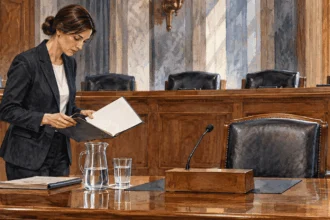
Can Congress Force You to Testify?
A congressional subpoena is a legal order, but pertinency rules, the Fifth Amendment, and negotiation can limit what you must answer or when.

A congressional subpoena is a legal order, but pertinency rules, the Fifth Amendment, and negotiation can limit what you must answer or when.

Federal ethics rules explain how officials disclose assets, avoid conflicts of interest, follow gift limits, and face lobbying bans after leaving government.

Public campaign financing explained: the $3 tax checkoff, state matching funds, clean-elections grants, democracy vouchers, and why fewer candidates use them.

Learn how U.S. whistleblower protection and reward programs work, including where to report, filing deadlines, and anonymity limits.
A federal grand jury in Washington, D.C. refused to charge six Democratic lawmakers with a crime on February 11, 2026, despite prosecutors arguing they…
On February 11, 2026, Attorney General Pam Bondi sat before the House Judiciary Committee and defended what dozens of career prosecutors say is the…
Over the past year, many Justice Department employees have left. Some were fired, and many resigned. Federal prosecutors across the country are discovering that…
Pam Bondi sat before the House Judiciary Committee on a Wednesday morning in February 2026, facing questions about whether she had turned the Justice…
A legal question with no clear answer has emerged regarding presidential social media deletions and record preservation requirements. The Presidential Records Act says that…
In January 2026, the Department of Justice opened a criminal investigation into Federal Reserve Chair Jerome Powell for statements he made to the Senate…
On February 3, 2026, something unusual happened: Bill and Hillary Clinton agreed to testify before Congress about what they knew about Jeffrey Epstein. They'd…
The agreement to provide private testimony sessions later this month represents a dramatic collision between two fundamentally different views of executive power: whether former…
Four days before Donald Trump took office in January 2025, representatives of Abu Dhabi royalty signed a contract to pump $500 million into a…
A $500 million investment in President Donald Trump's cryptocurrency company by a United Arab Emirates royal landed four days before Trump's second inauguration. Several…