
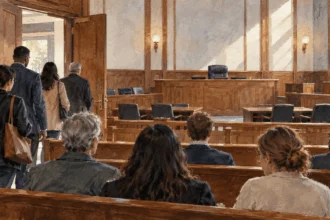
Open meetings laws, often called “Sunshine Laws,” require government agencies, boards, and commissions to conduct their business openly and transparently. These laws give citizens the right to observe how government decisions are made, whether in city council meetings, school board hearings, or legislative sessions. The goal is to promote accountability and prevent secret decision-making behind closed doors, reflecting the public’s right to know how their government operates.
Understanding What Counts as a Meeting
A “meeting” under these laws generally means a gathering where a quorum of a governing body discusses or takes action on official business. This includes not only in-person meetings but also phone calls, video conferences, and electronic communications. Even informal emails or social media exchanges can qualify if they involve deliberation on public matters. This broad definition prevents government officials from avoiding transparency by using alternative communication channels.
Public Notice, Agendas, and Participation
To ensure openness, government bodies must provide advance public notice with details like date, time, location, and agenda—often posted on official websites or public bulletin boards. While the public has the right to attend and listen, active participation is generally structured through formal opportunities such as public comment periods and public hearings, where citizens can directly make their voices heard.
When Meetings Can Be Closed
Although transparency is the norm, some meetings may be closed as executive sessions for limited reasons like personnel issues, litigation, real estate negotiations, or national security. These exceptions are narrowly defined and cannot be used simply because a topic is sensitive or controversial. For more on when meetings may be closed, see Open Meetings vs. Executive Sessions.
Enforcement and Your Rights
Enforcement mechanisms like fines, legal challenges, or invalidation of decisions help uphold open meetings laws. Citizens can challenge violations through civil actions, ensuring government transparency and accountability. This principle of public oversight is part of a broader commitment to openness, similar to why criminal trials are open to the public, promoting accountability across all branches of government.
In American courtrooms, the default setting is open doors. The principle stands in stark contrast to the secret tribunals and…
Democracy works best when citizens participate. But knowing how to engage with government can feel overwhelming, especially when dealing with…
Every decision your local school board makes about your child's education happens behind doors you can walk through. Every vote…