- presidency.ucsb.edu2 links
Last updated 10 months ago. Our resources are updated regularly but please keep in mind that links, programs, policies, and contact information do change.
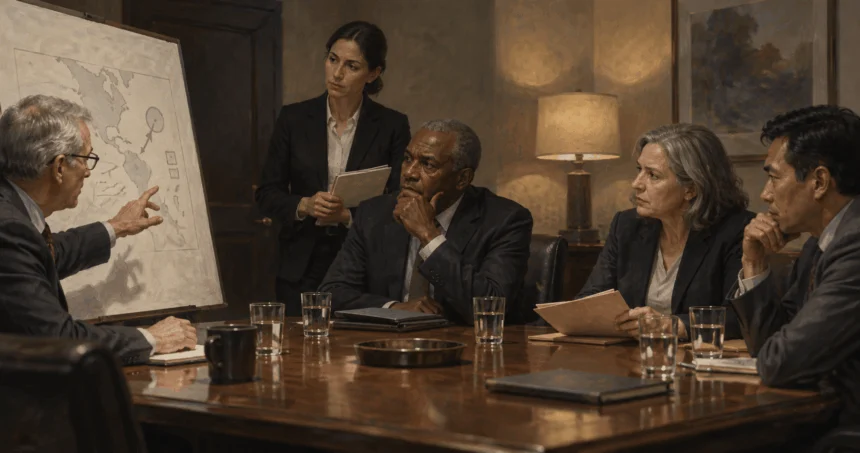
In recent decades, most presidents have relied on a small group called the President’s Intelligence Advisory Board. The Board gives 16 distinguished private citizens extraordinary access to classified information and the power to challenge America’s spy agencies.
This board is the president’s personal mechanism for getting a second opinion on intelligence matters, designed to cut through institutional bias and deliver candid advice.
- What the PIAB Actually Does
- Understanding Executive Orders
- The Intelligence Community the PIAB Oversees
- From Eisenhower’s Brain Trust to Today
- Who Gets to Serve
- Security Clearances Explained
- The Intelligence Oversight Board
- Does the PIAB Actually Matter?
- The FISA Section 702 Debate
- The Board’s Enduring Paradox
What the PIAB Actually Does
The President’s Intelligence Advisory Board is an independent element within the Executive Office of the President, established through presidential directives called Executive Orders. Its mission is exclusive: provide the President with objective advice on how well the U.S. Intelligence Community meets national needs and prepares for future threats.
The board exists because even sophisticated intelligence agencies develop blind spots, resist challenging assumptions, or filter information as it moves up the chain of command. The PIAB was conceived as a safeguard against “groupthink,” giving the commander-in-chief what founder President Dwight Eisenhower called “unfettered and candid appraisals” of U.S. intelligence activities.
The Official Job Description
Executive Orders task the board with conducting continuous performance reviews of the entire U.S. intelligence effort. According to Executive Order 13462, the board must “assess the quality, quantity, and adequacy of intelligence collection, of analysis and estimates, and of counterintelligence and other intelligence activities.”
This broad mandate empowers the board to examine every facet of the intelligence cycle, from spies gathering information in the field to analysts in Washington interpreting it.
The board’s mandate extends to intelligence machinery itself. It evaluates the “adequacy of management, personnel and organization in the intelligence community”. This means the PIAB can investigate whether the CIA has the right people in the right places, if the NSA’s organizational structure works effectively, or if inter-agency coordination is failing.
The board reports findings and recommendations directly to the President as necessary, but no less than twice each year.
Unprecedented Access Rights
To fulfill its mission, this small group of private citizens gets extraordinary authority. The board’s power stems from its legal right to access “the full extent permitted by applicable law to all information necessary to carry out its duties in the possession of any agency of the Federal government”.
This isn’t a polite request for information—it’s a directive. The CIA, NSA, FBI, and all other Intelligence Community members must make their information available to the board.
This “all-access” pass is the source of PIAB’s influence. It allows members to bypass usual channels and bureaucratic layers to get to ground truth. In exchange for this access, members are bound by strict silence. Each member must execute an agreement “never to reveal any classified information obtained by virtue of his or her service with the Board except to the President or to such persons as the President may designate”.
This underscores the immense trust placed in these individuals, who get access to the nation’s most sensitive secrets without being official government employees.
However, this power is simultaneously absolute and fragile. While Executive Orders provide clear legal mandate for access, the board’s actual influence depends entirely on the President’s personal engagement and support. History shows that without a president who actively uses and protects the board, its legal authority can be rendered meaningless by political maneuvering or simple neglect.
Understanding Executive Orders
An Executive Order is a formal directive issued by the President that manages federal government operations. It has the force of law within the executive branch but doesn’t require congressional approval.
The U.S. Constitution doesn’t explicitly define Executive Orders, but their authority generally stems from the President’s constitutional role as chief executive. The PIAB is a prime example of an entity created and governed by Executive Orders.
This means its structure, mission, and existence are subject to the sitting president’s will. An Executive Order issued by one president can be modified or revoked entirely by a subsequent president, making the PIAB powerful but fundamentally impermanent.
The Intelligence Community the PIAB Oversees
The PIAB oversees the entire U.S. Intelligence Community, a coalition of 18 federal agencies and organizations that work separately and together to conduct intelligence activities. The IC’s mission is to collect, analyze, and deliver foreign intelligence and counterintelligence information to America’s leaders.
The community is led by the Director of National Intelligence. Key members include:
Central Intelligence Agency (CIA): The nation’s lead agency for collecting foreign intelligence through human sources and conducting covert action at the President’s direction.
National Security Agency (NSA): The leader in signals intelligence, responsible for collecting and analyzing foreign communications and protecting U.S. information systems.
Defense Intelligence Agency (DIA): Provides military intelligence to warfighters, defense policymakers, and force planners.
Federal Bureau of Investigation (FBI): A dual-mission agency with both law enforcement and intelligence responsibilities, focusing on counterterrorism, counterintelligence, and cyber threats within the United States.
National Reconnaissance Office (NRO): Designs, builds, and operates the nation’s reconnaissance satellites.
National Geospatial-Intelligence Agency (NGA): Provides geospatial intelligence from satellite and aerial imagery.
Other members are housed within the Departments of State, Treasury, Energy, and Homeland Security, as well as the military branches. The PIAB’s job is to assess this entire, complex enterprise’s performance.
From Eisenhower’s Brain Trust to Today
The PIAB’s story is one of evolution, shaped by presidential personalities, global crises, and shifting views on intelligence oversight. Its name and mandate have changed over decades, but its core purpose—providing an independent, outside perspective—has remained constant.
Eisenhower’s Board of Consultants (1956-1961)
The PIAB’s lineage begins in 1956, when President Dwight Eisenhower issued Executive Order 10656 to create the President’s Board of Consultants on Foreign Intelligence Activities.
As a former five-star general who commanded vast Allied forces in Europe, Eisenhower understood large, complex bureaucracies’ inner workings. He recognized their potential for inertia and filtered reporting and concluded he needed an external body of “highly respected and accomplished Americans” to provide candid advice on the growing Cold War intelligence apparatus.
The PFIAB and the Cold War (1961-1977)
In 1961, following the disastrous Bay of Pigs invasion, which exposed critical flaws in CIA analysis and planning, President John F. Kennedy reconstituted the board via Executive Order 10938, renaming it the President’s Foreign Intelligence Advisory Board.
Under Kennedy, the PFIAB became highly influential, meeting frequently and providing crucial advice as his administration wrestled with intelligence challenges around the globe. The board’s role continued through the Johnson administration and expanded under President Richard Nixon, who through Executive Order 11460 in 1969 broadened its mandate to cover all CIA activities, not just foreign intelligence.
The Carter Interruption (1977-1981)
The board’s continuous service was broken in 1977 when President Jimmy Carter abolished it. Carter’s administration viewed the PFIAB as superfluous, believing its advisory function was duplicated by the National Security Council and the newly empowered congressional intelligence committees.
Some historical accounts also suggest Carter saw the board as an obstacle to his desire for a more direct relationship with the Director of Central Intelligence and disapproved of its support for covert operations.
The Modern PIAB (1981-Present)
The PFIAB was revived in 1981 by President Ronald Reagan, who had pledged to re-establish it during his campaign. The board continued under this name until 2008, when President George W. Bush issued Executive Order 13462, renaming it the President’s Intelligence Advisory Board.
The name change was symbolic but significant, intended to reflect the reality that in a post-9/11 world, “national intelligence does not begin or end at our Nation’s borders”. The PIAB has served every president since Reagan, continuing its mission under its modern name.
| Era | Board Name | President(s) | Key Executive Order(s) |
|---|---|---|---|
| 1956-1961 | President’s Board of Consultants on Foreign Intelligence Activities (PBCFIA) | Dwight D. Eisenhower | E.O. 10656 |
| 1961-1977 | President’s Foreign Intelligence Advisory Board (PFIAB) | John F. Kennedy, Lyndon B. Johnson, Richard Nixon, Gerald Ford | E.O. 10938, E.O. 11460 |
| 1977-1981 | Board Abolished | Jimmy Carter | N/A |
| 1981-2008 | President’s Foreign Intelligence Advisory Board (PFIAB) | Ronald Reagan, George H. W. Bush, Bill Clinton, George W. Bush | E.O. 12331, E.O. 12537 |
| 2008-Present | President’s Intelligence Advisory Board (PIAB) | George W. Bush, Barack Obama, Donald Trump, Joe Biden | E.O. 13462 |
Who Gets to Serve
The power and prestige of the PIAB come not just from its charter but from the stature of its members. The selection process is a direct presidential prerogative, and the board’s composition often signals an administration’s priorities and intended relationship with the Intelligence Community.
Presidential Selection
Members are appointed directly by the President and serve at his pleasure, meaning they can be dismissed at any time. Executive Orders stipulate that they must be “distinguished citizens outside the government who are qualified on the basis of achievement, experience, and independence”.
The board’s size is capped at 16 members, who serve without compensation, although they may be reimbursed for travel expenses.
A Roster of Elites
Historically, the PIAB has been a nonpartisan body drawing members from a cross-section of the American establishment, including national security, political, academic, and private sectors. This blend of expertise is intended to provide the President with diverse perspectives.
Past and present rosters reveal a consistent pattern of appointing individuals with extensive experience at the highest levels of their fields:
National Security & Military: The board has frequently included retired four-star generals like John Abizaid and Sandy Winnefeld, former National Security Advisors like Brent Scowcroft and Robert O’Brien, and former members of Congress with deep intelligence experience like Senator Warren Rudman.
Business & Finance: Leaders from the corporate world are board staples. Past members include Jim Barksdale, former head of Netscape; Stephen Friedman, past chairman of Goldman Sachs; and Safra Catz, CEO of Oracle. President Trump’s appointees included Thomas Ollis Hicks, Jr., founder of Hicks Holdings, LLC, and Jeremy Katz, President of D1 Capital Partners.
Academia & Science: The board often includes prominent academics, such as Dr. Shirley Ann Jackson, a physicist and former president of Rensselaer Polytechnic Institute, and Dr. Sidney Drell, a professor and physicist from Stanford University.
Law & Diplomacy: Former high-ranking diplomats and legal experts are common appointees, such as Ambassador Cresencio Arcos, Jr., and Zoe Baird, a former Associate Counsel to President Carter. President Biden appointed Richard Verma, a former U.S. Ambassador to India.
The specific individuals a President chooses can be telling. An administration focused on technological threats might appoint more members from Silicon Valley, while one concerned with military readiness might lean on retired generals.
President Biden’s appointees reflect a focus on a wide range of modern challenges. The chair, Admiral Sandy Winnefeld, is a former Vice Chairman of the Joint Chiefs of Staff. Other members include Gilman Louie, a venture capitalist and the first CEO of In-Q-Tel, the CIA’s strategic venture fund; Janet Napolitano, the former Secretary of Homeland Security and president of the University of California system; and Ronald Moultrie, a former Undersecretary of Defense for Intelligence and Security with senior experience at the NSA and CIA.
Security Clearances Explained
A security clearance is an official determination that an individual is eligible for access to classified national security information. It’s not something a person can apply for independently; a federal agency must sponsor an individual for a clearance based on specific job requirements.
This process involves a comprehensive background investigation conducted by agencies like the Defense Counterintelligence and Security Agency. The investigation scrutinizes an individual’s life history, including finances, criminal record, personal conduct, foreign contacts, and allegiance to the United States, to assess their trustworthiness and reliability.
There are three main levels of clearance—Confidential, Secret, and Top Secret—which correspond to the degree of damage that unauthorized disclosure of information could cause to national security. PIAB members require the highest levels of security clearance to perform their duties, reflecting the sensitive nature of the information they review.
The Intelligence Oversight Board
Nested within the PIAB is a smaller, specialized committee with a critical and distinct mission: the Intelligence Oversight Board (IOB). While the PIAB assesses the Intelligence Community’s effectiveness, the IOB acts as its legal and ethical conscience, ensuring America’s spies operate within the law’s bounds.
Born from Scandal
The IOB’s creation story is rooted in one of the most tumultuous periods in U.S. intelligence history. In 1975, a series of explosive congressional investigations, most famously the Senate’s Church Committee, uncovered decades of systemic abuses by intelligence agencies.
These investigations revealed that the CIA had engaged in domestic spying against anti-war activists (a violation of its charter), the FBI had conducted a covert campaign to discredit civil rights leaders like Martin Luther King, Jr. (COINTELPRO), and both agencies had been involved in plots to assassinate foreign leaders.
These revelations shattered public trust and created immense pressure for reform. In response, President Gerald Ford created a commission led by Vice President Nelson Rockefeller to conduct its own investigation. A key recommendation of the Rockefeller Commission was the creation of a presidential-level body to provide permanent oversight of the legality and propriety of U.S. intelligence activities.
Acting on this, President Ford established the IOB by Executive Order in 1976. The IOB’s existence represents an institutionalization of caution, a permanent mechanism designed to ensure the executive branch polices itself and prevents a repeat of past abuses.
Keeping Spying Legal and Ethical
The IOB’s mission is narrow but profound: it oversees the Intelligence Community’s compliance with the U.S. Constitution, federal laws, Executive Orders, and Presidential Directives. Its role is to complement, not duplicate, the oversight performed by agency inspectors general, general counsels, and congressional intelligence committees.
The IOB reports directly to the President on any intelligence activities it believes may be unlawful or contrary to a presidential directive. It pays special attention to issues not being adequately addressed by the Attorney General or the head of the relevant agency, or that are so serious they should be “immediately brought to [the President’s] attention”.
The IOB also has the authority to forward information concerning possible violations of federal criminal law to the Attorney General.
Structure and Organization
The IOB began as a separate White House entity. However, in 1993, President Bill Clinton issued an Executive Order that established the IOB as a standing committee of the PFIAB. This structure remains in place today.
The IOB is composed of not more than five members of the PIAB, who are designated by the President to serve on the committee. This integration ensures that the broader oversight work of the PIAB is always informed by a dedicated focus on legality and propriety.
Does the PIAB Actually Matter?
The ultimate question about the PIAB is one of impact. Does this secretive board of outside advisors truly influence the direction of U.S. intelligence, or is it merely a prestigious but toothless committee? The historical record is mixed, revealing a body capable of profound influence in certain moments and relative inaction in others.
When PIAB’s Advice Shaped Intelligence
At its most effective, the PIAB has been a powerful engine of reform. Its recommendations have led to some of the most significant structural changes in Intelligence Community history. According to multiple historical accounts, the board’s studies and advice were instrumental in creating several key agencies:
The Defense Intelligence Agency (DIA): Established to integrate military intelligence efforts across the armed services.
The CIA’s Directorate of Science and Technology: The legendary division responsible for developing cutting-edge espionage tools, from the U-2 spy plane to satellite reconnaissance.
The National Photographic Interpretation Center: A joint CIA-Defense entity created to analyze imagery from spy planes and satellites.
The establishment of these foundational components of the modern IC demonstrates that, when a president is receptive, the PIAB’s advice can have an immense and long-lasting impact on how the United States collects and analyzes intelligence.
The Team A/Team B Experiment (1976)
Perhaps no single event better illustrates the PIAB’s potential to challenge the intelligence consensus than the 1976 “Team A/Team B” exercise. Deeply concerned that the CIA was underestimating the Soviet Union’s strategic ambitions during the era of détente, the PFIAB, under President Ford, pushed for an unprecedented competitive analysis.
Team A consisted of the CIA’s own analysts, who had consistently concluded in their National Intelligence Estimates that the Soviets were pursuing rough strategic parity with the United States.
Team B was a handpicked group of outside experts, chaired by Harvard historian Richard Pipes, known for their more hawkish views. They were given access to the same raw intelligence as Team A and asked to produce their own assessment.
The results were explosive. The Team B report argued that the CIA’s analysis was dangerously flawed and that the Soviet Union was not seeking parity but strategic superiority, with the goal of being able to fight and win a nuclear war.
Though fiercely criticized by many within the intelligence community as a partisan exercise, the Team B analysis overwhelmed the Team A presentation. The CIA was forced to issue a new, starker NIE that acknowledged the Soviets’ goal of achieving dominance and their doctrine of fighting a winnable nuclear war. The intellectual framework of the Team B report went on to heavily influence the massive defense buildup under the Reagan administration.
Criticisms and Controversies
Despite these successes, the PIAB has faced persistent criticism regarding its effectiveness, independence, and relevance.
Dependence on the President: The board’s greatest weakness is that its influence depends entirely on the president it serves. President Carter’s decision to abolish the board demonstrated that it can be eliminated with the stroke of a pen. More subtly, a president can sideline the board by ignoring its advice or limiting its access, as was reportedly the case when PIAB Chairman Brent Scowcroft fell out of favor with the George W. Bush administration over the 2003 invasion of Iraq.
Politicization: The board is intended to be nonpartisan, but presidents can appoint close political allies who may lack deep intelligence expertise.
Absence During Major Failures: The board’s perceived silence or inaction during major intelligence failures has also drawn criticism. Many have questioned why the PIAB under President George W. Bush was not more visibly involved in scrutinizing the flawed intelligence on Iraq’s weapons of mass destruction. Similarly, the sweeping intelligence reforms that followed the 9/11 attacks were largely driven by the independent 9/11 Commission, with little public record of the PIAB’s direct influence.
The FISA Section 702 Debate
In recent years, the PIAB has taken on an unusually public role in one of the most contentious national security debates: the reauthorization of Section 702 of the Foreign Intelligence Surveillance Act. This law is a critical tool that allows the government to collect the communications of foreigners abroad, but in the process, it also “incidentally” collects a vast amount of data from Americans who are in contact with those foreign targets.
In July 2023, the PIAB and its IOB released a declassified report on Section 702. The report concluded that the authority is “essential” to protecting the United States from terrorism, cyberattacks, and foreign influence operations. It warned that failing to reauthorize the law “could be one of the worst intelligence failures of our time.”
The FBI and President Biden publicly endorsed the report’s findings.
However, the report did not settle the fight over what civil liberties advocates call the “backdoor search loophole,” which allows the FBI to search the vast repository of Section 702 data for information on Americans without obtaining a warrant.
This episode highlights the PIAB’s role in the modern era, where its traditionally secret advice can become a key piece of evidence in a fierce public and congressional battle over the balance between national security and individual liberty.
The Board’s Enduring Paradox
The PIAB represents a unique American institution—a group of private citizens granted extraordinary access to the nation’s most sensitive secrets, tasked with providing independent advice to the most powerful person in the world. Its history reveals both the potential for profound impact and the inherent limitations of an advisory body that exists entirely at presidential discretion.
Whether the PIAB continues to play a meaningful role in American intelligence will depend on future presidents’ willingness to seek out uncomfortable truths and their tolerance for being challenged by outsiders. In an era of increasing partisan polarization and rapid technological change, the board’s traditional role as a nonpartisan check on intelligence groupthink may be more important than ever—or more difficult to maintain.
The PIAB’s greatest strength—its independence from the bureaucracy it oversees—is also its greatest vulnerability. Without statutory authority or public accountability, the board’s influence will always depend on the political winds and the personal inclinations of whoever occupies the Oval Office.
This makes it a fascinating case study in the informal power structures that shape American national security policy, and a reminder that even in a democracy built on checks and balances, some of the most important oversight happens in the shadows.