Congressional Oversight
Can Congress Force You to Testify?
A congressional subpoena is a legal order, but pertinency rules, the Fifth Amendment, and negotiation can limit what you must answer or when.

A congressional subpoena is a legal order, but pertinency rules, the Fifth Amendment, and negotiation can limit what you must answer or when.
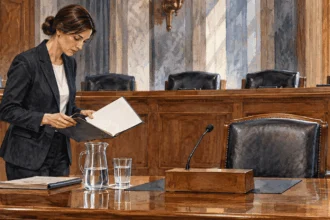
Pam Bondi sat before the House Judiciary Committee on a Wednesday morning in February 2026, facing questions about whether she had turned the Justice Department into…

In January 2026, the Department of Justice opened a criminal investigation into Federal Reserve Chair Jerome Powell for statements he made to the Senate Banking Committee…

On February 3, 2026, something unusual happened: Bill and Hillary Clinton agreed to testify before Congress about what they knew about Jeffrey Epstein. They'd spent months…
The agreement to provide private testimony sessions later this month represents a dramatic collision between two fundamentally different views of executive power: whether former…
Nine Democrats joined Republicans to advance the contempt resolution against Bill Clinton. Three Democrats supported the one against Hillary. When the top Democrat on…
On January 28, 2026, federal agents in tactical gear walked into the Fulton County elections office near Atlanta and walked out with 700 boxes…
The Powell investigation raised questions about Fed renovation spending, criminal subpoenas and the line between accountability and monetary independence.
Gene Dodaro retired on December 29, 2025. Now Congress must select his replacement, and this hiring decision will shape how thoroughly Congress investigates waste,…
A new refusal to release footage from the September 2 boat strike, articulated by Secretary of Defense Pete Hegseth under the banner of "longstanding…
On September 2, 2025, a United States military strike targeted a vessel allegedly operated by the Venezuelan gang Tren de Aragua. The engagement did…
From progressive senators to hawkish defense hawks, a unified voice has emerged about "Operation Southern Spear," the Trump administration's escalated military campaign against Venezuelan…
The Pentagon’s threat against Senator Mark Kelly involves military retirement, lawful orders, retirement pay and constitutional limits on political speech.
What Congress required in the Epstein files law, what DOJ released, why compliance remains disputed and where readers can check the record.