Last updated 11 months ago. Our resources are updated regularly but please keep in mind that links, programs, policies, and contact information do change.
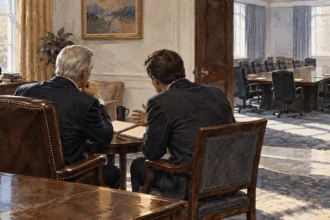
While congressional committees and courts provide external checks, the President’s Intelligence Advisory Board serves as the president’s oversight mechanism, designed to provide candid, expert advice on the U.S. Intelligence Community.
This internal watchdog role puts the PIAB in a unique position to confront agency abuse and drive reform. Its effectiveness, however, depends on presidential support and varies by administration.
The PIAB’s Dual Mission
The PIAB operates with two distinct but related functions: assessing intelligence effectiveness and ensuring legal compliance. These roles are embodied in the board itself and its specialized component, the Intelligence Oversight Board.
Mandate and Mission
The President’s Intelligence Advisory Board exists exclusively to assist the President in evaluating the U.S. Intelligence Community’s performance. Its primary purpose is offering the commander-in-chief an unvarnished, independent perspective on how well America’s spy agencies serve national needs.
This broad scope includes assessing the “quality, quantity, and adequacy of intelligence collection, of analysis and estimates, and of counterintelligence” activities. The board also reviews the management, personnel, and organizational structure of all federal agencies engaged in intelligence work.
To fulfill this mission, the PIAB gets two significant powers: direct access to the President and access to all information it deems necessary to carry out its functions. This gives the board a unique vantage point, theoretically allowing it to cut through bureaucratic layers and provide unfiltered assessments directly to the nation’s chief executive.
Structure and Composition
The PIAB’s credibility rests on its composition as an assembly of outsiders. The board consists of up to 16 members appointed by the President from among distinguished citizens who are not full-time federal government employees.
These members come from diverse fields, including national security, academic, political, and private sectors, selected based on their “achievement, experience, independence, and integrity”. Members serve without compensation to bolster the ideal of independent, public-service-oriented advice.
A core principle is the board’s tradition of non-partisanship, intended to ensure its advice remains objective and untainted by political considerations. This creates a paradox of “dependent independence.” While the PIAB is designed to be independent of the agencies it oversees, its entire existence, authority, and influence derive from the President.
The board is established by Executive Order, its members are presidential appointees, and it can be ignored, restructured, or even abolished by the President it serves. This means the board’s actual power is not static—it directly reflects the sitting President’s commitment to oversight and willingness to heed its counsel.
The Intelligence Oversight Board
Nested within the PIAB is the Intelligence Oversight Board, a standing committee of no more than five PIAB members designated by the President. The IOB has a singular, critical mission: to oversee the Intelligence Community’s compliance with the U.S. Constitution, federal laws, Executive Orders, and Presidential Directives.
The IOB’s function is to “complement and supplement” the work of other oversight bodies, not replace them. It acts as a high-level review panel, examining reports of potential violations from intelligence agencies themselves.
Its primary responsibility is informing the President of any intelligence activities it believes may be unlawful or are not being “adequately addressed” by the Attorney General or relevant agency heads.
A Legacy Born from Scandal
The modern structure of U.S. intelligence oversight, particularly the IOB, was forged in the fire of public scandal. It emerged from the mid-1970s when shocking revelations exposed decades of systemic abuse by America’s most powerful spy agencies.
| Date | Event | Significance |
|---|---|---|
| 1947 | National Security Act creates the CIA | Establishes the foundation of the modern U.S. Intelligence Community |
| 1956 | President Eisenhower creates the PIAB’s forerunner; FBI begins COINTELPRO | The first formal presidential intelligence advisory board is established; simultaneously, a major program of domestic abuse begins |
| 1967 | CIA begins Operation CHAOS | The CIA initiates an illegal domestic spying program on U.S. citizens |
| 1971 | COINTELPRO is publicly exposed and officially ended | The first major public revelation of systemic FBI misconduct occurs |
| 1974 | Seymour Hersh’s New York Times article exposes CIA domestic spying | Publicizes Operation CHAOS and triggers widespread calls for investigation |
| 1975 | The Church and Pike Committees are formed in Congress; President Ford creates the Rockefeller Commission | Marks the “Year of Intelligence,” a period of intense investigation into IC abuses |
| 1976 | President Ford creates the Intelligence Oversight Board | A direct response to the Rockefeller Commission’s call for a permanent executive oversight body focused on legality |
| 1977-78 | Permanent intelligence committees are established in Congress; FISA is passed | A new, permanent legislative oversight framework is created; FISA establishes judicial oversight for domestic surveillance |
| 1993 | President Clinton merges the IOB into the PIAB | The IOB becomes a standing committee of the PIAB via Executive Order 12863 |
The “Year of Intelligence”
The catalyst for modern intelligence reform was the 16-month investigation led by Senator Frank Church in 1975. The Church Committee’s inquiry uncovered a stunning history of systemic abuses hidden from the public and most of Congress for decades.
Its findings were explosive, detailing CIA assassination plots against foreign leaders, the NSA’s warrantless interception of Americans’ communications, and the CIA’s human experimentation program, MKULTRA, which involved drugging unwitting U.S. citizens with LSD. The committee’s final report concluded these were not isolated incidents but “intelligence excesses” that had developed over successive administrations, driven by Cold War pressures and lack of meaningful oversight.
COINTELPRO: The FBI’s War on Dissent
One of the most disturbing programs uncovered was the FBI’s Counterintelligence Program, or COINTELPRO. From 1956 to 1971, this covert initiative was designed to “expose, disrupt, misdirect, discredit, or otherwise neutralize” domestic political organizations the Bureau deemed subversive.
The targets were not foreign spies but American citizens and groups, including civil rights organizations, anti-Vietnam War protesters, the Black Panther Party, and feminist groups. The FBI’s methods included planting informants to sow discord, spreading false rumors to the media, forging correspondence to create conflicts between leaders, using the legal system for harassment through false arrests, and inciting violence between rival groups.
Operation CHAOS: The CIA’s Domestic Spying
While the FBI targeted domestic groups, the CIA violated its charter, which prohibits internal security operations. From 1967 to 1974, Operation CHAOS was a large-scale domestic espionage project aimed at determining whether the American anti-war movement was being manipulated or controlled by foreign powers.
The operation amassed files on over 7,200 U.S. citizens and created a computer index on 300,000 individuals and 1,000 groups. Despite this massive and illegal surveillance effort, the CIA repeatedly concluded there was no evidence of significant foreign control over domestic protest movements.
The IOB’s Creation
The public outcry from these revelations was immense. President Gerald Ford created the Rockefeller Commission in 1975 to investigate the allegations. A key recommendation was the need for a permanent, high-level body within the executive branch focused specifically on the legality and propriety of intelligence activities.
President Ford acted on this advice, creating the Intelligence Oversight Board by Executive Order in 1976. This act was more than bureaucratic reshuffling—it institutionalized a formal “conscience” within the Executive Office of the President. Where oversight had previously focused on effectiveness, the IOB’s creation ensured that the questions “Is this legal?” and “Is this proper?” would be formally and permanently embedded in the presidential oversight process.
The IOB in Action
With a mandate to oversee legality, the IOB’s work is largely driven by self-reporting from intelligence agencies. However, its record in the face of both routine compliance failures and major systemic scandals reveals both the potential and inherent limitations of its power.
The Reporting Pipeline
The IOB’s oversight process begins when an intelligence agency’s General Counsel or Inspector General reports an activity they believe “may be unlawful or contrary to Executive order or Presidential directive”.
Declassified quarterly and annual reports submitted by the NSA and FBI to the IOB provide a window into the types of issues flagged. The violations fall into several categories:
Intentional Misuse: While rare, these are the most flagrant abuses. Reports have detailed instances of personnel using powerful signals intelligence systems for personal reasons, such as spying on spouses or romantic partners—a practice sometimes referred to as “LOVEINT”.
Human Error: The most common violations appear to be unintentional mistakes. These include typographical errors in search queries that result in targeting a U.S. person, translation mistakes, or an analyst’s failure to conduct sufficient research before initiating surveillance.
Procedural and Technical Failures: Other issues stem from procedural breakdowns, such as failing to end surveillance on a foreign target who travels into the United States, or from software problems that lead to unauthorized collection.
FISA Section 702: A Public Test Case
A recent and prominent example of the PIAB’s work involves Section 702 of the Foreign Intelligence Surveillance Act. This law authorizes the warrantless collection of communications of foreigners located abroad, but inevitably sweeps in communications of Americans who contact those foreign targets.
The FBI has faced intense criticism for using this vast data repository to conduct searches on U.S. persons without a warrant—a practice critics call a “backdoor search” that circumvents the Fourth Amendment.
In a rare public report issued in July 2023, the PIAB weighed in on the controversy. The board acknowledged significant compliance problems at the FBI but ultimately recommended against requiring a warrant for U.S. person queries. It argued such a requirement would be impractical and would “prevent intelligence agencies from discovering threats to the homeland.”
The FBI acknowledged the report, highlighted its own reform efforts, and noted that the Foreign Intelligence Surveillance Court found its compliance rate had improved to over 98% following implementation of new remedial measures.
The Iran-Contra Affair: Oversight’s Limits
The Iran-Contra affair of the 1980s presented a stark test of the oversight system. The scandal involved senior Reagan administration officials facilitating secret arms sales to Iran, then under an arms embargo, in an attempt to free American hostages, and then diverting profits to fund Contra rebels fighting the Sandinista government in Nicaragua at a time when Congress had restricted such support.
The operation was run largely out of the National Security Council. A central legal question was whether the NSC was an “intelligence agency” subject to the Boland Amendment, which prohibited such support for the Contras. In a critical determination, the President’s Intelligence Oversight Board concluded that the NSC was not an intelligence agency in the context of the law.
This narrow, legalistic interpretation provided the administration with a loophole to continue the covert operation, demonstrating how an oversight body’s judgment can sometimes enable a major abuse of executive power rather than constrain it.
The “Black Sites” Era: A Silence in the Record
In the years following September 11, 2001, the CIA established a global network of secret prisons, or “black sites,” where suspected terrorists were detained and subjected to “enhanced interrogation techniques.”
These methods, which included waterboarding, sleep deprivation, and confinement in small boxes, are widely considered torture. The program was one of the most significant and controversial intelligence operations of the 21st century and was later the subject of a massive, multi-year investigation by the Senate Intelligence Committee.
Yet in the publicly available record, there is a conspicuous absence of any PIAB or IOB investigation into the legality or propriety of the CIA’s detention and interrogation program.
This dichotomy between the board’s handling of routine compliance issues and its apparent absence during major scandals suggests a critical distinction in its effectiveness. The IOB appears to function as an internal auditor, diligently tracking procedural errors and minor infractions within the established rules. However, when the executive branch chooses to operate outside that system, as in Iran-Contra or the black sites program, the board seems to lack the power, independence, or mandate to serve as a meaningful check.
How PIAB Fits with Other Oversight Bodies
The PIAB doesn’t operate in isolation. It’s one component in a complex and sometimes overlapping “accountability web” designed to oversee the U.S. Intelligence Community.
| Oversight Body | Type/Branch | Mandate | Key Powers | Public Transparency |
|---|---|---|---|---|
| PIAB / IOB | Executive | Advise President on IC effectiveness & legality | Advisory only; access to all IC info | Almost entirely secret; reports are classified |
| PCLOB | Independent Executive Agency | Balance counterterrorism with privacy/civil liberties | Advisory & oversight; subpoena power; public hearings | High; mandated public reports and public forums |
| SSCI / HPSCI | Legislative (Congress) | Oversee all IC activities & budget | Legislative; budgetary control; subpoena; confirmation (Senate) | Mixed; public hearings & reports, but much work is classified |
| Agency IGs | Internal Executive | Investigate waste, fraud, abuse within a specific agency | Investigative; audit | High; most reports are public |
PIAB vs. PCLOB
The Privacy and Civil Liberties Oversight Board is often confused with the PIAB, but their roles are distinct. The PCLOB was established by Congress in 2007 as a direct recommendation of the 9/11 Commission, which saw the need for an independent body to ensure new counterterrorism powers were balanced with liberty protection.
Several key differences distinguish the PCLOB from the PIAB:
Independence and Mandate: While the PIAB is part of the Executive Office of the President and serves the President, the PCLOB is a fully independent agency. Its primary mission is not to advise on intelligence effectiveness but to analyze and review counterterrorism programs through the specific lens of privacy and civil liberties.
Transparency: The PCLOB operates with a high degree of public transparency. It’s required to make its reports public to the greatest extent possible, holds public forums, and actively solicits public comment. This stands in stark contrast to the PIAB, whose work is almost entirely classified.
Powers: The PCLOB has the authority to request that the Attorney General issue subpoenas on its behalf to compel testimony or documents from parties outside the executive branch, a power the PIAB lacks.
The differing approaches were evident in their respective reports on FISA Section 702. While the PIAB’s report focused on the FBI’s operational needs, the PCLOB’s report was far more critical of the program’s impact on Americans’ privacy and recommended more substantial reforms.
Congressional Oversight: The Power of the Purse
The primary legislative watchdogs are the Senate Select Committee on Intelligence and the House Permanent Select Committee on Intelligence. Both were established as permanent committees in the 1970s following the Church Committee’s investigation.
Their power is rooted in the Constitution and is far more direct than the PIAB’s advisory role. These committees conduct oversight through:
Authorization and Appropriations: They authorize budgets for the entire Intelligence Community, giving them powerful leverage to shape policy and demand accountability.
Investigations and Hearings: They conduct their own investigations into intelligence failures and misconduct, holding public and closed hearings to question officials.
Confirmations: The Senate committee holds confirmation hearings for key presidential nominees, including the Director of National Intelligence and the Director of the CIA.
This web of different bodies means oversight is not monolithic. The PCLOB serves as the public’s advocate for privacy, Congress acts as the legislative check on executive power, and agency Inspectors General function as internal auditors. Within this framework, the PIAB occupies a unique niche: it’s intended to be the President’s confidential “peer review” board, offering strategic advice on performance and legality that’s insulated from congressional politics, inter-agency rivalries, and public pressure.
Assessing the PIAB’s Impact
For over six decades, the PIAB has operated in the White House shadows, its influence often difficult to measure. While official histories credit it with significant achievements, its inherent structural limitations and dependence on the President raise persistent questions about its ultimate effectiveness as a reform mechanism.
Documented Successes
Despite its low public profile, the PIAB has been credited with having an “immense and long-lasting impact on the structure, management, and operations of US intelligence”. Its recommendations have sometimes led to major reorganizations and the creation of new agencies.
The board’s advice was instrumental in establishing the Defense Intelligence Agency and the CIA’s Directorate of Science and Technology, two cornerstones of the modern IC. These successes demonstrate that when the board has the attention and trust of the President, its advice can translate into tangible, lasting change.
Inherent Limitations
The PIAB’s successes are balanced by significant structural weaknesses that limit its power and effectiveness.
No Enforcement Power: The board is purely advisory. It can investigate, analyze, and recommend, but it cannot compel an agency to act or impose sanctions for wrongdoing. Its influence depends entirely on its ability to persuade the President, who may or may not choose to act on its recommendations.
Dependence on the President: The board’s influence is directly proportional to the President’s interest in its work. A President who values its outside perspective can empower it, as President Kennedy did. Conversely, a President who sees it as an obstacle can sideline it. President Jimmy Carter abolished the board entirely, believing its function was redundant.
More recently, the falling-out between PIAB Chairman Brent Scowcroft and the George W. Bush administration over the 2003 invasion of Iraq reportedly diminished the board’s access and influence.
Politicization and Secrecy: Although intended to be nonpartisan, the board is not immune to politics. Presidents have been criticized for appointing political allies who lack deep intelligence expertise, potentially compromising the quality of the board’s advice. This, combined with the intense secrecy that shrouds its work, makes public accountability nearly impossible and a full assessment of its track record difficult.
A Fragile Mandate
Perhaps the greatest illustration of the PIAB’s limitations is the fragility of its mandate. Because it’s a creature of the executive branch, its powers can be altered by presidential pen stroke.
A critical example occurred in February 2008, when President George W. Bush issued an executive order that significantly curtailed the IOB’s authority. The order removed the IOB’s power to refer matters directly to the Department of Justice for criminal investigation and directed the board to notify the president of a problem only if other officials were not already “adequately” addressing it.
Without the power to refer matters to the Department of Justice, the IOB became a less proactive watchdog.
This history reveals that the PIAB can be seen as a barometer of an administration’s attitude toward oversight. An administration that values independent advice and is concerned with the legality of its intelligence programs will tend to empower the board, as President Ford did when he created the IOB. Conversely, an administration seeking to consolidate executive power and minimize external checks may weaken the board’s charter, sideline its members, or fill its ranks with political loyalists.
The Board’s Continuing Role
The fluctuating status of the PIAB across administrations provides a powerful indicator of the prevailing philosophy of governance and accountability within the White House. Its history demonstrates both the potential for meaningful reform when presidents are receptive to outside advice and the inherent limitations of any oversight body that exists entirely at presidential discretion.
The PIAB represents a unique experiment in American governance—private citizens granted extraordinary access to the nation’s most sensitive secrets, tasked with providing independent oversight from within the executive branch. Whether it continues to serve as an effective check on intelligence agencies or remains a largely symbolic body will depend on future presidents’ willingness to seek uncomfortable truths and their tolerance for being challenged by outsiders.