- studentprivacy.ed.gov6 links
Last updated 11 months ago. Our resources are updated regularly but please keep in mind that links, programs, policies, and contact information do change.
The Family Educational Rights and Privacy Act (FERPA) is a cornerstone federal law protecting student education records privacy. Enacted in 1974, FERPA applies to educational agencies and institutions receiving funding under U.S. Department of Education programs.
FERPA grants parents specific rights regarding their children’s education records. These include the ability to inspect and review records, seek amendments to inaccurate or misleading records, and control the disclosure of personally identifiable information (PII) contained within those records. When a student turns 18 or enrolls in a postsecondary institution at any age, these rights transfer from parents to the student, who becomes an “eligible student.”
- Defining the Terms: Education Records and PII
- Are Classroom Recordings “Education Records” Under FERPA?
- Consent Requirements for Classroom Recordings
- Exceptions: When Can Recordings Be Disclosed Without Consent?
- Purpose and Context Matter: How Use Affects FERPA Rules
- Best Practices for Schools
- When is a Classroom Recording an Education Record? (Quick Guide)
- Interplay with State Laws
- Authoritative Resources
Understanding these fundamental rights is crucial because classroom recordings can, under certain circumstances, become part of a student’s protected education record, triggering FERPA’s requirements.
Defining the Terms: Education Records and PII
To understand how FERPA applies to classroom recordings, it’s essential to know what constitutes “education records” and “personally identifiable information.”
What Constitutes an “Education Record”?
FERPA defines “education records” broadly as records that are:
- Directly related to a student; AND
- Maintained by an educational agency/institution or by a party acting for the agency or institution
Traditional examples include grades, transcripts, class lists, student schedules, health records kept by the school, and disciplinary files. The format doesn’t matter – records can be handwritten, typed, digital, video, or audio.
The “maintained” criterion is critical; the record must be kept by the school or an entity acting on its behalf (like a contractor providing an online learning platform). Records kept in the sole possession of the maker (like a teacher’s private notes) and not shared, or records created and maintained by a law enforcement unit for law enforcement purposes, are generally excluded from this definition.
What is “Personally Identifiable Information” (PII)?
PII under FERPA includes information that, alone or in combination, is linkable to a specific student. If PII is contained within an education record, its disclosure is generally prohibited without consent.
Examples of PII often relevant to recordings include:
- Student’s name
- Names of parents or other family members
- Student’s address
- Personal identifiers like a student ID number or username
- A student’s image or photograph
- A student’s voice
- Biometric records (e.g., fingerprints, facial characteristics, voiceprints)
- Other information that would make the student’s identity easily traceable
Context matters. Information that isn’t inherently identifying can become PII if combined with other data or presented in a way that makes a specific student identifiable within an education record.
Are Classroom Recordings “Education Records” Under FERPA?
Whether a specific classroom recording qualifies as an “education record” depends on applying the two-part test from FERPA’s definition: Is the recording directly related to a student, and is it maintained by the educational institution?
The Critical Test: “Directly Related” AND “Maintained”
“Directly Related” Test: This examines the focus of the recording. Is a specific student the subject? For instance, a video showing a student having a seizure is directly related to that student because the health emergency is the focus. Conversely, if a recording captures a wide view of a classroom where students are generally visible but not the focus (e.g., a recording evaluating the teacher’s technique), it may not be considered “directly related” to any specific student. If a recording focuses on two or three students playing basketball, it is directly related to those players but not necessarily to students incidentally visible in the background.
“Maintained” Test: This requires that the school or someone acting on its behalf (like a vendor hosting educational software) keeps the recording. A recording made by a student on their personal device for note-taking purposes and not collected by the school would likely not meet this criterion. However, if a teacher records a virtual class session and the school stores it on its learning management system (LMS) or a cloud server under its control, the recording is “maintained.”
Scenarios Where Recordings Likely ARE Education Records
Classroom recordings are more likely to be considered education records when they:
- Focus on specific students, such as recordings of student presentations, performances, or participation in specific activities
- Capture a disciplinary incident involving specific students and are used by the school for investigation or imposing sanctions
- Are created as part of providing special education services or accommodations to a specific student
- Are used to evaluate or grade a student’s performance
- Are systematically kept by the school as part of a student’s file or educational history
Scenarios Where Recordings Likely ARE NOT Education Records
Recordings may not be education records if:
- They only incidentally capture students, and the focus is elsewhere (e.g., a recording solely for evaluating a teacher’s performance, where student faces are blurred or students are not identifiable)
- They are created and maintained solely by a school’s law enforcement unit for a law enforcement purpose (these records are subject to different rules)
- They are not maintained by the school or a party acting for the school (e.g., a recording made by a parent during a school play, or personal notes recorded by a student)
The Nuance of Multiple Students
A single recording can contain PII related to multiple students, making it an education record for each student depicted. For example, a video of a fight between two students, maintained by the school for disciplinary purposes, is an education record for both students involved. This creates complexities regarding access and disclosure. When one parent or eligible student requests access to such a recording, the school must allow access but, if feasible, should redact or segregate the portions containing PII of other students before disclosure to unauthorized parties.
Consent Requirements for Classroom Recordings
FERPA’s core protection requires consent before disclosing PII from education records.
General Rule: Prior Written Consent Needed for Disclosure
As a general principle, educational institutions must obtain prior written consent from the parent (for minor students) or the eligible student before disclosing PII from a student’s education record. This applies if a classroom recording has been determined to be an education record.
Who Provides Consent?
Consent must be obtained from the student’s parents (either custodial or noncustodial, unless limited by court order or state law) until the student turns 18 or enrolls in a postsecondary institution. At that point, the student becomes an “eligible student,” and they must provide consent themselves.
When is Consent Required for Disclosure?
Written consent is typically required when a school intends to share a recording that qualifies as an education record containing PII with parties outside the specific educational context. Examples include:
- Posting a recording on a public website
- Sharing a recording with educators at another school for training purposes
- Providing a recording to external researchers not covered by a FERPA exception
- Sharing a recording containing student PII beyond the students enrolled in the same course during the same term
When is Consent Generally NOT Required?
FERPA does not necessarily require consent in these situations:
- Creation of the Recording: FERPA primarily governs the privacy and disclosure of existing education records, not the act of recording itself. However, school policies or state laws might impose requirements on whether recording is permitted at all, or require notice.
- Internal Classroom Sharing: Sharing a recording that contains student PII only with other students enrolled in the same course during the same academic term is generally permissible without consent. This allows instructors to make recordings of class sessions available for review by students enrolled in that specific class.
- FERPA Exceptions Apply: Disclosure is permitted without prior consent if one of FERPA’s specific exceptions applies.
Voluntary Nature of Consent
If consent is sought for using a recording (e.g., for promotional purposes or sharing with future classes), it must be genuinely voluntary. A school cannot require a student to consent to the disclosure of their PII from an education record as a condition of enrollment or participation in regular class activities.
Exceptions: When Can Recordings Be Disclosed Without Consent?
FERPA recognizes several exceptions to the general consent rule, allowing schools to disclose education records (including qualifying recordings) under specific circumstances without prior written consent.
School Officials with Legitimate Educational Interests
Schools may disclose PII from education records to “school officials” within the institution whom the school has determined have “legitimate educational interests” in the information.
Definition: This typically includes teachers, administrators, counselors, and other staff members who need access to fulfill their professional responsibilities. It can also extend to contractors, consultants, volunteers, or other parties performing services for the school (e.g., providers of online learning platforms) under certain conditions, such as being under the direct control of the school regarding the use and maintenance of education records.
Requirement: The school must specify its criteria for determining who constitutes a school official and what qualifies as a legitimate educational interest in its annual FERPA notification to parents and eligible students.
Application: This exception allows internal sharing of recordings for purposes like teacher supervision, internal training, providing student support services, or investigating conduct violations. If using a third-party platform for virtual learning, the school official exception might permit the platform provider access if the vendor meets FERPA’s requirements.
Directory Information
Directory information is PII that is generally not considered harmful or an invasion of privacy if disclosed, such as name, address, phone number, email address, photograph, dates of attendance, and participation in officially recognized activities.
Requirement: Schools can disclose directory information without consent only if they have given public notice to parents/eligible students about the types of information designated as directory information and provided a reasonable time for them to opt out of its disclosure.
Application Limitation: This exception has limited applicability to disclosing substantive classroom recordings. While a student’s image or name might be designated as directory information, a recording capturing classroom discussions, student performance, or behavior often contains more than just directory information. Furthermore, a student cannot use their right to opt out of directory information to prevent being identified by name or email address within their own class. Relying solely on the directory information exception to share classroom recordings broadly is often inappropriate and risky.
Health or Safety Emergency
Schools may disclose PII from education records without consent to appropriate parties (e.g., law enforcement, medical personnel, public health officials) if the disclosure is necessary to protect the health or safety of the student or other individuals in an emergency situation.
Condition: There must be an actual, articulable, and significant threat. The disclosure must be related to addressing that specific emergency.
Application: This could permit sharing relevant portions of a classroom or security recording depicting an incident (like an assault, a medical emergency, or a threat) with first responders or officials needing the information to manage the immediate crisis.
Other Exceptions
FERPA includes other exceptions allowing disclosure without consent, such as:
- To comply with a lawfully issued judicial order or subpoena (schools must generally make a reasonable effort to notify the parent/eligible student before complying)
- To officials of another school system where the student seeks or intends to enroll
- For authorized studies conducted for or on behalf of the school to develop, validate, or administer predictive tests, administer student aid programs, or improve instruction (subject to strict requirements, including written agreements)
- For audits or evaluations of federal or state-supported education programs
Purpose and Context Matter: How Use Affects FERPA Rules
The specific reason for creating and using a classroom recording significantly impacts whether FERPA applies and how.
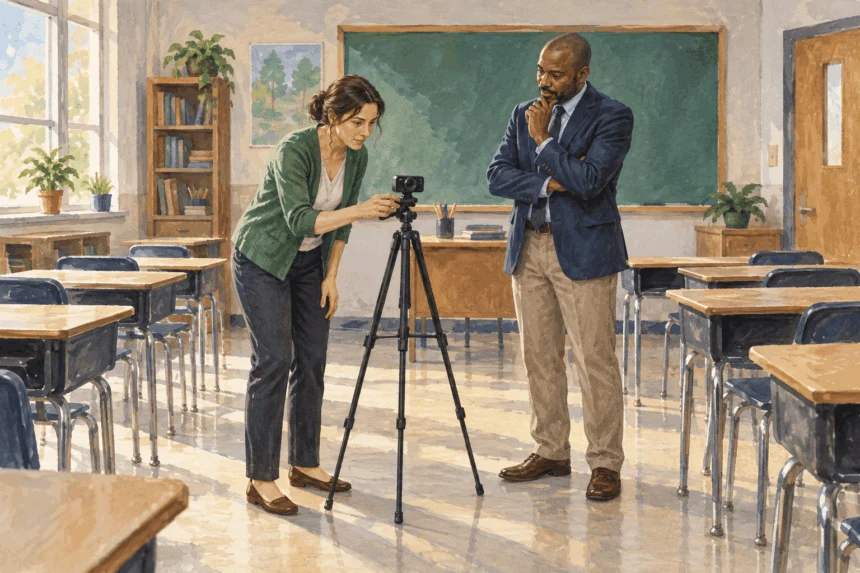
Teacher Evaluation: If a recording is made solely to evaluate a teacher’s instructional methods and students are either not identifiable or only incidentally visible, it is unlikely to be considered a student education record. However, if identifiable students are the focus, or if the recording is maintained by the school in a way that links it to specific students, it could become an education record requiring FERPA compliance.
Accommodation for Students with Disabilities: Recordings created specifically to provide an accommodation (e.g., allowing a student with a disability to review lectures) are almost certainly “directly related” to that student and, if maintained by the school, constitute an education record for that student. Disclosure rules apply.
General Instruction/Remote Learning: Recordings of regular class sessions, especially in virtual settings, present common scenarios.
- If these recordings (containing identifiable students) are maintained by the school (e.g., on an LMS) but access is strictly limited to students enrolled in that same course during the same term, FERPA generally permits this disclosure without additional consent.
- However, if the school intends to keep these recordings beyond the term, use them for future classes, or share them more broadly, they become education records requiring consent or a FERPA exception for such disclosures.
- Schools should discourage observation of live virtual classrooms by individuals not enrolled in the class (like parents or administrators without a legitimate educational interest) if PII from student education records might be disclosed during the session.
Security Monitoring: Video surveillance recordings maintained by the school that capture identifiable students involved in incidents (e.g., fights, vandalism) are likely education records for the students involved. Access and disclosure must comply with FERPA, distinct from records potentially held by a separate law enforcement unit.
Student-Created Recordings: Recordings made by students using personal devices are typically not education records unless the school requires students to submit them or otherwise collects and maintains them. School policies (Acceptable Use Policies, Codes of Conduct) often govern whether students are permitted to record classes.
Best Practices for Schools
To navigate the complexities of classroom recordings and FERPA compliance, educational institutions should adopt clear policies and practices:
Develop Clear Policies: Create and disseminate written policies addressing classroom recordings. These should cover permissible purposes, required notices, consent procedures (if applicable), access controls, secure storage methods, data retention schedules, and secure destruction protocols.
Provide Notice: Clearly inform parents and eligible students about the school’s practices regarding classroom recordings. This can be done through student handbooks, course syllabi, acceptable use policies, or specific notices at the start of a course or term. Ensure the annual FERPA notification accurately describes directory information policies and the criteria for school officials and legitimate educational interests.
Obtain Consent When Necessary: Use clear, specific, written consent forms when planning to disclose recordings (that are education records) beyond the scope permitted by FERPA exceptions (e.g., sharing publicly, using for future classes). Remember consent must be voluntary.
Limit Access: Utilize secure, password-protected platforms, such as the school’s official Learning Management System (LMS), to store and share recordings containing PII. Configure permissions carefully to restrict access only to authorized individuals (e.g., students enrolled in the specific course section for that term). Avoid posting recordings containing student PII on public platforms like YouTube unless access is strictly controlled or PII is removed.
Secure Storage and Retention: Treat recordings that are education records with the same level of security as other confidential student data. Implement access controls. Establish clear retention schedules – how long will recordings be kept? – and ensure they are securely destroyed or deleted when no longer needed for their specified educational purpose.
De-identification/Editing: If recordings need to be shared more broadly under a FERPA exception or with consent, but consent isn’t obtained from every identifiable student, consider editing techniques to remove or obscure PII. This can include blurring images, altering voices, or editing out specific segments.
Staff Training: Provide regular training to teachers, administrators, IT staff, and relevant contractors on FERPA requirements, particularly as they relate to video and audio recordings and the use of online platforms.
Vendor Contracts: Carefully review contracts with third-party vendors providing platforms for recording, hosting, or virtual instruction. Ensure agreements include provisions requiring vendors to comply with FERPA, specifying that the vendor is acting as a “school official” (if applicable) and outlining limitations on the use and redisclosure of student PII.
When is a Classroom Recording an Education Record? (Quick Guide)
This table summarizes common scenarios and the likelihood of a recording being classified as a FERPA-protected education record.
| Scenario | Likely an Education Record? | Key Factors |
|---|---|---|
| Teacher films self for technique review | No | Focus is teacher; students incidental/unidentifiable; not maintained by school for student purposes |
| Recording of student presentation | Yes | Directly related to the presenting student; maintained by school for grading |
| General lecture recorded for absent students | Potentially Yes | If students are identifiable AND school maintains it (e.g., in LMS) |
| Security camera footage of hallway incident | Yes (for involved students) | Directly related to involved students; maintained by school |
| Zoom class recording shared only within class | Yes (if maintained) | Directly related (if students identifiable); maintained by school. Disclosure limited to class okay. |
| Recording used for specific student disability accommodation | Yes (for that student) | Directly related to the student; maintained as part of service provision |
Interplay with State Laws
While FERPA provides a federal baseline for student privacy, schools must also be aware of state and local laws.
FERPA as a Floor: FERPA establishes minimum privacy protection standards. States are free to enact laws that provide greater protection.
State Laws May Be Stricter: Some states have specific laws addressing student privacy, data security, or consent requirements for recording conversations (e.g., “two-party consent” laws) that may impose stricter obligations than FERPA regarding classroom recordings. State laws might also have specific provisions regarding the administration of certain tests or data sharing initiatives.
Importance of Checking Local Regulations: Educational institutions must ensure their policies and practices comply with both FERPA and any applicable state or local laws concerning recordings and student privacy.
Authoritative Resources
For more detailed information, consult these official resources:
- U.S. Department of Education Student Privacy Policy Office (SPPO): The primary source for FERPA guidance and information.
- FERPA Statute and Regulations: The legal text of the law. (Statute: 20 U.S.C. § 1232g; Regulations: 34 CFR Part 99) (Found via https://studentprivacy.ed.gov/ferpa)
- SPPO Guidance Documents:
- FAQs on Photos and Videos under FERPA: Addresses specific scenarios involving visual recordings.
- FERPA and Virtual Learning: Provides guidance relevant to online and remote instruction contexts.
- Parent and Eligible Student Guides to FERPA: