Military Structure and Branches
Who’s Actually in Charge of the U.S. Military?
The U.S. military chain of command runs president, Secretary of Defense, then combatant commanders, and troops must refuse illegal orders.

The U.S. military chain of command runs president, Secretary of Defense, then combatant commanders, and troops must refuse illegal orders.

Former President Donald Trump and Defense Secretary Pete Hegseth have proposed renaming the Department of Defense back to its historical predecessor: the Department of War. The…
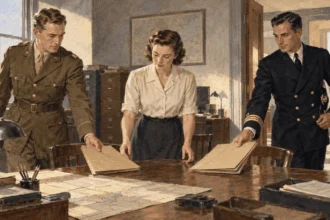
The decision to rename the United States Department of War marked a revolutionary restructuring of America's national security apparatus, driven by lessons from World War II…

The civilian nerve center that controls America's $840 billion military machine operates more like a Fortune 500 headquarters than a traditional government bureaucracy.
Walking onto a military base for the first time can feel like entering a foreign country. Everyone seems to know an unspoken code—when to…
Army ranks, pay grades and insignia reveal different kinds of responsibility, from junior enlisted soldiers to warrant officers and senior commanders.
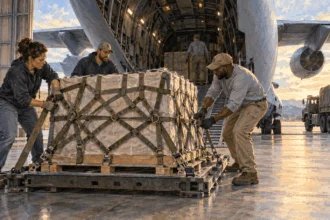
The ability of the United States military to operate anywhere on the globe, responding to crises, projecting power, and sustaining forces, hinges on a…
On December 20, 2019, the United States established its first new military service branch in over 70 years with the signing of the National…
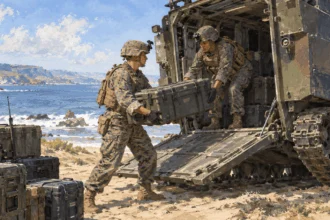
The United States Marine Corps stands as a unique component of the U.S. Armed Forces, renowned for its expeditionary nature and constant state of…
The U.S. Air Force prepares airpower through major commands, military and civilian personnel, and aircraft, with joint commanders directing operations.
The U.S. Navy’s leadership, numbered fleets, ships, aircraft and personnel connect national missions with the training and support needed to carry them out.
The United States Army stands as the nation's principal land power, a cornerstone of the U.S. Armed Forces with a legacy stretching back over…
The vast network of the United States military operates globally under a specific command structure designed for effectiveness and unified action. At the heart…
The leadership structure of the U.S. military involves complex relationships and distinct roles designed to ensure civilian control while providing expert military counsel. Central…