- gao.gov15 links
- facts.usps.com4 links
- about.usps.com3 links
- news.usps.com
- opb.org8 links
- en.wikipedia.org7 links
- realclearmarkets.com2 links
- retaildive.com2 links
Last updated 2 weeks ago. Our resources are updated regularly but please keep in mind that links, programs, policies, and contact information do change.
The United States Postal Service (USPS) is an essential public institution that delivers mail and packages to every address in the nation, from major cities to rural farms. Founded over two centuries ago, it has long been a backbone of American commerce and communication. In recent years, however, the USPS has grappled with significant challenges that threaten its financial viability and service performance.
Financial Struggles: Debt, Funding Issues, and Revenue Declines
The USPS is expected to operate as a self-funded entity, covering its expenses through sales of postage and services rather than taxpayer dollars. Unfortunately, the Postal Service’s revenues haven’t covered its costs for over 15 years, resulting in persistent yearly losses. This financial spiral is driven in large part by declining mail volumes. Americans simply aren’t sending as many letters as they used to – digital communication has replaced a lot of paper mail. From 2007 to 2022, the combined volume of first-class and marketing mail (letters, bills, advertisements) fell by about 42%, a steady drop that has eroded USPS’s most profitable revenue stream. Overall mail volume peaked at over 200 billion pieces in 2006 and has nearly halved since then, while e-mail and online billing surged as preferred alternatives. At the same time, the Postal Service still must maintain delivery to a growing number of addresses each year, stretching its resources thin.
- Financial Struggles: Debt, Funding Issues, and Revenue Declines
- Operational Difficulties: Workforce, Delivery Delays, and Logistics
- Technological Advancements and Their Impact on USPS
- Policy and Regulatory Challenges: Mandates and Restrictions
- Public Perception and Service Expectations
- Opportunities for Improvement and a Path Forward
- Delivering the Future
A major factor in USPS’s financial woes has been a unique congressional mandate imposed in 2006: the Postal Accountability and Enhancement Act. This law required the USPS to pre-fund retiree health benefits decades in advance, essentially setting aside billions of dollars for future retirees’ healthcare 75 years into the future. No other private company or federal agency faces such an extreme prefunding obligation. Complying with this mandate plunged the Postal Service into debt – it made roughly $21 billion in payments before defaulting on over $33 billion when the burden became unsustainable. The prefunding expense, piled on top of the Great Recession in 2008 (which caused mail volume to drop by one-third) and the additional hit from the COVID-19 pandemic in 2020, pushed USPS into a deep financial hole. It has survived by accumulating debt and unfunded liabilities, essentially deferring the problems.
USPS’s total debt and unfunded benefit liabilities have ballooned over the past decade, reflecting cumulative losses. Declining first-class mail volumes and mandated retiree benefit funding contributed to this growing burden.
By 2021, USPS’s debt stood at $11 billion (near its statutory borrowing limit of $15 billion) and it had recorded 15 consecutive years of net losses. In essence, the Postal Service has been running an annual deficit, propped up by borrowing and delayed payments, which is obviously not sustainable long term. Congress did provide some relief in an overhaul passed in 2022. The Postal Service Reform Act of 2022 eliminated the onerous prefunding requirement (acknowledging that forcing USPS to finance retiree health care 75 years in advance had “stretched [its] finances almost to the breaking point,” as President Biden noted). The new law wiped out billions in unpaid obligations on paper and will integrate future postal retirees into Medicare to reduce costs. It also gave USPS greater flexibility to raise postage rates above inflation when necessary. These changes improved USPS’s balance sheet on paper, but they didn’t inject any new cash; the Postal Service still faces liquidity challenges and an aging infrastructure in need of investment. In fact, officials warned that without further action, USPS could run out of cash by 2024. Simply put, the Postal Service’s expenses continue to outpace its revenues, and years of losses have left it with massive debt and unfunded benefit liabilities that will require ongoing management. Financially, the USPS remains in a precarious position, struggling to adapt its business model to a world with far less traditional mail.
Operational Difficulties: Workforce, Delivery Delays, and Logistics
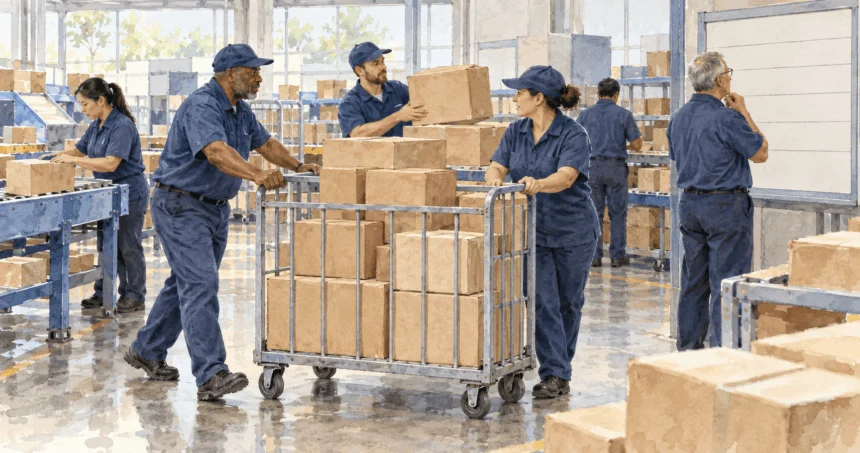
Running the United States Postal Service is a massive logistical operation. USPS has over half a million career employees (about 525,000 as of 2023) – one of the largest civilian workforces in the country – plus tens of thousands of part-time and seasonal workers. Six days a week (and often seven for packages), postal workers traverse 167 million delivery points (homes and businesses) nationwide. Each year, about 1 million new addresses are added to its delivery network as communities grow. This universal service obligation – to deliver mail to every corner of the United States at affordable, uniform rates – is a point of pride for USPS but also a tremendous challenge. Many delivery routes, especially in rural or remote areas, are not profitable, yet the Postal Service must serve them regardless. Maintaining over 30,000 post offices and thousands of mail routes in all 50 states entails high fixed costs for vehicles, facilities, and labor that are hard to shrink even as mail volumes shrink.
Labor is a particularly significant aspect. Compensation and benefits for postal workers make up the majority of USPS expenses. The workforce is unionized, and USPS must abide by negotiated contracts and federal employment rules, limiting how quickly it can downsize or adjust labor costs. In recent years, the Postal Service has tried to control costs by offering early retirements and hiring more non-career employees (who have lower wages/benefits) to increase flexibility. But cutting staff can only go so far without hurting service, and USPS has faced staffing shortfalls at times. During the COVID-19 pandemic, for instance, employee absences soared due to illness and quarantines, just as package volumes spiked – a combination that severely strained operations. Mail processing facilities saw backlogs, and delivery routes went understaffed in some areas, leading to delays. Even outside of extraordinary events, the sheer scale of the network makes on-time delivery a constant battle: a letter travels through a complex chain of post offices, sorting centers, trucks, and sometimes airplanes to reach its destination. Any weak link (weather, vehicle breakdown, unexpected absenteeism) can slow the chain.
The Postal Service’s iconic delivery vehicles – such as the long-serving Grumman LLV mail trucks seen in neighborhoods nationwide – are aging and due for replacement. As of 2022, roughly 75% of USPS delivery vehicles were over 20 years old (purchased in 1987–2001), which drives up maintenance costs and safety concerns.
Another operational hurdle is the outdated equipment and infrastructure in some parts of USPS’s system. Many postal delivery trucks in the fleet are decades old with high mileage, prone to breakdowns and lacking modern features (no air conditioning, for example). An inspection found that a majority of delivery vehicles are well past their expected service life. Aging mail sorting machines and old facilities can also hamper efficiency. The Postal Service has consolidated some mail processing centers and upgraded equipment over time, but such changes often face resistance when they affect employees or local mail service. For instance, in mid-2020 the USPS removed hundreds of surplus high-speed mail sorting machines from facilities (a cost-cutting and efficiency measure given declining letter volumes), but the move sparked public concern since it coincided with noticeable mail slowdowns. That episode became controversial because it happened ahead of the 2020 election, when many people planned to vote by mail – highlighting how deeply Americans care about mail timeliness. In general, delivery delays and inconsistent service performance have been an issue in recent years, undermining confidence. In 2020, only about 87% of first-class mail was delivered on time, down from 92% the year before, and on-time rates in some regions dropped dramatically during the worst of the pandemic (at one point, on-time delivery fell below 50% in parts of New York). Customers across the country reported weeks-long backlogs for mail that normally took days. Even in 2023, the Postal Service failed to meet its performance targets for prompt delivery and customer satisfaction according to its regulator. These delays have real effects: medications, bills, and other important items were late, and public outcry was loud. The USPS has been working to adjust its operations – for example, by shifting some mail to slower ground transport to improve reliability and cut costs, and by prioritizing package delivery capacity – but it remains a difficult balancing act to maintain speed, reliability, and coverage with the resources available.
Technological Advancements and Their Impact on USPS
Technology has been a double-edged sword for the Postal Service – both a source of challenges and a key to potential solutions. On the one hand, technological change in society has dramatically altered USPS’s business. The proliferation of email, electronic billing, and online statements since the 1990s led to a steep decline in traditional first-class mail. Important communications that once filled Americans’ mailboxes (like personal letters, bill payments, or paychecks) are now often handled digitally. This trend punched a hole in USPS revenues over the past two decades, as evidenced by the sharp drop in mail volume. In short, the internet age changed consumer behavior in ways that hurt the Postal Service’s core letter mail product.
On the other hand, technology has opened new avenues and efficiencies for USPS. The rise of e-commerce is one example: although people send fewer letters, they are ordering far more packages online, and USPS has capitalized on that with its package delivery services. Package volume has more than doubled since the mid-2010s (especially spiking during the COVID-19 pandemic), partially offsetting the decline in letter mail. Fulfilling e-commerce deliveries has pushed USPS to invest in new package sorting systems, routing software, and expanded delivery hours (including Sunday deliveries through a partnership with Amazon). Internally, the Postal Service has long been a leader in mail processing automation. As early as the 1980s and 1990s, USPS deployed advanced optical character recognition (OCR) machines and barcode sorters to automate the sorting of letters. Today, computers read 98% of handwritten addresses and 99.5% of printed addresses on mail pieces, routing them to the proper destination automatically. This automation allows a letter mailed in California, for example, to be scanned, sorted by destination, and transported across the country with minimal human intervention until the final delivery. High-speed sorting machines can process up to 36,000 letters per hour and thousands of packages per hour, far faster and more accurately than manual sorting. These technologies enable USPS to handle immense mail volumes (even after decline, still over 100 billion pieces of mail per year) with a leaner workforce than would otherwise be possible.
USPS continues to modernize its operations with new technology. In 2021–2022 it began installing over a hundred new package sorting machines to accommodate the surge in parcels, increasing daily package processing capacity by an estimated 4.5 million parcels. It has also introduced automated guided vehicles (warehouse robots) in some processing centers to move mail trays, and even robotic arms for loading containers. These innovations aim to boost efficiency and reduce costs in mail processing and transportation. On the customer service side, the Postal Service has leveraged digital technology to enhance its offerings. A prime example is the Informed Delivery program launched in 2017, which provides customers with a digital preview of their incoming mail via email or a smartphone app. More than 60 million Americans have signed up for Informed Delivery, reflecting the public’s appetite for combining digital convenience with traditional mail. Through this service, USPS emails users greyscale images of letter-sized mail that will arrive soon, and it allows tracking of packages on a dashboard. Informed Delivery not only improves transparency and customer experience, but it also creates new advertising opportunities (marketers can add interactive content to the digital previews). The Postal Service has also expanded online tools like Click-N-Ship (for printing postage at home), scheduling package pickups online, and providing real-time tracking for packages – all of which meet customers’ modern expectations for digital ease-of-use.
Of course, keeping up with technology is an ongoing challenge in itself. USPS’s IT systems and equipment require continual upgrades, which demand capital investment even during financial hardship. Cybersecurity is another concern given the vast amount of data (as seen when a security flaw exposed data on 60 million USPS online users in 2018, a vulnerability that was subsequently fixed). Nevertheless, embracing technology is not optional for USPS – it’s essential for survival. The key is for the Postal Service to harness tech advancements to become more efficient and to offer new services, even as it navigates the negative impacts of digital substitution. In the next section on improvements, we’ll explore how further automation, digital services, and modernization are central to USPS’s strategy for the future.
Policy and Regulatory Challenges: Mandates and Restrictions
The Postal Service’s operations are not only shaped by market forces but also by the policies and laws set by Congress. Unlike a private delivery company, USPS is a government-established entity (an independent agency in the executive branch) with a specific public service mandate. This unique status means the Postal Service often faces regulatory constraints and mandates that can complicate its efforts to operate efficiently. A clear example is the aforementioned 2006 congressional mandate to pre-fund retiree health benefits, which significantly contributed to USPS’s financial struggles. Another long-standing mandate has been the requirement (historically imposed via annual appropriations riders and now codified by the 2022 reform law) that USPS maintain six-day-a-week mail delivery. Public and political pressure has repeatedly stopped the Postal Service from cutting back to five-day delivery, even though eliminating Saturday delivery was once projected as a way to save billions per year. In 2022, Congress decided to guarantee six-day delivery in law, reflecting how sacrosanct that service frequency is to many Americans. The new law essentially locks in the expectation that mail will come Monday through Saturday, with limited exceptions, which is great for service continuity but removes one option USPS had considered for cost reduction.
The governance structure of USPS also creates some challenges. A Board of Governors (appointed by the President and confirmed by the Senate) oversees USPS, and a separate Postal Regulatory Commission (PRC) regulates postal rates and service standards. For years, postal rates for market-dominant products (like first-class letters) were capped at or below the rate of inflation, by law, making it hard for USPS to raise prices enough to cover rising costs. (This price cap was loosened only recently – in 2021 the PRC granted USPS more flexibility to hike rates above inflation in certain categories. The Postal Service has since begun implementing more frequent postage increases, twice a year, to bring in additional revenue.) Any significant changes to USPS’s service offerings, pricing, or network often require regulatory approval or can prompt Congressional scrutiny. For instance, when USPS wanted to close low-traffic post offices or mail processing plants to save money, local communities and their representatives in Congress frequently pushed back, and the plans were scaled down. Legally, USPS is also restricted in the types of products and services it can offer. It generally cannot expand into completely new non-postal business lines without congressional permission. This means innovative ideas like postal banking (reviving a service USPS offered decades ago, to provide basic financial services in post offices) or offering fishing/hunting licenses at post offices have been debated but not implemented, partly due to legal hurdles. Some stakeholders have proposed letting USPS provide more government services or partner more with state agencies, but these would likely require policy changes or pilot programs under close review.
The Postal Service’s public-service mission – to bind the nation together through universal mail service – sometimes sits uneasily alongside the requirement that it be self-financing. When these goals conflict, USPS leaders can find themselves constrained by law from acting purely like a profit-driven business. For example, USPS cannot unilaterally decide to drop unprofitable services or sharply raise prices in a particular region; it must serve all Americans at uniform rates, which is a social policy choice. Likewise, moves that could improve efficiency but reduce service (like slowing delivery standards or closing a rural post office) tend to draw political intervention. The 2020 crisis over mail delays showed this dynamic: operational changes by the new Postmaster General (Louis DeJoy) that led to worse service performance resulted in congressional hearings and public lawsuits. In that case, political pressure forced USPS to suspend certain cost-cutting measures until after the election. In summary, policy and regulatory factors often limit USPS’s flexibility, as it must obey congressional mandates, comply with regulatory caps, and answer to multiple oversight bodies. Reforming the Postal Service isn’t just a management challenge; it’s also a legislative one. Any long-term solution likely requires action from Congress to adjust the rules under which USPS operates.
Public Perception and Service Expectations
One thing that sets the Postal Service apart from many institutions is the deep public affection and trust it has earned. Americans have come to rely on USPS for everyday needs, and in general they hold the Postal Service in high regard. Surveys consistently rank USPS as one of the most trusted and well-liked federal agencies. In fact, a Pew Research Center poll in 2020 found that 91% of Americans had a favorable opinion of the Postal Service, the highest favorability rating of any government agency. Another study that year ranked USPS the most trusted brand in the nation, beating out even well-known private companies like Amazon and Google. This reservoir of goodwill is built on USPS’s long history of reliable service: many people can recall their neighborhood letter carrier as a friendly, dependable presence, or have stories of holiday gifts and important documents delivered through all manner of weather. The public also appreciates that USPS provides a vital link to every community (for example, delivering 4 million prescriptions a day, including to areas that “private carriers can’t or won’t” serve, as President Biden noted). In short, the Postal Service’s role in American life is both practical and almost sentimental; it’s a beloved institution enshrined in the Constitution and often personified by the figure of the mail carrier making the rounds.
Because of this high esteem and reliance, public service expectations are very high. People expect their mail to arrive promptly, whether it’s a birthday card or an election ballot, and generally assume USPS will offer consistent, six-days-a-week delivery at low cost. When those expectations aren’t met, frustration mounts quickly. The service failures in recent years, such as letters and packages taking weeks to arrive during the 2020 delays, drew an outpouring of complaints and media scrutiny. For the general public, problems like mail delays aren’t seen as mere business issues; they’re felt as a breakdown of a public service that people depend on for essentials. Small businesses, too, are vocal when postal performance slips, since many rely on USPS for shipping products or receiving payments. At the same time, proposals to cut back service to save money often meet resistance from the public and their representatives. For example, the idea of ending Saturday mail delivery was broadly unpopular among many Americans (especially in rural areas where the post office is a lifeline), and as noted, Congress ensured six-day delivery will continue. Similarly, whenever USPS floats closing a local post office or reducing its hours, the community often pushes back fiercely to keep it open. The public’s message has been clear: we want a Postal Service that is both financially sound and highly reliable, but don’t diminish the service we count on. This creates a tricky situation for USPS management, who must implement cost efficiencies and changes to survive, yet not alienate the public by eroding the very service quality that generates such goodwill. In effect, the USPS is expected to run like a business and a public service simultaneously, and the American people have strong expectations for both aspects: affordability, universal access, and timely delivery. The challenge moving forward is meeting those expectations in a sustainable way.
Despite recent controversies and service lapses, public sentiment remains largely supportive of helping the Postal Service thrive. People recognize the importance of USPS and generally want it to succeed. This widespread goodwill is an asset: it means there is political will and public willingness to consider reforms that can strengthen the Postal Service for the future. In the next section, we’ll explore some opportunities for improvement – changes in legislation, operations, technology, and partnerships – that could address the challenges we’ve outlined and align USPS’s performance with the public’s expectations.
Opportunities for Improvement and a Path Forward
While the USPS’s difficulties are substantial, they are not insurmountable. A combination of thoughtful legislative reforms, operational efficiencies, digital innovation, and collaborative partnerships could put the Postal Service on a more sustainable path. Below, we break down some key opportunities for improvement that policymakers and USPS leaders are exploring or could consider, in order to secure the future of universal mail service in America.
1. Legislative Reforms and Policy Changes
Since many of USPS’s challenges are rooted in laws and regulations, Congressional action is crucial for meaningful reform. The Postal Service Reform Act of 2022 was a significant step – it removed the onerous prefunding mandate and shored up retiree health benefits by integrating them with Medicare, and it guaranteed six-day delivery in law. These changes relieved much of the immediate financial pressure on USPS (simply ending the 75-year prefunding requirement wiped out a huge paper liability that had been driving USPS’s deficits). However, further legislative measures could enhance USPS’s viability:
- Adjusting or Eliminating Remaining Constraints: Lawmakers could revisit other restrictions that hinder USPS’s ability to operate efficiently. For instance, while USPS now has more pricing flexibility than before, it might benefit from even greater freedom to set postage rates in response to market conditions (with appropriate oversight to protect consumers). Additionally, Congress could consider relaxing the prohibition on USPS offering non-postal services. This might open the door for USPS to raise revenue in new ways, such as providing basic banking services (e.g. savings accounts or money transfers) at post offices, processing government documents (like hunting licenses or ID renewals) for fees, or expanding into email identity verification services – ideas that have been floated to leverage USPS’s trusted brand and vast network. Any such expansion would require careful study and likely pilot programs, but legislative support would be needed to make it possible.
- Targeted Financial Support or Debt Relief: Although USPS is designed to be self-funding, Congress could choose to give it targeted financial help recognizing its public service mission. This might include forgiving or restructuring remaining debt, or appropriating funds for specific capital improvements (for example, funding to modernize the vehicle fleet with electric vehicles, which has public benefits in reducing emissions and improving rural service reliability). Indeed, during the 2020 pandemic, Congress effectively provided a $10 billion emergency grant to USPS via the CARES Act to cover COVID-related losses, acknowledging that postal services are critical infrastructure. In normal times, direct subsidies are politically sensitive, but some experts argue that providing a modest annual appropriation for the universal service obligation (to cover deliveries to extremely remote areas, etc.) could relieve the financial burden without compromising USPS’s independence. Any legislative move in this direction would require broad consensus that supporting USPS is in the public interest – and given the 91% favorability rating USPS enjoys, the public case can certainly be made.
- Governance and Accountability Reforms: Congress could also look at the governance structure of USPS to ensure it is being managed as effectively as possible. This might involve strengthening the Postal Regulatory Commission’s ability to review cost-cutting plans or service changes, or requiring more transparency from USPS (the 2022 law, for instance, mandates an online public dashboard tracking service performance by ZIP code to hold USPS accountable for delivery times). Some have proposed giving the Board of Governors clearer mandates to prioritize long-term sustainability over short-term political concerns. Others have even suggested more radical changes like converting USPS into a nonprofit corporation or a public-private hybrid. While full privatization of USPS has been suggested in the past, it has very little political support (it was explicitly set aside during the 2022 reforms), since lawmakers and the public fear it would jeopardize service to rural areas and drive up costs. More moderate governance tweaks are likelier – the goal being to ensure USPS leadership has the tools and mandate to execute needed reforms and that Congress provides consistent oversight without micromanaging.
In summary, legislative reforms should aim to reduce burdens that uniquely handicap USPS, give it more flexibility to innovate and adjust in a changing market, and possibly recognize through policy (and funding) that some aspects of its universal service are a public good worth subsidizing. The 2022 reforms addressed a big part of the problem by dealing with retiree benefits and allowing more frequent postage rate hikes. Going forward, continued bipartisan support will be needed to implement additional fixes, whether that’s letting USPS develop new services or ensuring it has the capital to invest in modernization. With Congress’s help, the Postal Service can have the breathing room it needs to implement operational improvements and new strategies.
2. Operational Efficiency and Cost-Cutting Strategies
On the operational front, there are numerous strategies USPS can pursue (and in many cases has already begun) to trim costs and improve efficiency without severely impacting service. The Postal Service’s own 10-year strategic plan (“Delivering for America”) announced in 2021 lays out many of these steps. Key operational improvements include:
- Streamlining the Mail Processing Network: USPS operates about Processing and Distribution Centers around the country. Over time, the decline in mail volume means some of these facilities are underutilized. By consolidating mail processing operations, USPS can save on facility maintenance and staffing. For example, mail from multiple small processing centers can be routed through a larger regional hub that runs around the clock. USPS has already closed or merged some facilities and plans to restructure the network further. This must be done carefully to avoid harming service – the plan is to eliminate redundancies while still meeting delivery standards. Modernizing and standardizing equipment across fewer facilities can also improve reliability.
- Optimizing Delivery Routes and Schedules: The Postal Service is using data analytics and route optimization software to redesign delivery routes for efficiency. By adjusting routes, USPS can reduce extra trips and mileage – for instance, if population shifts or volume declines have made some routes lighter, they can be combined, and delivery times adjusted. The aim is to have carriers spend less time driving empty or backtracking, saving fuel and labor hours. Additionally, USPS has contemplated modifying delivery frequency for certain mail classes or areas if permissible. While six-day delivery of paper mail is now law, USPS can still adjust what time of day letters vs. packages are delivered, and is exploring dynamic routing where package deliveries (which are time-sensitive) are prioritized on certain days, while routine mail might follow a different pattern to maximize efficiency. Another proposal has been to convert more addresses from door delivery to curbside or cluster mailboxes (common in many newer suburban developments), which significantly speeds up carrier delivery since they can drop off many customers’ mail at once. This change can be unpopular where people are used to doorstep delivery, but it offers operational savings.
- Workforce Management and Labor Cost Control: USPS has been reducing its career workforce through attrition and shifting to a mix that includes more part-time or “non-career” employees in roles like mail processing and delivery support. These employees have lower wages and more flexible schedules, which can help USPS adjust to seasonal fluctuations (like the huge peak in packages during the holidays) without incurring year-round costs. Going forward, continuing to right-size the workforce relative to mail volume will be important – as mail declines, having fewer employees (through retirements and hiring freezes) can cut expenses. At the same time, USPS needs to invest in training and retaining workers with new skill sets (like operating complex sorting machinery, or handling customer service for new digital offerings). By improving workforce productivity – via training, better equipment, and incentives for attendance and performance – USPS can get more output per employee, effectively lowering unit labor costs. Labor unions and USPS have in some cases collaborated on efficiency measures (for instance, agreeing to use more non-career carriers, or adjusting work rules to allow automation). The challenge is to achieve cost savings without degrading employee morale or service quality. Given that personnel are the face of USPS to the public, maintaining a motivated workforce even as changes are made is crucial.
- Vehicle Fleet and Transportation Upgrades: Transportation is a major expense for USPS – moving billions of pieces of mail by road and air every year. One obvious improvement is updating the delivery vehicle fleet. The current fleet of mail trucks (the boxy white trucks known as LLVs) is decades old, guzzles gas, and lacks modern safety features – plus maintenance costs skyrocket as they age. USPS has initiated a program to purchase a Next Generation Delivery Vehicle (NGDV), including a large percentage of electric vehicles, to replace these old trucks over the coming years. New vehicles will be more fuel-efficient (or use no fuel at all, in the case of EVs), carry more packages, and require less maintenance downtime. Over time this should save money and improve reliability (no more frequent breakdowns on routes). Similarly, for long-haul transport between distribution centers, USPS can invest in more efficient trucks or outsource highway transportation to contractors if cheaper. Better fleet management systems (tracking fuel usage, predictive maintenance) can also squeeze costs. On the air mail side, USPS contracts with airlines and carriers like FedEx for air transport of mail – renegotiating those contracts for better rates and optimizing what truly needs to go by air (versus ground) can reduce expenses. In fact, in 2021 USPS adjusted its service standards to allow slightly longer delivery times for cross-country first-class mail, enabling more ground transport usage and less reliance on costly air transport. These kinds of operational tweaks, while perhaps adding a day to delivery of some mail, significantly cut costs and were deemed acceptable to preserve financial stability.
- Improving Equipment and Facility Efficiency: The Postal Service can continue to invest in automation where it makes sense – for instance, installing faster sorting machines that can handle packages (which historically required more manual sorting). The new package sorters mentioned earlier, as well as innovations like automated parcel lockers for post offices (where customers can pick up packages 24/7 without a clerk), help process the growing package business more cheaply. Additionally, energy efficiency upgrades at postal facilities (lighting, HVAC systems, etc.) and space consolidation can lower operating costs. USPS has many old buildings; retrofitting them to be more energy-efficient or selling off those that are no longer needed can provide cost savings or one-time revenue. Reducing the number of under-utilized post office facilities (for example, by relocating a small post office into a nearby grocery store or sharing space with another government office) could cut lease and maintenance costs, though again such changes must be balanced with preserving community access.
Overall, USPS’s plan is to “reinvent” its network for the current reality – a world with fewer letters, more packages, and high service expectations. By closing unnecessary infrastructure, routing mail more intelligently, controlling labor costs, and replacing outdated assets, the Postal Service projects it can save billions of dollars over the next decade. Those savings are crucial to offset the continuing decline in mail revenue. It won’t be easy – every cost-cutting move, from facility closures to changing delivery routes, tends to face pushback either internally or from affected communities. But many experts agree that USPS has significant room to become leaner and more efficient. Even simple steps like reducing overtime through better scheduling, or using data to pinpoint and fix mail bottlenecks, can improve the bottom line. The key is doing this while maintaining service standards as much as possible, so that cost-cutting doesn’t lead to a self-defeating loss of customers. If executed well, operational efficiencies can lower USPS’s cost base and give it breathing room to invest in growth areas.
3. Embracing Digital Innovation and Modernization
Digital innovation is not just about handling the decline of letter mail – it’s also about finding new ways to make USPS relevant and useful in the digital age. The Postal Service can build on the success of programs like Informed Delivery and continue modernizing how it interacts with customers. Several opportunities exist on this front:
- Expanding Digital Services: USPS could broaden its suite of digital offerings. For example, it might develop a robust online platform for verified communications – essentially leveraging its trusted status to certify emails or digital documents the way it does physical certified mail. There have been discussions about a secure digital mailbox service, where customers could opt to receive certain communications electronically through USPS as a middleman (ensuring privacy and security). Additionally, enhancing the USPS mobile app and website to make it easier to do everything from buying stamps to requesting package pickups will meet customers’ expectations for convenience. USPS already allows customers to do many tasks online, but the user experience could always improve to match the best private sector apps.
- Data Analytics and AI: With millions of data points from mail tracking, delivery scans, and network operations, USPS can use data analytics and artificial intelligence to optimize performance. Machine learning algorithms could help predict mail volumes by route, identify patterns of delay or bottlenecks in real time, and suggest preemptive re-routing of mail or allocation of resources on busy days. For instance, if data shows a certain processing plant gets overwhelmed every Monday, USPS could dynamically shift some shipments to a nearby plant or adjust truck schedules. Embracing analytics will allow a traditionally manual industry to become more nimble and proactive.
- Customer Service Modernization: USPS can integrate modern customer service tools like chatbots on its website for common inquiries (tracking, ZIP code lookup, etc.), freeing up phone lines and staff for more complex issues. It could also use technology to keep customers better informed – for example, sending text alerts about mail delays in your area or giving more precise delivery time estimates for packages (similar to how some private couriers offer a delivery window). These digital touches improve the customer experience and build loyalty, which is important if USPS wants people to keep using its services.
- Infrastructure Modernization: Modernizing isn’t just digital in the sense of software – it also includes upgrading physical infrastructure with modern tech. The new delivery vehicles on order, for example, come with features like 360-degree cameras, sensors, and telematics to help monitor routes and vehicle health. This will improve safety and also allow USPS to collect route data to optimize delivery. In mail processing plants, investing in state-of-the-art sorting machines (some of which now come with AI vision systems to handle odd-sized packages or illegible addresses) will keep USPS competitive in speed and cost. The Postal Service is also exploring autonomous technology; it has tested self-driving trucks for highway mail transportation and could continue pilots in that area to see if automation can reduce long-haul driver costs in the future. Even drones have been speculated as a way to deliver to remote areas – while not near-term, USPS could partner in trials for delivering medicine to hard-to-reach places via drone.
USPS is rolling out new Next Generation Delivery Vehicles (NGDVs) to modernize its fleet. Many of these trucks will be electric and feature modern safety and efficiency upgrades, replacing the aging delivery vans from the 1980s. This fleet upgrade – part of a broader $40 billion investment in USPS’s infrastructure – is expected to enhance reliability, reduce maintenance and fuel costs, and even improve employee comfort and safety.
- Innovation in Products and Services: USPS can also innovate by creating new mail products that blend digital and physical. One idea is enhanced marketing mail – for example, allowing businesses to send interactive mail that works with smartphones (QR codes, augmented reality experiences triggered by a mailed postcard, etc.). USPS has run promotions encouraging this kind of omnichannel marketing, which could keep advertising mail (a big revenue source) attractive to businesses in a digital world. Another concept is expanding the use of USPS’s address database and verification services – perhaps offering an API for e-commerce sites to validate addresses (some of which USPS already does) or even a change-of-address notification system that integrates with other companies (so when you move and tell USPS, you could opt in to notify your banks, utilities, etc., in one step – a value-added service). By thinking creatively, USPS can find new roles to play in an increasingly digital economy, complementing its physical delivery business.
Modernization does require investment – something USPS doesn’t have in abundance. But as mentioned, the Delivering for America plan earmarks about $40 billion over 10 years for upgrades to vehicles, processing equipment, and facility improvements. These investments are intended to “achieve better and more efficient service” and help USPS compete in the package delivery market while maintaining mail service. A major area of focus is the vehicle fleet electrification and replacement, which is already underway. By 2024–2025, the first of the new NGDVs are hitting the streets, and USPS plans to deploy thousands more in the coming years, aiming for a largely electric fleet by the end of the decade. This not only cuts fuel and maintenance costs but is also aligned with environmental goals – something that could improve USPS’s public image and possibly qualify for federal support or partnerships (for example, working with agencies promoting electric vehicles).
4. Public-Private Partnerships and Collaborations
Collaboration with the private sector and other entities offers opportunities for USPS to improve service and generate revenue. The Postal Service doesn’t have to solve its challenges alone – it can leverage partnerships to enhance its network and capabilities:
- Package Delivery Partnerships: One of the most notable partnerships in recent years has been between USPS and Amazon. In 2013, USPS began delivering Amazon packages on Sundays, a groundbreaking move that created an “incremental day” of delivery and tapped a new revenue stream. This partnership has been a win-win – Amazon gets to extend its delivery options, and USPS earns additional revenue for utilizing its network on a day it traditionally didn’t deliver regular mail. Expanding such arrangements (with Amazon or other e-commerce companies) could further boost USPS’s package volume. For example, USPS could partner with more online retailers to handle their last-mile deliveries or overflow capacity during peak seasons. It already does something similar with UPS and FedEx: through programs like UPS SurePost and FedEx Ground Economy (formerly SmartPost), those private carriers hand off many residential packages to USPS for final delivery to the doorstep. USPS earns fees for providing this “last mile” service, which is efficient because the postal carrier is going to those addresses anyway. Strengthening these partnerships or developing new ones (perhaps with smaller regional delivery companies) can bring in revenue and ensure USPS’s network stays fully utilized.
- Retail Partnerships: Another area is partnering with retail businesses. USPS could place postal service counters or kiosks inside existing stores – for instance, having a USPS presence in grocery chains or pharmacies in communities where maintaining a standalone post office is costly. Some trials of this concept (branded as “Village Post Offices” or contract postal units) have been done, where local businesses provide basic postal services. This kind of public-private partnership can save USPS money (no need to operate a separate building) while offering customers convenient access to postal products in places they already shop. Additionally, retail partnerships could help with package drop-off and pickup. We already see that you can drop off prepaid USPS packages at Staples stores in some locations, thanks to agreements. USPS could expand parcel lockers in third-party locations, or team up with companies like Amazon to allow USPS deliveries to their locker networks, etc. Collaborating rather than duplicating infrastructure makes sense financially.
- Technology and Logistics Collaboration: USPS can work with tech and logistics firms to improve its operations. For example, the Postal Service contracts with mail transport companies and airlines for moving mail between cities – continuing to negotiate good contracts or even teaming up with newer logistics startups (say, self-driving truck companies or route optimization software firms) can give USPS a technological edge without having to develop everything in-house. A hypothetical collaboration might be USPS working with a drone delivery startup to pilot drone mail delivery in an extremely remote area – USPS provides the infrastructure and local knowledge, the startup provides the tech, and both benefit from the test results. Or partnering with a mapping/navigation company to get the most up-to-date route data for carriers. The idea is that leveraging external expertise through partnerships can accelerate USPS’s modernization.
- Government Partnerships: USPS can also partner with other government agencies to enhance services. For instance, many post offices already accept passport applications on behalf of the State Department – an example of inter-agency cooperation that’s convenient for the public and brings in some revenue to USPS. This could be expanded to other services: perhaps partnering with state motor vehicle departments to offer driver’s license renewals at post offices, or with the IRS to help distribute tax forms or maybe even refunds via debit cards at post offices. During the COVID-19 pandemic, USPS worked with the federal government to deliver free at-home COVID test kits to millions of households – a huge logistical effort that showcased USPS’s capability to reach every address. Building on that, USPS could position itself as the go-to delivery partner for public health or emergency programs (like distributing medications during a health crisis, or delivering census materials). Such collaborations reinforce USPS’s value while often coming with federal funding for the specific task.
- Public-Private Innovation: In some cases, public-private partnerships could even involve sharing USPS assets in novel ways. USPS has an immense fleet and a vast network of post offices – could those be used for more than just mail? One idea floated is installing electric vehicle charging stations at post offices (in partnership with energy companies) to support the public EV infrastructure rollout, since post offices are everywhere. Another idea is using postal trucks to collect data as they roam (for instance, sensors on postal vehicles could monitor air quality or road conditions as they do their daily rounds, data which could be sold or shared for smart city projects). These are outside-the-box concepts, but they demonstrate that USPS’s reach is a valuable asset that could be leveraged creatively via partnerships.
Ultimately, strategic partnerships can provide USPS with new revenue streams, cost-sharing opportunities, and service enhancements that it might not achieve alone. The Amazon Sunday delivery deal is a clear example where partnering filled a need for both parties and bolstered USPS’s relevance. By being open to collaboration – whether it’s with big retailers, small businesses, tech startups, or government agencies – USPS can integrate itself into a broader ecosystem rather than be seen as an isolated, outdated monopoly. These collaborations should always be structured in a way that USPS benefits financially or operationally, and that they don’t undermine the universal service mission (e.g., partnerships should support or at least not harm service to rural areas and everyday mail). When done right, partnerships can help USPS improve quality of service (through shared innovation) and maintain financial stability (through cost sharing or added revenue).
Delivering the Future
The United States Postal Service stands at a crossroads of tradition and transformation. On one side is its historic mission – to bind the nation together by delivering mail to every American, an enduring service that people cherish and rely on. On the other side are the pressures of the modern world – digital communication supplanting letters, a competitive package delivery market, and financial structures that have left it struggling. The challenges USPS faces in recent years are indeed formidable: unsustainable finances, operational strains, technological disruption, restrictive policies, and sky-high public expectations. Yet, as we’ve explored, there are realistic paths to address these issues.
By enacting smart legislative fixes, Congress can remove unfair burdens and empower the Postal Service to be more innovative and self-sufficient. Through internal reforms, USPS can streamline its operations, embrace new technology, and cut costs while preserving service. By developing new digital services and modernizing its fleet and facilities, it can stay relevant and efficient in a digital age. And by partnering with the private sector and other government agencies, it can enhance its offerings and find new sources of revenue, all while continuing to serve the public interest.
The Postal Service has a history of adaptation – from horse-drawn mail carriages to airmail to barcoded automated sorting – and it can adapt once again to the 21st-century environment. The process will require investment, difficult decisions, and a willingness to change long-standing practices. It will also require continued public support and understanding, as some changes (like higher postage rates or slightly slower delivery standards) may be necessary trade-offs to ensure USPS’s survival. The encouraging news is that Americans overwhelmingly value the Postal Service, and there is broad bipartisan agreement that it must be preserved. That consensus is a powerful foundation for action.
In the coming years, we are likely to see a leaner, more tech-savvy USPS that still honors its commitment to universal service. You might interact with the Postal Service through your smartphone to manage mail, receive more packages on Sundays or via electric mail vans, and still see your friendly letter carrier on the street – albeit armed with new tools to work smarter. The transformation is already underway. If the identified improvements are implemented, the Postal Service can emerge from its challenges as a sustainable, modern delivery service that continues to connect Americans far and wide. In doing so, USPS will carry forward Benjamin Franklin’s legacy (he was the first Postmaster General) into the future, proving that even in an era of instant digital communication, a reliable postal system remains a vital thread in the fabric of American life.