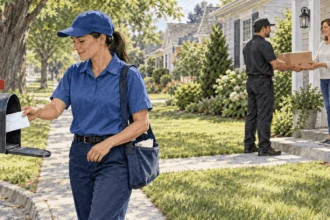
The Role of USPS in America: Beyond Just Delivering Mail

GovFacts

Last updated 1 week ago. Our resources are updated regularly but please keep in mind that links, programs, policies, and contact information do change.

The United States Postal Service (USPS) is an enduring American institution, central to the nation’s communications and commerce. Created over two centuries ago and enshrined in the Constitution, the USPS has evolved from a colonial mail system into a modern logistics network that delivers to over 160 million addresses nationwide.

Historical Background

The origins of the USPS trace back to the founding of the United States. In 1775, during the Second Continental Congress, Benjamin Franklin was appointed the first Postmaster General, charged with establishing a reliable mail system for the fledgling nation. The Founders recognized that a robust postal network was critical to the nation’s welfare, enabling communication among military commanders, elected officials, and citizens. This early postal system allowed newspapers and information to circulate, helping knit together the colonies and facilitate democratic discourse.

After the U.S. Constitution was adopted, Congress formally cemented its authority over mail. Article I, Section 8 of the Constitution – often called the Postal Clause – gave Congress the power “to establish Post Offices and post Roads.” Using this power, Congress passed the Postal Service Act of 1792 under President George Washington, turning the postal service into a permanent government fixture. This law expanded the mail network, set privacy protections (opening someone’s mail became a crime), and guaranteed low rates for newspapers, affirming the mail’s role in supporting free press and informed citizenry.

Throughout the 19th century, the U.S. postal system grew alongside the nation. Congress expanded postal routes westward as the frontier advanced. Key innovations improved access: in the mid-1800s postage rates were simplified and reduced, and by late 1800s home delivery was introduced – first in cities, then via Rural Free Delivery (RFD) to farms and remote communities. No longer did residents have to travel miles to a post office; mail would come to them. In 1913, the Post Office started Parcel Post service, enabling affordable package delivery nationwide and fueling the rise of mail-order businesses (a boon especially to rural Americans).

Over time the Post Office Department became a massive operation and a cabinet-level agency. A major turning point came with the Postal Reorganization Act of 1970, passed after a national postal worker strike. This law transformed the Post Office Department into the United States Postal Service, an independent establishment of the executive branch. The USPS began operations in 1971 with a mandate to be run more like a business – “a basic and fundamental service” to be provided to all people, “authorized by the Constitution, created by Act of Congress, and supported by the people,” as the law proclaimed. It was required to provide “prompt, reliable, and efficient” mail service to all communities while funding itself through its own revenue. Postal workers won the right to collectively bargain, and direct federal subsidies were largely ended, meaning USPS had to break even on postage and service fees.

The Postal Service’s mission of universal service has remained constant even as technology and society changed. In the 21st century, the USPS still stands as the nation’s oldest and most expansive communications network, connecting every corner of the country. Its historical evolution – from horse-and-rider mail routes and post riders to railroads, airmail, and now digital tracking – reflects the broader development of America. Despite the rise of telephones, email, and the internet, the Postal Service continues to fulfill its constitutional role of uniting the nation through secure, reliable communication.

Core Functions and Services

The USPS’s core function is universal mail delivery – the obligation to deliver mail to every address in America, no matter how remote, at a uniform affordable rate. It is the only service that reaches all households, currently serving nearly 167 million homes, businesses, and P.O. boxes across urban cities, suburbs, and rural towns. Six days a week (and sometimes seven, during peaks or for packages), postal workers fan out by foot, vehicle, boat, or even mule in the Grand Canyon, to fulfill this universal service mandate. This public service commitment ensures that a letter can be sent from any U.S. resident to any other for just the price of a stamp, and that packages can be delivered even to rural farms or Alaskan villages that private couriers might not routinely serve.

What services does USPS provide in modern times? Key roles and offerings include:

  • Mail Delivery (First-Class and Marketing Mail) – Carrying letters, bills, greeting cards, and advertising mail (flyers, catalogs, etc.) nationwide. USPS handles an enormous volume of paper mail: in 2023 it processed about 318 million mail pieces per day, including personal and business correspondence and bulk mailings. Despite the shift to digital communication, tens of billions of mail pieces (letters, statements, invitations, magazines) still flow through USPS each year, sustaining communications and commerce. Notably, the Postal Service is required by law to deliver flat-rate First-Class Mail to all regions at the same postage price, which keeps mail service equitable and accessible.
  • Package and Parcel Logistics – Handling the shipping of packages for consumers and e-commerce. With the boom in online shopping, USPS has become an e-commerce delivery powerhouse, moving everything from small parcels to large boxes. It delivers packages for retail customers and also partners with private carriers for “last-mile” delivery in some areas (for example, FedEx and UPS sometimes rely on USPS to carry parcels the final distance to remote addresses). On average USPS now delivers over 23 million packages each day. In 2019, shipping and package services accounted for only about 4.3% of total mail pieces but generated 32% of USPS’s revenue, reflecting the higher value of parcel delivery. Package volume has doubled over the past decade, rising to roughly 7+ billion parcels delivered annually as of the early 2020s. The Postal Service has even expanded to Sunday deliveries in many areas to accommodate package demand, and during the COVID-19 pandemic it delivered vital goods like medications and test kits to households.
  • Post Offices and Retail Services – USPS operates about 31,000 post offices and retail outlets across the country, providing communities with access to postal services. At local post offices, customers can buy postage, ship packages, and use services like certified mail. USPS also offers P.O. boxes for rent, money orders, and even partners with the State Department to accept passport applications at many locations. In rural towns, the post office often serves as a community hub – sometimes the only place to access government services or retail in remote areas. (Many rural post offices are protected by Congress from closure due to their importance, even if they operate at a deficit.)
  • Serving Rural Communities – A critical aspect of USPS’s role is serving sparsely populated and rural regions that might be unprofitable for private delivery firms. By law, USPS must provide “universal service” at uniform rates, which effectively subsidizes rural delivery with revenue from more efficient urban routes. This ensures that a farmer in a remote area can receive mail-order goods and send letters just as easily as someone in a city. In fact, rural Americans often depend on USPS not just for mail but for essential needs: for example, many lack broadband internet (over 14.5 million rural residents have no high-speed internet) and thus rely on mail for communication and bill payments. Roughly 18% of Americans still pay their bills by mail instead of online, and about 20% of adults receive prescription medications by mail for convenience or due to distance from pharmacies. The Postal Service is literally a lifeline in these areas, delivering prescription drugs, election ballots, benefit checks, and news publications to people who might otherwise be cut off. (Indeed, rural newspapers benefit from special postal rates to reach subscribers.) In short, USPS remains an essential public service in rural America, where private alternatives are scarce or costly.
  • Additional Government Services – USPS plays a role in civic and government functions. It delivers absentee ballots and election mail, helping enable vote-by-mail in many states. It distributes tax forms and census materials. The Postal Service’s law enforcement arm, the U.S. Postal Inspection Service, combats mail fraud and safeguards the mail system. And USPS has infrastructure for emergency situations – for instance, a legal obligation to deliver government communications in national emergencies. There are also ongoing discussions about leveraging post offices for services like basic banking (postal money transfers or savings accounts) to serve unbanked populations, a concept known as postal banking. While not a core function yet, it illustrates how policymakers see USPS’s extensive network as a platform for additional public services.

Financial and Operational Challenges

Despite its vital role, the USPS in modern times faces significant financial and operational challenges. The Postal Service has struggled for years to balance its budget and adapt to changing market conditions, leading the Government Accountability Office (GAO) to label USPS’s finances a “high-risk” area since 2009. Several major factors contribute to these challenges:

  • Declining Mail Volume in the Digital Age: One of the biggest challenges is the sharp decline in traditional mail (first-class letters) due to electronic communication. USPS’s most profitable product – first-class stamped mail – has been steadily shrinking. After peaking in 2001, first-class mail volume had declined by 43% by 2017, as Americans and businesses increasingly shifted to email, online bill pay, and digital documents. The trend continued into the 2020s: total mail pieces delivered fell from about 207 billion in 2000 to 142.6 billion in 2019 (a 31% drop), and the decline accelerated during the COVID-19 pandemic when businesses cut back advertising mail. This erosion of mail volume cuts deeply into USPS revenue, since first-class letters historically cross-subsidized other services. The agency delivered fewer personal letters and paper bills each year, even as the number of delivery points keeps growing by roughly 1 to 2 million new addresses annually (new homes and businesses that still must be served). In short, USPS must service more addresses with less mail per address – a tough financial equation.
  • Growing Package Demand – But Intense Competition: On the flip side, package delivery has surged with e-commerce, and USPS has seen double-digit growth in its Shipping and Packages business. Package volume jumped nearly 20% in 2020 alone (an increase of 1.2 billion parcels) due to the pandemic-driven online shopping boom. While this growth is a lifeline (bringing in new revenue), it also pits USPS in fierce competition with UPS, FedEx, and Amazon’s own delivery network. Packages are heavier and more labor-intensive to handle than letters, and the USPS network had to adjust (for example, installing new package sorting equipment and delivering on Sundays in many places). Additionally, some critics argue USPS’s package rates are low and implicitly subsidized by its letter monopoly, though postal officials and many analysts dispute this. The bottom line: packages offer opportunity, but the Postal Service must invest to capture e-commerce business and fend off competitors, all while maintaining its universal obligation.
  • Legal Funding Constraints and the Prefunding Mandate: Unlike private companies, USPS is constrained by laws in how it manages its finances. Notably, a 2006 law – the Postal Accountability and Enhancement Act (PAEA) – imposed an unprecedented mandate that USPS pre-fund retiree health benefits far into the future. This required the Postal Service to pay billions of dollars annually into a fund for future retiree health insurance, something no other agency or business was required to do. The goal was to ensure retiree benefits were secure, but in practice it placed an onerous financial burden on USPS. From 2007 onward, these huge payments (about $5.5 billion per year) drove the Postal Service into the red; they accounted for 84% of USPS’s losses between 2007 and 2019, effectively turning what might have been small operating profits into large paper losses. In fact, from 2013 to 2018, the Postal Service’s losses were entirely due to this prefunding requirement – without it, USPS would have seen a modest profit in those years. The mandate drained USPS’s cash and forced it to max out its borrowing from the U.S. Treasury, leaving little capital for modernization. This issue became a poster child for USPS’s financial woes, with calls for Congress to repeal the prefunding rule.
  • Mounting Debt and Persistent Losses: Year after year of losses have accumulated. The USPS has not recorded a net profit since 2006. By 2020, it had reported roughly $83 billion in cumulative losses since that time (largely due to the prefunding expense, unpaid obligations, and declining mail revenue). It also defaulted on tens of billions in payments into the retiree funds, and had amassed about $11 billion in debt to the Treasury by 2020. Even after skipping some payments, the losses continued – USPS reported a $9.5 billion net loss in fiscal year 2023, for example. These ongoing deficits led the agency to the brink of insolvency at times. In 2020, during the COVID crisis, USPS warned it could run out of operating cash without relief. (Congress gave a $10 billion emergency loan in the 2020 CARES Act to prop up the Postal Service.) The U.S. Senate in 2022 noted USPS had over $90 billion in losses since 2007 while “struggling with diminishing mail volumes and a growing number of addresses.”
  • High Fixed Costs (Labor and Network): USPS has a large unionized workforce (about 635,000 employees as of 2019, down from a peak of 900,000 in 1999) and operates thousands of facilities. About 75–80% of USPS expenses are labor costs – wages, benefits, and pensions. By law, postal workers participate in federal retirement and healthcare programs, and they enjoy decent pay and job protections through union contracts. While an experienced workforce is an asset, it also means USPS cannot shed costs quickly when revenue declines. Efforts have been made to reduce headcount (increasing part-time “non-career” staff, offering early retirements, etc.), but labor remains a major cost center. Similarly, maintaining tens of thousands of post offices – even those in rural areas that operate at a loss or see only a few customers a day – is required by the political mandate of universal service. Many small post offices and delivery routes are not profitable, but USPS is not free to close offices or cut delivery days without Congress’s blessing. These fixed obligations make it hard to quickly right-size the network to save money.
  • Operational Challenges and Service Pressures: In recent years, USPS has faced operational strains that affected delivery performance. Aging equipment and vehicles (many mail trucks are over 30 years old) led to maintenance issues. In 2020, controversial cost-cutting measures by a new Postmaster General (like reducing overtime and removing high-speed mail sorting machines) were blamed for nationwide mail delays, sparking public outcry and even legal challenges before the presidential election. The pandemic also sickened many postal workers and temporarily disrupted service. While USPS delivery performance has since rebounded, it continues to juggle the mandate of speedy delivery with cost control. For example, in 2021 USPS adjusted its service standards, slowing down the delivery target for some first-class mail traveling long distances (from 2-3 days to 4-5 days), so that it could rely more on ground transportation and less on costly air transport. This trade-off saves money but tests customers’ patience. Balancing service quality, affordability, and efficiency is an ongoing challenge for USPS management.

In summary, the Postal Service’s financial crisis is the result of structural issues: a business model squeezed by declining letter revenue and rigid legal obligations, compounded by a congressionally imposed funding burden that saddled it with billions in debt. By the late 2010s, there was broad agreement that the status quo was unsustainable and that legislative reform was needed to put USPS on a stable path.

Policy and Legislative Considerations

The USPS is not a private company; it is a government-established entity governed by a web of laws and regulations. Understanding the Postal Service’s situation requires examining this policy framework – how Congress oversees USPS, what laws dictate its operations, and recent reforms.

Constitutional and Legal Status: The U.S. Postal Service is one of the few federal agencies explicitly authorized by the Constitution. As noted, the Postal Clause (Article I, Section 8) empowers Congress to establish post offices and postal roads. This constitutional grounding means USPS’s existence and public service obligation trace to the nation’s founding principles. Over the years, Congress has passed various Postal Acts to shape the system. The 1792 Act made the postal system a permanent government function. An 1872 law elevated the Post Office to a Cabinet department. The 1970 Postal Reorganization Act spun it off into today’s semi-independent USPS with a corporate-like structure. These laws establish that USPS must serve every community, operate efficiently, and cover its costs primarily through revenue, not taxes.

Crucially, unlike a purely private courier, USPS has legal monopolies designed to protect its revenue base so it can fulfill the universal service mission. By law, USPS has exclusive rights to carry letter mail and access mailboxes – private competitors cannot deliver letters to your mailbox. These Private Express Statutes date back to the 1800s, intended to prevent private companies from cherry-picking profitable urban mail routes and leaving only unprofitable rural routes to the government service. In exchange for this monopoly, USPS must follow extensive regulations on pricing and service. For example, it cannot arbitrarily raise postage rates; rate hikes for market-dominant products (like first-class mail) are reviewed by the Postal Regulatory Commission (PRC), an independent regulator, and historically were capped by inflation (although the PRC loosened this cap in recent years to allow larger increases to help revenues). The USPS also cannot enter new non-postal businesses without Congress’s approval – a restriction that has prevented it from, say, providing banking services or other commercial products that could generate income.

Governance and Oversight: USPS is led by a Postmaster General (PMG) as the CEO-equivalent, but the PMG is hired and overseen by a Board of Governors. The Board of Governors is like a board of directors and is mostly appointed by the President with Senate consent. This structure, created by the 1970 law, injects political oversight into USPS leadership. Day-to-day, USPS is supposed to be apolitical and self-sustaining, but in practice it is often at the center of political attention. Congress has an oversight role (through committees and through controlling certain aspects in appropriation bills), and interest groups from postal unions to mail-order businesses lobby on postal issues. For example, since 1983 Congress has inserted a yearly provision in appropriations requiring USPS to deliver mail six days a week – preventing the agency from cutting to five-day delivery. This six-day mandate became permanent in 2022 (see below). Congress also can block post office closures, as happened when USPS in the 2010s proposed closing low-traffic rural post offices to save money (local communities and lawmakers pushed back, and most stayed open). The result is that USPS must navigate not just market forces but also political forces, with many stakeholders in its decisions.

Postal Service Reform Act of 2022: After many years of debate, Congress passed a major bipartisan reform in 2022 to address USPS’s most pressing financial burdens. The Postal Service Reform Act (PSRA) of 2022 delivered several important changes:

  • Repeal of the Prefunding Mandate: The 2006 requirement to pre-fund retiree health benefits was eliminated. This immediately lifted a huge weight off USPS’s balance sheet. Going forward, USPS can return to the pay-as-you-go approach for retiree health care that other entities use. Wiping out the prefunding rule (and forgiving the unpaid billions related to it) was estimated to provide $50+ billion in financial relief over the next decade. This reform alone is expected to erase the majority of paper losses that USPS has been reporting.
  • Medicare Integration for Retirees: The law requires that future USPS retirees enroll in Medicare (the federal health program) when eligible, which most already do but now it’s mandated. Essentially, from 2025, postal retirees will use Medicare as their primary health coverage, reducing the cost borne by the USPS health benefit fund. This is projected to save USPS money by shifting some expenses to Medicare (note: postal employees have paid into Medicare through their careers). The Postal Service Health Benefits program will still provide supplemental coverage, but integrating with Medicare should lower USPS’s long-term healthcare liabilities.
  • Six-Day Delivery Requirement: The practice of delivering mail 6 days per week (Monday through Saturday) was formally written into law, making it a permanent requirement. Previously, USPS could technically have moved to five-day delivery, but Congress’s annual budget riders prevented it. Now the PSRA guarantees six-day delivery, reflecting bipartisan support for keeping Saturday mail service for the foreseeable future (since many constituencies, from rural communities to mail-dependent businesses, opposed any service reduction). This provision ensures USPS cannot cut delivery days as a cost-savings measure without further legislative change.
  • Service Performance Transparency: The law called for an online dashboard where USPS must regularly report on service performance metrics, so that the public and regulators can monitor delivery times by ZIP code area. This was in response to concerns about mail delays; it aims to increase accountability by making on-time delivery stats visible and encouraging improvements.
  • Other Provisions: The PSRA included various other measures, such as requiring the Postal Regulatory Commission to review postage rate policies, and shielding the PRC’s budget from some government shutdown impacts. It also allows USPS to partner more broadly with state and local governments to offer non-postal services (like fishing licenses or perhaps notary services) at post offices, as long as those partnerships don’t detract from postal business.

The 2022 reforms were a landmark reset for USPS. By removing the prefunding albatross and affirming six-day delivery, Congress effectively set USPS on more stable footing while maintaining its public service obligations. Postal management noted that with these changes and internal reforms, USPS should be able to “self-fund our operations and continue to deliver to 161 million addresses six days per week for decades to come.” Indeed, the Postmaster General said the legislative fixes, combined with USPS’s own 10-year strategic plan, could eliminate $160 billion in projected losses over ten years.

It’s worth noting that postal policy remains a balancing act between competing goals: profitability vs. public service, autonomy vs. oversight, innovation vs. tradition. Some have proposed more radical changes, such as privatizing the Postal Service or reducing the USPS monopoly to open more competition. While such ideas have been floated (even a Presidential task force in 2018 suggested examining privatization), they face heavy political opposition and legal hurdles. Any major structural change to USPS (beyond the reforms of 2022) would require congressional action. For now, lawmakers appear committed to keeping USPS as a public institution but with improved sustainability.

Modern Adaptations and Future Outlook

In the face of its challenges, the USPS has been actively adapting its operations and services to remain relevant and solvent in the 21st century. The agency’s leaders often point out that while technology is changing the way we communicate, it is also creating new opportunities for the Postal Service (particularly in e-commerce). Here are some key ways USPS is modernizing and what the future might hold:

Embracing E-Commerce and Packages: USPS has reoriented much of its network to handle the surge in package delivery. It has invested in package sorting machines, enlarged parcel capacity at hubs, and negotiated deals with major e-commerce players. In many areas, USPS now delivers packages 7 days a week, including Sundays for Amazon and holiday seasons for all. It introduced USPS Ground Advantage in 2023, a new simplified ground parcel service to better compete with UPS and FedEx on medium-speed deliveries. These efforts have paid off with growing package volumes – a bright spot that USPS is counting on for future revenue growth. The strategy is to capitalize on USPS’s strength in “last-mile” delivery: since postal carriers already go to every address, adding packages to the route is efficient. Going forward, the Postal Service aims to capture more market share in parcel delivery, especially for small-to-medium retailers and residential deliveries where its ubiquitous network gives it an edge. The challenge will be doing so profitably, as packages require competitive pricing and timely service to keep customers satisfied.

Digital Integration and Services: While USPS cannot replace email, it has found ways to complement the digital economy. One innovative offering is Informed Delivery, launched in 2017, which gives residential customers a digital preview (via email or app) of letter-sized mail headed their way each day. Over 60 million users have signed up for this service, bridging the physical-digital gap by allowing people to see scanned images of incoming mail and manage packages online. USPS has also enhanced its tracking systems – today virtually every package and even regular mail can be tracked in real time, a capability expected by e-commerce shippers and customers. On the marketing side, USPS promotes mail as part of omnichannel advertising, emphasizing that physical mail can complement email and digital ads for businesses (for instance, using targeted direct mail campaigns that tie into online marketing). Looking ahead, USPS may explore more digital services, such as secure email or digital identity verification, leveraging its trusted brand – though any expansion into non-mail services would require careful navigation of legal boundaries.

Operational Reforms and the 10-Year Plan: Postmaster General Louis DeJoy (appointed in 2020) launched a “Delivering for America” 10-year strategic plan in 2021, aimed at achieving financial stability and service excellence by 2030. This plan includes a variety of operational reforms:

  • Network Modernization: USPS is consolidating and upgrading its mail processing network. The plan involves investing in new equipment and creating more efficient sorting hubs that integrate mail and package processing. By redesigning its transportation routes and facilities, USPS hopes to reduce costs and improve reliability. For example, it is shifting more long-distance mail transport from airplanes to trucks/trains (since ground transport is cheaper), which required relaxing some delivery speed standards as noted earlier.
  • New Delivery Fleet: A major infusion of capital is going into replacing the Postal Service’s aging delivery vehicles. USPS has committed to acquiring 106,000 “Next Generation Delivery Vehicles” (NGDV) in the coming years, including 66,000 electric vehicles (EVs) as part of a push for a greener fleet. These new mail trucks, built by Oshkosh Defense, will gradually replace the iconic but old LLV trucks. The modern vehicles will have more cargo space (to handle packages), air conditioning, improved ergonomics and safety, and in the case of EVs, produce zero emissions. Deployment of the first NGDVs began in late 2023, with thousands more expected to hit the streets in 2024-2025. By 2028, USPS intends to have the majority of its delivery fleet electrified, significantly reducing fuel and maintenance costs over the long term. This is a historic infrastructure investment for USPS, made possible partly by the savings and flexibility gained from the 2022 reforms. It also aligns with broader federal goals to reduce carbon emissions.
  • Cost Reduction and New Revenue Streams: The Delivering for America plan projects cutting projected losses by tens of billions through a combination of cost savings and revenue enhancements. USPS has been aggressively raising postage rates (with approval from the PRC) above inflation in the past couple of years – for instance, the price of a First-Class stamp has been hiked multiple times annually since 2021. While higher rates risk volume loss, they immediately boost revenue to help close the budget gap. On the cost side, USPS is streamlining workforce overtime and improving efficiency with new technology (such as automated address sorting and robotics in warehouses). USPS is also piloting ways to generate income beyond traditional mail, like leasing space on its trucks for advertising or expanding its partnerships (for example, handling local deliveries for retailers through a service called USPS Connect). Every small advantage helps: USPS even sells branded merchandise (like USPS-themed apparel and collectibles) which bring in some funds and promote the brand.
  • Service Quality Commitments: Importantly, USPS leadership asserts that these changes will improve reliability. After some high-profile lapses, the focus is on meeting delivery standards consistently. The new plan pledges to restore the public’s trust by investing in the postal workforce (e.g. converting more part-time staff to career positions to reduce turnover) and by using data to address problem spots in delivery. The required public dashboard and regular reporting to Congress (as instituted by the 2022 law) mean USPS’s performance is under the microscope. So far, there are signs of improvement: on-time delivery statistics for first-class mail climbed back into the 90%-on-time range in late 2021 and 2022 after having dipped in 2020. Continued oversight will drive USPS to maintain or better those levels, even as it implements cost-cutting measures.

Looking toward the future, the USPS faces both uncertainty and opportunity. On one hand, mail volumes will likely continue to fall as generations grow up with digital communication, potentially requiring USPS to further downsize parts of its traditional mail infrastructure. On the other hand, the e-commerce boom is here to stay, and USPS is well-positioned to be a delivery backbone for the nation’s online shopping habits if it can remain competitive. The Postal Service’s unmatched network is an asset that no startup can easily replicate – every house, every day is a powerful platform. This has led some experts to suggest USPS could do even more, such as offering check-in services for the elderly during deliveries, expanding into financial services, or partnering to deliver groceries and other essentials. Pilot programs in a few locations are testing some of these concepts.

One looming question is whether the USPS can achieve long-term financial sustainability under the current model or if further reforms will be needed. The 2022 relief was a huge step, but USPS still forecasts billions in losses over the next decade (albeit much less than before). If the economy slows or if package competitors undercut USPS, it might put it back in a bind. Some have proposed giving USPS more freedom to act like a business – for instance, adjusting delivery frequency in low-demand areas, or closing redundant post offices – but such moves remain politically sensitive. Conversely, others argue USPS as a public service should be funded in part by taxpayer dollars, especially for the public good aspects like rural delivery and mail voting. So far, the prevailing policy is that USPS must sustain itself with earned revenue.

Public Perception and Support: One strong asset for USPS is the public’s goodwill. Surveys consistently rank the Postal Service as one of the most trusted and well-regarded federal institutions. In many ways, people care deeply about their mail service, as seen by the outcry when mail slowed in 2020. This public support has translated into bipartisan political backing for helping USPS (hence the 2022 law’s easy passage). It also means that drastic changes like privatization are unlikely in the near term – Americans appreciate the Postal Service’s role and generally want it to thrive. The challenge for USPS is leveraging that support to innovate carefully without eroding the public service that people value.

The United States Postal Service today remains a vital thread in the nation’s fabric, binding Americans together through the delivery of letters, packages, and services everywhere. It stands at a crossroads of old and new: steeped in history and mandated by law to serve all, yet needing to innovate and operate efficiently in a fast-paced, digital-centric world. Recent reforms and modernization efforts show that the USPS is not static – it is adapting to e-commerce, investing in technology, and streamlining its operations to meet current demands. The road ahead will require continued balancing of its unique public service mission with financial realities. If successful, the Postal Service will continue to connect the country – rain or shine – for generations to come, just as it has since the days of Benjamin Franklin.

Follow:
Our articles are created and edited using a mix of AI and human review. Learn more about our article development and editing process.We appreciate feedback from readers like you. If you want to suggest new topics or if you spot something that needs fixing, please contact us.