

Last Checked: November 24, 2026Next Check: December 10, 2026
- fna.usda.govcited ×37
- govinfo.govcited ×6
- ncdhhs.govcited ×2
- mass.govcited ×1
- pa.govcited ×1
- everycrsreport.comcited ×3
Last updated 11 seconds ago. Our resources are updated regularly but please keep in mind that links, programs, policies, and contact information do change.
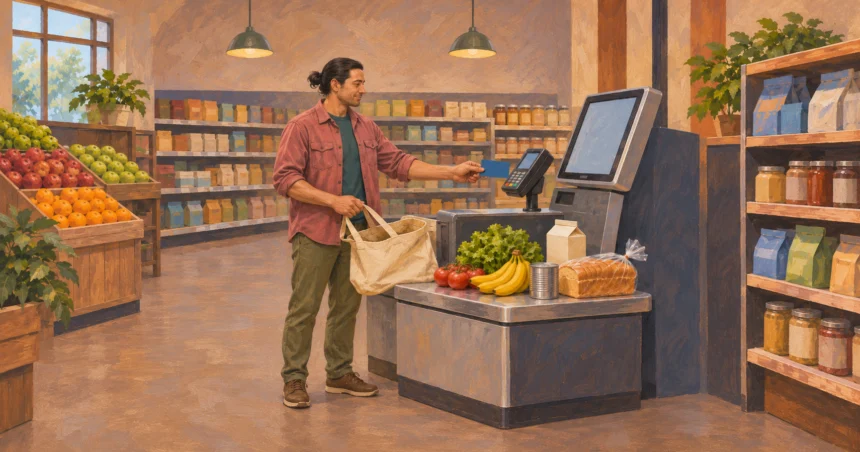
The Supplemental Nutrition Assistance Program, or SNAP, helps low-income households pay for groceries. Eligible households receive a monthly benefit on an electronic benefit transfer (EBT) card that works like a debit card at authorized food retailers.
The amount depends on who belongs to the household, its countable income and the expenses the program allows it to deduct. Understanding those steps explains why the maximum benefit advertised for a family can differ from the payment that family actually receives.
To apply, use the U.S. Department of Agriculture’s (USDA) SNAP State Directory to find the application and local office for the state where the household lives. The federal agency does not handle individual applications or provide their status.
Food help delivered through a state program
SNAP operates in all 50 states, the District of Columbia, Guam and the U.S. Virgin Islands. The Congressional Research Service’s November 2026 SNAP primer explains that state agencies determine household eligibility and issue benefits, while USDA oversees retailer authorization. Some states assign administration to county or other local governments.
According to that report, the federal government pays all SNAP benefit costs and, starting October 1, 2026, 25 percent of state administrative costs. Beginning in fiscal year 2028, some states will have to contribute toward benefits depending on their payment error rates, with later implementation possible for some states. Payment error rates measure how accurately states determine eligibility and benefits; they include both overpayments and underpayments and are not fraud rates.
An EBT card can carry both SNAP and separate cash assistance, but only the cash benefits can be withdrawn at an ATM. The grocery benefit is therefore a food budget with purchase rules, even when the same physical card also provides access to another program.
Who belongs in a SNAP household
SNAP generally groups people who live together and buy and prepare their meals together as one household. Spouses and most children under 22 living with their parents must be included together even if they buy and prepare meals separately.
A person age 60 or older who cannot buy and prepare food separately because of a permanent disability may qualify as a separate household with a spouse if the other residents’ income is no more than 165 percent of the poverty level. That exception matters when an older adult needs help preparing meals from the people providing a place to live.
People applying for SNAP must have or apply for a Social Security number. A household member without one can choose not to apply, but that person’s income and resources still count when the agency evaluates the remaining household members.
Income is only part of eligibility
Gross income is the income SNAP counts before deductions; net income is what remains after allowed deductions. Most households must meet both the gross-income and net-income limits, while a household with an elderly or disabled member generally needs to meet only the net-income limit.
For October 1, 2026, through September 30, 2027, the regular federal limits for a four-person household in the contiguous states and the District of Columbia are $3,575 in gross monthly income and $2,750 in net monthly income. The federal income limits are higher in Alaska and Hawaii.
The calculation deducts 20 percent of earned income, a standard household deduction and qualifying dependent-care costs needed for work, training or education. Elderly or disabled members can also deduct qualifying medical expenses above $35 a month that insurance or someone else does not pay. A paycheck and the income used in the benefit formula can consequently be different amounts.
Shelter costs have a separate calculation: eligible rent, mortgage and utility expenses above half of income after other deductions can produce an excess shelter deduction. For fiscal year 2027, the deduction is capped at $769 in the contiguous states and the District of Columbia unless the household has an elderly or disabled member. This makes both the household’s income and its qualifying expenses relevant to the result; rent is not simply subtracted dollar for dollar.
For the resource test, countable resources include cash and money in bank accounts. The regular resource limit is $3,000, or $4,750 when a member is at least 60 or disabled, under USDA’s fiscal year 2027 guidance. The home and lot and most retirement plans are among the resources excluded from that test.
Most states use broad-based categorical eligibility, which connects SNAP’s income and resource rules to eligibility for a noncash benefit funded through the Temporary Assistance for Needy Families (TANF) program or related state funding. That state option may allow more resources, but applicants must still meet nonfinancial requirements and have income low enough to receive a benefit. A household above a standard federal cutoff should therefore use its own state’s application rules rather than assume the national figure settles eligibility.
USDA’s November 10, 2026 proposal, “Supplemental Nutrition Assistance Program: Reforming Categorical Eligibility,” would narrow that route to households receiving TANF assistance under a more restrictive regulatory definition. The proposal describes the noncash-benefit route as part of current regulations. For categorical eligibility, USDA requested public comments by December 10, 2026; the notice directs readers to Regulations.gov for submission instructions.
Work, student and immigration rules
The general work rules ordinarily apply to people ages 16 through 59 who can work. They include registering for work, taking suitable work offered, participating in assigned employment or training activities and not voluntarily quitting or reducing hours below 30 a week without good reason. Exemptions include certain caregivers, people unable to work because of a physical or mental limitation, and people already working enough hours or meeting another program’s work requirements.
A separate rule limits some adults to three months of SNAP in a 36-month period without qualifying work or activities. To satisfy it, a person generally must work or participate in a qualifying program for 20 hours a week, averaged to 80 hours a month, or complete assigned workfare. Workfare means required public-service work as a condition of receiving the household’s normal benefit. Meeting an income test does not by itself satisfy this continuing participation condition.
USDA’s November 2026 explanation says the time limit now covers ages 18 through 64 unless an exception applies. Exceptions include physical or mental unfitness for employment, pregnancy, responsibility for a child under 14 and qualifying Native American categories specified in law. Approved geographic waivers can allow otherwise eligible residents to receive benefits without meeting this additional work requirement. Ask the state office which work rules apply and whether the household’s circumstances establish an exception.
USDA’s November 10, 2026 “Modification to Work Requirements for Able-Bodied Adults” is a proposed rule implementing the enacted law, with additional proposed changes to waiver requests and the definition of a homeless individual. For this work-rule proposal, USDA requested comments by December 10, 2026, through Regulations.gov or the other submission methods in its notice. The enacted time-limit requirements described above apply while USDA considers the proposal.
College students enrolled at least half-time face a separate eligibility rule and generally need a student exemption. One exemption is paid work of at least 20 hours a week; self-employed students must also earn at least the federal minimum wage multiplied by 20 hours each week. Others include qualifying work-study, on-the-job training, caring for a child under six, or caring for a child ages six through 11 without enough child care to attend school and meet the work or work-study condition. A single parent enrolled full-time and caring for a child under 12 also qualifies for a student exemption. Receiving most meals through a campus meal plan makes a student ineligible, whether the plan is mandatory or optional.
Immigration status also matters: North Carolina’s explanation of the federal law identifies eligible categories including lawful permanent residents, Cuban and Haitian entrants, and citizens of Micronesia, the Marshall Islands or Palau. Lawful permanent residents are also known as green-card holders. Lawful permanent residents generally face a five-year waiting period, with exceptions such as being under 18, being blind or disabled, or having enough qualifying work history. A person’s specific status and any waiting-period exception need to be checked together; lawful presence alone does not settle the question.
How the monthly amount is calculated
The monthly SNAP payment is called an allotment. The agency starts with the maximum allotment for the household’s size, then subtracts 30 percent of its net monthly income. The deductions described above therefore affect more than eligibility: they also affect how much the household receives.
USDA lists a maximum monthly benefit of $306 for one person, $562 for two, $808 for three and $1,023 for four in the contiguous states and the District of Columbia. These figures belong to the October 2026 through September 2027 benefit year, and the maximum is the starting point for the income calculation rather than a guaranteed payment. Alaska, Hawaii, Guam and the U.S. Virgin Islands have different maximum allotments.
Those maximums are based on USDA’s Thrifty Food Plan, an estimate of the cost of nutritious, low-cost meals for a four-person household. The adjustment for household size gives smaller households somewhat more per person and larger households somewhat less per person than the four-person standard.
The Congressional Research Service reports a $25 minimum monthly benefit for eligible one- and two-person households in the contiguous states and the District of Columbia in fiscal year 2027. The first month’s benefit is adjusted to reflect the application date, and late recertification can also reduce the first month’s benefit in a new certification period.
Applying and keeping a case current
Federal application rules allow a household to begin filing with a name, address and signature, whether the state uses paper or an electronic system. Filing starts the process; the household must still complete the interview and provide supporting information to establish eligibility. USDA says the interview is usually by telephone or in person and applicants must provide verification of the information they give.
Document lists come from the state agency: Massachusetts, for example, lists pay stubs or an employer letter for earnings, and a lease, rent receipt or utility bill for residency. Its guidance also lists housing, dependent-care and qualifying medical expense records that may increase benefits. Federal rules require the agency to give applicants a verification notice explaining document examples and the periods they must cover. The agency must help a cooperating household obtain required verification, so tell the office when a requested record is difficult to get.
Most applications should receive an eligibility decision within 30 days, with benefits for qualifying households based on the application date. Expedited processing can provide benefits within seven days for qualifying households in urgent need. One example is a household whose combined monthly gross income and liquid resources are less than its monthly rent or mortgage and utility expenses. Liquid resources include cash on hand and money in checking or savings accounts. Ask the local office to assess expedited eligibility when applying if food is urgently needed.
An approval notice states the certification period, meaning the period for which the household is approved. Before it ends, the agency sends instructions for recertification to continue benefits. Reporting systems differ: the agency tells recipients which changes to report and when, and households may have to repay excess benefits caused by missing required information.
A household that disagrees with a decision can request a fair hearing within 90 days of the local office’s decision, by phone, in writing or in person. A hearing examines whether the rules were applied correctly; it does not change the rules themselves.
Using SNAP at the grocery store
Ordinary eligible purchases include fruits and vegetables, meat, fish, dairy products, breads and cereals, plus seeds and plants that produce food. Alcohol, tobacco, medicines, supplements, pet food, cleaning products and other nonfood items are excluded. Food that is hot when sold is ordinarily excluded too.
State Restaurant Meals Programs provide an exception for certain recipients who cannot prepare meals or lack permanent housing for storing and preparing food. The restaurant must participate in the state’s program and be authorized to accept SNAP.
USDA’s food-restriction waiver directory lists state-specific restrictions on items such as soda and candy, with different implementation dates and notices where implementation has been stopped. Check the state entry and its linked agency information before assuming an item permitted elsewhere is eligible locally. To find stores, enter an address or ZIP code in USDA’s SNAP Retailer Locator for nearby authorized retailers and directions.
Online grocery purchases also require a separate way to pay delivery charges, tips and other ineligible costs, as Pennsylvania’s official SNAP purchasing guidance explains. A store receipt shows the SNAP purchase amount and the benefits remaining in the account.
Keep the card number and PIN private, cover the keypad at checkout and check the account for unfamiliar charges. USDA says state agencies and EBT processors will never call or text asking for those credentials. If suspicious transactions appear, change the PIN promptly and report the activity to the local SNAP office.