- en.wikipedia.orgcited ×2
- acslaw.orgcited ×1
- americanprogress.orgcited ×1
- brennancenter.orgcited ×1
- constitutioncenter.orgcited ×1
- protectdemocracy.orgcited ×1
- youtube.comcited ×1
- axios.comcited ×1
- ballardspahr.comcited ×1
- court-martial.comcited ×1
- govexec.comcited ×1
- supreme.justia.comcited ×1
Last updated 8 months ago. Our resources are updated regularly but please keep in mind that links, programs, policies, and contact information do change.
A federal grand jury in Washington, D.C. refused to charge six Democratic lawmakers with a crime on February 11, 2026, despite prosecutors arguing they had committed a crime under federal law by releasing a clip about military personnel’s legal rights. In 2013, federal grand juries declined charges in five of 196,969 cases. When citizens serving on grand juries start rejecting prosecutions at rates that would have been statistically impossible a few years ago, something fundamental has shifted in how Americans understand their role in checking government power.
The six lawmakers, Senators Elissa Slotkin and Mark Kelly along with Representatives Jason Crow, Chrissy Houlahan, Chris Deluzio, and Maggie Goodlander, had recorded a 90-second clip in November 2025. In it, they stated what military law has established for decades: service members can refuse illegal orders, and they must refuse them.
The Prosecution That Shouldn’t Have Existed
U.S. Attorney Jeanine Pirro, the former Fox News personality Trump appointed to lead the D.C. federal prosecutor’s office, directed her team to present the case to a grand jury. They argued the lawmakers had violated a federal law prohibiting interference with military loyalty and discipline.
The clip stated: “Our laws are clear. You can refuse illegal orders. You must refuse illegal orders. No one has to carry out orders that violate the law or our Constitution.”
Military law clearly states that service members have a duty to refuse clearly illegal orders. This principle comes from the Nuremberg trials after World War II, where Nazi officers couldn’t claim “I was following orders.” Military training emphasizes this obligation repeatedly.
Defense Secretary Pete Hegseth acknowledged this when asked about the clip, confirming that military personnel are taught not to follow unlawful orders. In interviews after the jury’s decision, Senator Kelly argued that if the lawmakers’ statements were a federal crime, then Hegseth, every military lawyer and instructor, and the news networks that reported on the recording would have to face prosecution too.
Federal prosecutors had asked citizens to indict elected officials for statements about constitutional law, made in a public debate about military policy. The jury said no.
Why Grand Juries Almost Never Say No
Federal prosecutors enjoy near-total control of the jury process—they present evidence without any judge or defense attorney present, they decide which witnesses to call, they frame the legal standards. The proceedings happen in secret. For decades, this imbalance produced a rubber stamp.
Former New York Chief Judge Sol Wachtler famously observed that prosecutors could charge a ham sandwich. The data proved him right: a 99.9975% approval rate meant the jury had become a rubber stamp instead of checking government power.
But something changed in recent months. Juries in Washington, Los Angeles, Chicago, and other cities started rejecting prosecutions with historically unusual frequency. A D.C. jury refused to charge someone for throwing a sandwich at a federal officer. Los Angeles juries declined to charge protesters arrested during immigration enforcement actions. Chicago jurors rejected charges against a couple accused of assaulting federal agents outside an ICE facility.
The pattern suggests ordinary Americans serving on these panels have become more willing to refuse the charges prosecutors bring them.
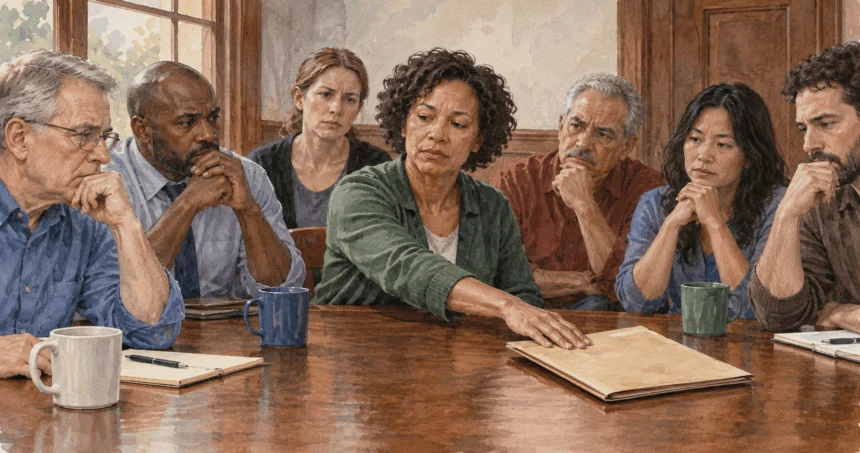
The jury was reasserting its original constitutional role: serving as citizens’ check against arbitrary government power. This occurred without organized instruction, without legal counsel to guide them, without even knowing whether their refusal would prevent further proceedings.
How We Got Here
Nixon demanded that Special Prosecutor Archibald Cox be fired because Cox wouldn’t stop investigating Watergate. Attorney General Elliot Richardson refused, and Deputy Attorney General William Ruckelshaus resigned rather than comply.
In what became known as the Saturday Night Massacre, Nixon fired Watergate Special Prosecutor Archibald Cox.
The attorney general, though appointed by the president, was understood to occupy a unique position: a cabinet member but also someone who has a duty to serve the American people and justice rather than merely presidential whim.
The Pattern of Targeting
“We can’t delay any longer, it’s killing our reputation and credibility,” Trump posted publicly in September 2025, addressing Attorney General Pam Bondi. “They impeached me twice, and indicted me (5 times!), OVER NOTHING. JUSTICE MUST BE SERVED, NOW!!!”
The administration took away the Public Integrity Section’s power to independently review cases. Political appointees took control of sensitive cases. Six career prosecutors from Minneapolis resigned. More than 200 former Justice Department employees, all from the Civil Rights Division, said they were pushed out by political leadership and that the new leadership was abandoning civil rights protections.
The administration’s actions extended beyond the six members of Congress. Prosecutors also sought to charge James on bank fraud allegations. FBI agents searched the home of former National Security Advisor John Bolton. The administration investigated former intelligence officials who had signed a statement questioning reporting about Hunter Biden’s laptop.
The case proceeded, placed in the hands of Jeanine Pirro, a political appointee who had previously worked as a television personality.
The First Amendment Problem
The Supreme Court ruled that the government can only criminalize speech if it directly calls for immediate illegal action and is likely to cause it. The speech must be directed at producing imminent action, and the likelihood of that action must be substantial.
A 90-second clip encouraging military personnel to understand their legal rights, released in the context of public debate about military policy, falls nowhere near this demanding legal standard. If this recording constituted sedition, then any public criticism of military policy would be prosecutable, rendering the Supreme Court precedent meaningless and chilling core political speech.
The members of Congress had released the recording in response to what they characterized as unconstitutional military actions by the Trump administration—including drone strikes on alleged drug-smuggling vessels that they believed lacked legal authorization. They crafted the message as political communication, urging military personnel to understand their rights in the context of their concerns about executive overreach.
This political dimension falls squarely within the First Amendment’s strongest protections. Political speech by elected officials receives strong constitutional protection, particularly when those officials speak on matters of constitutional significance.
The Constitution protects members of Congress from being prosecuted for what they say in Congress. While this rule originally applied only to speeches on the House or Senate floor, courts have expanded it to include other things members of Congress do as part of their job.
What Remains of the Guardrails
According to the Brennan Center, the Trump administration removed the Justice Department’s internal rules that were supposed to prevent prosecutors from acting unethically.
The formal protections still exist, but they’ve been seriously weakened. The Public Integrity Section no longer has real power. Political appointees have taken control of sensitive cases. Career prosecutors have resigned rather than participate in what they understood as political prosecutions.
Yet some institutional resistance remains. The jury’s refusal to charge the lawmakers suggests that at least some safeguards remain partially functional. The citizens on that jury made their own decision, even though prosecutors were pushing them and it was clear the administration wanted them to charge the lawmakers. They did so without organized instruction, without legal counsel to guide them, without even knowing whether their refusal would prevent further proceedings.
The judicial system also demonstrated some capacity to resist. Federal Judge Richard J. Leon ordered Defense Secretary Hegseth to stop threatening to punish Senator Kelly for his participation in the recording. Judge Leon rejected the administration’s argument that it could punish retired military officers for their political speech, ruling that the First Amendment protects retired military officers.
The Constitutional Design Question
The people who wrote the Constitution knew that presidents could use law enforcement to punish their political enemies. They divided power between branches so no one person could become too powerful. But the Framers’ solution works only when the branches assert their independence.
Presidents can dismiss prosecutors, reorganize the Justice Department, remove career officials who resist, and install loyalists. Congress can’t stop the president except through impeachment. Courts can block unconstitutional prosecutions, but only after someone has already been charged and gone through trial. Citizens on juries can refuse to authorize charges, but most don’t know they have this power, and prosecutors can bring the same case before a different jury.
The attorney general has two conflicting jobs: following the president’s orders and serving justice. These have never been fully balanced. When everyone agreed that laws should apply equally to everyone, the conflict stayed under control. When presidents tried to control prosecutors, the conflict became a crisis.
The case of the six Democratic members of Congress illustrates this constitutional fragility.
What Happens Next
This case was one of several investigations and prosecutions of the president’s political opponents.
Protect Democracy has documented dozens of cases where, by the group’s account, the administration prosecuted people because they opposed Trump or investigated him.
The jury’s refusal to charge the lawmakers is encouraging, but it’s not a strong safeguard. Juries declined charges in a handful of recent high-profile cases, but these rejections remain exceptions to the historical norm. If prosecutors bring the case before a different jury, they might succeed next time.
Many politically motivated prosecutions will go to trial before judges throw them out, meaning defendants must endure the trauma and expense of criminal prosecution even if ultimately vindicated. Many career prosecutors will quit rather than take part in unfair prosecutions, but when they leave, the Justice Department becomes worse at prosecuting actual crimes. Many of the system’s protections have been weakened, and it will be hard to fix them after this administration leaves.
Can Democracy Survive This?
The jury’s refusal to charge six Democratic members of Congress over their political speech shows that a grand jury can still act as a check when other protections are weakened.
It also suggests that some resistance remains possible. Citizens on juries can refuse to go along with unfair prosecutions, even without knowing they have this power. Judges can defend constitutional rights despite executive pressure. Lawyers and law schools can document abuse and remind people what fair prosecution looks like.
This case shows that what happens when a president tries to prosecute political enemies isn’t already decided. What happens depends on whether judges, juries, and prosecutors stand up for fairness instead of following the president’s orders.
The jury’s quiet refusal to charge the lawmakers is one example of citizens declining to go along with prosecutors. Whether this becomes common, or stays a rare exception, depends on what Americans do next.
When prosecutors asked citizens to indict elected officials for their statements about constitutional law, the citizens said no. They refused even though the government controlled every aspect of the process, political pressure suggested compliance, and they had no organized support or legal guidance.
The question now is whether that kind of resistance can scale. Whether enough judges, enough prosecutors, enough citizens will assert independence to maintain what remains of the rule of law. The answer will determine whether American democracy survives this moment or whether the weaponization of justice becomes the new normal.