- justice.gov3 links
- uscourts.gov2 links
- ada.gov
- pacer.uscourts.gov
- law.cornell.edu10 links
- supreme.justia.com4 links
Last updated 3 weeks ago. Our resources are updated regularly but please keep in mind that links, programs, policies, and contact information do change.
The U.S. criminal justice system follows a series of specific steps, with indictment and arraignment being two of the earliest and most important. Though you’ve likely heard these terms in news reports or crime shows, their distinct roles and significance aren’t always clear.
An indictment involves a grand jury determining if there’s enough evidence to formally charge someone with a serious crime. An arraignment is the defendant’s first formal court appearance to hear those charges and enter a plea.
- The Indictment: How Serious Federal Charges Begin
- The Arraignment: Formally Facing the Charges
- Arraignment vs. Indictment: Key Differences
- The “Information”: Alternative Way to Initiate Charges
- The Criminal Justice Timeline: Putting It All Together
- State vs. Federal Procedures: Important Variations
- Why This Matters to You
- Further Information
These aren’t just legal technicalities. They represent core principles of due process, designed to protect individuals from unchecked governmental power and arbitrary prosecution.
The Indictment: How Serious Federal Charges Begin
What is an Indictment?
An indictment is a formal written accusation issued by a grand jury stating there’s enough evidence, known as probable cause, to believe someone committed a serious crime, typically a felony. It’s not a finding of guilt, but a determination that sufficient evidence exists to warrant bringing the accused to trial.
When someone is indicted, they receive formal notice that authorities believe they committed a crime. Think of an indictment as the “gateway to a trial.”
The indictment process ensures serious criminal charges aren’t brought by the government without review by an independent group of citizens, the grand jury. This review acts as a check against arbitrary prosecutions.
The requirement for indictments in serious federal criminal cases comes from the Fifth Amendment to the U.S. Constitution. The amendment’s Grand Jury Clause states: “No person shall be held to answer for a capital, or otherwise infamous crime, unless on a presentment or indictment of a Grand Jury…” This applies to federal felony cases, crimes punishable by death or imprisonment for more than one year.
While the Fifth Amendment also mentions “presentment” (an accusation initiated by the grand jury itself), this term is largely obsolete in modern federal criminal procedure. Indictment is now the standard method for initiating serious federal charges.
The Grand Jury: A Citizen’s Check or Prosecutor’s Tool?
The grand jury plays a critical role in the criminal justice system. Understanding its composition, function, and governing rules is key to grasping the indictment process.
Composition and Function
In the federal system, a grand jury consists of 16 to 23 citizens summoned by the court when public interest requires it, as outlined in Federal Rule of Criminal Procedure 6(a)(1). These citizens review evidence presented by the prosecutor to determine if probable cause exists to believe a crime was committed and the accused committed it.
For an indictment to be issued (known as a “true bill”), at least 12 grand jurors must agree. The foreperson of the grand jury, appointed by the court, signs all indictments and records the number of jurors concurring.
Grand juries typically serve for up to 18 months, which can be extended by the court for up to an additional 6 months if it’s in the public interest. During their term, they often consider multiple cases.
The Prosecutor’s Role
The prosecutor, typically an Assistant U.S. Attorney in federal cases, plays a central role in grand jury proceedings. They present evidence, call witnesses to testify, and outline the case to the grand jurors.
According to the Department of Justice’s Justice Manual, the prosecutor’s responsibility is to advise the grand jury on the law and present evidence fairly and impartially. This includes an obligation to present or disclose substantial evidence that directly negates the guilt of a subject before seeking an indictment.
Secrecy of Proceedings
Grand jury proceedings are not open to the public. Federal Rule of Criminal Procedure 6(e) mandates this secrecy for several important reasons:
- To prevent suspects from fleeing or tampering with witnesses or evidence
- To encourage witnesses to testify truthfully without fear of retaliation
- To protect the reputations of individuals investigated but not indicted
- To ensure the grand jury can deliberate freely without outside pressure
Only authorized individuals may be present while the grand jury is in session and hearing evidence. These include government attorneys, the witness being questioned, interpreters if needed, and a court reporter.
All grand jury proceedings (except deliberations and voting) must be recorded, usually by a court reporter or recording device. Recording helps ensure defendants can impeach witnesses with prior inconsistent statements, promotes trustworthy testimony, acts as a restraint on potential prosecutorial abuses, and can support the prosecution’s case at trial.
Defendant’s Rights in Grand Jury Proceedings
While the Fifth Amendment’s Grand Jury Clause protects defendants by ensuring citizen review before serious charges are brought, defendants have limited direct participation rights during these proceedings. They generally don’t have the right to be present, present their own evidence, or cross-examine witnesses.
Witnesses, including investigation targets, can’t have their attorney present inside the grand jury room. However, Department of Justice policy permits witnesses to consult with counsel outside the room if they wish.
Two landmark Supreme Court cases define the landscape of grand jury proceedings:
Costello v. United States (350 U.S. 359, 1956): The Supreme Court held that an indictment is valid even if based exclusively on hearsay evidence. The Court reasoned that the Fifth Amendment doesn’t prescribe specific types of evidence for grand juries. This gives federal prosecutors considerable flexibility and limits a defendant’s ability to challenge an indictment based on the nature of that evidence.
United States v. Mandujano (425 U.S. 564, 1976): The Court ruled that Miranda warnings aren’t required for grand jury witnesses. False statements to a grand jury can be used in a subsequent perjury prosecution, even without Miranda warnings. Witnesses must testify truthfully or risk perjury charges, and they cannot use the absence of Miranda warnings as a shield against prosecution for false testimony.
The grand jury process, while intended as a protective measure against unwarranted prosecution, gives defendants few participatory rights. The prosecutor largely controls information flow and legal guidance to grand jurors. This makes the “probable cause” determination heavily reliant on the prosecutor’s presentation and the diligence of the grand jurors themselves.
Contents of an Indictment
For an indictment to be legally sufficient, Federal Rule of Criminal Procedure 7(c)(1) requires specific content. The indictment:
- Must be a “plain, concise, and definite written statement of the essential facts constituting the offense charged”
- Must be signed by a government attorney
- Must state for each count the citation of the law the defendant allegedly violated
- Must provide sufficient detail to inform the defendant of the charges and allow them to prepare a defense
- Must contain enough specificity that the defendant could later plead “double jeopardy” if prosecuted again for the same offense
An error in the legal citation, or omission of a citation, isn’t grounds to dismiss the indictment unless the defendant was misled and prejudiced in their defense.
When is an Indictment Required?
In the federal system, a grand jury indictment is legally required for any offense punishable by death or imprisonment for more than one year, all federal felonies. This requirement can be waived by the defendant.
For misdemeanors (offenses punishable by imprisonment for one year or less), prosecutors may proceed by indictment or, more commonly, by a document called an “Information.”
While many states use grand juries, the U.S. Supreme Court has interpreted the Constitution to mean that only the federal government must use grand juries for all felony crimes; states have more flexibility.
Sealed Indictments
Sometimes, after a grand jury votes to indict, the indictment is “sealed,” kept secret from the public and even from the person named in it. Federal Rule of Criminal Procedure 6(e)(4) allows a magistrate judge to order that an indictment be kept secret until the defendant is in custody or released pending trial.
The primary purposes of sealing an indictment are:
- To prevent the defendant from fleeing or hiding
- To prevent evidence destruction or witness tampering
- To protect ongoing investigations
- To ensure witness safety
- To help ensure a fair trial by preventing premature media coverage
A sealed indictment carries the same legal weight as an unsealed one. It’s typically unsealed once the defendant is arrested or makes their first court appearance.
When a Grand Jury Declines to Indict
If the grand jury doesn’t find probable cause to support charges (meaning at least 12 jurors don’t vote for indictment), it returns a “no bill” or “not a true bill.” In this situation:
- No indictment is issued
- The charges presented to that grand jury are typically dismissed
- If the defendant is in custody based on those potential charges, they should be released
A “no bill” isn’t the same as an acquittal (a finding of “not guilty” after trial). While charges could technically be refiled if new evidence emerges and the statute of limitations hasn’t expired, this is uncommon for non-high-profile cases.
The Arraignment: Formally Facing the Charges
Once formal charges have been initiated through a grand jury indictment or Information, the next significant step is the arraignment, a critical court hearing with several key purposes.
What is an Arraignment?
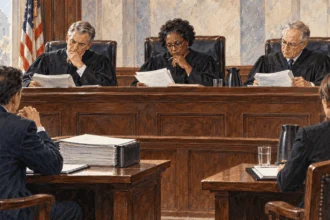
An arraignment is typically the defendant’s first formal appearance in court after an indictment or Information has been filed. It marks the official beginning of the criminal trial process.
The primary purposes of an arraignment are:
- To formally notify the defendant of the specific criminal charges filed against them
- To allow the defendant to enter a plea (guilty, not guilty, or in some jurisdictions, no contest)
- To address the defendant’s Sixth Amendment right to counsel and ensure legal representation
- To make decisions regarding bail or other conditions of pretrial release
When Does Arraignment Occur?
The timing of arraignment varies:
- If charges are initially filed via a criminal complaint, an arraignment may happen shortly after arrest, often combined with a bail hearing
- In the federal system, an “Initial Appearance” before a U.S. Magistrate Judge typically occurs within 48 to 72 hours of arrest for defendants in custody
- If a grand jury returns an indictment before an arrest, the arraignment will be the defendant’s first court appearance after arrest
- In many felony cases, arraignment is specifically scheduled after a grand jury returns an indictment
The time between indictment and arraignment varies based on whether it’s a federal or state case, the defendant’s custody status (in-custody defendants are usually arraigned more quickly), and court caseloads.
The Arraignment Hearing: Step-by-Step
Federal Rule of Criminal Procedure 10(a) dictates the core components of a federal arraignment:
- Conducted in Open Court: Arraignments are public proceedings to ensure the defendant experiences the formal impact of the charge, to allow the court to assess the defendant’s understanding, to facilitate effective legal counsel, and to promote public confidence in the judicial process.
- Ensuring Defendant Has a Copy of Charges: The court must make sure the defendant has received a copy of the indictment or Information.
- Reading of Charges: The indictment or Information is read aloud to the defendant, or the judge states the substance of the charges. The judge typically asks if the defendant understands the charges.
- Asking for a Plea: The defendant is formally asked to enter a plea.
Key Participants and Their Roles
Several key individuals participate in an arraignment:
The Judge (U.S. Magistrate Judge or U.S. District Judge):
- Presides over the hearing and ensures proper legal procedures
- Formally informs the defendant of charges and potential penalties
- Advises the defendant of constitutional rights
- Determines if the defendant has legal representation
- Accepts the defendant’s plea
- Makes decisions regarding bail or release conditions
- Sets dates for future court proceedings
In federal felony cases, initial appearances and arraignments are often conducted by U.S. Magistrate Judges. U.S. District Judges, appointed by the President and confirmed by the Senate for life terms, typically preside over felony trials and sentencing.
The Prosecutor:
- Represents the government
- Formally presents the charges to the court and defendant
- May make arguments regarding bail or release conditions
The Defense Attorney:
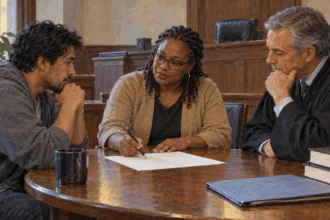
- Represents the defendant and protects their legal rights
- Explains charges, rights, potential consequences, and plea implications
- Advises the defendant on pleading
- May argue for lower bail or less restrictive release conditions
- May begin preliminary plea bargain discussions
- Ensures the defendant understands the proceedings
Defendant’s Rights at Arraignment
The arraignment is where several fundamental constitutional rights are formally recognized:
Right to Counsel (Sixth Amendment): Perhaps the most crucial right at arraignment. The Sixth Amendment guarantees the right to an attorney. If the defendant can’t afford one, the court must appoint counsel.
The landmark case Gideon v. Wainwright (372 U.S. 335, 1963) established that this right applies to indigent defendants in state felony cases. The Court reasoned that a fair trial can’t be assured if someone faces their accusers without a lawyer.
Arraignment is considered a “critical stage” where the right to counsel attaches because decisions made there (like the plea) can have irreversible consequences.
Earlier Supreme Court cases like Hamilton v. Alabama (368 U.S. 52, 1961) and White v. Maryland (373 U.S. 59, 1963) further established arraignment as a critical stage requiring counsel.
Right to Be Informed of Charges: The defendant has a constitutional right to be clearly informed of the specific accusations.
Right to Remain Silent (Fifth Amendment): The defendant can’t be compelled to make self-incriminating statements.
Other rights, such as the right to a jury trial, the right to confront witnesses, and the right to present evidence, are also fundamental protections that become more directly relevant during trial.
Entering a Plea: Options and Consequences
A central event at arraignment is the defendant’s plea. The common options are:
Guilty: A formal admission by the defendant that they committed the crime as charged.
Consequences: The defendant waives several constitutional rights, including the right to a jury trial, the right to confront accusers, and the right against self-incrimination. The case typically proceeds directly to sentencing, though sentencing may occur later. A guilty plea results in a criminal conviction.
Long-Term Implications: A conviction carries significant collateral consequences, including employment difficulties, problems obtaining professional licenses, housing barriers, loss of voting rights, and ineligibility for certain public benefits or educational opportunities. The National Inventory of Collateral Consequences of Conviction catalogs these restrictions.
Not Guilty: A formal denial of the charges.
Consequences: The defendant asserts innocence and puts the burden on the prosecution to prove guilt beyond a reasonable doubt at trial. This is the most common plea, as it preserves all the defendant’s rights and allows their attorney time to review evidence, investigate, and prepare a defense or negotiate. The case proceeds to pretrial motions, discovery, and potentially trial.
No Contest (Nolo Contendere): The defendant doesn’t admit guilt but accepts conviction and punishment as if they had pleaded guilty.
Consequences: For the criminal case, a no contest plea generally has the same effect as guilty; the court finds the defendant guilty and proceeds to sentencing. The primary advantage is that in many jurisdictions, it can’t be used as an admission of guilt in a related civil lawsuit brought by a victim. However, like a guilty plea, it results in a criminal record with similar collateral consequences. Not all courts permit no contest pleas.
The following table summarizes these options:
| Plea Option | Admission of Guilt? | Typical Next Step | Impact on Right to Trial | Potential Use in Civil Case |
|---|---|---|---|---|
| Guilty | Yes, formal admission | Sentencing | Waived | Admissible as admission of guilt |
| Not Guilty | No, formal denial | Pretrial proceedings, possible trial | Preserved | Not applicable (no admission) |
| No Contest | No, but accepts conviction | Sentencing | Waived | Generally not admissible as admission |
Note: The availability and implications of “No Contest” pleas vary by jurisdiction.
Bail and Pretrial Release Decisions
For defendants pleading “not guilty” or deferring their plea, the judge addresses bail or other pretrial release conditions. Bail is often a sum of money intended to ensure the defendant appears for future court dates.
The judge considers several factors:
- Seriousness of charges
- Criminal history
- Community ties (family, employment)
- Flight risk
- Potential danger to the community
Based on these factors, the judge has several options:
- Release on Own Recognizance (ROR): Release on a promise to appear, without posting money
- Setting Bail: A monetary amount the defendant must post
- Imposing Conditions: Non-monetary conditions like electronic monitoring, curfews, check-ins, stay-away orders, or travel restrictions
- Denying Bail: For serious crimes or if the defendant is a significant flight risk or danger
Crime victims may also have the right to be heard during bail considerations, particularly regarding safety concerns.
Waiving Appearance at Arraignment
In some circumstances, defendants needn’t be physically present. Federal Rule of Criminal Procedure 10(b) allows this if:
- The defendant is charged by indictment or misdemeanor information
- The defendant, in a written waiver signed by both the defendant and defense counsel, has waived appearance
- This waiver affirms the defendant received a copy of the indictment/information and their plea is “not guilty”
- The court accepts the waiver
This option is more common for misdemeanors, where an attorney can often appear on behalf of the defendant. For felonies, personal appearance is generally required.
The waiver option isn’t permitted for arraignments on felony informations (where the defendant has waived indictment), or when the defendant intends to stand mute, enter a conditional plea, a nolo contendere plea, or a guilty plea.
If a defendant is required to appear and fails to do so, the judge can issue a bench warrant for their arrest, and they may face additional charges.
Arraignment vs. Indictment: Key Differences
Understanding the differences between indictment and arraignment helps clarify how criminal cases progress.
Purpose
Indictment: Determines if there’s sufficient probable cause to formally charge someone with a serious crime and initiate prosecution. Acts as a screening mechanism.
Arraignment: Formally informs the defendant of charges, ensures they understand their constitutional rights (especially right to counsel), and has them enter a plea.
Timing in Process
Indictment: Occurs before arraignment in federal felony cases. It contains the formal charges that lead to arraignment.
Arraignment: Occurs after an indictment or Information has been filed with the court.
Key Document vs. Key Event
Indictment: A key document, a formal written accusation issued by the grand jury, often called a “true bill.”
Arraignment: A key court hearing or event. Important documents include the indictment or Information presented to the defendant and the court record of the plea.
Primary Participants
Indictment (Grand Jury Proceeding): Prosecutor (presenting evidence), grand jurors (evaluating evidence and voting), and witnesses. The defendant and defense attorney are generally not present during testimony or deliberations.
Arraignment (Court Hearing): Judge (presiding), defendant, prosecutor, and defense attorney.
Public Access
Indictment (Grand Jury Proceeding): Secret, not open to the public, to protect the investigation’s integrity, encourage candid testimony, and shield individuals not ultimately indicted.
Arraignment: Conducted in open court, generally public, consistent with the constitutional principle of public trials.
Typical Outcome
Indictment: Grand jury returns a “true bill” (indictment issued, charges formally brought) or “no bill” (grand jury declines to indict due to insufficient evidence).
Arraignment: Defendant enters a plea. Court makes bail/release decisions and schedules future proceedings.
The following table provides a side-by-side comparison:
| Feature | Indictment | Arraignment |
|---|---|---|
| Primary Purpose | Grand jury determines if probable cause exists for formal charges | Formally inform defendant of charges, ensure rights understanding, enter plea, set bail/release |
| Timing | Before arraignment; initiates formal felony charges | After indictment/Information is filed; defendant’s first formal court appearance |
| Key Document/Event | The indictment document (“true bill”) | A court hearing; key documents are the indictment/Information and plea record |
| Primary Participants | Prosecutor, grand jurors, witnesses. Defendant & defense attorney generally absent | Judge, defendant, prosecutor, defense attorney |
| Public Access | Secret | Open court, generally public |
| Typical Outcome | “True bill” or “no bill” | Defendant enters plea; court sets bail/release conditions and future dates |
The “Information”: Alternative Way to Initiate Charges
While grand jury indictment is the constitutionally mandated method for federal felony charges, an alternative process uses a document called a “Criminal Information” or simply an “Information.”
What is a Criminal Information?
A Criminal Information is a formal written accusation filed directly with the court by a prosecutor, without grand jury involvement. Like an indictment, it must be a “plain, concise, and definite written statement of the essential facts constituting the offense charged” and must be signed by a government attorney. It serves the same purpose of formally notifying the defendant of charges.
When is an Information Used?
There are two primary scenarios in federal court:
Waiver of Indictment by Defendant: For felony offenses, a defendant can choose to waive their right to grand jury indictment. If they do, prosecution can proceed by Information instead. This waiver must occur in open court, with the defendant fully advised of the charge nature and their rights.
This waiver provision helps defendants, especially those unable to make bail who are incarcerated pending grand jury action but wish to plead guilty. It allows quicker case resolution if the defendant doesn’t want to wait for a grand jury. The waiver must be knowing, voluntary, and fully understood.
Misdemeanor Charges: For federal misdemeanors, grand jury indictment isn’t constitutionally required. Prosecutors may initiate misdemeanor charges directly by Information.
The Information process, especially the option to waive indictment in felony cases, balances the legal system. While the Fifth Amendment provides grand jury protection for serious crimes, the system recognizes not all defendants want this process, particularly if they intend to plead guilty for faster resolution. The Information provides this alternative, streamlining the charging process while requiring judicial oversight to ensure the defendant’s decision is informed and voluntary.
Procedural Steps for Prosecution by Information
When a federal felony case proceeds by Information after indictment waiver:
- Waiver in Open Court: The defendant, after being advised of rights and charge nature, formally waives their right to grand jury indictment in open court.
- Filing the Information: The prosecutor files the Information with the court, detailing the charges. The court acquires jurisdiction upon filing, when the waiver becomes effective.
- No Preliminary Hearing Required: If charged by Information after waiving indictment for a felony, a preliminary hearing is generally not required. The waiver itself bypasses this probable cause determination.
- Arraignment on the Information: The case proceeds to arraignment.
Arraignment on an Information
The arraignment process following Information filing is largely identical to post-indictment arraignment. It occurs in open court, the defendant receives a copy of the Information, charges are read or summarized, and the defendant enters a plea. All arraignment rights, including right to counsel, apply equally whether charges come via indictment or Information.
The Criminal Justice Timeline: Putting It All Together
Criminal Case Explorer
Pick a stage of a criminal case to see what happens there, the rights that apply, the standard of proof where one applies, and what comes next. It follows the federal system, and state rules vary.
How to answer this
Each state has its own courts and its own set of rules for criminal cases. Justice Department
The Federal Rules of Criminal Procedure, the source of the preliminary hearing deadlines and many other rules here, govern criminal cases in federal courts. U.S. Courts
In a state case, check that state’s own rules and deadlines. Not sure where a case stands? Choose the first answer.
- After an arrest, the defendant must be taken before a magistrate judge “without unnecessary delay” for an initial appearance. U.S. Courts
- A federal defendant who can’t get a lawyer is entitled to an appointed one at every stage, from the first court appearance through appeal, unless the defendant gives up that right. U.S. Courts
- For some petty offenses, the court isn’t required to appoint a lawyer. U.S. Courts
- A defendant who can’t afford a lawyer may be represented by a public defender, a lawyer the government provides at no or minimal charge. Justice Department
- Each state has its own courts and its own set of rules for criminal cases. Justice Department
Indictment and arraignment are part of a larger sequence in the U.S. criminal justice system. Here’s a simplified overview, focusing on the federal process:
From Investigation to Formal Charges
Investigation: The process begins when law enforcement (FBI, DEA, local police) investigates a suspected crime, gathering evidence, interviewing witnesses, identifying suspects.
Charging Decision: A prosecutor reviews evidence and decides whether to file charges and which specific charges are appropriate.
Methods of Formal Charging:
- Criminal Complaint: Often the first formal document filed, especially if arrest precedes grand jury action. This document, sworn by law enforcement or a prosecutor, outlines the alleged crime and the basis for believing the defendant committed it. It establishes probable cause for an arrest warrant or justifies charges after warrantless arrest. A complaint can initiate the case, but for federal felonies, it typically must be followed by indictment unless waived.
- Indictment: For federal felonies, the prosecutor presents the case to a grand jury. If they find probable cause, they issue an indictment as the formal charging document.
- Information: Filed directly by the prosecutor for federal misdemeanors or for felonies if the defendant waives their right to grand jury indictment.
Key Pretrial Stages After Formal Charges
Once formal charges exist via indictment or Information:
Initial Appearance (if arrested before indictment/information, or on a complaint): If arrested, the defendant must appear before a U.S. Magistrate Judge “without unnecessary delay,” typically within 48-72 hours. They’re informed of charges, advised of rights, potentially appointed counsel, and bail or detention conditions are considered.
Preliminary Hearing (if charged by complaint for a felony with indictment not yet returned/waived): The prosecutor shows enough evidence exists to continue holding the defendant. The defendant can cross-examine witnesses. If probable cause is found, the case proceeds; if not, the complaint may be dismissed (though charges can sometimes be refiled). A preliminary hearing isn’t required if the defendant is indicted or waives indictment before the hearing date.
Arraignment: The formal court proceeding where the defendant, facing charges via indictment or Information, hears those charges and enters a plea. This is a critical stage requiring counsel or knowing waiver of that right.
Discovery: If a “not guilty” plea is entered, the prosecution must turn over evidence to the defense, and sometimes the defense must provide information to the prosecution, allowing both sides to prepare.
Plea Bargaining: Throughout the pretrial process, sometimes initiated around arraignment, the prosecutor and defense attorney may negotiate an agreement where the defendant pleads guilty to a lesser charge or some charges in exchange for a more lenient sentence or dismissal of other charges. Most federal criminal cases resolve through plea bargains rather than trial.
Pre-Trial Motions: Attorneys may file various motions before trial, to suppress allegedly illegally obtained evidence, dismiss charges, or compel discovery.
Trial: If no plea agreement is reached and the case isn’t dismissed, it proceeds to trial. The prosecution must prove guilt beyond a reasonable doubt to a jury (or judge if jury trial is waived).
Sentencing: If the defendant pleads guilty or is found guilty, the judge imposes a sentence.
Appeal: After sentencing, a defendant may appeal the conviction or sentence to a higher court.
This overview shows that indictment and arraignment are foundational steps that formally initiate and structure the court-based phase of criminal prosecution, setting the stage for all subsequent proceedings.
State vs. Federal Procedures: Important Variations
While this article focuses on federal criminal procedure, procedures vary significantly between states and the federal system.
Grand Jury Requirement for Felonies
Federal: The Fifth Amendment requires grand jury indictment for all federal felonies, unless waived.
State: States aren’t bound by the Fifth Amendment’s grand jury requirement (per Hurtado v. California, 110 U.S. 516, 1884). About half use grand jury indictments for serious crimes, while others use preliminary hearings before a judge to establish probable cause. Some states use a combination or reserve grand juries for specific cases. For example:
- Colorado uses grand juries for complex cases (financial crimes, gang cases) and preliminary hearings for cases filed by complaint or information.
- Florida files about 98% of cases by Information; grand juries typically handle homicides, police shootings, or public corruption.
- Illinois uses both grand juries (often for violent cases) and preliminary hearings (often for non-violent cases).
- Texas requires grand jury indictment for felony cases unless waived.
Charging Documents
While indictments and informations are common, states may use different terms or have different requirements. Many states initiate charges, especially for misdemeanors or less serious felonies, with a “complaint” filed by a prosecutor or police officer.
Arraignment Procedures
The core functions of arraignment (notification of charges, plea entry, counsel appointment, bail determination) are generally similar across jurisdictions because they’re rooted in fundamental due process rights. However, specific timelines, judge’s inquiries, and appearance waiver rules can differ. For instance, Florida law requires suspects in custody to have an arraignment (often called a “first appearance”) within 24 hours of arrest.
Terminology
Titles of court officials can vary. State prosecutors might be called District Attorneys or State’s Attorneys, while federal prosecutors are U.S. Attorneys.
Rules of Procedure
Each state has its own criminal procedure rules which, while often mirroring federal rules in principle, have specific local provisions.
These variations show why individuals involved in the criminal justice system need to understand the specific laws and procedures of their jurisdiction. Resources from state Attorneys General or state court websites can offer state-specific information. The National Center for State Courts also provides resources on state court practices.
Why This Matters to You
Understanding indictment and arraignment empowers citizens in several ways:
- Informed Citizenry: Better understanding of legal processes allows individuals to follow news about criminal cases more critically, comprehend actions of prosecutors and courts, and engage in informed discussions about the justice system.
- Jury Duty: Citizens called for grand jury service will be directly involved in the indictment process. Understanding its purpose, their role, and secrecy requirements is vital for this civic duty. Similarly, trial jurors benefit from knowing how a case reached trial.
- Protecting Your Rights: For anyone facing criminal charges or with a loved one in that situation, knowing these procedural steps and associated rights (especially the right to counsel at arraignment) is crucial. It emphasizes the importance of immediate legal advice.
- Advocacy and Reform: Understanding system mechanics, including potential concerns like grand jury independence or plea bargaining fairness, enables more effective participation in criminal justice reform discussions. Criticisms of the grand jury system often focus on prosecutorial influence and secretive proceedings potentially reducing accountability. An informed public can better evaluate such critiques and reform proposals.
- Access to Justice: Knowing about court-appointed counsel procedures, resources for understanding legal rights (through organizations like the ACLU or the National Association of Criminal Defense Lawyers), and rights related to court accessibility for individuals with disabilities (under the Americans with Disabilities Act) is vital for ensuring equal justice access.
The criminal justice system is fundamental to American governance. By understanding key stages like indictment and arraignment, citizens are better equipped to understand its workings, protect their rights, and help ensure its fairness and accountability.
Further Information
For more detailed information on federal criminal procedure, these official resources are invaluable:
U.S. Department of Justice (DOJ)
- Justice 101: Overview of federal criminal process steps, including charging and initial hearing/arraignment.
- Charging Process Explained: Details on how federal charges are brought, including the grand jury’s role.
- Initial Hearing/Arraignment: Information on this first court appearance.
- Bureau of Justice Statistics (BJS): Publishes “Federal Justice Statistics” reports and maintains the Federal Criminal Case Processing Statistics data tool, offering data on federal case processing.
- Disability Rights Resources: The DOJ’s Civil Rights Division provides extensive information on the Americans with Disabilities Act’s application to courts and criminal justice entities.
U.S. Courts (uscourts.gov)
- Criminal Cases Overview: Explains the judicial process in federal criminal cases.
- Federal Rules of Criminal Procedure: The official rules providing the legal framework.
- PACER: Public Access to Court Electronic Records allows access to federal court dockets and documents.
- Statistical Reports: The Administrative Office of the U.S. Courts publishes various reports on federal court caseloads.
- Accessibility: Federal courts provide reasonable accommodations for individuals with disabilities. Each federal court typically has an ADA coordinator and procedures for requesting accommodations.
Legal Information Institute (LII)
Cornell Law School’s LII provides annotated versions of the Federal Rules of Criminal Procedure, including Advisory Committee Notes offering valuable context and explanations: