Last updated 10 months ago. Our resources are updated regularly but please keep in mind that links, programs, policies, and contact information do change.
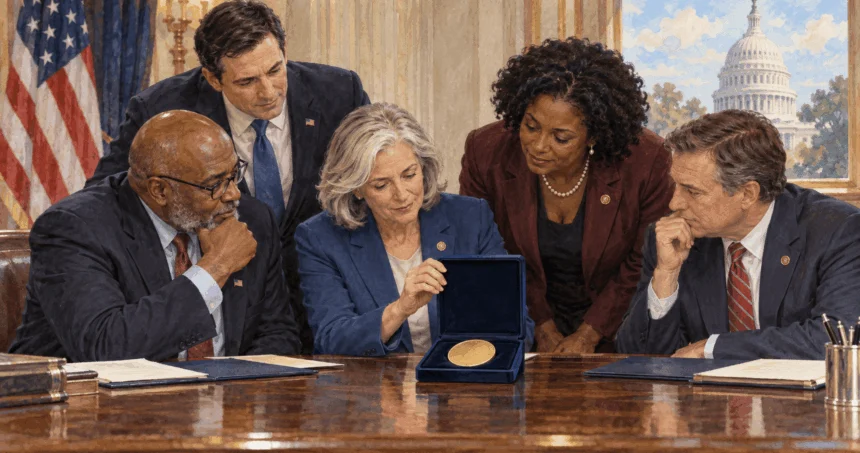
The Congressional Gold Medal represents the highest civilian award that Congress can bestow. Since 1776, only 184 of these unique gold medals have been awarded, making them among the rarest honors in American government.
Each medal requires its own Act of Congress, meaning both the House and Senate must approve the recipient before the President signs the legislation. The U.S. Mint describes it as Congress’s “highest expression of national appreciation for distinguished achievements and contributions.”
- Origins in Revolutionary War
- Expanding Beyond the Military
- Recognizing Groups and Collective Achievement
- The Legislative Gauntlet
- Creating the Medal
- The Presentation Ceremony
- How It Differs from Other Top Awards
- Complete List of Recipients
- International Recipients
- Modern Trends and Recent Recipients
- The Political Process Behind the Honor
- Who Pays for the Medals?
- Contemporary Relevance
- Rarity as Prestige
- The Mint’s Role
- Impact Beyond Recognition
- Design Elements and Symbolism
- Selection Criteria Evolution
- Processing Time
- International Perspective
- Future Considerations
- Collecting and Display
- Administrative Details
- Documentary Record
- Medal Specifications
The medal ranks alongside the Presidential Medal of Freedom as America’s top civilian honor. The key difference: presidents choose Medal of Freedom recipients themselves, while Congressional Gold Medals require broad bipartisan support from hundreds of lawmakers.
Origins in Revolutionary War
The tradition started during the American Revolution. On March 25, 1776, the Second Continental Congress voted to award the first medal to General George Washington for driving British forces from Boston.
This first award established the medal’s core purpose: recognizing extraordinary service to the nation. For the next century, recipients were almost exclusively military officers who had won decisive battles or shown exceptional leadership during wartime.
Early recipients included naval commanders like Captain Thomas Truxtun and Commodore Edward Preble, plus army generals like Andrew Jackson and Winfield Scott. Major General Zachary Taylor holds the record as the only person to receive three separate medals, all for his service during the Mexican-American War.
Expanding Beyond the Military
Congress gradually recognized that profound contributions to American life weren’t limited to battlefields. The 20th century brought a dramatic expansion in the types of people who could receive the honor.
Scientists and Inventors
Thomas Edison received his medal in 1928 for inventions that transformed modern life. The Wright Brothers earned theirs in 1909 for achieving the first successful airplane flight. Dr. Robert H. Goddard was honored posthumously in 1959 for pioneering rocket research that would eventually put Americans on the moon.
Dr. Jonas Salk received the medal in 1955 for developing the polio vaccine, which saved countless lives and ended one of the most feared diseases of the era.
Artists and Entertainers
The medal began recognizing cultural contributions too. Composer George M. Cohan received his award in 1936 for patriotic songs like “Over There” and “You’re a Grand Old Flag.”
Bob Hope earned his medal in 1962 for decades of entertaining American troops around the world. The Gershwin brothers, Ira and George, were honored posthumously in 1985 for their iconic contributions to American music.
Walt Disney received his medal posthumously in 1968 for creating entertainment that defined American family culture.
Civil Rights Leaders
The medal became a way to honor moral courage and the fight for justice. Dr. Martin Luther King Jr. and his wife Coretta Scott King received medals in 2004 for their leadership in the nonviolent struggle for racial equality.
Rosa Parks was honored in 1999 for her pivotal role in the Civil Rights Movement. Jackie Robinson received his medal posthumously in 2003 for breaking baseball’s color barrier and advancing civil rights.
Jesse Owens was honored in 1988 for his athletic achievements at the 1936 Berlin Olympics, which delivered a powerful rebuke to Nazi racial ideology.
Recognizing Groups and Collective Achievement
A major shift occurred in the late 20th century when Congress began awarding medals to entire groups rather than just individuals. The American Red Cross became the first organization to receive the honor in 1979.
This change acknowledged that some of history’s most important achievements resulted from collective effort rather than individual genius.
Military Units
Several military groups have received recognition for extraordinary service:
The Tuskegee Airmen were honored in 2006 as the first African American military aviators. They compiled an outstanding combat record in World War II while facing discrimination at home.
The Navajo Code Talkers received their medal in 2000 for creating an unbreakable communications code during World War II using their native language.
The Nisei soldiers of the 100th Infantry Battalion, 442nd Regimental Combat Team, and Military Intelligence Service were recognized in 2010. These Japanese American soldiers fought heroically for the U.S. during World War II even as their families were held in internment camps.
Women’s Contributions
Several medals have recognized women’s previously overlooked contributions to major national efforts.
The Women Airforce Service Pilots (WASP) received recognition in 2009 as the first women to fly American military aircraft during World War II.
The women known as “Rosie the Riveter” were honored collectively in 2020 for their essential work in factories and shipyards during World War II.
NASA’s “Hidden Figures” – Katherine Johnson, Dorothy Vaughan, Mary Jackson, and Dr. Christine Darden – received recognition in 2019 for their critical work as African American women mathematicians and engineers in the U.S. space program.
Correcting Historical Oversights
Many recent group medals serve as formal corrections to the historical record. They recognize contributions that were ignored or minimized due to discrimination.
Filipino veterans of World War II waited until 2016 for recognition. More than 250,000 Filipinos fought alongside American troops, but their service went largely unacknowledged for decades.
The Montford Point Marines, honored in 2011, were the first African Americans to serve in the Marine Corps. They faced intense discrimination during training but proved their worth in combat.
The Legislative Gauntlet
Getting a Congressional Gold Medal requires navigating one of the most demanding processes in American government. There’s no nomination committee or application form. Each medal requires its own law.
Starting the Process
A member of Congress must introduce legislation proposing a specific individual or group for the medal. This bill gets treated like any other proposed law, complete with a formal number and official text.
Public Law 113-16 shows how this works in practice. It authorized the medal for the First Special Service Force of World War II.
The Two-Thirds Rule
Here’s where most proposals die. Before committees will even consider the bill, it must be co-sponsored by two-thirds of both chambers of Congress. That means at least 290 House members and 67 senators must sign on as supporters.
This requirement ensures that any recipient has overwhelming bipartisan support. It prevents the medal from becoming a partisan political tool and maintains its status as a truly national honor.
Committee Review
Bills that clear the co-sponsorship hurdle go to committees that might seem unrelated to the honor itself. In the House, the Financial Services Committee handles these bills. In the Senate, it’s the Banking, Housing, and Urban Affairs Committee.
This assignment exists because these committees oversee the Treasury Department, which includes the U.S. Mint. The committees don’t judge the worthiness of recipients – they focus on the practical aspects of creating and funding the medals.
Final Passage
After committee approval, the bill follows the standard legislative path. Both chambers must pass it, then the President must sign it into law. Sometimes presidents hold ceremonial signings to mark the occasion.
Creating the Medal
Once Congress authorizes a medal, the U.S. Mint begins the complex process of turning that honor into a physical object.
Custom Design Process
Unlike standardized awards, each Congressional Gold Medal gets its own unique design. The process involves multiple stakeholders working together to create something historically accurate and artistically excellent.
Mint artists start by creating initial design concepts for both sides of the medal. They work closely with the recipient, their family, or representative organizations to ensure the design captures the honoree’s essence and achievements.
Two advisory bodies review the proposed designs: the Citizens Coinage Advisory Committee and the U.S. Commission of Fine Arts. These groups provide expert feedback on artistic merit and historical appropriateness.
The Treasury Secretary makes the final design decision based on all this input.
Personal Touches
The design process produces highly personalized results. Steve Gleason’s medal shows him in his New Orleans Saints jersey on one side, with a Pacific Northwest river scene and his motto “KEEP EXPLORING” on the other side, reflecting both his football career and his advocacy for ALS patients.
Gold for Recipients, Bronze for Everyone Else
The original medal gets struck in solid gold and presented to the recipient. Most authorizing laws also allow the Mint to produce bronze duplicates for public sale. This lets citizens own a piece of history while helping cover the cost of producing the gold medal.
The Presentation Ceremony
The formal presentation represents the culmination of the entire process. These ceremonies typically take place at the U.S. Capitol in locations like Statuary Hall or Emancipation Hall.
Top congressional leaders preside over the events, including the Speaker of the House and Senate Majority Leader. The ceremonies bring together recipients, their families, lawmakers, and other distinguished guests for a shared moment of national recognition.
The 2017 ceremony honoring Filipino World War II veterans shows the emotional power of these events. More than 250,000 Filipinos had fought alongside American troops, and the ceremony provided long-awaited recognition.
Speaker of the House Paul Ryan called the day “long, long overdue” and declared that “those who fought for freedom are never forgotten, and always remembered.”
Veteran Celestino Almeda, age 100, spoke for his comrades: “We have waited a long time… I am an American soldier. I am a warrior and a member of the team. Thank you for sharing this glorious day.”
How It Differs from Other Top Awards
The Congressional Gold Medal often gets confused with other prestigious American honors. Understanding the differences helps explain why each award matters.
Congressional Gold Medal vs Presidential Medal of Freedom
Both rank as America’s highest civilian honors, but they come from different branches of government with different selection processes.
The Gold Medal requires legislative approval from hundreds of lawmakers. The Presidential Medal of Freedom can be awarded by presidents at their discretion, often reflecting personal and political preferences.
Each Gold Medal gets a unique design created specifically for the recipient. The Medal of Freedom uses a standard design: a white star over a red pentagon, with a more prestigious “with distinction” version available.
Congressional Gold Medal vs Medal of Honor
These serve completely different purposes despite both being associated with Congress.
The Gold Medal recognizes civilian achievement and lifetime contributions. The Medal of Honor is America’s highest military decoration for combat valor.
The Gold Medal honors distinguished achievement or historic contributions. The Medal of Honor requires “conspicuous gallantry and intrepidity at the risk of life above and beyond the call of duty.”
The Medal of Honor is sometimes called the “Congressional Medal of Honor” because it’s presented “in the name of Congress,” but its official name is simply Medal of Honor.
Congressional Gold Medal vs Congressional Award
This causes frequent confusion since both involve Congress and include a “Gold Medal.”
The Congressional Gold Medal is a lifetime achievement honor typically given to adults for past accomplishments of historical significance.
The Congressional Award is a youth development program for Americans aged 14 to 24, established in 1979. Young people earn Bronze, Silver, and Gold level certificates by achieving goals in public service, personal development, physical fitness, and exploration.
The Congressional Award’s “Gold Medal” recognizes a young person’s initiative and achievement. It’s completely separate from the historic Congressional Gold Medal.
Complete List of Recipients
The recipient list tells the story of American and world history. U.S. citizenship isn’t required, allowing Congress to recognize figures of global importance.
| Recipient(s) | Date of Approval | Reason for Award |
|---|---|---|
| General George Washington | March 25, 1776 | Leadership in the American Revolutionary War, specifically for the capture of Boston from British forces |
| Captain Thomas Truxtun | March 29, 1800 | Command of the USS Constellation during its battle against the French frigate La Vengeance in the Quasi-War |
| Commodore Edward Preble | March 3, 1805 | Leadership during the 1804 attacks on Tripoli in the First Barbary War |
| Captain Isaac Hull, Captain Stephen Decatur, Captain Jacob Jones | January 29, 1813 | Naval victories against the HMS Guerriere, HMS Macedonian, and HMS Frolic during the War of 1812 |
| Captain William Bainbridge | March 3, 1813 | Command of the USS Constitution during its capture of HMS Java in the War of 1812 |
| Captain Oliver Hazard Perry, Captain Jesse D. Elliott | January 6, 1814 | Victory in the Battle of Lake Erie during the War of 1812 |
| Lieutenant William W. Burrows II, Lieutenant Edward McCall | January 6, 1814 | Capture of HMS Boxer; awarded posthumously to Burrows |
| Captain James Lawrence | January 11, 1814 | Awarded posthumously for the capture of HMS Peacock |
| Captain Thomas Macdonough, Captain Robert Henley, Lieutenant Stephen Cassin | October 20, 1814 | Heroism in the Battle of Plattsburgh during the War of 1812 |
| Captain Lewis Warrington | October 21, 1814 | Capture of HMS Epervier |
| Captain Johnston Blakeley | November 3, 1814 | Capture of HMS Reindeer |
| Major General Jacob Brown | November 3, 1814 | Command at the Battles of Chippawa, Niagara, and Erie |
| Major General Winfield Scott | Nov. 3, 1814 & Mar. 9, 1848 | Actions at the battles of Chippawa and Niagara (War of 1812) and Siege of Veracruz (Mexican-American War) |
| Major General Peter Buell Porter, Brigadier General Eleazar Ripley, Colonel James Miller | November 3, 1814 | Actions at the battles of Chippawa, Niagara, and Erie |
| Major General Edmund P. Gaines | November 3, 1814 | Actions during the Siege of Fort Erie |
| Major General Alexander Macomb | November 3, 1814 | Actions in the Battle of Plattsburgh |
| Major General Andrew Jackson | February 27, 1815 | Defense of New Orleans in the War of 1812 |
| Captain Charles Stewart | February 22, 1816 | Capture of HMS Cyane and HMS Levant |
| Captain James Biddle | February 22, 1816 | Capture of HMS Penguin |
| Major General William Henry Harrison, Governor Isaac Shelby | April 4, 1818 | Victory in the Battle of the Thames |
| Colonel George Croghan | February 13, 1835 | Defense of Fort Stephenson |
| Major General Zachary Taylor | July 16, 1846; Mar. 2, 1847; May 9, 1848 | Three separate awards for distinguished achievements in the Mexican-American War |
| Rescuers of the Officers and Crew of the U.S. Brig Somers | March 3, 1847 | French, British, and Spanish ship officers who rescued U.S. personnel during the Mexican-American War |
| Commander Duncan Ingraham | August 4, 1854 | Role in the Koszta Affair, a diplomatic incident involving protection of a Hungarian immigrant |
| Dr. Frederick Rose | May 11, 1858 | British surgeon honored for caring for American sailors suffering from yellow fever |
| Rescuers of the passengers of the steamship San Francisco | January 28, 1854 | Heroic efforts in rescuing passengers from the sinking vessel |
| Cyrus W. Field | March 2, 1867 | Perseverance and success in laying the first transatlantic telegraph cable |
| George Peabody | March 16, 1867 | Extensive philanthropy and educational endowments in the United States |
| Captains Creighton, Low, and Stouffer | March 1, 1871 | Rescue of shipwrecked seamen |
| George F. Robinson | March 1, 1871 | Saving Secretary of State William H. Seward from an assassination attempt |
| John Horn, Jr. | June 20, 1874 | Bravery in saving people from a shipwreck |
| Joseph Francis | May 2, 1888 | Inventions and services in lifesaving apparatus |
| Officers and men of the Jeannette Arctic Expedition | September 30, 1890 | Bravery and perseverance during the ill-fated polar expedition |
| The Wright Brothers (Orville and Wilbur) | March 4, 1909 | Invention and first successful flight of a heavier-than-air flying machine |
| Dr. Walter Reed and associates | February 28, 1911 | Work in discovering the cause and transmission of yellow fever |
| Captain Arthur H. Rostron | June 11, 1912 | Captain of the RMS Carpathia, for rescuing survivors of the RMS Titanic |
| Colonel George W. Goethals and others | March 4, 1915 | Distinguished service in constructing the Panama Canal |
| Charles A. Lindbergh | May 4, 1928 | Solo, non-stop transatlantic flight from New York to Paris |
| Thomas A. Edison | May 29, 1928 | Numerous inventions that revolutionized modern life, including the light bulb and phonograph |
| Lincoln Ellsworth, Roald Amundsen, Umberto Nobile | May 29, 1928 | Trans-arctic flights |
| George M. Cohan | June 29, 1936 | Patriotic contributions to American music and theater |
| Howard Hughes | August 7, 1939 | Achievements in advancing the science of aviation |
| Dr. Jonas Salk | August 9, 1955 | Development of the first effective polio vaccine |
| Dr. Robert H. Goddard | September 16, 1959 | Posthumously awarded for pioneering research in rocketry and space flight |
| Bob Hope | June 8, 1962 | Decades of service entertaining American armed forces around the world |
| Sir Winston Churchill | May 9, 1963 | Leadership as Prime Minister during World War II and contributions to the defense of freedom |
| Walt Disney | May 24, 1968 | Posthumously awarded for contributions to entertainment and family-friendly art |
| Ira and George Gershwin | August 8, 1985 | Posthumously awarded for iconic contributions to American music |
| Jesse Owens | September 24, 1988 | Posthumously awarded for athletic achievements at the 1936 Berlin Olympics |
| General Colin L. Powell | April 23, 1991 | Exemplary performance as Chairman of the Joint Chiefs of Staff during the Persian Gulf War |
| General H. Norman Schwarzkopf | April 23, 1991 | Leadership as Commander of Operation Desert Storm during the Persian Gulf War |
| Francis Albert “Frank” Sinatra | April 29, 1997 | Outstanding and enduring contributions to American music and culture |
| Mother Teresa of Calcutta | June 2, 1997 | Selfless humanitarian work with the poor and destitute around the world |
| Nelson Mandela | July 29, 1998 | Leadership in the fight against apartheid and for a democratic South Africa |
| The “Little Rock Nine” | November 9, 1998 | Courage in integrating Central High School in Little Rock, Arkansas, in 1957 |
| Rosa Parks | April 28, 1999 | Pivotal role in the Civil Rights Movement, beginning with the Montgomery bus boycott |
| Reverend Billy Graham and Ruth Graham | February 2, 1996 | Enduring contributions to morality, racial equality, and spiritual well-being |
| Pope John Paul II | July 27, 2000 | Contributions to peace, religious freedom, and human dignity |
| Navajo Code Talkers | December 21, 2000 | Critical contributions to Allied victory in World War II using their native language as an unbreakable code |
| Jackie Robinson | October 29, 2003 | Posthumously awarded for breaking the color barrier in Major League Baseball and contributions to the Civil Rights Movement |
| Dr. Martin Luther King, Jr. and Coretta Scott King | October 12, 2004 | Posthumously awarded for leadership and sacrifice in the nonviolent struggle for racial equality and justice |
| Tuskegee Airmen | April 11, 2006 | Heroic service as the first African American military aviators in the U.S. Armed Forces during World War II |
| 14th Dalai Lama (Tenzin Gyatso) | September 27, 2006 | Advocacy of peace, non-violence, human rights, and religious understanding |
| Dr. Michael E. DeBakey | October 10, 2007 | Pioneering work as a cardiovascular surgeon and medical innovator |
| Apollo 11 Astronauts (Neil Armstrong, Buzz Aldrin, Michael Collins) | August 7, 2009 | Historic achievement as the first humans to land on the Moon |
| Women Airforce Service Pilots (WASP) | July 1, 2009 | Service as the first women to fly American military aircraft during World War II |
| Nisei Soldiers of World War II | October 5, 2010 | Extraordinary bravery and decorated service in World War II while facing discrimination at home |
| Montford Point Marines | November 23, 2011 | Service as the first African Americans to serve in the U.S. Marine Corps |
| Doolittle Tokyo Raiders | May 23, 2014 | Courage and contribution to the U.S. effort in World War II by conducting the first air raid on Japan |
| The “Monuments Men” | June 9, 2014 | Work preserving artistic and cultural treasures from destruction during World War II |
| Office of Strategic Services (OSS) | December 14, 2016 | Pioneering contributions to intelligence gathering and special operations during World War II |
| Filipino Veterans of World War II | December 14, 2016 | Dedicated service and sacrifice alongside American forces during World War II |
| Bob Dole | January 17, 2018 | Dedicated service to the nation as a soldier, legislator, and statesman |
| Steve Gleason | December 15, 2018 | Work as an advocate for people with ALS and efforts to improve their quality of life through technology |
| The “Hidden Figures” (Katherine Johnson, Dorothy Vaughan, Mary Jackson, and Dr. Christine Darden) | November 8, 2019 | Pioneering work as African American women at NASA, critical to the success of the U.S. space program |
| The “Rosie the Riveter” Women of World War II | March 23, 2020 | Collective honor for the millions of women who contributed to the war effort on the home front |
| U.S. Capitol Police and other law enforcement agencies | August 5, 2021 | Protection of the U.S. Capitol on January 6, 2021 |
| The “Ghost Army” | February 1, 2022 | Unique and creative tactical deception unit that saved lives during World War II |
International Recipients
The medal isn’t limited to Americans. Foreign recipients have included:
Sir Winston Churchill earned his medal in 1963 for his leadership during World War II and his defense of freedom. The British Prime Minister’s recognition showed how the medal can honor international contributions to American values.
Mother Teresa received hers in 1997 for humanitarian work around the world. Her selection demonstrated how the medal recognizes moral leadership that transcends national boundaries.
Nelson Mandela was honored in 1998 for his leadership against apartheid and his promotion of democratic values.
The 14th Dalai Lama received recognition in 2006 for advocating peace, non-violence, and human rights.
Modern Trends and Recent Recipients
Recent decades have shown clear patterns in Congressional Gold Medal selections. Many awards now serve to correct historical oversights, particularly regarding minority contributions that were previously ignored or minimized.
The 2019 medal for NASA’s “Hidden Figures” exemplifies this trend. Katherine Johnson, Dorothy Vaughan, Mary Jackson, and Dr. Christine Darden were African American women whose mathematical and engineering work proved critical to early space missions. Their contributions went largely unrecognized for decades.
The 2020 collective honor for “Rosie the Riveter” women similarly acknowledged previously overlooked contributions. Millions of women entered the workforce during World War II, taking on manufacturing jobs traditionally held by men. Their efforts were essential to the war effort but received limited recognition at the time.
Recent medals have also recognized groups whose service was controversial or classified when it occurred. The 2016 medal for the Office of Strategic Services honored America’s World War II intelligence agency, whose work remained largely secret for decades after the war.
The 2022 recognition of the “Ghost Army” celebrated a unit that used creative deception – including inflatable tanks and sound effects – to mislead German forces. This tactical innovation saved lives and helped win battles, but the unit’s existence remained classified for years.
The Political Process Behind the Honor
While the medal is meant to be non-partisan, the legislative process means politics inevitably plays a role. The two-thirds co-sponsorship requirement serves as a buffer against purely political selections, but it also means that controversial figures are unlikely to receive recognition.
Some potential recipients have generated debate. The 2006 medal for the Dalai Lama drew objections from China, which considers him a separatist. But the overwhelming congressional support (86 senators and 351 House members co-sponsored the bill) showed bipartisan agreement on his contributions to peace and human rights.
The process can also be slow. The Filipino World War II veterans waited more than 70 years for recognition. The Nisei soldiers received their medal 65 years after their wartime service. Sometimes the delay stems from changing social attitudes – contributions that were overlooked during periods of discrimination gain recognition as society evolves.
Who Pays for the Medals?
Each medal costs tens of thousands of dollars to design and produce. The authorizing legislation typically covers these costs through general Treasury funds.
The bronze duplicates sold to the public help offset expenses. These replicas usually sell for $40-60 each and often become collector’s items. Sales can continue for years after the original presentation.
Contemporary Relevance
The Congressional Gold Medal continues evolving to reflect current American values and priorities. Recent selections show growing recognition of:
- Previously marginalized groups whose contributions were ignored
- Collective achievements that required teamwork rather than individual genius
- International figures who advanced American ideals
- Service members whose classified work couldn’t be recognized at the time
The 2021 medal for U.S. Capitol Police officers who defended the building on January 6 shows how the award can provide immediate recognition for recent events of national significance.
Rarity as Prestige
The medal’s extreme rarity contributes to its prestige. Only 184 medals have been awarded across nearly 250 years of American history. For comparison, thousands of Presidential Medals of Freedom have been awarded since that honor was established in 1963.
This scarcity results from the demanding legislative process. Getting 290 House members and 67 senators to co-sponsor legislation requires broad consensus that’s difficult to achieve. The requirement ensures that recipients represent figures or achievements that unite rather than divide Americans.
The Mint’s Role
The U.S. Mint serves as more than just a manufacturer – it’s the artistic interpreter of congressional intent. Mint artists must translate legislative language about someone’s achievements into visual symbols that capture their essence.
This artistic challenge varies dramatically depending on the recipient. Creating a medal for a specific person like Steve Gleason allows for portraits and personal symbols. Designing one for a group like “Rosie the Riveter” requires representing millions of women through symbolic imagery.
The Mint maintains detailed records of all Congressional Gold Medals on its website, including images of both sides of each medal and background information about recipients.
Impact Beyond Recognition
The medals often have effects beyond simple recognition. They can reshape historical narratives and bring attention to overlooked contributions.
The Tuskegee Airmen medal helped cement their place in World War II history. Their outstanding combat record had been documented, but the congressional recognition brought national attention to their achievements and the discrimination they faced.
The “Hidden Figures” medal coincided with renewed interest in the women’s contributions to the space program, including a popular book and Hollywood movie. The congressional recognition validated their importance to American space achievements.
For some recipients, the medal provides closure or vindication after years of being overlooked. The ceremony for Filipino World War II veterans was particularly emotional because many had lived their entire lives without formal recognition from the country they had served.
Design Elements and Symbolism
Each medal tells a story through its imagery. Common design elements include:
- Portraits of individual recipients on the obverse (front)
- Symbolic imagery representing their achievements on the reverse (back)
- Relevant dates marking important events or service periods
- Inscriptions of mottos, quotes, or descriptive text
- Eagles, flags, and other patriotic symbols
The Wright Brothers’ medal features their historic airplane and the location of their first flight. Edison’s medal incorporates his light bulb invention. Military unit medals often include relevant insignia, battle locations, or equipment.
Religious figures like Pope John Paul II and Mother Teresa have medals with appropriate spiritual symbolism. The Dalai Lama’s medal incorporates Tibetan Buddhist elements alongside American patriotic imagery.
Selection Criteria Evolution
While there are no formal written criteria for the medal, congressional research shows that recipients typically fall into several categories:
- Military leaders who achieved decisive victories or showed exceptional courage
- Inventors whose work transformed American life
- Artists who defined American culture
- Humanitarian leaders who advanced human dignity
- Groups whose collective service was of exceptional national importance
- International figures who advanced American values globally
The criteria have clearly broadened over time. Early recipients were almost exclusively white male military officers. Modern selections show much greater diversity in race, gender, nationality, and type of contribution.
Processing Time
The legislative process typically takes several years from introduction to final passage. Bills must build support gradually, gathering co-sponsors from both parties and both chambers.
Some medals move faster when they address timely issues. The Capitol Police medal passed relatively quickly after January 6, 2021, because the events were fresh in lawmakers’ minds and had clear bipartisan condemnation.
Others take much longer. The Ghost Army medal required years of advocacy because few people knew about the unit’s classified World War II service. Supporters had to educate lawmakers about the group’s contributions before building support for recognition.
International Perspective
While many countries have their highest civilian honors, few require such extensive legislative involvement. Most nations allow their head of state or head of government to make these selections independently.
The American system’s requirement for broad legislative consensus makes it uniquely democratic among major awards. This process ensures that recipients represent genuine national consensus rather than the preferences of a single leader.
The downside is that the system can be slow and may overlook worthy recipients who lack sufficient political support or awareness among lawmakers.
Future Considerations
Current trends suggest the medal will continue recognizing previously overlooked groups, particularly those whose contributions were minimized due to discrimination.
Several groups that might receive future consideration include:
- Chinese workers who built the transcontinental railroad
- Native American World War II veterans who served outside the famous code talker units
- Hispanic American service members from various conflicts
- Merchant mariners who transported supplies during World War II under dangerous conditions
The medal may also recognize more international figures who advanced American ideals, following the precedent set by Churchill, Mandela, Mother Teresa, and the Dalai Lama.
Collecting and Display
The original gold medals typically remain with recipients or their families. Some are donated to museums or institutions for public display.
The Smithsonian Institution holds several medals in its collections. Presidential libraries sometimes display medals received by their subjects. Military museums often feature medals awarded to service members or units.
The bronze duplicates have created a collecting market. Some replicas from early or particularly famous recipients can sell for several times their original price at auction.
Administrative Details
The authorizing legislation for each medal includes specific details about design, cost, and distribution. Congress typically:
- Authorizes the Treasury Secretary to strike the medal
- Specifies design consultation requirements
- Permits bronze duplicate sales
- Sets any special presentation requirements
- Covers costs through general Treasury funds
Some laws include specific language about ceremony locations or timing. Others delegate these details to congressional leadership or the recipient’s preferences.
Documentary Record
Each medal generates an extensive paper trail through the legislative process. Bills, committee reports, floor debates, and ceremony transcripts create a detailed record of why each recipient was chosen.
These documents provide valuable insight into how American values and priorities have evolved over time. Early congressional debates focused heavily on military valor and national defense. Modern discussions emphasize diversity, inclusion, and correcting historical oversights.
Medal Specifications
While designs vary, all Congressional Gold Medals share certain physical characteristics:
- Struck in solid gold (typically 3 inches in diameter)
- Weighs approximately 150 grams
- Features high-relief artwork
- Includes “Act of Congress” inscription
- Bears the year of authorization
- Contains recipient’s name and achievement description
The substantial size and weight reflect the honor’s importance. These aren’t small medallions meant for wearing – they’re significant art objects designed for display and preservation.