- stjohns.edu2 links
- brookings.edu
Last updated 3 weeks ago. Our resources are updated regularly but please keep in mind that links, programs, policies, and contact information do change.
The Department of Homeland Security (DHS) has navigated a complex landscape of threats and responsibilities since its creation in 2002. Established in the wake of the September 11, 2001 attacks, DHS merged 22 federal agencies in the largest government reorganization since World War II. Its mission initially centered on preventing terrorism, but over time it expanded to encompass cybersecurity, immigration enforcement, disaster response, and more, as noted in Brookings’ analysis of DHS twenty years after 9/11.
While the United States has not experienced another attack on the scale of 9/11 – most large terrorist plots have been thwarted – DHS’s journey has been marked by significant challenges. This article explores those challenges in recent years, providing historical context and highlighting key areas such as cybersecurity, immigration, disaster response, counterterrorism, and other pressing concerns.
- Historical Context: DHS Formation and Evolving Mission
- Cybersecurity Threats and Critical Infrastructure Protection
- Immigration Enforcement and Border Security Challenges
- Disaster Response and Resilience
- Counterterrorism and Evolving Threat of Extremism
- Other Pressing Concerns and Departmental Challenges
- Opportunities for Improvement and Future Outlook
Historical Context: DHS Formation and Evolving Mission
DHS was officially formed in 2002 as a direct response to the 9/11 attacks. The Homeland Security Act merged 22 agencies – including the Customs Service, Immigration and Naturalization Service, FEMA, the Secret Service, and the Coast Guard – into a single department. This unprecedented merger aimed to unify efforts in border security, aviation security, emergency preparedness, and critical infrastructure protection under one roof. From the beginning, leaders acknowledged that integrating so many organizations would be difficult. Early growing pains included developing a cohesive culture and overcoming bureaucratic silos. DHS also introduced new initiatives like the color-coded terror alert system (later phased out) which even became a pop-culture punchline. Over the past two decades, the security landscape has evolved – cyber warfare, homegrown extremism, and pandemics have joined foreign terrorism as threats – requiring DHS to continually adapt its strategies and structure, as St. John’s University’s analysis of homeland security points out.
Despite many successes, DHS has encountered its share of setbacks and controversies, from its response to Hurricane Katrina in 2005 to operational challenges at the southwest border in recent years to persistent issues with employee morale and integrating organizational cultures. These experiences, both positive and negative, form the backdrop for understanding DHS’s current challenges.
Cybersecurity Threats and Critical Infrastructure Protection
In the 2000s, cybersecurity was a relatively small part of DHS’s mission, but it has rapidly become a top priority in recent years. Relentless waves of cyberattacks – including state-sponsored hacking and ransomware targeting government agencies, businesses, hospitals, and critical infrastructure – have forced DHS to ramp up its cyber defenses, according to DHS’s 2022 Year in Review. The department’s Cybersecurity and Infrastructure Security Agency (CISA), established in 2018, leads efforts to protect U.S. networks and critical systems. For example, CISA has worked with partners to improve election security (designating elections as critical infrastructure after 2016) and launched the “Shields Up” campaign in 2022 to help organizations guard against potential Russian cyber aggression amid the Ukraine conflict. DHS also rolled out the first-ever cross-sector cybersecurity performance goals to guide businesses and local governments in shoring up their defenses.
Yet, significant challenges in cybersecurity remain. Many critical infrastructure assets (like power grids, pipelines, and water systems) are owned by the private sector, so DHS must coordinate closely with companies to detect and respond to threats – a complex public-private partnership issue. High-profile incidents like the 2021 Colonial Pipeline ransomware attack underscored vulnerabilities in sectors regulated by DHS. Resource constraints are another concern: CISA accounts for only about 2% of DHS’s overall budget, which some experts argue is too low given the magnitude of cyber threats. Recruiting and retaining cybersecurity talent in government is difficult when private tech firms offer higher salaries. Additionally, emerging technologies (such as artificial intelligence and the Internet of Things) introduce new attack surfaces that DHS must help secure. Going forward, DHS is working on strategies to strengthen cyber resilience – for instance, a $1 billion grant program now helps state and local governments improve their cybersecurity capabilities. The dynamic nature of cyberspace means DHS must remain agile and proactive, continually updating its defenses to keep pace with hackers. Enhancing threat information sharing across federal agencies (like with the FBI and NSA) and with industry is crucial to anticipating attacks. Cybersecurity will likely continue to be one of the most pressing and rapidly changing fronts in homeland security.
Immigration Enforcement and Border Security Challenges
Few issues have thrust DHS into the public spotlight more than immigration enforcement. DHS oversees border security (through Customs and Border Protection, CBP) and interior immigration enforcement (through Immigration and Customs Enforcement, ICE), as well as citizenship and visa processing (through USCIS). In recent years, the southwest border has seen record levels of migration, straining DHS resources and facilities. Surges of families and unaccompanied children from Central America in 2014 and again in the late 2010s created humanitarian and logistical crises, as DHS end-of-year statistics show. One DHS report noted an “unprecedented surge of unaccompanied children and families” from Central America, which overwhelmed Border Patrol holding facilities and required emergency measures. Unaccompanied minors pose special challenges due to legal protections on how they must be cared for, making it difficult for enforcement agencies to process and repatriate them quickly, according to the FY23 Enforcement Lifecycle Report. In 2021–2022, migrant encounters at the U.S.-Mexico border hit all-time highs, leading to crowded shelters and political contention over how to respond. Border agents and asylum officers have been hard-pressed to manage the volume of people seeking entry or fleeing danger, while also screening for security threats and contraband.
Enforcing immigration laws effectively while upholding humanitarian values is a delicate balance. DHS has faced criticism from multiple sides: some argue enforcement has been too harsh (pointing to past policies like family separations), while others argue it has been too lax. Indeed, debates over immigration policy have thrust DHS into the spotlight, with the agency facing intense scrutiny and criticism from both the left and right. Internal enforcement operations by ICE can be controversial, especially when they involve long-term residents or mixed-status families. Furthermore, cooperation between federal immigration authorities and local jurisdictions varies; many cities have “sanctuary” policies limiting cooperation with ICE, which DHS says makes it harder to remove criminals who are undocumented. The immigration court backlog (though managed by the Justice Department) also affects DHS, as asylum seekers and others often wait years for decisions, during which DHS must handle their cases or detention.
Despite these challenges, DHS has implemented measures aiming for smarter enforcement. DHS leaders emphasize prioritizing the removal of those who pose threats to public safety or national security. Technological upgrades are underway at ports of entry – for example, modernizing border surveillance with drones and sensors, using biometric systems to track entries/exits, and expanding capacity at checkpoints. DHS has also coordinated humanitarian initiatives, such as Operation Allies Welcome (led by DHS in 2021) to resettle Afghan refugees, demonstrating the department’s flexibility to handle large population movements in an orderly way. Nonetheless, immigration enforcement remains a perennial challenge for DHS. It is a mission heavily influenced by external factors (like economic conditions and violence abroad) and domestic policy choices. Until comprehensive immigration reforms are enacted to address systemic issues, DHS will likely continue to operate in “crisis management” mode at the border. The department must continually adapt – improving processing efficiency, bolstering border infrastructure, and working with foreign partners – to manage migration flows consistent with U.S. laws and values.
Disaster Response and Resilience
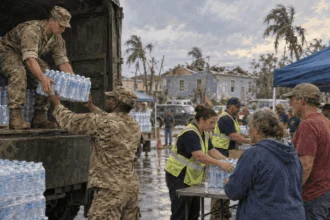
Responding to natural disasters is another core DHS function, primarily carried out by the Federal Emergency Management Agency (FEMA). In recent years, disaster response has been tested by the increasing frequency and severity of emergencies – from catastrophic hurricanes and wildfires to pandemics. For example, in 2023 alone the United States experienced 28 weather and climate disasters that each caused over $1 billion in damage, totaling nearly $93 billion in losses. Climate change is contributing to more intense storms, heatwaves, floods, and fires, stretching the nation’s emergency management resources. DHS, through FEMA, must help communities prepare for and recover from these events, often managing multiple major disasters at once. This represents a huge challenge in logistics, coordination, and funding. Ensuring FEMA’s disaster relief fund doesn’t run dry amid back-to-back disasters has become a concern, as has disaster fatigue among staff and volunteers.
Historically, DHS’s disaster response capabilities have seen both failure and improvement. The response to Hurricane Katrina in 2005, marked by delayed relief and mismanagement, was a low point that revealed serious weaknesses in FEMA (which had been folded into DHS two years prior). In the aftermath, reforms were enacted: FEMA was reorganized and strengthened, better training and planning were instituted, and partnerships with state/local governments were bolstered. By the time of Hurricane Sandy in 2012 and other recent events, FEMA demonstrated more competent responses. Today, DHS boasts stronger disaster response capabilities and a reformed FEMA, as well as improved state and local emergency preparedness. The department has put emphasis on building a resilient nation, encouraging communities to plan for disasters and mitigate risks before they strike.
Despite progress, challenges in disaster response remain pressing. One major challenge is sheer scale: when multiple large disasters happen in close succession (for instance, a hurricane season with several major storms plus widespread wildfires), federal resources are stretched thin. Another challenge is coordinating across many stakeholders – DHS/FEMA must work hand-in-hand with other federal agencies (like HUD for housing recovery, or the National Guard for immediate rescue operations), state and local emergency managers, non-profit organizations like the Red Cross, and even private sector partners. Effective response depends on clear communication and unity of effort across all levels of government. Lessons learned have shown the importance of pre-positioning supplies, having robust emergency communications, and streamlining the bureaucracy that survivors face when seeking aid. There is also a growing recognition that disaster response isn’t just about immediate relief, but also long-term recovery and building back better to withstand future hazards. DHS initiatives in community resilience, such as providing funds for elevating homes in flood zones or hardening infrastructure, are examples of shifting from a reactive to a proactive stance. In summary, while DHS has come a long way since Katrina, the accelerating tempo of disasters ensures that FEMA and its partners will need to continuously enhance readiness, agility, and capacity to protect lives and property.
Counterterrorism and Evolving Threat of Extremism
Protecting the nation from terrorism was the original impetus for DHS, and it remains a central mission. The terrorism threat has evolved considerably over the last two decades. Immediately after 9/11, the focus was on preventing foreign terrorist networks like al-Qaeda from striking the U.S. homeland again. Over time, the concern expanded to include homegrown violent extremists radicalized by jihadist ideology (inspired by ISIS or Al-Qaeda but operating independently) as well as, increasingly, domestic extremists with other motivations (such as white supremacist or anti-government ideologies). DHS has had to broaden its counterterrorism approach accordingly – from primarily guarding against foreign plots to also addressing domestic terrorism and targeted violence. In recent years, attacks by lone actors on schools, houses of worship, malls, and government institutions have highlighted the threat of domestic violent extremism. Tragic incidents like the 2015 San Bernardino shooting and the 2016 Orlando nightclub attack (both influenced by Islamist extremism), as well as the 2019 El Paso Walmart shooting and the 2018 Pittsburgh synagogue shooting (motivated by racist and anti-Semitic beliefs, respectively), demonstrated the diverse sources of terror. The January 6, 2021 attack on the U.S. Capitol by extremist supporters of a political cause further underscored this shifting threat environment on American soil.
DHS’s approach to counterterrorism has adapted to these changes. It still works closely with the FBI, which leads terrorism investigations, but DHS plays vital roles in prevention, intelligence sharing, and protecting targets. The department’s intelligence branch and nationwide fusion centers facilitate the sharing of threat information with state and local law enforcement. DHS agencies screen travelers coming into the country against terror watchlists, and the Transportation Security Administration (TSA, part of DHS) guards airports and other transport modes to prevent attacks. The department also administers grants to help cities secure soft targets (like the Urban Area Security Initiative) and runs community programs to prevent radicalization (now termed “Targeted Violence and Terrorism Prevention”). These efforts have contributed to disrupting plots; indeed, there has not been a terrorist attack on U.S. soil approaching the scale of 9/11 in the past 20 years. However, the threat persists in different forms. DHS officials warn that foreign terrorist organizations still seek to strike the U.S. – and global events can heighten the risk (for example, the U.S. withdrawal from Afghanistan in 2021 raised concerns about Al-Qaeda or ISIS regrouping). At the same time, domestic terrorism has been on the rise, often fueled by online misinformation and extremist content. DHS has acknowledged this and in recent years increased its focus on domestic terrorism, including allocating more resources to analyze and combat violent white supremacist and anti-government groups.
Another challenge in this arena is avoiding complacency and blind spots. The forms of terrorism today are more varied and “borderless” (a term used to describe how cyber propaganda and lone-actor attacks blur the traditional foreign/domestic distinction, according to the Center for American Progress report on redefining homeland security). DHS must therefore coordinate not just with law enforcement, but also with tech platforms (to address online extremist content) and with communities to improve awareness of signs of radicalization. Balancing aggressive counterterrorism measures with the protection of civil liberties is a continuous tightrope for the department. There have been concerns in the past about DHS programs infringing on privacy or profiling certain communities; maintaining public trust is essential for effective counterterrorism. The good news is that DHS’s counterterrorism infrastructure – developed extensively in the post-9/11 years – provides a strong foundation. As threats evolve (potentially including new ones like bioterrorism or drones used in attacks), DHS will need to evolve as well, ensuring its strategies and partnerships address the full spectrum of terrorism and extremism that endanger the homeland.
Other Pressing Concerns and Departmental Challenges
Beyond the high-profile mission areas above, DHS contends with several other pressing issues that impact homeland security and the department’s effectiveness:
- Human Trafficking and Transnational Crime: DHS agencies also combat human trafficking, child exploitation, illicit drug smuggling, and other cross-border crimes. Human trafficking, in particular, is a global epidemic with an estimated 27.6 million victims worldwide (over a million in the U.S.). Traffickers exploit vulnerable people for forced labor or sex, often using international networks. DHS tackles this through investigative units (ICE’s Homeland Security Investigations targets trafficking rings) and partnerships with local and international law enforcement. The department’s Blue Campaign works on public awareness and victim support. However, fighting trafficking requires a multifaceted approach – not just law enforcement but also support for victims and international cooperation. Similarly, DHS must stem the flow of illicit drugs like fentanyl coming across U.S. borders, working with agencies like the DEA and foreign counterparts. These issues remain challenging as criminal networks adapt tactics to evade detection.
- Organizational and Workforce Challenges: Internally, DHS has long struggled with low employee morale and retention difficulties. Since its inception, DHS has consistently ranked near the bottom among federal agencies in employee satisfaction surveys, according to the Government Accountability Office. Merging 22 agencies with distinct cultures was never easy, and employees often reported feeling disconnected from DHS leadership or overburdened by the sprawling bureaucracy. Concerns about leadership stability (for a period, DHS went through frequent turnover of Secretaries and acting officials) and adequate resources contribute to these morale issues, as HSToday reported. A dysfunctional work environment can hurt performance, so DHS has made efforts to improve engagement – for example, implementing mentorship programs, recognition initiatives, and opportunities for career development. There has been some progress (employee survey scores improved somewhat by 2019), but DHS still has a ways to go to shed its reputation as a tough place to work. A united, motivated workforce is important for DHS to fulfill its mission, so addressing these human capital challenges is a pressing concern.
- Public Perception and Polarization: DHS operates in an intensely political environment, and several of its tasks (notably immigration enforcement) have become lightning rods in national politics. In the 2000s, there was broad bipartisan support for DHS’s counterterrorism role. However, in recent years the politicization of homeland security issues has increased. For instance, debates over border security and immigration policy have grown highly polarized, with DHS and its sub-agencies like ICE sometimes caught in the middle. During the late 2010s, DHS leadership was drawn into controversial political initiatives such as the border wall and travel bans, and some activists called for ICE to be abolished. Such developments can undermine morale and public confidence in DHS. The department functions best when it has broad public and political backing to carry out security missions without being seen as a political tool. Current leaders have emphasized staying out of politics and simply enforcing the law faithfully. Rebuilding a nonpartisan image and public trust is an ongoing challenge that affects DHS’s ability to do its job.
- Coordination and Oversight Complexity: DHS’s wide scope means it must coordinate with numerous other agencies and governments. This includes everything from working with the Department of Health and Human Services on sheltering migrant children, to sharing cyber threat intel with the Department of Defense, to synchronizing disaster response with state governors. Internally, ensuring the many components of DHS (from TSA to Coast Guard to Secret Service) work together efficiently is a challenge – although progress has been made in creating a more unified department culture where everyone “speaks the same language, even if with different accents,” as former Secretary Janet Napolitano quipped. Even Congressional oversight of DHS is fragmented (over 100 committees and subcommittees claim jurisdiction), which some argue makes it harder to set coherent priorities. These structural hurdles can hinder DHS’s agility. Streamlining communication channels and clarifying roles and responsibilities – both within DHS and among its external partners – are continual areas for improvement to avoid duplication or gaps in homeland security efforts.
In summary, DHS faces a multifaceted set of challenges. It must combat not only external threats (terrorists, hackers, cartels, natural disasters) but also internal and systemic issues (morale, politicization, coordination difficulties). Understanding these pressures is key to formulating solutions that will enable DHS to better protect the nation going forward.
Opportunities for Improvement and Future Outlook
Despite the challenges outlined, there are many opportunities for DHS to strengthen its performance and better fulfill its vital mission. Experts and officials have proposed numerous ideas to enhance DHS’s effectiveness, focusing on policy changes, efficiency gains, technology, and collaboration. Below are some key opportunities for improvement:
- Policy Reforms: Updating and reforming policies can address root causes of challenges. For example, immigration policy reforms could improve the system so that enforcement is more manageable and humane – modernizing asylum procedures, expanding legal pathways for workers and refugees, and providing clearer guidelines for ICE and CBP would help DHS focus on true security threats rather than processing backlogs. In the counterterrorism realm, policies that counter violent extremism domestically (through community engagement and early intervention programs) are crucial. Clear cybersecurity policies and standards for critical infrastructure can delineate roles for government and industry in protecting networks. Essentially, Congress and the administration should continually refine laws (from immigration laws to cyber regulations) to give DHS the tools and clarity it needs to act effectively within legal and ethical bounds. A more balanced homeland security strategy, as some analysts have suggested, would have DHS emphasize services like facilitating lawful trade/travel and welcoming legitimate immigrants alongside its enforcement duties. Such rebalancing of priorities via policy could improve outcomes and public perception.
- Operational Efficiencies: As a large bureaucracy, DHS can gain a lot by improving internal processes and eliminating redundancies. One opportunity is to streamline operations across DHS components – continuing to break down silos between agencies. “One DHS” initiatives (like joint task forces that pool Border Patrol, Coast Guard, and ICE resources in regions to tackle smuggling) have shown promise. Improving information technology systems so that databases are integrated (for instance, allowing CBP, ICE, USCIS, and others to share data seamlessly) would increase efficiency and situational awareness. Filling longstanding job vacancies and reducing employee turnover would also boost operational capacity; consistent leadership and staffing enable sustained progress on initiatives. DHS should also regularly assess its programs for cost-effectiveness – perhaps consolidating or phasing out efforts that aren’t yielding results, and reinvesting in those that work. The department’s Office of Inspector General and the GAO have identified management best practices that DHS can implement to become leaner and more responsive. By cutting red tape and optimizing workflows, DHS can do more with the substantial budget it already has (on the order of $90+ billion annually), ensuring taxpayer money is used wisely to secure the homeland.
- Technological Advancements: Embracing innovation is critical for DHS to keep ahead of emerging threats. The department can leverage new technologies to improve mission performance in many areas. For example, advanced biometrics and data analytics driven by artificial intelligence could help identify high-risk travelers or cargo faster and more accurately at ports of entry, while expediting low-risk individuals – enhancing both security and efficiency. Drones and surveillance towers along borders can expand coverage of remote areas, acting as force multipliers for Border Patrol agents. Modern screening equipment (for detecting weapons, explosives, or nuclear material) and next-generation scanners can make aviation security and cargo inspection more effective without overly hampering commerce. In cybersecurity, DHS can invest in cutting-edge network monitoring tools and promote adoption of strong encryption and authentication technologies nationwide. However, technology is not a panacea; DHS must also address privacy and civil liberties implications and ensure officers are well-trained to use these tools. Notably, DHS has created mechanisms to harness private sector innovation, such as the Silicon Valley Innovation Program which partners with tech companies and startups to solve homeland security problems. Continuing to pilot and deploy promising tech – and quickly learning from failures – will give DHS an edge. As Secretary Mayorkas has stated, DHS is striving to “harness innovation” and deliver critical services in more modern ways to meet today’s demand. A forward-leaning, tech-enabled DHS can adapt faster than adversaries.
- Inter-Agency and Intergovernmental Cooperation: Homeland security is a shared responsibility, and DHS’s success greatly depends on collaboration with other entities. Improving cooperation both within DHS (among its components) and with external partners is therefore a major opportunity. Internally, DHS leadership should continue fostering a unified culture and joint training/exercises that bring together personnel from FEMA, TSA, Coast Guard, etc., to work as a team in crisis scenarios. Externally, DHS can enhance partnerships with federal peers – for instance, better intelligence and case coordination with the FBI and local police can help preempt domestic terrorist plots, and closer work with the Department of Defense can bolster border security technology and disaster response logistics when needed. DHS’s coordination with state, local, tribal, and territorial governments is especially crucial for emergencies: one recommendation is to invest more in connecting and communicating with these local partners. By providing training, resources, and timely information to first responders and officials on the ground, DHS can act as a force multiplier rather than a distant bureaucracy. Joint task forces and information-sharing hubs (like fusion centers and Joint Terrorism Task Forces) should be continually improved and supported. Internationally, threats like terrorism, cybercrime, and pandemics don’t stop at borders, so DHS should strengthen ties with allies – sharing best practices and coordinating responses (for example, working with Canada and Mexico on border security, or with European and Indo-Pacific partners on aviation security and cyber defense). Simply put, homeland security is too big for one department. By leading a concerted, cooperative approach across agencies and jurisdictions, DHS can more effectively mitigate threats and respond to incidents. The American public is best served when government agencies work in concert, and DHS is in a unique position to facilitate that unity on security matters.
Looking ahead, the Department of Homeland Security will undoubtedly continue to face an ever-changing array of threats and challenges. The landscape of 2025 and beyond may introduce concerns we aren’t even anticipating today. But with the right reforms and investments, DHS can become more agile, effective, and resilient. The past two decades have shown that while DHS has stumbled at times, it has also learned and adapted – for instance, improving disaster response post-Katrina, expanding cyber capabilities, and preventing numerous attacks. By seizing the opportunities for improvement – in policy, operations, technology, and partnerships – DHS can better fulfill its founding promise: to safeguard the nation against all threats, while upholding the values and freedoms that define America.