Last Checked: Jul 27, 2026Next Check: Jul 27, 2029
Government and agencies (10 cited in article · 56 reviewed)
- congress.govcited ×416 reviewed
- govinfo.govcited ×15 reviewed
- rules.house.gov4 reviewed
- constitution.congress.gov3 reviewed
- docs.house.gov3 reviewed
- help.senate.govcited ×13 reviewed
- law.cornell.educited ×13 reviewed
- cha.house.gov2 reviewed
- levin-center.orgcited ×12 reviewed
- supremecourt.govcited ×12 reviewed
- waysandmeans.house.gov2 reviewed
- caselaw.findlaw.com
- clerk.house.gov
- edworkforce.house.gov
- en.wikisource.org
- ethics.house.gov
- judiciary.house.gov
- oversight.house.govcited ×1
- oversightdemocrats.house.gov
- rules.senate.gov
- senate.gov
- visitthecapitol.gov
Research and academic (19 reviewed)
- ebsco.com3 reviewed
- firstamendment.mtsu.edu2 reviewed
- digitalcommons.du.edu
- digitalcommons.law.byu.edu
- edge.sagepub.com
- foley.wsu.edu
- ir.lawnet.fordham.edu
- journals.law.harvard.edu
- law.yale.edu
- lawreview.uchicago.edu
- lsd.law
- oyez.org
- repository.law.indiana.edu
- scholarcommons.sc.edu
- scholarship.law.duke.edu
- yalejreg.com
Organizations and advocacy (1 cited in article · 8 reviewed)
- docs.pogo.orgcited ×12 reviewed
- ballotpedia.org
- co-equal.org
- congressionalinstitute.org
- fire.org
- legbranch.org
- nyclu.org
Industry and standards (1 cited in article · 15 reviewed)
- cov.comcited ×12 reviewed
- federal-lawyer.com2 reviewed
- insidepoliticallaw.com2 reviewed
- gibsondunn.com
- jenner.com
- kslaw.com
- lexology.com
- mololamken.com
- natlawreview.com
- nyccriminalattorneys.com
- quimbee.com
- wiley.law
News and analysis (4 reviewed)
- justsecurity.org
- lawfaremedia.org
- pbs.org
- pointoforder.com
Other sources (1 cited in article · 8 reviewed)
- supreme.justia.comcited ×15 reviewed
- everycrsreport.com3 reviewed
Last updated 2 months ago. Our resources are updated regularly but please keep in mind that links, programs, policies, and contact information do change.
- The Legal Obligation Is Real, and So Are the Penalties
- Where the Power Comes From, and Why It Has Edges
- Who Can Actually Sign the Thing
- What You Can Refuse to Answer
- The Civil-Liberties Objection: Lawful Is Not the Same as Fair
- What Happens If You Say No
- The First Forty-Eight Hours Decide More Than the Law Does
- The Harm the Law Was Never Built to Address
Wandrea ArShaye Moss spent more than a decade registering voters in Fulton County, Georgia. Then a president and his lawyer amplified a grainy video of her handling ballots, called it fraud, and her life came apart.
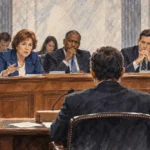
By June 2022, Moss was sitting at a witness table before the House Select Committee investigating the January 6 attack, answering questions from Rep. Adam Schiff about accusations she had already firmly denied.
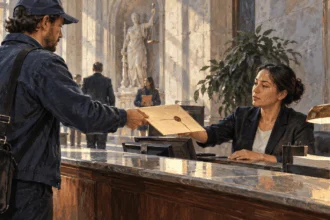
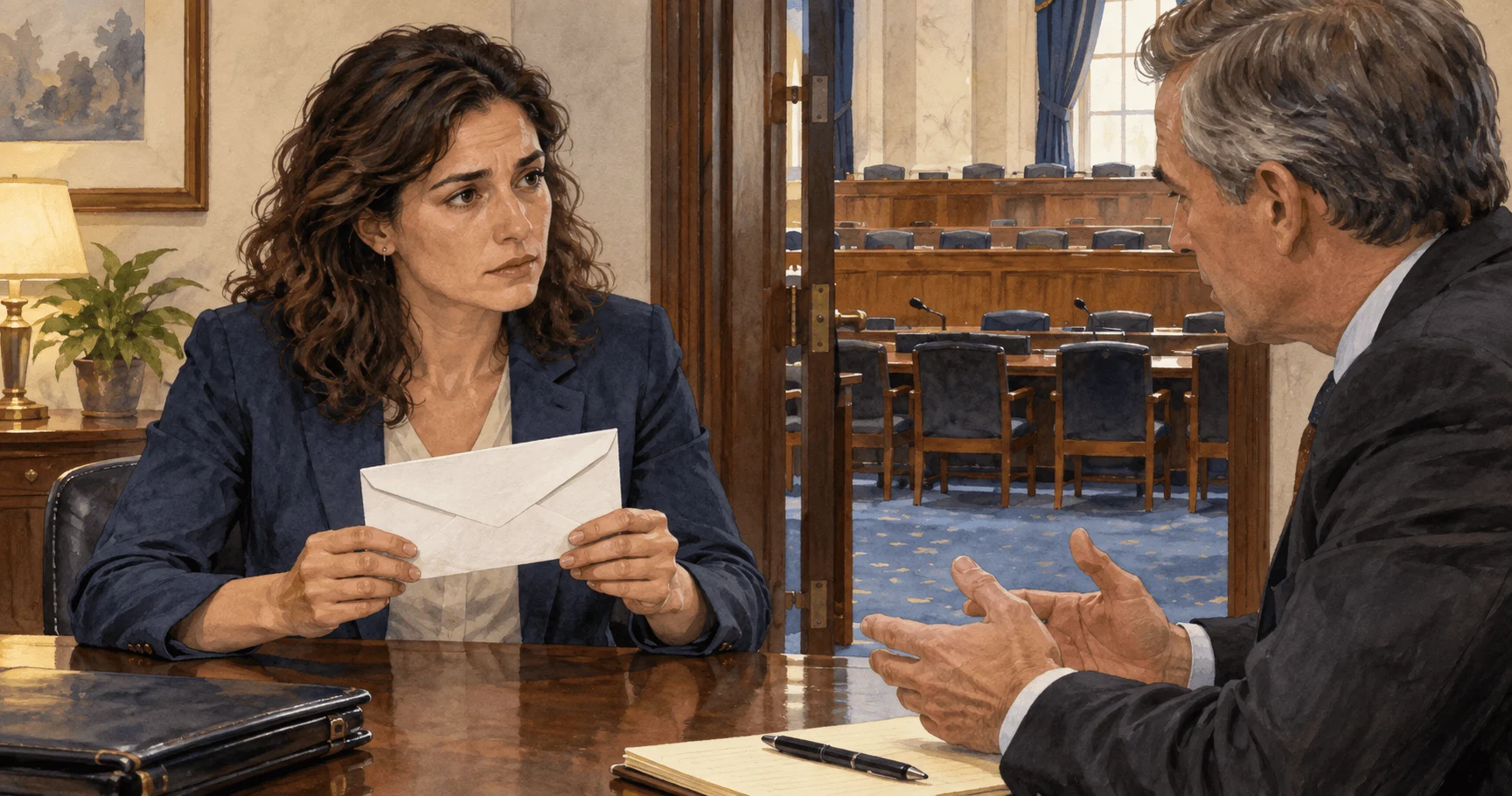
So here is the question that matters if that envelope ever lands on your desk: can Congress force you to testify?
The short answer is yes. A valid congressional subpoena is a legal order, not an invitation. The Congressional Research Service puts it plainly: “the recipient of a duly issued and valid congressional subpoena has a legal obligation to comply, absent a valid and overriding privilege or other legal justification.”
But that sentence has a lot of hinges in it: valid, privilege, justification. Those hinges are where an ordinary witness has real room to move.
The Legal Obligation Is Real, and So Are the Penalties
Federal law, 2 U.S.C. § 192, makes it a misdemeanor to ignore a congressional summons. The statute reaches Every person who having been summoned as a witness by the authority of either House of Congress… willfully makes default, or who, having appeared, refuses to answer any question pertinent to the question under inquiry. The penalty runs to a fine and imprisonment “for not less than one month nor more than twelve months.”
Read that clause again, because the drafters buried a limit inside the threat. The question you refuse to answer has to be “pertinent to the question under inquiry.” Pertinency is not decoration. It is a required part of the crime: the prosecution has to prove it.
Which means the same statute that can put you in jail also hands your lawyer a defense.
The obligation itself is not controversial. If a committee with jurisdiction issues a subpoena tied to an actual investigation, you have to show up. You do not get to decide the inquiry is a waste of time and stay home.
The contested part is everything about how far the demand can reach, and that is where the courts have spent a century drawing lines.
Where the Power Comes From, and Why It Has Edges
Here is a small surprise: the Constitution contains no enumerated power for Congress to investigate, though the Supreme Court has recognized that each House has an implied power to secure information in order to legislate.
The Supreme Court said so directly in Trump v. Mazars USA, decided July 9, 2020: the Court noted that Congress has no enumerated constitutional power to conduct investigations or issue subpoenas, but has held that each House has power to secure needed information in order to legislate. The implied power rides along with the power to make laws, on the theory that you cannot legislate about a problem you are not allowed to learn about.
The foundational case is McGrain v. Daugherty, from January 1927. The Senate had subpoenaed Mally Daugherty, brother of the sitting Attorney General, during an investigation into corruption at the Justice Department. Mally refused.
The Court sided with the Senate, holding that each house has the power “to secure needed information” to legislate, and that the power of inquiry, with process to enforce it, is an essential and appropriate auxiliary to the legislative function.
That is the ceiling on your side of the argument: the power is broad, and courts presume it is being used legitimately.
But the floor exists too, and its name is Watkins v. United States (1957), the Supreme Court decision that overturned Watkins’s contempt conviction.
John T. Watkins was a labor organizer hauled before the House Un-American Activities Committee in the 1950s. He answered every question about himself, then drew the line at naming other people he thought had once belonged to the Communist Party. Convicted of contempt, he saw the Supreme Court throw the conviction out.
The 1957 opinion, whose language still governs, held that Congress’s power to conduct investigations is inherent in the legislative process and is a broad power. And then the turn: “There is no congressional power to expose for the sake of exposure.”
The Court added a due-process point that any frightened witness should tattoo somewhere: It is unthinkable that a person should be punished for refusing to answer a question which he could not determine was within the committee’s jurisdiction.
Mazars refined the same idea for the modern era. One of the subpoenas, issued by the House Financial Services Committee to Deutsche Bank, sought documents related to account activity, due diligence, foreign transactions, business statements, debt schedules, statements of net worth, tax returns, and suspicious activity identified by the bank. The Court refused to grant absolute immunity but also refused to rubber-stamp the subpoenas, insisting on a careful analysis of whether the demands served a “legitimate legislative purpose.”
That case involved a sitting president, a special situation we cover in our look at executive privilege versus congressional oversight. But the underlying test, does the demand connect to possible legislation, reaches private witnesses too.
So the frame is a tension, not a rule. Broad power, presumed valid, tethered to a legislative purpose it cannot fully escape.
Who Can Actually Sign the Thing
People assume any senator who dislikes you can summon you. That is not how it works.
Subpoena power lives in committees, not in individual members, and each committee writes its own rules for using it. Those rules answer the questions that matter to you: does a single chairman get to act alone, or does the whole committee have to vote?
The House gets its authority from Rule XI, clauses 2(m)(1) and 2(m)(3), which let committees issue subpoenas to issue subpoenas for the attendance of witnesses and the production of memoranda, papers, and documents. The Senate operates under Rule XXVI. Within those frameworks, individual committees diverge sharply.
Consider the range. Under the House Oversight Committee’s rules for the 119th Congress, adopted in January 2025, the chair may issue subpoenas unilaterally without a committee vote, though this authority has typically been exercised with notice or consultation with the ranking minority member.
The table below shows how much the answer depends on which committee is calling.
| Committee | Who authorizes a subpoena | Minority role |
|---|---|---|
| House Oversight (119th Congress) | Chair, acting alone | No vote required, though notice or consultation is typical |
| House Judiciary (118th Congress) | Chair, in the conduct of investigations | Expanded chair authority |
| Senate Judiciary | Chair with ranking member’s agreement, or committee vote | Consent or vote required |
| Senate HELP | Committee or subcommittee authorization | Formal committee action |
Sources: House Oversight rules, Senate HELP rules, and law-firm analyses of the 118th Congress rules. Committee rules change each Congress.
Why should you care about internal committee bookkeeping? Because a subpoena that skipped a required step is a defective subpoena.
For a witness, though, there is a colder truth underneath: courts reviewing a subpoena look at formal validity and legislative purpose, not at whether the vote was bipartisan. A partisan subpoena that followed the rules is still enforceable.
What You Can Refuse to Answer
Showing up is mandatory. Answering every question is not.
The strongest shield is the Fifth Amendment privilege against self-incrimination, and it applies in a congressional hearing room exactly as it does in a courtroom. You do not need magic words to raise it. A Fordham Law analysis notes that all that is required is a statement the committee can reasonably understand as an attempt to invoke the privilege.
Once you invoke it properly, the committee cannot punish you for staying silent on questions that could incriminate you. There is one big exception.
Congress can grant you immunity. Under federal statutes including 18 U.S.C. § 6005, a court can order you to testify by promising that your compelled words will not be used against you in a criminal case. Once immunity is on the table, the Fifth Amendment stops shielding you, and refusal becomes contempt.
Immunity is rare, because it requires coordination between Congress and the Justice Department, and prosecutors are wary of handing witnesses a shield against their own future cases.
There is also a trap in the privilege. If you start answering questions on a subject, a court may decide you gave up your Fifth Amendment right for that entire subject. Begin the story and you may be forced to finish it. That is why witnesses with real criminal exposure often decline to engage at all rather than answer selectively.
Other privileges apply, with attorney-client privilege the most common in document fights. But notice what is not protected: embarrassment. Committee materials quote the old statutory rule that “no witness is privileged to refuse to testify to any fact, or to produce any paper” merely because the testimony might disgrace him. The law draws a hard line between incrimination, which it protects, and humiliation, which it does not.
That distinction is exactly what makes congressional hearings feel so brutal to private witnesses, and it brings us to the criticism.
The Civil-Liberties Objection: Lawful Is Not the Same as Fair
Civil-liberties advocates do not dispute that Congress has the power. They dispute what the power feels like from the witness chair.
The Project On Government Oversight, a nonpartisan watchdog, frames the structural problem bluntly, noting in a Mayer Brown white paper it published that the congressional system offers relatively few procedural protections for those individuals or companies who find themselves subject to what one of the paper’s authors called the grand inquest of the state, and that recourse to the judiciary for relief from such action is extremely limited.
Stack up what a courtroom gives you that a hearing does not. No rules of evidence. No neutral judge; the members asking questions are also the ones deciding what is relevant. No right to cross-examine your accuser.
A civil-liberties commentary has pressed this point in a live dispute, arguing that the recent House subpoena to Harvard University over campus advocacy on Palestine and Israel raises First Amendment concerns the Court recognized in Watkins and Sweezy v. New Hampshire.
The historical anchor for all of this is HUAC. During the McCarthy era, private citizens including the Hollywood Ten went to jail for contempt of Congress after refusing to answer questions about their political beliefs. Many more were blacklisted after televised accusations, never charged with any crime. Watkins itself grew out of that machinery, which is why the Court’s warning against exposure for the sake of exposure carries the weight it does.
What Happens If You Say No
Congress has three ways to enforce a subpoena, and they are wildly uneven in practice.
| Mechanism | How it works | Practical reality |
|---|---|---|
| Inherent contempt | The chamber directs its Sergeant-at-Arms to arrest and detain the witness | Long dormant; last used in 1934 |
| Criminal contempt (2 U.S.C. § 192) | Chamber votes contempt, refers to the U.S. Attorney for D.C. | Depends on DOJ, which retains discretion to decline |
| Civil enforcement | A committee sues in federal court for an order compelling compliance | Slow, but turns the subpoena into a binding court order |
Sources: Congressional Research Service and CRS report on contempt.
The criminal route runs through the executive branch, and that is its weakness. The chamber adopts a contempt resolution and certifies it to the U.S. Attorney for the District of Columbia, who is statutorily directed to bring it to a grand jury.
We trace where that road actually leads in our piece on how criminal contempt of Congress works and when it is enforced.
Civil enforcement is the path that bites, and the Backpage.com case shows why.
In 2015, the Senate Permanent Subcommittee on Investigations subpoenaed Carl Ferrer, chief executive of Backpage.com, for documents about the site’s online classified ads. Ferrer refused to fully comply. So the subcommittee did not wait for a criminal referral; it went to federal court and asked a judge to enforce the subpoena directly.
Judge Rosemary Collyer of the U.S. District Court for the District of Columbia sided with the subcommittee on August 5, 2016 — though the D.C. Circuit later dismissed the case as moot and vacated her decision. The subcommittee, her opinion noted, was investigating the business practices of websites accused of facilitating sex trafficking. She rejected Ferrer’s First Amendment arguments and his argument that the demand was too broad, with a line that captures how deferential courts tend to be: “Because Mr. Ferrer has failed to demonstrate that the Subcommittee’s requests are unreasonable, oppressive, or otherwise unlawful, the Court will enforce the subpoena.”
Then she ordered him to comply within ten days. At that point the demand was no longer merely contempt of Congress. Defying it would have been contempt of a federal court, enforceable by the judge’s own power to jail.
That is the real lesson of the enforcement machinery. The dramatic-sounding tools are mostly theater or bottleneck. The quiet civil lawsuit is what turns a committee’s paper into a mandate you cannot ignore.
The First Forty-Eight Hours Decide More Than the Law Does
Because inherent contempt is a museum piece, criminal contempt depends on a reluctant DOJ, and civil suits are slow and expensive, committees generally need your cooperation more than they need to make an example of you. That imbalance creates room to negotiate that the statutes never mention.
Most of that negotiation is invisible. It happens in emails and phone calls between a witness’s counsel and committee staff, and it rarely shows up in any court opinion.
What gets bargained? Scope, first. A document demand that would take months can sometimes be narrowed to specific custodians, date ranges, or phased in rolling productions.
Format, second. A private witness facing a televised hearing can sometimes convert it into a closed, staff-conducted transcribed interview, which is less intimidating and lets counsel participate more fully.
Timing, third. A witness who engages early and in good faith can often win a delay that a stonewaller never would.
None of this is guaranteed by law. It is available because committees would rather get information quickly than litigate for a year to prove a point.
The catch is that early choices lock you in, sometimes permanently. A witness who voluntarily sits for a wide-ranging, unprotected interview may waive privileges or create a transcript that later surfaces in a regulatory or criminal case. That is the risk a seasoned lawyer is watching for in the first two days, when a panicked witness is most tempted to either over-comply or refuse outright.
Which is why the honest advice, from defense firms and watchdogs alike, is the same: do not answer a congressional subpoena alone, and do not answer it slowly.
The Harm the Law Was Never Built to Address
Return to Shaye Moss and Ruby Freeman, because their testimony reveals the gap the legal framework leaves open.
Neither woman was accused of a crime by Congress. Neither faced contempt. They were witnesses to a national dispute they never asked to join, summoned to explain events that began at their local workplace.
Freeman, an Atlanta small-business owner known as “Lady Ruby,” had proudly worn a shirt with that name on Election Day 2020, in every color she owned. She testified that she has not worn it since, and never will. She described herself as a small business owner, a mother, and a proud American citizen, and told the committee she had lost her name, her reputation, and her sense of security.
Public figures had made specific accusations against the two women. Rudy Giuliani, in a Georgia Senate hearing, had described a video of the two women “surreptitiously passing around USB ports as if they are vials of heroin or cocaine.” The January 6 committee later showed that the object in the video was a piece of candy. President Trump also attacked Freeman by name on his recorded call with Georgia Secretary of State Brad Raffensperger.
Here is the uncomfortable point for anyone trying to answer can Congress force you to testify. The Fifth Amendment protects you from prosecution. Committee rules govern who signs the subpoena and how many lawyers may question you. No rule protects you from the death threats, the lost job, the fear of leaving your house.
The law that compels your testimony has almost nothing to say about the harm that testimony can bring down on you. That is not a loophole. It is the design.
Congress’s power to compel is settled and, for the foreseeable future, unlikely to shrink. The live question is whether the harms that ride alongside it, the exposure Watkins warned about nearly seventy years ago, will ever be met with protections as sturdy as the power itself. So far they have not, and the next private citizen to open that thick envelope from Capitol Hill will find the same lopsided setup waiting.
Our articles make government information more accessible. Please consult a qualified professional for financial, legal, or health advice specific to your circumstances.