Digital surveillance refers to the government’s collection, monitoring, and analysis of Americans’ electronic communications and data. Federal agencies including the NSA, FBI, and Department of Homeland Security conduct surveillance through multiple programs and technologies to gather information on communications like phone calls, emails, text messages, social media activity, and internet browsing. While surveillance programs are designed to support national security and law enforcement objectives, they raise significant questions about privacy rights, government oversight, and how extensively Americans’ communications can be monitored.
Large-Scale Surveillance Programs
The NSA operates broad surveillance programs authorized under Section 702 of the Foreign Intelligence Surveillance Act. These programs include PRISM, which obtains communications directly from major tech companies, and Upstream, which intercepts international internet communications as they flow in and out of the United States. The scope of these programs has grown significantly over time, with the number of monitored targets expanding substantially. The government reports that Americans’ communications are often caught in this process, particularly when they communicate with people abroad.
Emerging Surveillance Technologies
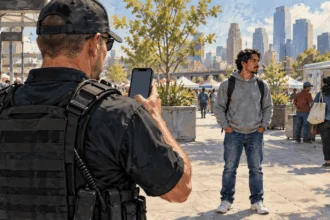
Beyond traditional communications surveillance, federal agencies are increasingly deploying advanced technologies to monitor and identify people. Federal law enforcement agencies routinely monitor social media platforms for investigations and threat identification. Immigration enforcement has also adopted new technological tools—explore how ICE’s mobile facial recognition systems are being deployed in enforcement operations and what privacy implications they present.
Privacy Protections and Oversight
Surveillance programs operate under multiple layers of oversight by the Foreign Intelligence Surveillance Court, Congress, and the Executive Branch. However, civil rights organizations emphasize that stronger protections are needed, including requirements for warrants before searching surveillance databases for Americans’ information and greater transparency about how many Americans’ communications are collected and searched.
If police want to know who was near a crime scene, they can ask Google for a list of every…
In 2018, the Supreme Court ruled that police need a warrant to track your movements through your cell phone records.…
An ICE agent points a government-issued smartphone at someone's face, snaps a photo, and within seconds knows whether that person…