Last updated 9 months ago. Our resources are updated regularly but please keep in mind that links, programs, policies, and contact information do change.
When Donald Trump spoke with Chinese President Xi Jinping on February 4, 2026, the call itself lasted perhaps an hour. The preparation consumed days.
Dozens of government employees across the State Department, National Security Council, intelligence agencies, Treasury, and the Office of the U.S. Trade Representative had already been working to assemble briefing materials, intelligence assessments, talking points, and strategic objectives. The White House Situation Room coordinated secure communications lines. Interpreters with Top Secret clearances studied technical vocabulary. Senior NSC directors argued about what the commander-in-chief should and shouldn’t say.
- How the Situation Room Prepares Calls
- The Briefing Book
- The Interpreters
- Intelligence Gathering on Foreign Leader Calls
- Who Participates in the Call
- What the Call Initiated
- Constitutional Authority and Legal Requirements
- After the Call: Documentation and Follow-Up
- When Presidents Ignore the Briefing
- Why Direct Leader-to-Leader Calls Matter More Now
The order was intentional—it showed where China stood in its relationships. For the Americans, it was a logistical nightmare compressed into a few hours.
This is how calls with foreign leaders work. Not the official statements released to the public afterward—the ones where the former president emphasizes soybean purchases while Xi emphasizes Taiwan—but the government process that kicks into gear before the phone call ever happens.
How the Situation Room Prepares Calls
When a call gets scheduled—either because the White House wants to call someone or a foreign leader has requested a call—the Situation Room director coordinates with the foreign leader’s team to confirm timing, test communications lines, and arrange interpretation. For a call between the president and Xi, that means setting up secure phone lines and coordinating timing across time zones (accounting for a time difference that varies between 12 and 13 hours depending on whether daylight saving time is in effect), and arranging for a State Department interpreter who has both Top Secret clearance and fluency in diplomatic Mandarin.
The Situation Room was upgraded in 2023 with new secure communications equipment, with the renovation completed in August of that year. Video calls—like the one Xi held with Putin—require not only voice encryption but video encryption, with both sides using compatible systems. Phone calls are simpler to secure but lose the nonverbal communication that can matter in high-stakes diplomacy.
During the call itself, two officers rapidly type every word they hear while a third officer, in a separate room, repeats everything into a microphone for voice-to-text transcription. The three transcripts get reconciled afterward—someone always hears a country name or project name slightly differently—into a single document.
That document is explicitly not a verbatim transcript. It’s a memo based on notes taken during the call, not a word-for-word recording.
The Briefing Book
Before the president could speak with Xi, someone had to prepare what’s called the Briefing Book. This falls to the National Security Council’s Asia directorate, which coordinates with multiple agencies to gather information and draft materials.
The State Department’s Bureau of East Asian and Pacific Affairs provides diplomatic context: recent cable traffic from the U.S. Embassy in Beijing, assessments of Xi’s current political position, recommendations about what messages the president should emphasize. The intelligence community—coordinated through the Director of National Intelligence—contributes classified assessments about military developments, Xi’s recent statements, China’s economic situation, and intelligence about Xi’s relationship with other foreign leaders. Treasury provides analysis of China’s economic behavior and recent trade dynamics. The Office of the U.S. Trade Representative contributes expertise about ongoing trade negotiations.
The NSC team pulls all this together into a briefing document studied before the call—usually the night before or the morning of the scheduled conversation.
Former NSC officials describe the book as containing several standard components: talking points organized by topic, background on the foreign leader’s recent actions, intelligence assessments, recommendations about what would constitute success, limits on what the president shouldn’t agree to, and notes about the foreign leader’s personality and communication style.
For the February 4-5 call, the briefing book had to address contradictory objectives. The administration wanted economic concessions—the soybean purchases, purchases of American oil and gas, market access for U.S. businesses. Xi was expected to emphasize Taiwan, viewing American arms sales to the island as intervention in China’s internal affairs. The briefing team had to prepare for both conversations simultaneously, knowing they would intersect in unpredictable ways.
China is both a major trading partner and a potential rival. When you’re calling the Prime Minister of Japan, the assumption is you share fundamental interests. When you’re calling Xi Jinping, you’re managing competition, cooperation, and the possibility of conflict all at once.
The Interpreters
Interpreters are career State Department employees with Top Secret clearances who receive the same briefing materials as the White House. They study the technical vocabulary and diplomatic terminology that will likely arise. They understand the context.
During a call, when the White House speaks, the interpreter translates into the foreign language. This serves multiple purposes: it allows the foreign leader to hear professional interpretation, and it gives the American side a moment to review what was said and catch errors before the foreign leader responds.
For someone with an unconventional communication style, the interpreter role becomes particularly delicate. The interpreter must accurately convey what gets said—even unusual phrasing or grammatical irregularities—while also understanding when subtle correction might be welcome.
Intelligence Gathering on Foreign Leader Calls
When Xi called Putin first and the president second, American intelligence agencies faced a question with significant implications: How much could they learn about the Putin-Xi conversation, and how quickly?
The NSA and CIA monitor foreign leader communications. Intelligence agencies try to intercept and understand calls between foreign leaders. But when the call involves secure communications between Russia and China—two countries skilled at protecting their secrets—the difficulty increases substantially.
American intelligence would likely have had some information about the Putin-Xi call. This might include information from allied intelligence services, human intelligence sources, or technical intelligence collected through legal means. State Department and CIA experts would be asked to synthesize whatever was available and provide the briefing team with analysis of what Xi had said to Putin, what issues seemed to be priorities, and what that might imply for the call with the president.
The team knows something about what Xi told Putin. Xi knows they probably know something, but not how much. Both sides are operating with incomplete information, trying to read signals and implications from what the other says and doesn’t say.
The speed of modern communications has made this dynamic more intense. Thirty years ago, it would have been nearly impossible for American personnel to gather, analyze, and incorporate intelligence about a Putin-Xi call into a briefing in hours. Now it’s expected.
Who Participates in the Call
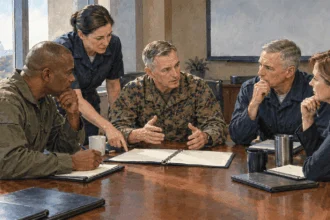
On the day of the call, the Situation Room director, the National Security Advisor (or a deputy), the Chief of Staff, and usually the senior NSC director responsible for Asia gather in or near the Oval Office.
When ready, the Situation Room director—sitting at the end of the couch in the Oval Office—communicates with Situation Room operators via secure phone, giving them the signal to proceed. The operators contact their counterparts in China to confirm Xi is ready. The call connects.
Presidents want autonomy—they don’t want to feel constrained or manipulated by institutional personnel. But they also appreciate having experts available when unexpected issues arise. The presence of career experts in the Oval Office during calls attempts to balance these competing concerns.
What the Call Initiated
Beijing’s readout focused on Taiwan, emphasizing strategic concerns. Both sides got to claim they achieved their objectives.
But the consequences extend beyond what was said. The statement about visiting China in April created obligations throughout the U.S. government. An April visit to China requires months of diplomatic planning, coordination between the two countries, a large entourage, media arrangements, and usually substantial bilateral agreements the two leaders will sign during the visit.
The soybean commitment similarly created follow-up work. These commitments need to be memorialized in subsequent conversations between officials, potentially in written agreements, certainly in official communications. American agricultural personnel need to understand exactly what China committed to. Counterparts in Beijing need to do the same.
After the call, there would be follow-up conversations between the Secretary of State and China’s Foreign Minister, between USTR officials and negotiators, between NSC Asia specialists and their counterparts. These follow-up conversations translate the general statements made during the call into specific policies and agreements.
Constitutional Authority and Legal Requirements
The Constitution gives the president power over foreign policy, which includes making calls to other leaders. The Constitution makes the president the nation’s main representative to other countries, and the authority to conduct diplomacy flows from this fundamental grant.
Unlike treaties, which require Senate ratification, or military deployments, which trigger legal requirements about military action, routine calls are the president’s responsibility alone.
But there are constraints. The White House cannot unilaterally change tariff rates without following procedures established by law. Cannot commit the United States to new military expenditures without congressional appropriation. Cannot make treaties without Senate ratification.
This is why the process includes personnel from Treasury, USTR, and other agencies—to ensure understanding of what commitments are within executive authority and what would require further action or congressional approval.
Federal law requires that records—including memoranda of conversations with foreign leaders—be saved and eventually transferred to the Archives. This creates a legal obligation to create and preserve records of calls. There has been considerable controversy about whether this requirement has sometimes been violated by failing to create records at all. But for calls that go through the standard Situation Room process, the documentation happens automatically.
After the Call: Documentation and Follow-Up
Once the call concludes, the Situation Room’s draft transcript goes to the NSC directorate responsible for the call—in this case, the Asia directorate. An NSC senior director reviews the transcript, fixes any errors, and clarifies technical terms, and decides what format the final memo will take.
Sometimes the decision is to produce an explicit, word-for-word or close to it transcript. Other times, personnel produce a summary or a brief prose description of the call.
The memo goes to the National Security Advisor’s front office for additional review, then to the NSC’s executive secretary, who keeps records and decides who needs to see them—which officials throughout the government need to see the memo. This might include the Secretary of State, Secretary of Defense, Director of National Intelligence, Director of the CIA, and various others depending on the content.
Those officials can share the memo with their teams who worked on the issues so that they are aware of what happened on the call.
For those working on Asia policy in the State Department and NSC, this creates ongoing work. They track what commitments were made, monitor whether China is fulfilling them, and prepare for subsequent calls by assessing what progress has been made on previous commitments.
When Presidents Ignore the Briefing
This entire process assumes the president will follow the briefing—but that doesn’t always happen.
Presidents are free to ignore the briefing, ignore the talking points, and say whatever they wish during the call. They sometimes do exactly this.
The process reveals a basic conflict in how American government works: the balance between constitutional authority over foreign policy and the knowledge of career diplomats and experts. Presidents come to office with their own views about what American foreign policy should be. But they also rely on career diplomats, military officers, and intelligence analysts who have spent their careers developing expertise.
Career NSC personnel prepare the briefing to help the president understand the options—or at least ensure understanding of the implications of various positions. But ultimately, the decision about what to say rests with the Oval Office.
This creates situations where the careful work of dozens of people over several days can be rendered irrelevant by a decision to go off-script. Sometimes that produces diplomatic breakthroughs. Sometimes it produces problems that take months to fix.
The system is designed to give the best available information and expert analysis while preserving autonomy. Whether it succeeds depends on whether the White House wants to use what the system provides.
Why Direct Leader-to-Leader Calls Matter More Now
Presidents now rely more on direct calls to other leaders instead of formal negotiations. In the past, diplomats handled most negotiations, with leaders only involved at the end.
Direct communication between leaders can cut through bureaucratic obstacles and create personal relationships that facilitate cooperation. It can respond quickly to fast-moving events.
But it also means one conversation between two leaders can make huge decisions without much oversight. When the president and Xi speak for an hour, they can make commitments that shape the U.S.-China relationship for years. The process attempts to ensure those commitments serve American interests, but it cannot guarantee outcomes.
The February 4-5, 2026 call will prove consequential not because of the specific words exchanged, but because of what it initiated: the planned April visit, the agricultural purchase commitments, the implicit understanding that the two leaders would maintain frequent communication.
All of these developments will generate subsequent processes, follow-up calls, and diplomatic exchanges. American foreign policy is shaped by the work of analyzing information and following up.
That work is conducted by career professionals who rarely appear in news headlines but whose expertise and institutional memory shape the actual content and trajectory of American engagement with the world. The State Department’s Operations Center runs 24 hours a day, monitoring world events and preparing briefings. NSC personnel coordinate across agencies. Interpreters study technical vocabulary. Intelligence analysts synthesize information.
When Xi and the president spoke on February 4-5, the public saw a readout and a Truth Social post. Behind that: hundreds of hours of work by people whose job is to make sure that when the phone gets picked up, there’s understanding of what’s being discussed and what can be delivered.