
How a Bill Becomes a Law
Why Most Bills Never Become Law: The Hidden Chokepoints in Congress
Congress introduces thousands of bills each year, but most die from Senate rules, budget reconciliation limits, or the obscure Byrd Rule test.

Congress introduces thousands of bills each year, but most die from Senate rules, budget reconciliation limits, or the obscure Byrd Rule test.
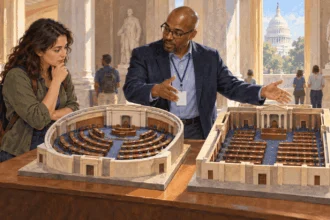
Article I, Section 1 of the United States Constitution establishes that "All legislative Powers herein granted shall be vested in a Congress of the United States,…

Many Americans observe the workings of their government and wonder how certain issues come to dominate public discussion and legislative action, while others, seemingly just as…

Every law you see in action started as an idea in someone's head. But the journey from that initial spark to real-world impact involves two crucial…
The American system of government rests on a clear hierarchy of laws designed to provide both stability and the capacity for change. At the…
When a bill becomes a law, it typically follows a path through congressional committees. But there's an alternative route in the House of Representatives…
Why Congress passes bills thousands of pages long, what a one-subject rule would actually require, and what happened in the states that already have one.
The presidential veto can stop legislation, but Congress has a path to override it. Pocket vetoes and the whole-bill rule determine what can happen next.
The U.S. Congress has its own unique language and procedures that can seem bewildering to the average citizen. Terms like "rider" and "clean bill"…
The United States Congress, as the legislative branch of the federal government, holds the fundamental responsibility of crafting the nation's laws. This power, granted…
The United States Congress transforms ideas into laws that govern American society through legislative proposals known as bills. While we commonly use this single…
The United States Congress uses several tools to conduct its business beyond the familiar "bills" that become laws. Congress also relies on three types…
Bills become laws only after Congress and the president complete the enactment process. Committee votes, passage and enrolled text mark different stages.