Last updated 11 months ago. Our resources are updated regularly but please keep in mind that links, programs, policies, and contact information do change.
Exercising your right to vote presents unique challenges if you’re serving in the military away from home, an eligible family member, or a U.S. citizen residing overseas. Distance, mobility, varying state election laws, and mail delays can create significant hurdles. To address these obstacles, the U.S. Department of Defense (DoD) administers the Federal Voting Assistance Program (FVAP).
Operating under the authority of the Uniformed and Overseas Citizens Absentee Voting Act (UOCAVA), FVAP serves as your dedicated resource to vote successfully, no matter where you are in the world. This guide provides a comprehensive overview of FVAP, the protections under UOCAVA, and the tools and processes available to ensure your vote is counted.
Understanding FVAP and Your Voting Rights
FVAP’s Core Mission
The core mission of the Federal Voting Assistance Program is clear: “to ensure Service members, their eligible family members, and overseas citizens are aware of their right to vote and have the tools and resources to successfully do so – from anywhere in the world.” This mission recognizes the inherent difficulties faced by a globally dispersed and mobile population in participating in the U.S. electoral process.
FVAP functions primarily as an assistance program, providing the necessary information, tools, and support to enable eligible citizens to navigate the absentee voting process effectively.
FVAP does not operate in isolation. It collaborates closely with:
- Military Services (Army, Navy, Air Force, Marine Corps, Space Force, Coast Guard)
- Department of State (assisting citizens abroad via embassies and consulates)
- Department of Justice (responsible for UOCAVA enforcement)
- Election officials from all 50 states, the District of Columbia, Puerto Rico, Guam, the U.S. Virgin Islands, and American Samoa
These partnerships underscore FVAP’s crucial role as a central coordinator within a complex, decentralized system. Elections in the U.S. are primarily administered at the state and local level, resulting in 55 different sets of rules and procedures.
FVAP serves as the essential bridge, connecting federal responsibilities under UOCAVA with state election administration and the unique needs of military and overseas voters. It disseminates critical state-specific voting information, develops standardized federal forms accepted across jurisdictions, and provides guidance and training to ensure a smoother process.
FVAP’s approach involves both proactive outreach and reactive support. It proactively develops and distributes tools like the Federal Post Card Application (FPCA) and the Federal Write-In Absentee Ballot (FWAB), maintains the comprehensive FVAP.gov website with online assistance tools, and conducts awareness campaigns.
It also offers reactive support through its call center and email helpdesk, and through the network of Voting Assistance Officers (VAOs) stationed at military installations worldwide who provide direct, personalized assistance.
The existence of mechanisms like the FWAB, designed specifically for situations where the primary ballot process fails, demonstrates FVAP’s understanding that robust support systems and contingency plans are necessary for this unique voter population.
The Law Protecting Your Vote
The cornerstone of voting rights for military and overseas citizens is the Uniformed and Overseas Citizens Absentee Voting Act (UOCAVA). Enacted by Congress in 1986 and signed into law by President Ronald Reagan, UOCAVA consolidated and improved upon previous, fragmented legislation to create a more unified framework.
Its fundamental purpose is to make it easier for eligible uniformed service members and overseas citizens to register to vote and cast absentee ballots in federal elections, provided they are otherwise qualified. While UOCAVA specifically mandates procedures for federal elections (President, Vice President, U.S. Senate, U.S. House of Representatives), many states have voluntarily extended similar protections and processes for state and local elections as well.
UOCAVA was significantly strengthened in 2009 by the passage of the Military and Overseas Voter Empowerment (MOVE) Act, which was incorporated as part of the National Defense Authorization Act for Fiscal Year 2010 (P.L. 111-84).
Key provisions mandated by UOCAVA, as amended by the MOVE Act, require states and territories to:
- Permit Absentee Registration and Voting: States must allow covered citizens to register to vote absentee and to cast absentee ballots in federal elections.
- Timely Ballot Transmission: States must transmit requested absentee ballots to UOCAVA voters (who submitted their request on time) no later than 45 days before a federal election, unless granted a hardship waiver by the DoD. This 45-day rule is crucial for allowing sufficient round-trip time for ballots.
- Electronic Ballot Delivery: States must provide options for the electronic transmission (e.g., email, fax, online portal) of blank absentee ballots to requesting voters. This helps bypass potential mail delays for receiving the ballot.
- Accept Standardized Federal Forms: States must accept and process the Federal Post Card Application (FPCA) for voter registration and absentee ballot requests. They must also accept the Federal Write-In Absentee Ballot (FWAB) as a backup ballot for federal offices under specific conditions.
- Remove Certain Barriers: States cannot reject otherwise validly completed UOCAVA forms or ballots solely because they fail to meet state-specific requirements regarding paper type, envelope specifications, or notarization.
The specific mandates within UOCAVA and the MOVE Act reveal a clear legislative intent to dismantle systemic barriers that historically disenfranchised military and overseas voters. Requirements like the 45-day ballot transmission deadline directly combat the problem of ballots arriving too late to be voted and returned. The mandate for electronic delivery options provides a vital alternative to potentially slow or unreliable international mail systems.
The FWAB exists precisely as an acknowledgment that, despite best efforts, the primary system of delivering state ballots might fail, necessitating a federally guaranteed backup. Furthermore, prohibiting rejections based on technicalities like paper weight or notarization removes bureaucratic hurdles that are particularly burdensome for voters located abroad or on deployment.
The responsibility for enforcing UOCAVA rests with the U.S. Department of Justice (DOJ). The Attorney General is authorized to bring civil actions against states or jurisdictions that fail to comply with the law’s requirements. The DOJ has, in the past, successfully obtained court orders and consent decrees compelling states to extend deadlines or modify procedures to ensure UOCAVA compliance, particularly regarding timely ballot transmission. FVAP works closely with both the DOJ and state election officials to promote compliance and facilitate the smooth implementation of the law.
Who Can Use FVAP?
The protections and services offered under UOCAVA and administered by FVAP are available to specific groups of U.S. citizens who are eligible to vote:
Members of the Uniformed Services on Active Duty: This includes members of the U.S. Army, Navy, Marine Corps, Air Force, Space Force, and Coast Guard. It also includes commissioned officers of the Public Health Service and the National Oceanic and Atmospheric Administration (NOAA). UOCAVA applies to these members if they are absent from their established voting residence due to their active-duty service, even if they are currently stationed within the United States but outside of their voting jurisdiction.
Members of the U.S. Merchant Marine: Individuals serving in the U.S. Merchant Marine who are absent from their voting residence due to that service are covered.
Eligible Spouses and Dependents: The spouses and dependents of members of the Uniformed Services and Merchant Marine are also covered under UOCAVA, provided they are U.S. citizens and are absent from their voting residence due to the service member’s or mariner’s active duty or service.
U.S. Citizens Residing Outside the United States: This broad category includes any U.S. citizen residing outside the U.S. who is eligible to vote in federal elections in their last state or territory of residence. This encompasses various individuals, such as federal employees stationed abroad, private citizens working or living overseas, students studying abroad, and others who maintain their U.S. voting eligibility.
A critical element for all UOCAVA voters is establishing their Voting Residence. This is the address in a U.S. state or territory that determines the voter’s eligibility and the specific jurisdiction from which they request and cast their ballot. The rules for determining this address differ slightly:
For Military Members: The voting residence is typically the member’s state of legal residence (SLR). This is often, but not always, the same as their military “Home of Record.” Service members can establish or change their legal residence, but should be aware that doing so can have state tax implications and other legal consequences. Consulting with a military legal assistance office is advisable before changing legal residency.
For Overseas Citizens: The voting residence is generally the U.S. address where the citizen last resided immediately before departing the United States. This address remains valid for voting purposes even if the citizen no longer owns property there, has other ties to the state, or has uncertain plans to return.
For Spouses/Dependents: Eligible family members may generally choose to vote using the service member’s legal residence, or they may retain their own previously established voting residence. The Military Spouse Residency Relief Act (MSRRA) provides certain protections allowing spouses to maintain a specific legal residence under certain conditions; legal advice may be beneficial.
For Citizens Born Abroad/Never Resided in the U.S.: U.S. citizens who were born outside the U.S. and have never established residency in the U.S. may still be eligible to vote. Many states allow such citizens to claim one of their U.S. citizen parents’ voting residence as their own. FVAP provides a list of states allowing this.
It is important to note that military members and their families who are stationed within the county/jurisdiction of their established voting residence typically vote using regular local procedures (either in person or via standard state absentee voting, if applicable), rather than the special UOCAVA absentee process. Resources like Vote.gov or state election websites are more appropriate for these individuals.
These eligibility rules, while generally clear, contain nuances that require voters to pay close attention to their specific circumstances. Factors like current duty station location relative to voting residence, spousal residency choices under MSRRA, or the unique situation of citizens who have never lived in the U.S. highlight the need for careful self-assessment. FVAP.gov provides extensive guidance, and voters with complex situations may benefit from consulting FVAP resources, a Voting Assistance Officer, or legal counsel.
Table 1: UOCAVA Eligibility Summary
| Group | Key Criteria | Key Notes |
|---|---|---|
| Uniformed Service Member | Active duty in Army, Navy, Air Force, Marine Corps, Space Force, Coast Guard, PHS, NOAA; Absent from voting residence due to service (even if stationed in US) | Includes Space Force via interpretation. Covers members stationed outside their voting jurisdiction, regardless of country. |
| Merchant Mariner | Member of U.S. Merchant Marine; Absent from voting residence due to service | Must be serving in U.S. Merchant Marine. |
| Eligible Family Member | Spouse or dependent of Uniformed Service member or Merchant Mariner; Absent from voting residence due to member’s service | Must be U.S. citizen. Can often use member’s voting residence or maintain their own. MSRRA may apply to spouses. |
| Overseas Citizen | U.S. citizen residing outside the U.S.; Eligible to vote in last U.S. state/territory of residence | Includes federal employees, private citizens, students, etc. Voting residence remains valid even without current ties or intent to return. |
| Citizen Never Resided in US | U.S. citizen born abroad who has never lived in the U.S. | Many states allow using a U.S. citizen parent’s voting residence. Check FVAP.gov for state specifics. |
FVAP’s History and Role within the DoD
The Federal Voting Assistance Program is formally established within the Department of Defense structure. The Secretary of Defense holds the designation, assigned by the President, as the primary federal official responsible for administering UOCAVA’s functions. This responsibility is delegated through the Under Secretary of Defense for Personnel and Readiness (USD(P&R)) to the Director of FVAP and the FVAP office.
FVAP represents an evolution of federal efforts to support military and overseas voting, building upon earlier (now repealed) laws like the Federal Voting Assistance Act of 1955 and the Overseas Citizens Voting Rights Act of 1975. The enactment of UOCAVA in 1986 provided a more robust and consolidated legal foundation, and the subsequent MOVE Act amendments in 2009 further modernized procedures and strengthened voter protections.
Within its DoD mandate, FVAP undertakes a wide range of activities. These include developing standardized procedures and guidance, most notably publishing the comprehensive Voting Assistance Guide. FVAP creates and distributes the critical federal forms – the FPCA and FWAB. A significant part of its mission involves training the extensive network of Voting Assistance Officers (VAOs) across the military services and coordinating with the Department of State for embassy/consulate assistance.
FVAP also conducts extensive outreach efforts to raise awareness among eligible voters. Furthermore, FVAP is tasked with conducting post-election surveys of voters, VAOs, and election officials to gather data on participation rates, challenges encountered, and the effectiveness of assistance programs. This data informs FVAP’s legally required reports to the President and Congress on the functioning of UOCAVA.
This continuous cycle of legislative updates, program implementation, data collection, analysis, and reporting demonstrates that FVAP is not a static entity. It adapts based on new laws like the MOVE Act and actively uses empirical data from its surveys and partnerships to identify persistent challenges (such as voter confusion about rules or gaps in awareness) and refine its strategies and recommendations for future election cycles. This data-informed approach is essential for improving the effectiveness of voting assistance for a population facing unique and ongoing obstacles.
FVAP in Action: Services and Tools to Help You Vote
FVAP provides a suite of services and tools, primarily accessible through its website, designed to simplify the absentee voting process for UOCAVA citizens.
Your Online Portal: Navigating FVAP.gov
The official FVAP website serves as the central hub for information and resources related to military and overseas voting. It is frequently described as a “one-stop-shop” for UOCAVA voters. The site is designed to provide easy access to essential tools and state-specific information:
State-Specific Information: A prominent feature allows users to select their state or territory (often via an interactive map or dropdown menu) to access tailored guidelines for absentee voting, crucial election dates and deadlines, contact information for local election offices, and links to state-run systems for checking the status of a submitted ballot.
Federal Forms Assistants: Direct links lead to online assistants that guide users step-by-step through completing the Federal Post Card Application (FPCA) and the Federal Write-In Absentee Ballot (FWAB).
Voting Assistance Guide: The comprehensive Voting Assistance Guide is readily accessible, providing detailed rules and procedures for all states and territories.
Voting Assistance Officer Locator: A search tool helps military personnel find contact information for their nearest Installation Voting Assistance Office (IVAO).
Updates and Communication: The site features the latest FVAP news, voter alerts, links to sign up for email notifications, and contact information for FVAP support.
Supporting Resources: Links to FAQs, downloadable forms and materials (like postage-paid envelopes), and information categorized by voter type (Military Voter, Overseas Citizen Voter) are also available.
The comprehensive nature of FVAP.gov positions it as the essential self-service resource for UOCAVA voters. By consolidating federal guidelines, state-specific rules, essential forms, and support contacts in one accessible digital location, the website empowers users to find the information and tools they need independently. This self-service capability is particularly valuable for a globally dispersed population operating across different time zones and potentially lacking easy access to in-person assistance.
The Essential First Step: The Federal Post Card Application (FPCA)
The Federal Post Card Application (FPCA), officially designated Standard Form 76, is the primary document used by UOCAVA citizens to initiate the absentee voting process. Its critical importance stems from its dual function: it serves simultaneously as an application to register to vote and as a request for an absentee ballot. This eliminates the need for voters to navigate potentially different state forms for registration and ballot requests, streamlining the initial step.
Using the FPCA provides significant advantages under UOCAVA. Submitting a valid FPCA triggers the requirement for states to send the voter’s absentee ballot at least 45 days prior to a federal election (assuming the FPCA is received by the state’s deadline). This is a key protection designed to allow adequate time for ballot transit. Furthermore, a single FPCA submission generally covers requests for absentee ballots for all federal elections held within that calendar year, reducing the burden on the voter to re-apply for each election.
To aid voters in correctly completing this crucial form, FVAP provides an easy-to-use online assistant accessible via FVAP.gov. This wizard guides users through each section, helping ensure accuracy and completeness based on their state’s requirements. FVAP explicitly states that no personal information entered into the online assistant is saved or archived by FVAP, protecting user privacy.
Once completed (whether using the online assistant or a paper form), the FPCA must be printed, signed, and dated by the voter. It must then be sent directly to the appropriate local election office in the voter’s state and county of voting residence. FVAP.gov provides tools to find the correct election office address. The method of submission (mail, email, or fax) depends entirely on what the specific state permits; voters must check their state’s guidelines on FVAP.gov.
Given its importance, FVAP recommends submitting a new FPCA every January and also any time a voter moves to ensure election officials have the most current mailing address and eligibility information. While states have varying deadlines, submitting the FPCA well in advance is always advised. For the November General Election, FVAP recommends submitting the FPCA by August 1st to ensure timely processing and ballot delivery.
The FPCA functions as the keystone of the UOCAVA absentee voting process. Its standardized format bridges the gap between federal law and diverse state systems. Timely submission unlocks critical protections like the 45-day rule, and its dual-purpose nature simplifies the first crucial step for the voter. The consistent recommendation for annual submission underscores its central role in maintaining a voter’s readiness to participate from afar.
Your Backup Plan: The Federal Write-In Absentee Ballot (FWAB)
While the goal is for every voter who requests a ballot via the FPCA to receive their official state ballot on time, logistical challenges like mail delays can sometimes interfere. Recognizing this reality, UOCAVA provides a critical safety net: the Federal Write-In Absentee Ballot (FWAB), Standard Form 186.
The FWAB serves as a backup, or emergency, ballot exclusively for eligible UOCAVA voters. It should only be used if a voter has submitted their regular absentee ballot request (typically the FPCA) to their election office by the deadline, but they have not received their official state ballot close to the election date. If a voter fears their official ballot will not arrive with enough time for them to vote it and mail it back by their state’s deadline, the FWAB allows them to cast a vote for federal offices. FVAP generally recommends that voters consider using the FWAB if their state ballot hasn’t arrived roughly 30 days before the election.
Using the FWAB allows voters to participate in elections for federal offices only: President, Vice President, U.S. Senator, and U.S. Representative. Voters fill out the ballot by writing in the name of their chosen candidate or the candidate’s political party.
Similar to the FPCA, FVAP offers an online assistant to help voters complete the FWAB accurately. The completed FWAB must be printed, signed, dated, and sent to the voter’s local election office using a method permitted by their state.
A common point of confusion is what happens if the official state ballot arrives after the voter has already submitted the FWAB. In this scenario, the voter should still complete and return the official state ballot. Election officials have procedures in place to ensure that only one ballot (either the FWAB or the official state ballot, typically prioritizing the state ballot if received by the deadline) is counted per voter.
The very existence of the FWAB highlights that the standard absentee voting process, despite improvements under UOCAVA and the MOVE Act, is not immune to failure, particularly given the complexities of international mail and military logistics. The FWAB serves as a crucial fail-safe mechanism, mandated by federal law, to prevent the disenfranchisement of eligible voters whose timely ballot requests are frustrated by delivery delays. While FVAP reports indicate usage may be declining, suggesting potential process improvements, the FWAB remains a vital tool in the UOCAVA toolkit.
Table 2: FPCA vs. FWAB Quick Guide
| Feature | Federal Post Card Application (FPCA) | Federal Write-In Absentee Ballot (FWAB) |
|---|---|---|
| Primary Purpose | Voter Registration AND Absentee Ballot Request | Backup / Emergency Absentee Ballot |
| When to Use | Annually (Jan rec.), when moving, to start absentee voting process | ONLY if official state ballot requested on time but not received with enough time to vote/return |
| What Offices Can Be Voted | Enables voting for ALL federal, state, & local offices on your ballot | Generally enables voting for FEDERAL offices only (Pres, VP, Senate, House) |
| Key Benefit | Triggers state’s 45-day ballot transmission rule for federal elections | Ensures voter can cast a ballot for federal offices if official ballot is significantly delayed or lost |
| How to Access/Complete | FVAP.gov Online Assistant | FVAP.gov Online Assistant |
| Submission | Print, sign, send to local election office via state-approved method | Print, sign, send to local election office via state-approved method |
| Follow-up Action | Expect official state ballot ~45 days before federal election | If official ballot arrives later, vote and return it too (only one ballot counted) |
Receiving and Returning Your Ballot: Transmission Options
Once an FPCA is successfully processed, the next steps involve receiving the blank ballot and returning the voted ballot. UOCAVA and the MOVE Act have influenced how ballots are transmitted, but state laws still play a significant role, especially in how voted ballots are returned.
For receiving the blank ballot, states are required to offer electronic transmission options (such as email, fax download, or an online portal) if requested by the voter on their FPCA. FVAP strongly recommends that voters choose email delivery on their FPCA to minimize delays associated with postal mail.
The methods allowed for returning the completed, voted ballot vary considerably from state to state. Voters must check the specific rules for their state, which are available through the state lookup features on FVAP.gov. Common return options include:
Mail:
- U.S. Mail / Military Postal Service (MPS): For voters with access to APO/FPO addresses, ballots can be returned via the military mail system. FVAP provides postage-paid envelope templates on its website that can be printed and used. The Military Postal Service Agency (MPSA) publishes recommended mailing deadlines prior to elections to help ensure timely delivery. While generally reliable, even MPS can experience delays.
- Foreign Postal Services: Voters can use the local mail service in their country of residence, but they must affix the appropriate international postage. Delivery times and reliability can vary greatly depending on the country.
- Diplomatic Pouch: Many U.S. Embassies and Consulates offer voters the option to drop off their voted ballots for return to the U.S. via diplomatic pouch, usually free of charge. Voters should check the specific procedures and hours for ballot drop-off at their nearest embassy or consulate.
Electronic Options:
- Fax: Some states permit voters to return their voted ballots by fax. FVAP offers a DoD Fax Service for voters who cannot fax directly to their election office.
- Email: A limited number of states allow voted ballots to be returned as email attachments. Security protocols for this method vary.
- Online Portal: A few states have developed secure online portals through which voters can upload and submit their voted ballots.
This patchwork of state-specific return rules underscores a critical aspect of the UOCAVA voting process: while federal law sets baseline requirements (like the 45-day rule and electronic blank ballot delivery), the crucial final step of returning the voted ballot is governed predominantly by individual state legislation. This makes it absolutely essential for voters to consult the FVAP.gov guidelines for their specific state to understand the permissible methods and deadlines for returning their ballot successfully. Choosing an unauthorized return method will likely result in the ballot being rejected.
Guidance and Information Resources
Beyond the primary forms and website tools, FVAP provides several other resources to guide voters:
Voting Assistance Guide (the Guide): This is FVAP’s flagship comprehensive reference document. Available online and as a downloadable PDF, it contains detailed state-by-state information on registration requirements, absentee voting procedures, ballot return rules, deadlines, contact information, and instructions for completing forms. It is regularly updated to reflect changes in state laws.
Frequently Asked Questions (FAQs): The FVAP website hosts an extensive FAQ section addressing dozens of common questions covering eligibility, residency, form usage (FPCA/FWAB), deadlines, troubleshooting ballot issues, and more.
State and Local Election Office Information: FVAP.gov provides links to official state election websites and includes a search tool to find contact information for county or local election offices nationwide. Direct contact with local officials is often necessary for specific questions about registration or ballot status.
Calendars and Alerts: FVAP maintains calendars of upcoming federal election dates and provides downloadable, state-specific deadline reminders for personal calendars. Voters can also subscribe to email alerts for timely updates.
Outreach Materials: FVAP produces posters, brochures, wallet cards, and other informational materials that Voting Assistance Officers can order and display.
This array of resources reflects a layered approach to information delivery. FVAP offers quick answers via FAQs and high-level website navigation, deeper dives through the comprehensive Voting Assistance Guide, and highly specific details via state pages and links to local election officials. This multi-level structure is necessary to manage the complexity arising from 55 different sets of state and territorial election laws operating under the umbrella of federal UOCAVA requirements, catering to users with varying levels of need and familiarity with the process.
Voting Made Clear: A Step-by-Step Absentee Voting Guide
Navigating the absentee voting process from overseas or while serving away from home can seem daunting. However, by following these steps and utilizing the resources provided by FVAP, eligible UOCAVA voters can successfully cast their ballots. This guide synthesizes the process based on FVAP recommendations.
Step 1: Confirm Your Eligibility and Voting Residence
First, ensure you qualify under UOCAVA (see Section II.C and Table 1 above). Then, determine your correct U.S. voting residence address – the specific state and county where you are eligible to vote. This address dictates which election office you’ll work with and which ballot you’ll receive.
Use FVAP’s guidance if unsure (Military, Overseas Citizen). Remember, this is likely your legal residence or last place of residence in the U.S., not necessarily where you live now.
Step 2: Register and Request Your Ballot with the FPCA
Complete the Federal Post Card Application (FPCA). The easiest way is often using the FVAP online assistant, which helps ensure accuracy.
On the FPCA, clearly indicate how you prefer to receive your blank ballot. Selecting “email” is generally the fastest option.
Print the completed FPCA, then sign and date it.
Send the signed FPCA directly to your designated local election office. Find the correct office address and contact information using the FVAP search tool. Use a submission method (mail, email, fax) that is permitted by your specific state – check the state guidelines on FVAP.gov.
Submit your FPCA as early as possible. FVAP recommends submitting a new one every January and whenever you move. For the November General Election, aim to submit it by August 1st. Always check your state’s specific voter registration deadlines on FVAP.gov.
Step 3: Look Out for Your Official Ballot
If you submitted your FPCA on time, your state election office is required to send your absentee ballot at least 45 days before a federal election. For the November General Election, this typically means you should receive it by early October.
Monitor your delivery method. If you requested email delivery, check your inbox and spam/junk folders regularly. If you requested mail delivery, allow sufficient time for international or military mail transit.
If your ballot hasn’t arrived by early October (for the General Election) or within a reasonable timeframe before other elections (generally allowing for the 45-day window and transit), contact your local election office directly to inquire about the status of your ballot.
Step 4: Vote and Return Your Ballot Promptly
As soon as you receive your official state ballot, open it and carefully read all instructions provided by your state election officials. Fill out the ballot completely and accurately according to those instructions.
Pay close attention to specific requirements, such as how to mark the ballot, whether a signature is required on the ballot itself or the return envelope, if any witness signatures are needed (rare for UOCAVA, but check state rules), and whether a secrecy sleeve or security envelope must be used. Failure to follow instructions is a common reason for ballot rejection.
Return your voted ballot to your local election office immediately. Do not delay.
Use a ballot return method that is explicitly permitted by your state (mail, fax, email, online portal – check FVAP.gov state guidelines). If mailing via APO/FPO, use the FVAP postage-paid template (available on FVAP.gov).
Ensure your ballot is sent back in time to meet your state’s official ballot return deadline. Deadlines vary significantly: some states require the ballot to be received by Election Day, while others only require it to be postmarked by Election Day and allow a few extra days for arrival. Find your state’s specific deadline on FVAP.gov. If mailing, consult MPSA recommended mailing dates for guidance (available via FVAP.gov).
Step 5: Using the FWAB if Your Ballot is Delayed
If you diligently requested your official ballot via FPCA but it has not arrived, and you are concerned you won’t be able to return it by the deadline (e.g., it’s 30 days or less before the election), use the Federal Write-In Absentee Ballot (FWAB) as your backup.
Use the FVAP online assistant to complete the FWAB, ensuring you fill in the federal offices you wish to vote for. Print, sign, and date the FWAB.
Return the completed FWAB immediately to your local election office using a state-permitted method.
Remember, the FWAB typically only allows you to vote for federal offices.
If your official state ballot arrives after you have already sent the FWAB, you should still complete the official ballot according to its instructions and return it as well. Election officials will ensure only one valid ballot from you is counted.
Step 6: Confirm Your Ballot Was Received
After you have submitted your voted ballot (either the official state ballot or the FWAB), take the final step to verify that it was received and accepted by your local election office.
Many states offer online ballot tracking portals. FVAP.gov provides links to these state systems where available (check the main page state lookup or the verification page).
If online tracking is not available or unclear for your state, contact your local election office directly by phone or email to confirm they received your ballot.
Successfully casting an absentee ballot under UOCAVA is not a single event but rather a cycle that demands voter engagement and vigilance. It begins with proactive steps like confirming eligibility and submitting the FPCA early. It requires monitoring for ballot arrival and careful execution when voting. Timely action is crucial, whether returning the official ballot promptly or using the FWAB when necessary. Finally, following up to confirm ballot receipt provides peace of mind and completes the cycle. Staying informed and utilizing FVAP resources at each stage is key to navigating the process successfully.
Don’t Miss Out: Key Resources and Deadlines
Staying organized and informed about deadlines and state-specific rules is paramount for UOCAVA voters. FVAP provides several resources specifically designed for this purpose.
State-Specific Rules and Deadlines
While UOCAVA establishes a federal framework, the administration of elections remains primarily a state and local function. This means that critical details – such as voter registration deadlines, ballot request deadlines, ballot return deadlines (both postmark and receipt requirements), permissible ballot transmission methods (mail, fax, email, portal), and specific identification or signature requirements – can vary significantly across the 55 states and territories covered by UOCAVA.
Therefore, the single most crucial piece of advice for any UOCAVA voter is to check the specific rules and deadlines for their state of voting residence. FVAP makes this information readily accessible:
FVAP.gov State Lookup: The interactive map and state selection tools on the FVAP homepage are the quickest way to find state-specific guidelines, deadlines, and election office contact information.
Voting Assistance Guide (the Guide): For more comprehensive details, the online Voting Assistance Guide provides dedicated chapters for each state and territory, outlining their specific procedures under UOCAVA.
The constant emphasis throughout FVAP materials on checking state-specific information reflects the reality of U.S. election administration. Federal resources like FVAP provide the overarching structure and tools (FPCA, FWAB), but navigating the final steps successfully requires understanding and adhering to the particular requirements mandated by the voter’s specific state or territory.
Stay Updated: FVAP Election Calendars and Alerts
Keeping track of numerous deadlines across different election types (primary, runoff, general, special) for 55 jurisdictions can be challenging. FVAP offers tools to help voters manage this complexity:
Election Calendars: FVAP publishes calendars listing upcoming federal election dates, including state primaries, runoffs (if applicable), and the general election.
Downloadable Calendar Alerts: A particularly useful feature allows voters to download state-specific absentee voting deadlines directly into their personal electronic calendars (e.g., Outlook, Google Calendar, Apple Calendar) on desktop or mobile devices. Instructions are provided for adding these alerts, which can serve as timely reminders.
Email Updates and Voter Alerts: Voters can subscribe via FVAP.gov to receive email updates and voter alerts, which often include reminders about upcoming deadlines and important voting information. FVAP typically sends out alerts 90, 60, and 30 days before federal elections.
These calendar and alert tools acknowledge the inherent difficulty voters face in tracking diverse and numerous state deadlines. By providing accessible calendars and personalized, downloadable reminders, FVAP aims to mitigate the risk of eligible voters missing critical dates simply due to the complexity of the election landscape.
Need Help? Contact FVAP and Voting Assistance Officers (VAOs)
While FVAP.gov provides extensive self-service resources, direct human support is also available for voters who need additional help or have specific questions.
FVAP Contact Center: FVAP offers assistance through multiple channels:
- Toll-Free Phone: 1-800-438-VOTE (1-800-438-8683) (available from the U.S., Canada, Guam, Puerto Rico, U.S. Virgin Islands)
- Commercial Phone: +1-703-588-1584
- Defense Switched Network (DSN): 425-1584
- Email: vote@fvap.gov
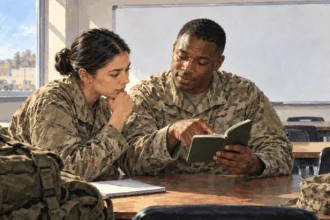
Voting Assistance Officers (VAOs): A cornerstone of the support system is the network of Voting Assistance Officers. These individuals are appointed within military units (Unit VAOs or UVAOs) and at military installations (Installation VAOs or IVAOs) worldwide. Their role is to provide direct, nonpartisan voting assistance to service members and their families.
VAO duties include helping voters correctly complete the FPCA and FWAB, distributing voting information and materials, conducting voter registration drives and awareness events (especially during designated Voting Emphasis Weeks like Armed Forces Voters Week and Absentee Voting Week), answering questions, and maintaining program continuity.
VAOs are trained by FVAP and serve as a critical link between the program’s resources and the voters on the ground. Department of State personnel at U.S. Embassies and Consulates often provide similar assistance to overseas citizens.
Finding Your VAO: Military personnel and their families can locate the contact information for their nearest Installation Voting Assistance Office (IVAO) using the dedicated search tool on the FVAP website. Service-specific voting program contacts are also available via FVAP.gov.
The existence of both a centralized FVAP call/email center and a decentralized, installation-based network of VAOs demonstrates a layered support strategy. This structure recognizes that while online self-service tools are efficient and essential, personalized, human assistance remains crucial for addressing complex individual situations, overcoming technology barriers, or simply providing reassurance and direct guidance. This human support network complements the digital resources offered on FVAP.gov, aiming to leave no eligible voter behind.
Navigating Potential Roadblocks: Common Challenges and Solutions
Despite the framework provided by UOCAVA and the resources offered by FVAP, military and overseas voters can still encounter obstacles. Understanding these common challenges and the available solutions can help voters navigate the process more effectively.
Challenge: Confusion Over Varying State Rules
Description: One of the most frequently reported difficulties, particularly for overseas citizens, is simply figuring out how to vote due to the complexity and variation in rules across states. Deadlines, residency requirements, acceptable ID forms, ballot return methods, and even specific form fields can differ significantly.
Solution: The primary solution is diligent use of FVAP’s state-specific resources. Consult the state pages on FVAP.gov or the detailed state chapters in the Voting Assistance Guide. Read all instructions provided with state forms and ballots carefully. If confusion persists, contact the local election office directly (contact info via FVAP.gov) or seek assistance from a trained Voting Assistance Officer.
Challenge: Mail Delays and Transit Times
Description: Delays in international or military mail remain a significant concern. Ballots sent by mail may not arrive in time for the voter to complete and return them by the deadline, especially for those in remote locations, on deployment, or in countries with unreliable postal services. Voters have also reported returning ballots later in the election cycle, increasing the risk of missing deadlines.
Solution: Be proactive. Request electronic delivery (email) of your blank ballot when completing the FPCA. Submit your FPCA as early as possible each year. Return your voted ballot immediately upon receipt. If mailing, check the MPSA recommended mailing dates (via FVAP.gov) and use the FVAP postage-paid template for APO/FPO mail. Consider using the diplomatic pouch service at embassies/consulates if available and convenient. Most importantly, if your official ballot is significantly delayed, use the Federal Write-In Absentee Ballot (FWAB) as your backup to ensure your vote for federal offices is cast.
Challenge: Understanding and Using the Forms Correctly (FPCA/FWAB)
Description: Voters may struggle with accurately completing the FPCA or FWAB, particularly distinguishing between their U.S. voting residence address and their current mailing address, or understanding all required fields. Knowing precisely when it is appropriate to use the FWAB versus waiting for the state ballot can also be confusing. Issues regarding the acceptance of electronic signatures (like those from a DoD Common Access Card) also arise, as only a few states currently accept them for voting forms.
Solution: Utilize the FVAP online assistants for both the FPCA and FWAB, which guide users through the process. Read the form instructions and related FAQs on FVAP.gov thoroughly. Double-check that all required information is provided, legible, and that the form is signed and dated. If unsure, ask a Voting Assistance Officer for help reviewing the form before submission. Remember the FWAB is only for situations where the timely requested official ballot hasn’t arrived.
Challenge: Ensuring Your Ballot is Received and Counted
Description: Voters naturally worry whether their submitted ballot successfully reached the election office on time and was accepted for counting. Ballots can be rejected for various reasons, including arriving after the deadline, missing signatures, or not following specific state instructions (e.g., improper use of security envelopes).
Solution: Follow all instructions accompanying the state ballot meticulously, especially regarding signatures and envelopes. Return the ballot using a permitted method as early as possible, well before the deadline. Utilize state online ballot tracking systems whenever available (links via FVAP.gov) to monitor the ballot’s status. If tracking is unavailable, contact the local election office directly a week or two after sending the ballot to confirm its receipt.
Challenge: Awareness of Resources (Especially for New Voters)
Description: Data suggests that first-time absentee voters, including younger service members and citizens, may be less aware of FVAP, the role of VAOs, and the available tools compared to more experienced voters. General awareness of voting assistance resources on military installations can also be inconsistent.
Solution: FVAP and the military services conduct ongoing outreach efforts, including briefings, social media campaigns, and participation in events. VAOs play a key role in promoting awareness at the unit and installation level. Voters themselves should proactively explore FVAP.gov, inquire with their unit leadership or colleagues about voting assistance, and seek out their VAO. Subscribing to FVAP email alerts (via FVAP.gov) is another good way to stay informed.
These common challenges are often not the result of individual voter error alone, but rather reflect the inherent complexities of the U.S. election system. Coordinating federal law with 55 distinct state/territorial jurisdictions, overcoming the logistical hurdles of global mail and military mobility, and ensuring effective communication across a vast and dispersed population are significant undertakings. FVAP’s resources and strategies – from state-specific guidance and electronic voting options to the FWAB safety net and the human support network of VAOs – are all designed as direct responses to mitigate these systemic and external factors, aiming to make the right to vote a reality for every eligible U.S. citizen, wherever they serve or reside.