- vetverify.org2 links
Last updated 11 months ago. Our resources are updated regularly but please keep in mind that links, programs, policies, and contact information do change.
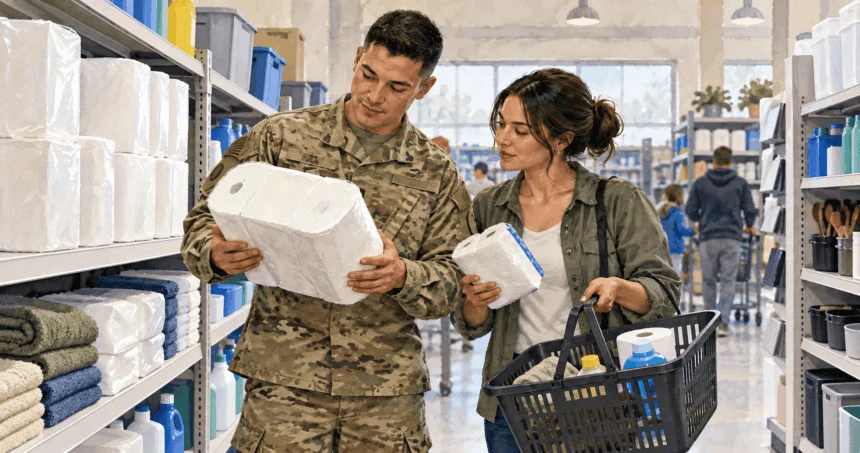
The military exchange system offers significant worldwide retail benefits to the U.S. military community. Operated by distinct organizations serving different branches – including the Army & Air Force Exchange Service (AAFES), the Navy Exchange (NEX), the Marine Corps Exchange (MCX), and the Coast Guard Exchange (CGX) – these stores provide unique advantages for eligible patrons.
Key attractions include tax-free purchases, competitively priced goods, and a system where profits are reinvested into vital Morale, Welfare, and Recreation (MWR) programs supporting the military community. This benefit is accessible through traditional brick-and-mortar stores on military installations worldwide and through robust online shopping platforms designed to serve a geographically dispersed community.
History, Purpose, and Structure of Military Exchanges
A Brief History
The modern military exchange system evolved from a need to provide reliable, fairly priced goods to service members. Before their establishment, traveling merchants known as “sutlers” often followed Army camps, selling merchandise at highly inflated prices, a practice dating back to the Revolutionary War.
Recognizing the potential for exploitation, the military sought better solutions. In 1867, the sutler system was replaced by authorized “post traders,” and later, in 1889, the War Department authorized “canteens” at posts, effectively eliminating traders.
The formal beginning of the modern exchange system occurred on July 25, 1895, when the War Department issued General Order No. 46, directing post commanders to establish “post exchanges” (PXs) at their installations. The term “PX” itself was first documented in meeting minutes from Camp McKinley in the Philippines shortly thereafter.
Initially, these exchanges operated somewhat independently. However, the need for standardization and broader support led to the creation of the Army Exchange Service (AES) in 1941. Following the establishment of the U.S. Air Force as a separate service branch in 1947, the organization became a joint operation and was renamed the Army & Air Force Exchange Service (AAFES) in 1948.
Throughout their history, exchanges have demonstrated unwavering support for troops, particularly during conflicts and crises. They have been involved in numerous major military operations, including World War II, the Korean War, the Vietnam War, Operations Desert Shield/Storm, and Operations Enduring Freedom and Iraqi Freedom, as well as humanitarian relief efforts.
During WWII, thousands of exchanges operated globally. They supported the Berlin Airlift with mobile food wagons, operated extensively in Vietnam with over 300 retail facilities and numerous food outlets, and rapidly built infrastructure to support hundreds of thousands of troops during Desert Shield/Storm.
This commitment is encapsulated in the AAFES pledge, “We go where you go,” serving troops worldwide, often deploying associates into conflict zones alongside service members. While AAFES is the largest, the Navy Exchange (NEX), Marine Corps Exchange (MCX), and Coast Guard Exchange (CGX) fulfill similar roles for their respective branches.
Core Mission
The fundamental mission of the military exchange system is consistently defined across branches: to provide quality merchandise and services at competitively low, tax-free prices to authorized patrons—including active duty personnel, Guard and Reserve members, military retirees, eligible veterans, authorized family members, and certain civilian employees—wherever they serve.
This benefit is considered a crucial element in enhancing the quality of life for the military community, contributing to readiness, recruitment, and retention efforts. Especially in remote or deployed locations where traditional retail options are scarce or nonexistent, exchanges provide essential goods and a welcome “taste of home,” supporting morale.
How Exchanges Operate
Military exchanges operate under a unique structure within the Department of Defense (DoD). They are classified as Non-Appropriated Fund Instrumentalities (NAFIs). This means they are DoD entities but are self-sustaining, generating their operating funds primarily through the sale of goods and services rather than relying on taxpayer dollars allocated by Congress (appropriated funds).
This financial independence distinguishes them from commissaries (military grocery stores), which receive appropriated funds to subsidize grocery prices. Governance varies slightly by branch:
- AAFES is governed by a Board of Directors responsible to the Secretaries of the Army and Air Force
- MCX operates under the umbrella of Marine Corps Community Services (MCCS)
- CGX functions as a military entity operating like a business
Despite these nuances, all operate with the primary goal of serving their patrons and supporting their respective service branches. The scale of these operations is substantial; AAFES is consistently ranked among the top retailers in the United States by revenue, operating thousands of facilities worldwide, including department stores, convenience stores (Express/Marine Mart), restaurants, gas stations, and online platforms.
The Vital Link Between Exchange Profits and MWR
A defining characteristic of the military exchange system is its commitment to reinvesting earnings back into the military community. A significant portion of profits—often cited as 100% of earnings by AAFES and MCX, or roughly two-thirds by AAFES in other reports—is returned as a “dividend” to support military quality-of-life programs.
These dividends are channeled directly into Morale, Welfare, and Recreation (MWR) funds for each service branch. This funding is critical for supporting a wide array of programs and facilities that enhance the well-being of service members and their families. Examples include:
- Child Development Centers (CDCs)
- Youth services
- Fitness centers and gyms
- Aquatic centers
- Golf courses
- Libraries
- Outdoor recreation programs
- Arts and crafts centers
- Armed Forces Recreation Centers (AFRCs)
The financial contributions are substantial; AAFES reported providing $3.7 billion over the last 10 years to support the military community through MWR contributions and other initiatives. MCX emphasizes that 100% of its earnings support MCCS programs, and CGX provides supplemental resources to the Coast Guard’s MWR fund.
Exchange earnings are also reinvested in building new stores and renovating existing facilities, ensuring modern shopping environments for patrons. This direct link between purchases and community support creates a unique dynamic not found in civilian retail. Every dollar spent at an exchange not only provides a personal benefit (tax savings, competitive prices) but also contributes tangibly to the services and facilities used by the entire military community.
This reinforces the “Family Serving Family” ethos promoted by AAFES and the MCX slogan, “It Matters Where You Shop®,” highlighting that patronizing the exchange is an act of collective support.
Who is Eligible to Shop?
General Overview
Eligibility to shop at military exchanges is determined by Department of Defense (DoD) directives, primarily DoD Instruction 1330.21, Armed Services Exchange Regulations (ASER), and subsequent updates or specific legislation. These privileges have expanded significantly in recent years, extending access to broader segments of the military and veteran community.
Access to exchange facilities and online stores always requires presentation of proper identification to verify eligibility status.
Detailed Eligibility Breakdown
The following groups are generally authorized patrons, though specific privileges (in-store vs. online, product limitations) may vary:
Active Duty, Reserves, and National Guard Members: This includes members of all uniformed services (Army, Navy, Air Force, Marine Corps, Coast Guard, Space Force) currently on active duty, as well as members of the Reserve components and National Guard (whether drilling or on active orders). Cadets and midshipmen at service academies, personnel in Delayed Entry/Training Programs, and active duty Commissioned Officers of the Public Health Service (PHS) and National Oceanic and Atmospheric Administration (NOAA) are also typically included.
Military Retirees: Individuals retired from any branch of the uniformed services (including Reserve components) who are receiving retired pay are eligible, along with their authorized dependents. This also extends to certain retired personnel from NOAA, PHS, and predecessor agencies.
Veterans: Eligibility for veterans varies significantly based on their status and whether they are seeking in-store or online access:
- Online Access (All Exchanges): A major expansion occurred on Veterans Day, November 11, 2017, granting all honorably discharged veterans lifetime online shopping privileges through the Veterans Online Shopping Benefit (VOSB). This includes veterans of all service branches, including the Reserves and National Guard. Limitation: This online-only benefit typically excludes the purchase of military uniforms, alcohol, and tobacco products. Crucially, the VOSB does not grant physical access to military installations or in-store shopping privileges.
- Expanded In-Store Access (All Exchanges): Effective January 1, 2020, under the Purple Heart and Disabled Veterans Equal Access Act of 2018 (part of the FY19 National Defense Authorization Act), in-store exchange and commissary privileges were extended to several new categories of veterans:
- Veterans with any VA-documented service-connected disability rating (from 0% to 100%)
- Purple Heart recipients
- Former Prisoners of War (POWs)
- Medal of Honor Recipients and 100% Disabled Veterans: These individuals were already eligible for full privileges (including dependents) but are reaffirmed under current policies.
Dependents: Authorized dependents typically include spouses and children of eligible active duty personnel, retirees, reservists on active duty, Medal of Honor recipients, and veterans with 100% disability ratings. Dependents of fallen service members (surviving spouses who haven’t remarried, dependent children) are also generally eligible. As of December 2023, remarried surviving spouses also regained access.
Limitations: Dependents of veterans eligible only for the online shopping benefit do not receive any privileges. Dependents of most DoD/CG civilian employees are also not eligible for exchange access.
Designated Primary Caregivers: As part of the 2020 expansion, individuals formally approved and designated as primary family caregivers for eligible veterans under the VA’s Program of Comprehensive Assistance for Family Caregivers (PCAFC) were granted in-store exchange and commissary access. This privilege is contingent on active enrollment in the PCAFC program.
Authorized DoD and Coast Guard Civilian Employees: Eligibility for civilian employees has also expanded significantly:
- Overseas: Traditionally, DoD civilians on service agreements overseas, and U.S. citizen employees of DoD contractors working overseas, have had exchange privileges, often governed by Status of Forces Agreements (SOFAs).
- CONUS/U.S. Territories (In-Store): Effective May 1, 2021, active DoD and Coast Guard appropriated fund (APF) and nonappropriated fund (NAF) civilian employees gained access to shop in exchange stores located in the United States and U.S. territories/possessions. Limitations: This access excludes the purchase of military uniforms, tobacco products, and alcohol. It does not extend to family members.
- CONUS/U.S. Territories (Online): Effective mid-October 2021, online shopping privileges were extended to active and retired DoD and Coast Guard APF and NAF civilian employees. Limitations: Requires a U.S. mailing address (including APO/FPO, territories, possessions) and online exchanges cannot ship to local addresses in foreign countries.
Other Authorized Personnel: Regulations also grant privileges, often limited, to specific groups under certain circumstances. These can include active Coast Guard Auxiliarists (at CGX), exchange system employees and retirees (with limitations), Red Cross personnel assigned overseas or residing on installations, certain foreign military personnel on official visits, and others as outlined in DoDI 1330.21. Base and external first responders may also gain access during major disaster declarations.
The expansion of eligibility in recent years, particularly for veterans and civilian employees, marks a notable shift. Driven by legislation like the FY19 NDAA and subsequent DoD policy changes, this broadening reflects a desire to recognize the contributions of a wider community associated with national defense. It acknowledges that service extends beyond active duty or retirement and includes those with service-connected conditions, caregivers, and the civilian workforce supporting the military mission.
This inclusivity potentially strengthens the exchange system by increasing its customer base, which in turn can bolster the MWR dividends that benefit the entire community. It represents an evolution from a benefit strictly for uniformed personnel and retirees towards one encompassing a more holistic view of the defense community.
Verification Process: Proving Your Eligibility
Accessing exchange privileges requires verification of eligibility through appropriate identification.
In-Store Identification: Patrons must present valid ID at the point of sale or installation gate. Commonly accepted forms include:
- DoD Common Access Card (CAC): Used by active duty, Reserves, Guard, and eligible DoD/CG civilians.
- Uniformed Services ID Card (USID): Issued to retirees, dependents, Medal of Honor recipients, 100% disabled veterans, and other eligible categories.
- Veteran Health Identification Card (VHIC): Required for veterans accessing privileges based on the 2020 expansion. The VHIC must display “SERVICE CONNECTED,” “PURPLE HEART,” or “FORMER POW” below the photo.
- VA Health Eligibility Center Form H623A: For veterans in Priority Group 8E who are eligible for the 2020 expansion but not for a VHIC. Must be presented with an acceptable credential like a REAL ID-compliant driver’s license or U.S. passport.
- VA-Issued Letter: For designated primary caregivers under the PCAFC program.
- Official Proof of Employment + Government ID: For DoD/CG civilians without a CAC, documentation like an SF-50 or equivalent NAF form, dated within 12 months, plus a valid government photo ID is required.
Online Verification: Shopping online requires creating an account and undergoing an electronic verification process.
- The exchange websites typically interface with DoD databases, such as the Defense Enrollment Eligibility Reporting System (DEERS), to confirm status based on information provided by the user (e.g., DoD ID number, name, date of birth, last four digits of SSN).
- For veterans utilizing the Veterans Online Shopping Benefit (VOSB), a specialized verification portal, VetVerify.org, is used by all four exchange systems. Veterans provide basic identifying information (full name, last four SSN, date of birth, email) which is checked against DoD records to confirm honorable discharge status. If an exchange site cannot initially verify a veteran, they may be redirected to VetVerify.org to complete the process.
Exchange Eligibility Matrix
To clarify the complex eligibility rules, the following table provides a summary of access privileges across the major exchange systems. Note that “Limited” access often excludes items like alcohol, tobacco, and uniforms, and specific rules can vary by location, especially overseas.
| Patron Category | AAFES In-Store | AAFES Online | NEX In-Store | NEX Online | MCX In-Store | MCX Online | CGX In-Store | CGX Online | Key ID / Verification | Notes |
|---|---|---|---|---|---|---|---|---|---|---|
| Active Duty (All Branches) | Yes | Yes | Yes | Yes | Yes | Yes | Yes | Yes | CAC / USID | |
| Reserves / National Guard (Active Status/Drilling) | Yes | Yes | Yes | Yes | Yes | Yes | Yes | Yes | CAC / USID | |
| Military Retirees (w/ Pay) | Yes | Yes | Yes | Yes | Yes | Yes | Yes | Yes | USID | |
| Medal of Honor Recipients | Yes | Yes | Yes | Yes | Yes | Yes | Yes | Yes | USID | |
| Veterans (100% Service-Connected Disability) | Yes | Yes | Yes | Yes | Yes | Yes | Yes | Yes | USID / VHIC | |
| Veterans (0-90% Service-Connected Disability) | Yes | Yes | Yes | Yes | Yes | Yes | Yes | Yes | VHIC (SC notation) / H623A+ID | Expanded Access Jan 2020 |
| Veterans (Purple Heart Recipient) | Yes | Yes | Yes | Yes | Yes | Yes | Yes | Yes | VHIC (PH notation) / H623A+ID | Expanded Access Jan 2020 |
| Veterans (Former POW) | Yes | Yes | Yes | Yes | Yes | Yes | Yes | Yes | VHIC (POW notation) / H623A+ID | Expanded Access Jan 2020 |
| Veterans (Honorably Discharged – VOSB) | No | Yes | No | Yes | No | Yes | No | Yes | VetVerify.org | Online only; No installation access; Product exclusions |
| Dependents (of AD, Retiree, 100% SC Vet, MOH) | Yes | Yes | Yes | Yes | Yes | Yes | Yes | Yes | USID | |
| Dependents (of Vets eligible only for VOSB) | No | No | No | No | No | No | No | No | N/A | |
| Surviving Spouses (Unremarried or Remarried post-Dec 2023) | Yes | Yes | Yes | Yes | Yes | Yes | Yes | Yes | USID | |
| Primary Caregivers (PCAFC Registered) | Yes | Yes | Yes | Yes | Yes | Yes | Yes | Yes | VA Letter | Expanded Access Jan 2020 |
| DoD/CG Civilian (Active, CONUS/Terr.) | Yes (Limited) | Yes | Yes (Limited) | Yes | Yes (Limited) | Yes | Yes (Limited) | Yes | CAC / Proof of Employment+ID | In-store access May 2021; Online access Oct 2021; Product exclusions apply |
| DoD/CG Civilian (Retired, CONUS/Terr.) | No | Yes | No | Yes | No | Yes | No | Yes | Online Verification | Online access Oct 2021 |
| DoD/CG Civilian (Active, Overseas Agreement) | Yes | Yes | Yes | Yes | Yes | Yes | Yes | Yes | CAC / SOFA Card | Privileges may vary by location |
| Active Coast Guard Auxiliarist | No | No | No | No | No | No | Yes | Yes | CG Aux ID | CGX Only |
Note: This table summarizes general eligibility based on available sources. Specific regulations (DoDI 1330.21, ASER) and local policies should be consulted for definitive guidance. Online access requires account creation and verification.
Shopping In-Store: The Traditional Exchange Experience
For decades, the primary way to access the exchange benefit was through physical stores located on military installations worldwide. While online options have grown, the traditional in-store experience continues to offer unique advantages.
The Tax-Free Advantage Explained
One of the most significant and immediate benefits of shopping at any military exchange—AAFES, NEX, MCX, or CGX—is that purchases are exempt from state and local sales tax. Unlike shopping at civilian retail stores where taxes are added at the register, the price patrons see on the shelf at the exchange is the price they pay (excluding any potential minor fees associated with specific payment methods at commissaries, though exchanges generally don’t have these).
This tax exemption provides a direct, tangible financial saving on every purchase, the value of which varies depending on the sales tax rates in the surrounding local area. This tax-free status is a core component of the exchange benefit earned through military service or authorized affiliation.
Pricing: Competitiveness and Price Match Policies
Beyond the tax savings, exchanges strive to offer competitive pricing on their merchandise. AAFES, for instance, has stated an aim for average overall savings of 25% compared to competitors, while MCX cites average savings over 20%, and NEX emphasizes its commitment to low prices every day.
To bolster these claims and ensure patrons receive value, most exchanges implement price match guarantee policies, though the specifics vary:
AAFES: Will match a local competitor’s current price on an identical item. For price differences of $10 or less per item, a verbal challenge is often sufficient (though validation may be needed). For differences greater than $10, proof (like a current ad) is required.
AAFES also offers a 14-Day Price Guarantee: if an item purchased from the Exchange or ShopMyExchange.com goes on sale for less within 14 days (either at the Exchange or a local/select online competitor), they will refund the difference upon presentation of the receipt.
In-store, AAFES will match prices found on ShopMyExchange.com (with exceptions like fine jewelry, clearance, special orders) and will match Amazon.com prices if sold and shipped by Amazon. Price matching against other online retailers is generally limited to the ShopMyExchange.com platform.
Exclusions include Black Friday/Cyber Week deals, clearance, special orders, alcohol/tobacco where restricted, and third-party marketplace prices.
NEX: Operates under a “Low Price Promise.” They match the regular or advertised price from local competitors or select major online retailers (e.g., Target.com, Amazon.com, Walmart.com, BestBuy.com).
If the difference is $10 or less, the match is done on the spot without proof. For differences over $10, verification (competitor ad printout or display on a mobile device – not a photo of a price tag) is needed.
NEX also has a 14-Day Price Guarantee similar to AAFES, covering subsequent lower prices found at NEX, local competitors, or qualifying online retailers. Online price matching requires contacting customer service. Exclusions apply, such as clearance items and coupon stacking offers.
MCX: Their “We Match That!” promise covers the final sale price (after competitor discounts, before shipping/tax) of identical, new items in retail packaging available at any U.S. brick-and-mortar store or select online retailers (including Amazon, Best Buy, Target, Walmart, etc., but excluding auction/marketplace sites).
MCX offers a 14-Day Price Guarantee only for price reductions on items sold by MCX itself, not competitors. Numerous exclusions apply, including commissary prices, fine jewelry, gasoline, alcohol (except within the same state), tobacco, clearance, competitor misprints, mail-in rebates, financing offers, third-party marketplace listings, refurbished items, and services.
CGX: Will match advertised or regular prices from legitimate brick-and-mortar retailers in the local area, as well as select online sites (e.g., Walmart.com, Target.com, Bestbuy.com, Sears.com, AAFES, NEXCOM – excludes third-party sellers on these sites).
They offer a 14-Day Price Guarantee for items subsequently sold lower by CGX or a local competitor. Exclusions include fine jewelry, automotive parts, gasoline, services, special orders, tires (though tires are included), tobacco, limited quantity sales (like Black Friday doorbusters), clearance, coupon deals, and commissary prices.
The existence and general similarity of these price matching policies across the exchanges demonstrate a commitment to delivering value that goes beyond the inherent tax advantage. They provide a mechanism for shoppers to ensure they are receiving competitive prices compared to the civilian market.
However, the detailed rules, required proofs, and specific exclusions (especially regarding online competitors, special sales events, and certain product categories) necessitate that patrons be familiar with the particular policy of the exchange where they are shopping to effectively utilize this benefit.
How Your Purchase Supports MWR
Shopping at the exchange is more than just a transaction; it’s an investment in the military community. As previously detailed, the profits generated from exchange sales are funneled back to support Morale, Welfare, and Recreation (MWR) programs on the installation.
This direct financial link means that patronizing the exchange helps fund the gyms, childcare centers, recreational activities, and other quality-of-life services that benefit service members and their families. This unique model embodies the “Family Serving Family” core value often cited by AAFES and underscores the MCX principle that “It Matters Where You Shop®”.
Beyond Retail: Services, Exclusives, and Store Brands
Physical exchange locations often serve as hubs offering more than just retail merchandise. Common services found within or adjacent to main exchange stores include:
- Food Courts and Restaurants: Offering a variety of dining options, often including well-known national chains like Burger King, Pizza Hut, Subway, Starbucks, Taco Bell, and Popeyes.
- Gas Stations and Convenience Stores: Known as Express (AAFES), Marine Marts (MCX), or Shoppettes, these provide fuel (often with a Military Star Card discount), snacks, drinks, and essential items.
- Military Clothing Stores: Selling official uniforms, insignia, footwear, and related gear, often with tailoring services available.
- Personal Services: Such as barber shops, beauty salons, dry cleaners, and optical centers.
- Automotive Services: Including Car Care Centers offering maintenance and repairs, and sometimes Auto Skills Centers for DIY work.
- Other Amenities: Depending on the location, these might include movie theaters, floral shops, and Class Six/Package Stores selling alcoholic beverages.
Exchanges also feature exclusive merchandise, particularly military branch-specific apparel and gifts (“Pride” items), tactical gear, and potentially unique vendor partnerships. Furthermore, exchanges may offer their own store brands, designed to provide quality comparable to national brands at a lower price point, such as the MCX “1775” brand or “Exchange Select” items.
Shopping Exchanges Online
Recognizing the need to serve a globally dispersed and mobile customer base, all major military exchange systems operate robust online shopping platforms, extending the exchange benefit far beyond the gates of a military installation.
Your Online Portals: Accessing Exchange Websites
Each primary exchange organization maintains its own dedicated e-commerce site:
- Army & Air Force Exchange Service (AAFES): ShopMyExchange.com
- Navy Exchange (NEX): MyNavyExchange.com
- Marine Corps Exchange (MCX): MyMCX.com. It’s noteworthy that MCX’s online retail operations are closely integrated with NEX, and shoppers may be directed to the unified MyNavyExchange.com portal for purchasing.
- Coast Guard Exchange (CGX): ShopCGX.com
These websites establish the exchanges as multi-channel retailers, offering access through physical stores, online desktops, and often mobile-optimized sites or apps.
Account Setup and Eligibility Verification
Accessing the online stores requires patrons to first create an account and verify their eligibility electronically. The process typically involves visiting the chosen exchange website and registering by providing personal identifying information.
This information (which may include DoD ID number, full name, date of birth, last four digits of SSN, or other details depending on patron category) is then validated against official government databases like DEERS or VA records to confirm authorized status.
For honorably discharged veterans seeking access via the Veterans Online Shopping Benefit (VOSB), a specific verification portal, VetVerify.org, is utilized by all exchanges. Veterans provide basic details here to confirm their service record and eligibility for the online benefit.
Similarly, active and retired DoD and Coast Guard civilian employees undergo an online verification process to gain access, which became available starting in mid-October 2021.
Product Availability: Online vs. In-Store Selection
Online exchange stores generally boast a significantly larger product selection compared to their brick-and-mortar counterparts. AAFES, for example, has reported offering access to millions of items through its online store and associated mall partnerships.
This expanded digital inventory allows patrons access to a wider range of brands, styles, sizes, and colors that may not be feasible to stock in every physical location.
However, the selection is not always identical. Certain items might be available exclusively online, while others, particularly services like food courts, gas stations, auto repair, or barber shops, are inherently tied to physical locations.
Availability of specific items like military uniforms can also differ between online and in-store channels. Furthermore, online availability can be affected by shipping restrictions; items classified as hazardous materials (HAZMAT), such as fragrances or aerosols, or bulky/heavy items, may not be shippable to all locations, particularly APO/FPO/DPO addresses.
Shipping Options and Policies
A critical aspect of online exchange shopping is understanding the shipping policies, especially for patrons outside the contiguous United States (CONUS).
Destinations: Exchanges generally ship to all 50 U.S. states, U.S. territories (like Puerto Rico, Guam), and importantly, to military/diplomatic post office addresses (APO/FPO/DPO) worldwide. However, there are nuances: NEX states they cannot ship to OCONUS street addresses, only to APO/FPO/DPO addresses or designated NEX stores for pickup. Online access for eligible DoD/CG civilians requires a U.S.-based mailing address (which includes APO/FPO and territories) but does not permit shipping to local addresses in foreign countries.
APO/FPO/DPO Specifics: Shipping to these addresses relies exclusively on the United States Postal Service (USPS), as other carriers like UPS and FedEx cannot make direct deliveries to these military mail system locations.
Correct addressing is vital: use the recipient’s name/rank, unit/box number, the city designation (APO, FPO, or DPO), the state designation (AA for Armed Forces Americas, AE for Europe/Middle East/Africa/Canada, or AP for Pacific), and the correct 5-digit or 9-digit ZIP code. Do not include foreign city or country names.
Despite the overseas destination, APO/FPO/DPO mail is priced at domestic rates. Delivery times vary but can range from approximately 7-10 days for Priority Mail to potentially longer for standard/parcel post. Depending on the contents and destination, customs declaration forms (like PS Form 2976 or 2976-A) may be required.
Shipping Costs & Speed: Exchanges typically offer several shipping speeds, such as Standard, Priority, and sometimes Express or Next-Day options (though expedited options may not be available for APO/FPO/DPO). Costs may be flat-rate based on speed or calculated.
A significant benefit is the frequent availability of free standard shipping, often offered when using the Military Star Card for payment or for orders exceeding a certain dollar threshold (e.g., $49). Delivery timeframes are provided as estimates and can vary based on destination and carrier operations.
Restrictions: Numerous items face shipping restrictions, particularly for APO/FPO/DPO addresses. Common exclusions include:
- Hazardous Materials (HAZMAT): Perfumes, nail polish, aerosols, certain cleaning supplies.
- Oversized/Heavy Items: Often defined as over 70 lbs or exceeding dimensional limits.
- Lithium Batteries: Restrictions apply to shipping batteries or devices containing them.
- Alcohol and Tobacco Products: Generally prohibited for online purchase/shipment.
- Firearms and Ammunition: Prohibited.
- Perishables: Often restricted.
- Country-Specific Restrictions: Destination countries may have their own import prohibitions. Patrons can check USPS resources for specific APO/FPO/DPO restrictions.
Ship-to-Store: Some exchanges offer a “Ship-to-Store” option, allowing online orders to be shipped (often for free) to a participating physical exchange store for pickup. This can be particularly advantageous for OCONUS patrons as a way to receive items faster (e.g., NEX uses DHL for OCONUS store shipments) or to bypass certain direct shipping restrictions. AAFES also offers in-store or curbside pickup for many online orders.
Carriers: While USPS handles the final delivery to APO/FPO/DPO, exchanges may use carriers like FedEx, UPS, or DHL for parts of the journey or for CONUS/territory shipments.
The complexities surrounding APO/FPO/DPO shipping underscore a key difference between military-focused e-commerce and standard civilian online retail. While the exchanges provide invaluable online access to a global community, logistical hurdles (carrier limitations, HAZMAT rules) and regulatory requirements (customs, import restrictions) mean that the range of goods readily available for shipment can be narrower for those serving overseas compared to their CONUS counterparts.
This reality highlights the importance of understanding shipping policies and restrictions before placing an order and makes options like Ship-to-Store particularly valuable where offered.
Online Exchange Shipping Summary
The following table summarizes key aspects of online exchange shipping:
| Destination | Primary Carriers | Estimated Timeframes (Standard) | Costs | Key Restrictions / Notes |
|---|---|---|---|---|
| CONUS (Contiguous US) | USPS, FedEx, UPS, DHL | 5-7 Business Days (NEX); Varies by service | Flat Rate or Calculated; Free Shipping often available (>$49 or w/ MILITARY STAR® Card) | Fewer restrictions than OCONUS/APO/FPO. |
| OCONUS (Ship-to-Store) | DHL (NEX example) | 7-10 Business Days (NEX example) | Often Free to participating stores | Bypasses some direct shipping limits; Not all items eligible (e.g., HAZMAT); Limited store locations. |
| APO/FPO/DPO | USPS (Mandatory final delivery) | Up to 45 Business Days (NEX estimate); 7-15+ days typical; Dec holiday deadlines apply | Domestic Rates; Free Shipping often available (>$49 or w/ MILITARY STAR® Card) | HAZMAT, Oversized (>70lbs), Lithium Batteries, Alcohol, Tobacco, Firearms, Perishables, Country-specific import rules. Correct addressing crucial. |
| US Territories (e.g., PR, GU) | USPS, potentially others | Similar to CONUS or slightly longer | Domestic Rates; Free Shipping rules generally apply | Fewer restrictions than APO/FPO, but HAZMAT/Oversized may still apply. |
| Foreign Local Addresses | Not Permitted | N/A | N/A | Online exchanges cannot ship to non-APO/FPO/DPO addresses in foreign countries. |
Note: Timeframes are estimates and subject to variation. Always check the specific exchange’s shipping policy at checkout.
The Military Star® Card
A key component of the exchange ecosystem is the Military Star® card, the exclusive credit card offered by the Exchange Credit Program (ECP), which is administered by AAFES.
What is the Military Star Card?
Established by Congress in 1979, the Military Star card was designed to provide service members and their families with fair, affordable credit options and protect them from potentially predatory lending practices often found outside military installations.
It serves not only as a payment method but also as an integrated financial tool tailored to the unique needs of the military lifestyle, assisting with everyday purchases as well as expenses related to Permanent Change of Station (PCS) moves, deployments, or retirement.
Eligibility extends to active duty, reserves, Guard, retirees, authorized dependents, DoD and Coast Guard civilians, Purple Heart recipients, service-connected disabled veterans, and all honorably discharged veterans who have online exchange shopping privileges.
Key Perks and Benefits
The Military Star card offers a suite of benefits designed to provide value and savings specifically within the military resale environment:
Rewards Program: Cardholders earn 2 points for nearly every dollar spent (2% reward rate) at exchanges, commissaries, and participating facilities. For every 2,000 points accumulated, a $20 MILITARY STAR® Rewards Card is automatically issued (typically digitally via email).
These rewards cards can be redeemed like gift cards at most exchange facilities and websites. Note: The Military Clothing line of credit does not earn points, and digital rewards require a valid, non-.mil email address and expire after 3 months.
Everyday Discounts:
- Fuel Savings: 5 cents off every gallon of fuel purchased at AAFES, NEX, and MCX gas stations.
- Food Savings: 10% off food purchases at participating Exchange restaurants.
Free Shipping: Cardholders receive free standard shipping on orders placed through ShopMyExchange.com, MyNavyExchange.com, and ShopCGX.com, regardless of the order total.
Special Financing Options:
- Promotional 0% Interest: Exchanges frequently offer limited-time 0% interest promotions on qualifying purchases made with the card. Importantly, unlike many civilian store cards, if the balance isn’t paid in full by the end of the promotional period, interest is only charged from that point forward, not retroactively applied to the original purchase date (no back-interest).
- Pay Your Way Plans: For larger purchases ($300 or more), cardholders can opt for fixed monthly payment plans over 36, 48, or 60 months at a reduced, fixed Annual Percentage Rate (APR) – currently 9.99% – which is significantly lower than the standard variable APR. These plans are available both in-store and online at ShopMyExchange.com.
- Military Clothing Plan: Eligible service members can qualify for an interest-free $1,000 line of credit specifically for purchasing required military uniform items.
Fair and Flexible Terms: The card features a competitive low APR that is often the same for all approved applicants, regardless of credit score. Furthermore, there are no annual fees, no late payment fees, and no over-limit fees.
Deployment Benefits: A reduced interest rate policy (typically 6%) is available for cardholders during qualifying deployments.
Introductory Offer: New cardholders typically receive a discount (usually 10%, but sometimes higher during special promotions like 20%) on all purchases made on the first day the account is opened and used.
Where It’s Accepted
The Military Star card enjoys wide acceptance across the military resale landscape:
- All Army & Air Force Exchange Service (AAFES), Navy Exchange (NEX), Marine Corps Exchange (MCX), and Coast Guard Exchange (CGX) locations, including main stores, Express/Shoppette/Marine Mart convenience stores, gas stations, food courts, and online stores (ShopMyExchange.com, MyNavyExchange.com, ShopCGX.com).
- Defense Commissary Agency (DeCA) commissaries (military grocery stores).
- Exchange mall vendors and concessionaires that accept exchange gift cards.
- Armed Forces Recreation Center (AFRC) resort hotels.
The integrated nature of the Military Star card’s benefits—rewards earned and redeemed within the system, discounts on exchange-specific services like fuel and food, free shipping from exchange websites, and tailored financing plans—creates a powerful incentive for patrons to use the card for their exchange and commissary purchases.
It functions as a loyalty program that reinforces the value of the exchange benefit itself, offering tangible savings and financial tools specifically designed for the military community, setting it apart from general-purpose credit cards.
Comparing In-Store vs. Online Exchange Shopping
Eligible patrons can access their exchange benefit through two primary channels: traditional brick-and-mortar stores on military installations and the exchanges’ online e-commerce websites. Each method offers distinct advantages and disadvantages.
Convenience & Accessibility
In-Store: Offers the advantage of immediate product access and the ability to physically inspect items before purchase. However, it requires being physically present on or near a military installation during operating hours, which can be a limitation for those living far from a base or with busy schedules.
Online: Provides unparalleled convenience, allowing patrons to shop 24/7 from any location with internet access. This is particularly crucial for geographically dispersed members of the military community, such as Guard and Reserve members, veterans without in-store privileges, retirees living far from installations, and deployed personnel. The trade-off is the need to wait for order processing and shipping.
Product Selection & Availability
In-Store: Product selection is inherently limited by the physical size of the store and is often tailored to local demand. While convenient for common items, finding specific sizes, colors, or niche products can be challenging. Stores offer immediate availability for items currently in stock and provide access to services not available online (e.g., food courts, auto care).
Online: Generally offers a vastly larger selection, often featuring millions of items, including extended product lines, more brands, and online exclusives. This makes it easier to find specific items. However, availability is contingent on warehouse stock and subject to shipping restrictions (like HAZMAT or oversized items) that might prevent certain products from being delivered to specific locations, especially APO/FPO/DPO addresses.
Returns & Exchanges: Policies and Processes
Return policies aim for customer satisfaction, but the process differs significantly between channels:
In-Store Purchases: Items bought in a physical store can typically be returned to any store within the same exchange system (e.g., AAFES to AAFES). This usually allows for immediate processing of refunds or exchanges, provided the return meets policy conditions (time limits: 15-90 days depending on item/exchange; condition: new/original packaging; receipt often required for full refund). Some exchanges may accept returns from other branches, though exclusions apply.
Online Purchases: Patrons often have two options for returning items bought online:
- Return to Store: The most convenient option is usually returning the online purchase to a physical store of the same exchange system. This typically follows the standard in-store return process.
- Return by Mail: Patrons can mail items back to the exchange’s return center, often using a prepaid shipping label included with the order or generated online. However, this method involves delays for shipping and processing (up to 14 days cited by NEX). Additionally, a restocking or return shipping fee may be deducted from the refund unless the return is due to an exchange error (e.g., NEX charges $7.95, CGX charges $7.95). Veterans eligible only for online shopping must use the mail return process or contact customer service. Complex returns involving oversized items, high-value goods, or items from third-party marketplace vendors have specific procedures. Exchanges typically offer extended return windows during the holiday season.
The difference in return processes is a significant factor. In-store returns offer immediacy and simplicity. Online returns, unless brought to a physical store, require more effort, time, and may incur fees. This practical difference highlights the convenience of having physical store access, even when primarily shopping online.
The Overall Experience: Browsing vs. Searching
In-Store: Facilitates browsing, discovery of new items, and impulse purchases. Allows for tactile evaluation (trying on clothes, testing electronics). Offers immediate gratification upon purchase. Can provide a sense of community and social interaction with fellow patrons and staff. Downsides can include travel time, navigating crowds or lines, and potentially limited stock.
Online: Highly efficient for targeted searching and filtering to find specific products quickly. Easy comparison of prices and features across items. Access to customer reviews can inform purchase decisions. Lacks the ability to physically interact with products before buying. The experience can feel more transactional and less communal.
In-Store vs. Online Exchange Shopping Comparison
The choice between shopping in-store or online depends on individual priorities, location, and needs. The following table summarizes the key trade-offs:
| Factor | In-Store Exchange | Online Exchange |
|---|---|---|
| Convenience | Requires travel to installation; Limited by store hours. | Shop 24/7 from anywhere with internet access. |
| Accessibility | Limited to those with installation access and proximity to a store. | Accessible to all eligible patrons globally (including online-only Vets, remote personnel). |
| Product Selection | Limited by physical space; Tailored to local demand. | Vastly larger selection; More brands, sizes, colors; Online exclusives. |
| Product Availability | Immediate for stocked items. | Subject to warehouse stock & shipping; Potential restrictions (HAZMAT, oversized). |
| Pricing/Deals | Tax-free; Competitive pricing; Price matching (local competitors, sometimes online); In-store specials/clearance. | Tax-free; Competitive pricing; Price matching (select online retailers); Online-only deals; Free shipping offers common. |
| Returns Process | Generally simple return to any store in the same system; Immediate processing. | Return to store (if accessible) is simplest; Mail returns require more steps, time, potential fees. |
| Immediacy | Instant gratification – take items home immediately. | Requires waiting for shipping and delivery. |
| Experience | Browsing, tactile evaluation, social interaction, community feel. | Efficient searching, filtering, comparison; Access to reviews; More transactional feel. |
Popular Products, Brands, and Services
Military exchanges function as comprehensive department stores, offering a wide array of goods and services tailored to the needs of the military community.
Wide Range of Categories
Exchanges typically feature departments covering nearly every aspect of daily life:
- Electronics: Including computers (laptops, desktops, tablets), televisions, home theater systems, audio equipment (headphones, speakers), video game consoles and games (PlayStation, Xbox, Nintendo), cameras, smart home devices, and accessories.
- Apparel & Accessories: Clothing for men, women, and children (including activewear, outerwear, basics), shoes, handbags, jewelry, watches, sunglasses, and hats.
- Home Goods: Furniture for various rooms, major appliances (often through partnerships), small appliances, bedding, bath items, kitchenware, dining sets, storage solutions, and patio/garden supplies.
- Sports, Fitness & Outdoors: Sporting goods, exercise equipment, activewear, camping and hiking gear, coolers, and outdoor recreation items.
- Military Gear & Uniforms: Official service uniforms, rank insignia, boots, tactical gear, field equipment, and military branch pride merchandise.
- Other Common Categories: Toys, baby products, health and beauty aids, personal care items, household cleaning supplies, groceries/snacks (especially at Express/Mart locations), and office/school supplies.
Examples of Major Brands Stocked
Patrons can find a wide selection of popular national and international brands across various departments. While availability varies by location and channel (online vs. in-store), examples include:
- Apparel, Shoes & Outdoors: Nike, Under Armour, Adidas, Tommy Bahama, American Eagle, Levi’s, The North Face, Columbia, Patagonia, Merrell, Keen, Oakley, Ray-Ban, Costa, YETI, CamelBak.
- Electronics: Apple (iPhone, iPad, Mac, Watch), Samsung (phones, TVs, appliances), Sony (TVs, PlayStation, audio), LG (TVs, appliances), Bose, JBL, Beats by Dre, GoPro, Fitbit, Dell, HP, Microsoft (Xbox), Nintendo.
- Home & Kitchen: KitchenAid, Cuisinart, Keurig, Ninja, Instant Pot, Dyson, Bissell, Shark, Weber, Traeger, Blackstone, Ashley Furniture, Sealy, Tempur-Pedic, Yankee Candle, Bath & Body Works, OXO, Corelle.
- Beauty & Personal Care: Estée Lauder, Clinique, Lancôme, MAC Cosmetics, Kiehl’s, Jack Black, various designer fragrances.
- Handbags & Luggage: Coach, Michael Kors, Kate Spade, Dooney & Bourke, Vera Bradley, TUMI, Samsonite.
- Toys & Baby: LEGO, Mattel (Barbie, Hot Wheels), Hasbro (Nerf, Transformers), Fisher-Price, Graco, Chicco.
Unique Exchange Services
Beyond retail sales, exchanges often host or are co-located with various essential services on military installations:
- Military Clothing Stores (often with tailoring)
- Food Courts / Restaurants
- Gas Stations / Convenience Stores (Express/Shoppette/Marine Mart)
- Barber Shops / Beauty Salons
- Laundry / Dry Cleaning Services
- Optical / Vision Centers
- Car Care / Auto Skills Centers
- Movie Theaters
- Class Six / Package Stores (Alcohol sales, where permitted)
- Other Concessions (e.g., GNC, GameStop, Florists, Banks/Credit Unions)