- fsa.usda.gov5 links
- farmers.gov3 links
- nrcs.usda.gov
- ask.usda.gov
Last updated 11 months ago. Our resources are updated regularly but please keep in mind that links, programs, policies, and contact information do change.
The Conservation Reserve Program (CRP) is a cornerstone voluntary federal initiative administered by the U.S. Department of Agriculture’s (USDA) Farm Service Agency (FSA). Its central function is straightforward: the program offers landowners annual rental payments in exchange for removing environmentally sensitive agricultural land from production. Instead of crops, participants establish long-term, resource-conserving vegetative cover, such as native grasses, trees, or buffers, typically under contracts lasting 10 to 15 years.
The primary aims driving CRP are significant environmental improvements. By converting eligible acreage to conservation covers, the program works to enhance water quality in rivers, lakes, and streams; control soil erosion on vulnerable lands; and create or restore vital wildlife habitat. Beyond these core goals, CRP contributes to other environmental benefits, including the potential for sequestering carbon in soils and vegetation, thereby playing a role in climate change mitigation efforts.
This guide serves as a resource for agricultural producers and private landowners across the United States. It aims to provide a clear understanding of the Conservation Reserve Program, helping landowners evaluate if CRP is a suitable option for their property, navigate the various enrollment pathways, understand the financial aspects, and recognize the responsibilities involved in participation. As CRP rules and incentives can evolve, this guide emphasizes reliance on official USDA and FSA information, best obtained through local USDA Service Centers.
History and Evolution
Authorized initially by the Food Security Act of 1985, CRP’s original primary focus was combating high rates of soil erosion and potentially stabilizing commodity prices by idling marginal cropland. Over nearly four decades and through successive Farm Bills and administrative updates, the program’s scope has broadened considerably.
While erosion control remains vital, CRP now places significant emphasis on improving water quality, boosting wildlife populations (including pollinators), preserving grasslands, restoring wetlands, and contributing to climate resilience. This evolution helps explain the diverse enrollment options and conservation practices available today, designed to address a wider range of environmental concerns on agricultural landscapes.
Understanding Eligibility
Participation in CRP hinges on meeting specific eligibility criteria for both the producer (the person or entity enrolling) and the land itself. These requirements are designed to ensure the program targets appropriate participants and land areas where conservation efforts can yield significant benefits.
Who Can Enroll?
Generally, individuals or entities who are owners, operators, or tenants of eligible agricultural land can apply for CRP. A key requirement relates to the duration of control over the land, often referred to as the 12-Month Rule. Typically, the producer must have owned or operated the land for at least 12 months prior to the closing date of the specific CRP signup period (for General or Grassland CRP signups) or before submitting an offer for Continuous CRP enrollment.
This 12-month requirement appears designed to ensure program stability and target participation towards those with a demonstrated, ongoing connection to managing the land, rather than encouraging speculative land acquisition solely for immediate CRP enrollment. However, there are important exceptions to the 12-Month Rule. The requirement may be waived if:
- The new landowner acquired the land due to the previous owner’s death.
- The ownership change resulted from a foreclosure where the owner exercised a timely right of redemption according to state law.
- Other specific circumstances provide adequate assurance to FSA that the land was not acquired for the primary purpose of placing it into CRP.
These exceptions accommodate legitimate changes in land ownership while upholding the principle of targeting landowners actively involved with the property.
Additionally, producers must meet other general USDA program eligibility requirements, which can include provisions related to Adjusted Gross Income (AGI) limits. Prospective applicants should confirm all producer eligibility criteria with their local FSA office.
What Land Qualifies?
Not all agricultural land is eligible for CRP. The program focuses on acreage where conversion to conservation cover provides substantial environmental benefits.
Primary Category: Cropland
The most common type of land enrolled is cropland. To be eligible, this land (which can include field margins) generally must meet a specific cropping history requirement. Under the rules aligned with the 2018 Farm Bill, the land must have been planted or considered planted to an agricultural commodity in 4 out of the 6 crop years from 2012 through 2017.
Additionally, the land must be physically and legally capable of being planted to an agricultural commodity in a normal manner; this means it should be farmable and not subject to easements or other restrictions that would prevent cropping. Certain lands planted to alfalfa or other multiyear grasses and legumes in an approved rotation may also qualify.
Additional Cropland Criteria
Beyond the basic cropping history, cropland offered for CRP, particularly through the competitive General Signup, often must meet at least one of the following additional criteria:
- Possess a weighted average Erodibility Index (EI) of 8 or higher, indicating significant potential for soil erosion if farmed.
- Consist of acreage currently enrolled in a CRP contract that is set to expire.
- Be situated within a designated national or state CRP conservation priority area, regions identified as critical for specific resource concerns like water quality or wildlife habitat.
Other Eligible Land Types
CRP eligibility extends beyond typical cropland in certain cases. Specific types of marginal pastureland may qualify, particularly if they are suitable for establishing practices like riparian buffers (along streams or water bodies) or wildlife habitat buffers, often under Continuous CRP or the Conservation Reserve Enhancement Program (CREP).
Furthermore, the Grassland CRP enrollment option has distinct criteria focused on existing grasslands, rangelands, and pasturelands suitable for grazing. Land identified as ecologically significant grassland may also be eligible under certain conditions.
County Acreage Cap
To prevent potential adverse impacts on local agricultural economies and rental markets, there is generally a limit on the amount of land that can be enrolled in CRP within a single county. Typically, no more than 25 percent of a county’s total cropland can be enrolled in CRP and federal wetland easement programs combined.
However, USDA may grant waivers to this cap, particularly to facilitate enrollment in high-priority initiatives like Continuous CRP or CREP, provided the county government concurs.
The combination of these eligibility requirements—focusing on recent cropping history, environmental sensitivity (like high erodibility or location in priority areas), or specific land types like marginal pasture suitable for buffers or existing grasslands—demonstrates the program’s strategic intent. CRP aims to enroll lands where converting from agricultural production to conservation cover will yield the most significant environmental returns, such as reducing soil loss from highly erodible fields or protecting water quality adjacent to streams, rather than enrolling any available farmland.
Exploring CRP Enrollment Options
CRP is not a one-size-fits-all program. USDA offers several distinct enrollment pathways, allowing landowners to choose the option that best aligns with their land characteristics, conservation objectives, and operational preferences. The three primary enrollment types are General CRP Signup, Continuous CRP Signup, and Grassland CRP Signup.
General CRP Signup
The Competitive Path
This is the traditional CRP enrollment route, conducted during specific signup periods announced periodically by USDA. Recent examples include a signup from March 4-29, 2024 and another from February 27-April 7, 2023. During these windows, landowners submit offers to enroll eligible land, competing against other offers nationwide.
Ranking with the Environmental Benefits Index (EBI)
The core of the General Signup competition is the Environmental Benefits Index (EBI). FSA uses the EBI to score each offer based on the potential environmental benefits the enrolled land would provide relative to its cost. Offers with higher EBI scores are more likely to be accepted. The EBI considers multiple factors, which typically include:
- Wildlife Habitat Benefits: Points awarded based on the value of the proposed cover for local wildlife.
- Water Quality Benefits: Points for reducing sediment, nutrients, and protecting both surface and groundwater.
- Soil Erosion Reduction Benefits: Points based on the potential to reduce erosion compared to cropping.
- Enduring Benefits: Points reflecting the likelihood that the conservation benefits will persist beyond the contract period.
- Air Quality Benefits: Points for practices that reduce wind erosion or provide other air quality improvements.
- Cost: Points awarded for cost-effectiveness, often meaning offers submitted below the maximum allowable rental payment rate receive a higher score.
Selection
After the signup period closes, FSA ranks all eligible offers based on their EBI scores. Offers are selected starting with the highest-scoring ones and moving down the list until the enrollment acreage goals for that signup are met or a minimum acceptable EBI score (the “cutoff”) determined by the Secretary of Agriculture is reached.
It’s important to note that meeting EBI thresholds in previous signups does not guarantee acceptance in a future signup, as the competition and cutoff score can change.
Climate-Smart Incentive
General CRP may also incorporate a Climate-Smart Practice Incentive. This provides additional financial motivation for establishing practices expected to increase carbon sequestration and reduce greenhouse gas emissions, such as planting trees and permanent grasses, enhancing wildlife habitat, or restoring wetlands.
The competitive nature of the General Signup means landowners should carefully consider how to make their offer attractive. Working closely with local FSA and NRCS staff during the planning phase can help identify conservation practices and site preparations that maximize potential EBI points. Additionally, offering to enroll the land at a rental rate slightly below the maximum calculated rate for the property can improve the cost factor score and increase the likelihood of acceptance.
Continuous CRP Signup
Year-Round Enrollment for Priority Practices
In contrast to the periodic General Signup, the Continuous CRP option allows eligible landowners to enroll specific high-priority conservation practices at any time throughout the year. There is no competitive bidding process; offers that meet the land and producer eligibility requirements for specific practices are generally accepted automatically, provided national program acreage limits have not been reached.
Focus
Continuous CRP typically targets smaller land areas, often partial fields or strips, dedicated to practices with significant environmental impact, especially related to water quality and wildlife habitat.
Eligible Practices
Common practices enrolled through Continuous CRP include vegetative filter strips along waterways (CP21), riparian buffers (often wider, with trees/shrubs) (CP22), grass waterways to control gully erosion (CP8A), field windbreaks (CP5A), shelterbelts (CP16A), shallow water areas for wildlife (CP9), wetland restoration (CP23, CP23A), pollinator habitat establishment (CP42), and prairie strips (CP43).
Potential Incentives
Continuous CRP enrollment often comes with additional financial incentives beyond the base rental payment and standard cost-share. These may include one-time Signing Incentive Payments (SIP) paid upfront upon contract approval, and one-time Practice Incentive Payments (PIP) paid after practice installation, calculated as a percentage of the installation cost. The availability and rates of these incentives can vary, making it crucial to check with the local FSA office.
The structure of Continuous CRP provides a streamlined, non-competitive pathway for landowners interested in implementing specific, high-impact conservation practices. By offering year-round enrollment, automatic acceptance for eligible offers, and often enhanced financial incentives, USDA strongly encourages the adoption of practices like buffers and wetland restoration that provide significant environmental benefits, particularly for water quality protection, relative to the acreage enrolled.
Spotlight: State Acres For Wildlife Enhancement (SAFE) Initiative
SAFE is a specialized initiative operating under the Continuous CRP umbrella. Its purpose is to establish habitat specifically designed to meet high-priority wildlife conservation goals identified at the state level.
Through SAFE, landowners enroll land to establish wetlands, native grasses, trees, or other habitat features critical for targeted wildlife species, such as upland birds, pollinators, or other species of concern identified by state fish and wildlife agencies and conservation partners.
Enrollment occurs via the Continuous signup process but is geographically limited to designated SAFE project areas within a state. SAFE projects utilize the specific practice code CP38.
Depending on the state project, additional financial incentives beyond standard CRP payments may be available through the state or partner organizations. Landowners can inquire about active SAFE projects and obtain state-specific fact sheets through their local FSA office or the FSA website.
SAFE exemplifies a collaborative approach, leveraging federal CRP resources to address specific, state-identified wildlife needs, making the program more responsive to regional ecological priorities.
Spotlight: Clean Lakes, Estuaries, And Rivers (CLEAR) Initiative & CLEAR30
The CLEAR initiative also functions within Continuous CRP, specifically prioritizing the enrollment of conservation practices aimed at protecting and improving water quality. Its goal is to reduce sediment and nutrient runoff into water bodies and help prevent issues like harmful algal blooms.
USDA policy directs that a significant portion of Continuous CRP acreage (at least 40%) be devoted to CLEAR practices. Eligible practices under CLEAR include many key water quality protectors like grass waterways (CP8A), filter strips (CP21), riparian buffers (CP22), wetland restoration (CP23/CP23A), prairie strips (CP43), contour grass strips (CP15A), and saturated buffers.
A unique component of this initiative is the CLEAR30 Pilot program. Initially launched in specific watersheds, CLEAR30 is now available nationwide. It offers landowners who have existing Continuous CRP or CREP contracts featuring eligible water quality practices that are nearing expiration the opportunity to re-enroll that specific acreage under a new 30-year contract.
This long-term commitment is incentivized with enhanced financial benefits: participants receive the current Continuous CRP annual rental payment rate plus a 20% water quality incentive payment and an annual rental rate adjustment of 27.5%. Enrollment for CLEAR30 occurs during designated signup periods specifically for eligible expiring contracts.
CLEAR30 represents a significant investment in securing the long-term persistence of critical water quality practices, recognizing that the environmental benefits of buffer systems and restored wetlands accrue substantially over extended periods. The 30-year contract length, coupled with attractive financial incentives, encourages landowners to maintain these vital conservation features for decades.
Grassland CRP Signup
Conserving Working Grazing Lands
This enrollment option differs significantly from General and Continuous CRP as it focuses on conserving existing grasslands, including rangeland and pastureland, while explicitly allowing landowners to continue using the land for livestock grazing and haying, provided these activities follow an approved conservation plan.
The program aims to support sustainable grazing operations, enhance plant and animal biodiversity on grasslands, and protect these lands from conversion to cropland or other uses, particularly those under the greatest threat.
Eligibility
To be eligible, the land must currently be grassland (planted to grass cover). Standard producer ownership/operation rules apply. Specific provisions may give priority or special consideration to small livestock operations (defined, for example, as having 100 or fewer grazing dairy cows or equivalent, potentially enrolling up to 200 acres per farm).
Signup and Ranking
Similar to General CRP, Grassland CRP enrollment occurs during designated signup periods announced by USDA. Offers submitted during these periods are competitive and are ranked based on a set of specific Grassland ranking factors, distinct from the General CRP EBI.
Grassland Ranking Factors
While factors can be adjusted between signups, they generally evaluate the following aspects:
- Current and Future Use: Points for existing cover type (especially native grasses like CP2 or specific habitat practices like CP10, CP25) and whether the land is expiring from a previous CRP or Grassland Reserve Program (GRP) contract.
- Existing Grassland Characteristics: Points based on the quality of the existing grassland cover, favoring multi-species stands and a predominance of native species.
- Threat of Conversion: Points awarded if the land is located in an area deemed under high threat of conversion to non-grassland uses (based on county data or GIS layers); offering a longer 15-year contract may also add points.
- Environmental Factors: Points for location within designated State Wildlife Priority Zones or National Grassland Priority Zones, or proximity to other protected areas.
- Applicant Status: Points awarded to applicants who qualify as Beginning Farmers or Ranchers, Military Veterans, or Socially Disadvantaged Producers.
- Existing Small Livestock Operation: Points may be awarded if the applicant operates a small livestock operation.
- Cost: Points awarded for offers submitted below the maximum calculated rental rate.
Usage
As a “working lands” program, haying and grazing are integral to Grassland CRP. However, these activities must adhere to a conservation plan developed with NRCS/FSA to ensure they are sustainable and compatible with the program’s conservation goals (e.g., maintaining biodiversity, protecting sensitive periods). Some restrictions on timing or intensity may apply.
Grassland CRP occupies a unique niche within the program portfolio. By allowing continued agricultural use (grazing/haying) while promoting conservation practices on existing grasslands, it seeks to balance ecological protection with economic viability for ranchers. Its focus is on preventing the loss of valuable grassland ecosystems and enhancing their biodiversity, rather than converting cropland back to grass. This makes it a distinct tool aimed at conserving a specific, valuable land type while supporting the agricultural operations that depend on it.
Quick Comparison of CRP Enrollment Options
| Feature | General CRP | Continuous CRP | Grassland CRP |
|---|---|---|---|
| Enrollment Window | Periodic, announced signup periods | Any time | Periodic, announced signup periods |
| Competition | Competitive (offers ranked by EBI) | Non-competitive (automatic acceptance if eligible) | Competitive (offers ranked by Grassland factors) |
| Primary Focus | Environmentally sensitive cropland | High-priority practices (buffers, wetlands, habitat) | Existing grasslands, pasture, rangeland |
| Typical Land Type | Cropland (often whole fields or large portions) | Cropland, marginal pasture (often partial fields) | Grassland, pastureland, rangeland |
| Primary Usage Allowed | Conservation cover (limited hay/graze allowed) | Conservation cover (limited hay/graze allowed) | Planned grazing & haying (per conservation plan) |
| Contract Length | 10-15 years | 10-15 years (or 30 years for CLEAR30) | 10-15 years |
Step-by-Step Application Guide
Navigating the CRP enrollment process involves several key steps, typically requiring interaction with both the Farm Service Agency (FSA) and the Natural Resources Conservation Service (NRCS). While the specifics can vary slightly depending on the enrollment type (General, Continuous, or Grassland) and local office procedures, the general pathway follows this sequence:
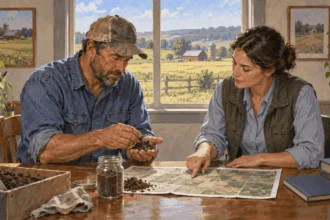
Connect with Your Local USDA Service Center
This is the essential starting point for anyone interested in CRP. USDA Service Centers are conveniently co-located facilities housing staff from both FSA and NRCS.
FSA personnel handle program administration, determine eligibility, process applications and contracts, and manage payments. NRCS staff provide the crucial technical expertise, assisting landowners with conservation planning and practice implementation standards.
Landowners should use the online USDA Service Center Locator tool to find their county office contact information. It is advisable to call the office to schedule an appointment specifically to discuss potential CRP enrollment.
Determine Eligibility & Gather Documents
During the initial contact or meeting, FSA staff will work with the landowner to determine if both the producer and the specific land parcel(s) meet the CRP eligibility requirements discussed earlier.
To facilitate this process, landowners should be prepared to provide certain documents. Commonly required items include: proof of identity (such as a Social Security Number or Employer ID Number), documentation verifying ownership or operational control of the land (like a property deed or lease agreement), and a farm number. If the landowner does not already have a farm number established with FSA, one can be obtained at the office; it is typically required for participation in programs involving financial assistance.
Create Your Conservation Plan with Technical Assistance
Enrollment in CRP requires the development of a site-specific conservation plan. This plan is the blueprint for the conservation activities on the enrolled land. NRCS conservation planners (or other USDA-approved technical service providers) offer free technical assistance to landowners to develop this plan.
The planner will discuss the landowner’s goals for the property, assess the land’s resource concerns, and help select the most appropriate conservation practices (CPs) from the list of eligible options. The resulting conservation plan details the specific practices to be implemented (e.g., what species of grass or trees to plant, required site preparation methods, seeding rates) and outlines the necessary maintenance activities and schedule for the life of the contract.
Submit Your CRP Offer
With eligibility confirmed and a conservation plan drafted, the next step is to submit a formal CRP offer to the local FSA office. This involves completing official program application forms. The primary contract form is the CRP-1.
Depending on the enrollment type, other forms like the CRP-2 (for General Signup offer details) or specific forms for Continuous (CRP-2C) or Grassland (CRP-2G) signups might be required. The offer package formally presents the land being offered, the selected conservation practices outlined in the plan, and, particularly for General and Grassland signups, may include the specific annual rental rate the landowner is willing to accept.
Offer Review and Ranking (if applicable)
The process diverges here based on the enrollment type:
- Continuous CRP: Offers submitted under the Continuous signup that meet all eligibility criteria for the land and producer are generally accepted automatically without competitive ranking. Acceptance is contingent on available program acreage authority.
- General & Grassland CRP: Offers submitted during the designated competitive signup periods undergo a review and ranking process after the signup window closes. General CRP offers are ranked based on the Environmental Benefits Index (EBI) score. Grassland CRP offers are ranked using the specific Grassland ranking factors. FSA analyzes and compares all eligible offers submitted nationwide during that period.
Contract Approval
Following the review and ranking (if applicable), FSA notifies landowners whether their offer has been accepted for enrollment. If the offer is accepted, the landowner proceeds to sign the final CRP contract (CRP-1).
This is a legally binding agreement detailing the terms, conditions, conservation practices, payment rates, and landowner obligations for the contract duration, which is typically 10 or 15 years, or 30 years in the case of CLEAR30 contracts. Accepted CRP contracts generally become effective on October 1st of the fiscal year following the signup or acceptance.
The enrollment process underscores the collaborative nature of CRP, involving distinct but coordinated roles for FSA (programmatic and financial aspects) and NRCS (conservation planning and technical standards). It also highlights the different pathways available—a non-competitive route for targeted, high-priority practices via Continuous CRP, and competitive routes for broader eligibility via General and Grassland signups, requiring landowners to understand which process applies to their situation.
The Financial Side: CRP Payments and Assistance
A primary incentive for participating in CRP is the financial compensation provided to landowners for enrolling their land and implementing conservation practices. The program offers several types of payments, including annual rental payments, cost-share assistance for practice establishment, and, in some cases, additional incentive payments. It is worth noting that certain payment limitations may apply; for instance, annual rental payments are typically capped at $50,000 per person or legal entity per fiscal year.
Annual Rental Payments: How Much Could You Receive?
The foundation of CRP financial benefits is the annual rental payment participants receive for each acre enrolled in the program, paid each year for the full duration of the contract.
Calculation Basis
These payments are not uniform across the country. They are calculated based on county-specific Soil Rental Rates (SRRs).
SRR Determination
Determining the SRR for a specific parcel involves two main components:
- The relative productivity of the soils present on the offered land, based on scientific soil data maintained by NRCS. Soils with similar productivity levels are often grouped together.
- The average cash rental rate for non-irrigated cropland in that specific county. This county average rate is primarily derived from annual survey data collected by the USDA’s National Agricultural Statistics Service (NASS). FSA uses this NASS data as the foundation for setting the final county-average rental rates used in CRP calculations each year.
Proration/Adjustments
The final annual rental payment offered might be a percentage of the calculated SRR, and this percentage can differ by enrollment type. For instance, General CRP offers might be based on 85% of the SRR, while Grassland CRP offers might use 75% of the estimated pastureland rental rate for the county.
Continuous CRP practices may receive payments based on 90% or even 100% of the cropland SRR, potentially with additional incentive percentages added on top. CLEAR30 contracts include specific upward adjustments to the rental rate. The local FSA office calculates the maximum potential rental rate for any given offer.
Alternative Rates
In situations where NASS county data is limited or deemed unrepresentative of local market conditions, FSA State and County Committees can propose, and the national FSA office may approve, the use of an alternative county rental rate based on other data sources, such as rates in neighboring counties with similar characteristics.
Offer Strategy (Competitive Signups)
For General and Grassland CRP signups, where offers are ranked competitively, landowners have the option to offer to enroll their land at an annual rental rate below the maximum calculated rate. Doing so can earn additional points in the EBI or Grassland ranking factors under the “Cost” criterion, potentially making the offer more likely to be accepted.
The complexity and localized nature of this system mean that potential CRP rental payments can vary significantly from county to county and even field to field based on soil types. The calculation methodology, involving soil productivity indices, county-average market rents derived from NASS surveys, potential adjustments based on enrollment type, and the possibility of administratively approved alternative rates, makes it impossible to predict a payment rate without a site-specific assessment. Landowners must work directly with their local FSA office to obtain an accurate calculation of the maximum potential rental rate for their specific land and chosen enrollment pathway.
Cost-Share Assistance: Help Establishing Practices
Beyond the annual rent, FSA provides financial assistance to help offset the landowner’s upfront costs associated with establishing the required conservation practices. This can include expenses for site preparation, purchasing seeds or tree seedlings, and planting labor.
Rate
Typically, CRP cost-share assistance covers up to 50 percent of the eligible costs incurred by the participant to establish the approved practices according to NRCS standards. In some cases, particularly under state-partnered CREP agreements, additional cost-share funds from the state partner may be available, potentially covering a higher percentage of the total cost.
Payment Timing
Cost-share payments are generally disbursed after the conservation practice has been fully installed, inspected by FSA/NRCS staff, certified as meeting the required technical standards and specifications, and the landowner has provided documentation of incurred costs.
Establishing conservation cover, especially practices like tree planting or diverse native prairie restorations, can involve substantial initial investment. The provision of up to 50% cost-share directly addresses this potential financial barrier, making it more economically feasible for landowners to undertake these important conservation actions and participate in the program.
Incentive Payments: Extra Support for Certain Practices
In addition to annual rental payments and cost-share, FSA offers various other incentive payments designed to further encourage the adoption of specific high-priority conservation practices or enrollment in particular initiatives like Continuous CRP, CREP, SAFE, and CLEAR30. The availability and amount of these incentives can change based on program priorities and funding.
Practice Incentive Payment (PIP)
This is typically a one-time payment made after an eligible high-priority conservation practice is successfully installed and certified. It is often calculated as a percentage of the participant’s eligible installation costs. PIP rates have varied considerably over time and across different CRP initiatives.
Historical examples cited in program documents include rates such as 5%, 20% (following an increase to boost enrollment), 40% (often associated with Continuous CRP), and even 50% for certain CREP or CLEAR practices. Because PIP rates are not uniform and can change, landowners must verify the current PIP rate applicable to the specific practice and program they are considering directly with their local FSA office.
Signing Incentive Payment (SIP)
This is generally a one-time, upfront payment made shortly after the CRP contract is approved, specifically for enrolling land into certain Continuous CRP practices. Like PIP, SIP rates have also varied. Examples include flat per-acre payments (e.g., $100 to $150 per acre depending on contract length) or payments calculated as a percentage of the first full year’s annual rental payment (e.g., 32.5%). Landowners should confirm current SIP availability and the applicable rate with their local FSA office.
Other Incentives
Depending on the specific CRP program, practice, and current USDA priorities, other financial incentives might be available. These could include:
- Rental Rate Incentives: An additional percentage added to the base annual rental rate for specific practices like field windbreaks, grass waterways, filter strips, and riparian buffers (e.g., up to 20%), or for land located in water quality priority areas (e.g., 10% for certain water quality practices, or the 20% water quality incentive plus 27.5% adjustment for CLEAR30).
- Maintenance Incentive Payments: Potential payments to help cover the costs of required maintenance activities for certain practices.
- Climate-Smart Practice Incentives: Additional payments for implementing practices recognized for their climate mitigation benefits.
The existence of these varied and often targeted incentive payments (PIP, SIP, rental add-ons) highlights their role as flexible policy tools. FSA uses them strategically to steer enrollment towards practices and initiatives deemed most critical for achieving current conservation objectives, such as improving water quality or enhancing specific wildlife habitats, or to boost overall program participation when needed. Landowners should inquire specifically about any available incentives when discussing enrollment options with FSA, as these can significantly enhance the financial attractiveness of certain CRP opportunities.
Potential Financial Benefits Summary
| Payment Type | Basis / Rate Calculation | Typical Applicability |
|---|---|---|
| Annual Rental | Based on Soil Rental Rate (SRR) derived from soil productivity & county average cropland rent; adjusted by program type | All CRP contracts |
| Cost-Share | Up to 50% of eligible establishment costs for approved practices | Practice establishment phase for most CRP contracts |
| Practice Incentive Payment (PIP) | One-time payment, often % of eligible installation cost. Rate Varies Significantly – Check Locally. | Certain high-priority practices, esp. Continuous CRP, CREP, SAFE, CLEAR |
| Signing Incentive Payment (SIP) | One-time payment, often flat rate/acre or % of 1st year rent. Rate Varies Significantly – Check Locally. | Certain high-priority practices, esp. Continuous CRP, CREP, SAFE |
| Other Incentives | Rental rate add-ons (%), maintenance payments, climate incentives. Varies by practice/program – Check Locally. | Specific practices (buffers, water quality), programs (CLEAR30), initiatives |
Understanding CRP Contract Obligations
Enrolling land in the Conservation Reserve Program signifies a significant, long-term commitment. The CRP contract (Form CRP-1) is a legally binding agreement between the participant and USDA’s Commodity Credit Corporation (CCC), represented by FSA. Understanding and fulfilling the obligations outlined in this contract is crucial for remaining in good standing and receiving program payments. Failure to comply can result in penalties, including the requirement to repay payments received.
Contract Duration
The commitment period for CRP is substantial. Standard contracts for General CRP, Continuous CRP, and Grassland CRP typically last for 10 to 15 years. The specific length is agreed upon at the time of enrollment. A major exception is the CLEAR30 pilot program, which involves 30-year contracts for specific water quality practices.
Establishing and Maintaining Your Conservation Cover
A core obligation for CRP participants is to establish and maintain the approved conservation cover or practice as specified in their conservation plan. Establishment typically involves preparing the site and planting the required vegetation (grasses, legumes, trees, shrubs, etc.) according to NRCS technical standards and within a designated timeframe outlined in the plan.
Beyond initial establishment, landowners have an ongoing maintenance responsibility for the entire contract duration. This active management is necessary to ensure the long-term success and function of the conservation practice. Maintenance activities, which will be specified in the conservation plan, commonly include controlling invasive weeds, managing pests, preventing encroachment of undesirable woody species, and taking other actions needed to keep the cover healthy and effective.
Depending on the practice, required maintenance might involve activities like prescribed burning or targeted mowing, often restricted to certain times of the year to protect wildlife. FSA or NRCS may conduct periodic spot checks or reviews to monitor compliance with maintenance requirements. This underscores that CRP participation requires active, long-term stewardship of the enrolled land, not simply setting it aside.
Using Your CRP Acres: What’s Allowed?
The rules regarding use of CRP land are strict, reflecting the program’s primary purpose of maintaining conservation cover.
General Restriction
For land enrolled under General CRP and most Continuous CRP practices, agricultural production activities like cropping or routine livestock grazing are generally prohibited. The land must remain dedicated to the established conservation cover.
Haying and Grazing Rules
Limited haying (mowing and baling forage) and grazing may be allowed under specific, regulated circumstances. Crucially, landowners must always obtain approval from their local FSA office before undertaking any haying or grazing activities on CRP land to ensure compliance and avoid contract violations. The rules differ based on the situation:
- Emergency Haying/Grazing: FSA may authorize emergency haying and grazing on certain CRP practices when a county is experiencing severe drought conditions (officially designated as D2 or higher on the U.S. Drought Monitor) or has suffered a significant loss in forage production (e.g., 40% or more). If approved, these activities are subject to a modified conservation plan and typically must occur outside of the local primary nesting season for grassland birds (these dates vary by state and can be found on maps provided by FSA). There are often restrictions, such as allowing only one cutting of hay which must be removed promptly, or limits on the duration of grazing. In very severe drought conditions (counties eligible for the Livestock Forage Program), grazing during the nesting season might be permitted, but only at a reduced stocking rate (e.g., 50% of normal). Generally, participants do not face a reduction in their annual rental payment for approved emergency haying or grazing. County eligibility for emergency provisions is reviewed periodically by FSA.
- Non-Emergency (Managed) Haying/Grazing: Outside of declared emergencies, FSA may authorize managed haying or grazing on certain CRP practices as a management tool to maintain or improve the quality of the conservation cover (e.g., reduce thatch buildup, control undesirable species). This is typically allowed only outside the primary nesting season and on a limited frequency (e.g., managed haying may be allowed once every 3 years, managed grazing once every 2 years on the same acreage). Importantly, participants who undertake approved non-emergency haying or grazing usually must accept a 25% reduction in their annual rental payment for the acres utilized in that year.
- Grassland CRP Exception: As noted previously, Grassland CRP is fundamentally different. It is designed as a “working lands” program where planned, sustainable grazing and haying activities are generally permitted throughout the contract period, as long as they are conducted in accordance with the approved conservation plan developed with FSA/NRCS.
- CREP: For lands enrolled through the Conservation Reserve Enhancement Program (CREP), haying and grazing rules typically follow the standard CRP emergency and managed provisions, unless specific restrictions are included in the state-level CREP agreement.
Other Uses
Activities that do not compromise the conservation cover or the program’s environmental objectives are generally allowed. This often includes recreational uses like hunting and fishing. For land enrolled in tree planting practices, managed timber harvesting may be permissible under certain conditions and according to an approved forestry management plan, often later in the contract period.
The detailed regulations surrounding haying and grazing clearly indicate that while some economic use of CRP land is possible under defined circumstances, it is tightly controlled to protect the primary conservation investment. Landowners must prioritize adherence to the rules, especially obtaining prior FSA authorization, to safeguard their contract and payments.
Consequences of Non-Compliance/Early Termination
Failing to meet the obligations of the CRP contract, such as not establishing or maintaining the required cover, or undertaking prohibited activities, can lead to termination of the contract. Similarly, if a landowner chooses to voluntarily terminate the contract before its scheduled expiration date, significant financial penalties apply.
Generally, termination requires the participant to repay all annual rental payments and cost-share payments received since the beginning of the contract, plus interest, and potentially liquidated damages (which might be assessed as a percentage, such as 25%, of one year’s rental payment). If CRP land is sold, the buyer must agree to assume the CRP contract obligations; if the buyer refuses, the seller is typically responsible for these repayment penalties unless a waiver is granted.
Common CRP Conservation Practices
The heart of CRP lies in the specific conservation practices (CPs) implemented on the enrolled land. These are the tangible actions landowners take, guided by their conservation plan developed with NRCS or another technical service provider, to achieve the program’s environmental goals. There is a wide array of approved practices, allowing for flexibility to address different resource concerns and landscape contexts across the country.
Examples of Eligible Practices
Below are examples of common CRP conservation practices, identified by their official CP code, along with their primary purpose or benefit:
- CP1 – Establishment of Permanent Introduced Grasses & Legumes: Establishes non-native grasses and legumes for basic ground cover and erosion control.
- CP2 – Establishment of Permanent Native Grasses: Plants native grass species suitable for the region, providing erosion control and better wildlife habitat than introduced species.
- CP3/3A – Tree Planting: Establishes stands of trees (hardwoods or conifers) for long-term erosion control, wildlife habitat, carbon sequestration, and potentially future timber value.
- CP4D – Permanent Wildlife Habitat: Creates habitat specifically designed to benefit wildlife, often using diverse mixes of native grasses, forbs (wildflowers), and/or shrubs.
- CP5A – Field Windbreak Establishment: Plants rows of trees or shrubs to reduce wind erosion across fields, protect crops or livestock, manage snow drift, and provide wildlife corridors.
- CP8A – Grass Waterway: Establishes sod-forming grasses in natural drainage ways within fields to prevent gully erosion from concentrated water flow.
- CP9 – Shallow Water Areas for Wildlife: Creates or restores small, shallow wetlands designed to provide habitat for waterfowl, shorebirds, amphibians, and other wetland-dependent wildlife.
- CP12 – Wildlife Food Plot: Plants specific crops or vegetation intended as a supplemental food source for wildlife; often established on small portions of larger CRP fields.
- CP15A – Contour Grass Strips: Establishes strips of perennial grass planted along the contour of sloped fields to slow water runoff and trap sediment, reducing sheet and rill erosion.
- CP21 – Filter Strip: Creates a strip of grasses or other permanent vegetation along the edge of fields adjacent to streams, ditches, or other water bodies to intercept and filter sediment, nutrients, and pesticides from runoff before they enter the water.
- CP22 – Riparian Buffer: Establishes a wider protective zone of vegetation, often including grasses, shrubs, and trees, along rivers, streams, or lakes to improve water quality, stabilize banks, provide aquatic and terrestrial habitat, and shade waterways.
- CP23/CP23A – Wetland Restoration: Restores the hydrology and native vegetation of previously drained or degraded wetlands on floodplain (CP23) or non-floodplain (CP23A) sites.
- CP25 – Rare And Declining Habitat: Focuses on establishing or restoring habitat critical for specific federal or state-listed threatened, endangered, or otherwise rare species.
- CP33 – Habitat Buffers for Upland Birds: Creates habitat buffers, typically around field edges, specifically designed to provide nesting, brood-rearing, and escape cover for upland game birds like pheasants and quail.
- CP36 – Longleaf Pine Establishment: A specialized tree planting practice focused on restoring the ecologically important longleaf pine ecosystem in the southeastern U.S.
- CP37 – Duck Nesting Habitat: Establishes dense grassland cover specifically managed to provide optimal nesting habitat for ducks and other waterfowl.
- CP38 – State Acres for Wildlife Enhancement (SAFE): Encompasses various practices tailored to meet specific state-level wildlife habitat objectives within designated SAFE project areas.
- CP42 – Pollinator Habitat: Plants diverse mixes of native wildflowers and forbs that provide nectar and pollen sources throughout the growing season to support bees, butterflies, and other beneficial pollinators.
- CP43 – Prairie Strips: Integrates narrow strips of native prairie vegetation within row crop fields to provide multiple benefits, including reduced runoff, improved water quality, increased biodiversity, and pollinator/wildlife habitat.
Finding More Practices
This list is not exhaustive. Landowners can find the complete, official list of currently approved CRP conservation practices, along with detailed specifications for each, by consulting the FSA CRP Practices Library online or by discussing options with their local NRCS conservation planner.
The availability of such a diverse suite of conservation practices allows CRP to be adaptable. It enables the program to move beyond simply idling land and instead implement targeted, science-based actions to address specific environmental challenges—whether controlling soil erosion, filtering agricultural runoff, restoring critical wetlands, or creating habitat for declining wildlife populations—in a manner appropriate for the local landscape and the landowner’s objectives.
Common CRP Practices, CP Codes, and Benefits
| Practice Name | CP Code | Primary Conservation Benefit(s) |
|---|---|---|
| Establishment of Native Grasses | CP2 | Erosion control, wildlife habitat |
| Tree Planting | CP3/3A | Erosion control, wildlife habitat, carbon sequestration |
| Grass Waterway | CP8A | Prevent gully erosion in fields |
| Filter Strip | CP21 | Water quality (filters sediment/nutrients near water bodies) |
| Riparian Buffer | CP22 | Water quality, bank stability, aquatic & terrestrial habitat |
| Wetland Restoration | CP23/23A | Restore wetland functions (water storage, filtering, wildlife habitat) |
| Habitat Buffers for Upland Birds | CP33 | Nesting and brood-rearing habitat for quail, pheasant, etc. |
| Pollinator Habitat | CP42 | Food and habitat for bees, butterflies, beneficial insects |
| State Acres for Wildlife (SAFE) | CP38 | Habitat tailored to specific state wildlife priorities |
| Prairie Strips | CP43 | Water quality, biodiversity, soil health within crop fields |
Essential CRP Resources
Given the complexity of the Conservation Reserve Program, its various enrollment options, evolving financial incentives, and detailed technical requirements, accessing accurate and up-to-date information is essential for landowners considering participation.
Your Primary Contact: Local USDA Service Center
The single most important resource for any landowner interested in CRP is their local USDA Service Center. Staff from both the Farm Service Agency (FSA) and the Natural Resources Conservation Service (NRCS) are available there to provide personalized assistance. They can answer specific questions about eligibility, explain the different program options, help calculate potential payments, guide landowners through the application process, and provide the necessary technical support for developing a conservation plan. Landowners can easily find contact information for their nearest office using the online USDA Service Center Locator tool.
Official USDA/FSA Websites
The USDA and FSA maintain comprehensive websites with official program information:
- Main FSA CRP Page: This is the central online hub for CRP information, including announcements about signup periods, program details, links to fact sheets, and other resources.
- NRCS CRP Page: Provides information focused on the technical assistance aspects of CRP, including conservation planning and practice standards.
- Farmers.gov: This is a broader USDA portal for farmers, ranchers, and landowners, often featuring articles, tools, and updates related to CRP and other USDA programs.
Key Fact Sheets and Guides
FSA publishes numerous fact sheets that provide concise summaries of specific CRP aspects. While availability and links may change, landowners should look for current versions of fact sheets covering topics such as:
- General CRP Signup
- Continuous CRP Signup
- Grassland CRP Signup
- State Acres For Wildlife Enhancement (SAFE) Initiative (national and state-specific)
- CLEAR30 Pilot Program
- Environmental Benefits Index (EBI) Factors (for General Signup)
- Grassland CRP Ranking Factors
- Emergency Haying and Grazing Provisions and Eligible Practices Guide
These are often available on the main FSA CRP webpage or through local offices.
CRP Practices Library
For detailed information on specific conservation practices eligible under CRP, including their purpose and basic requirements, refer to the official FSA CRP Practices Library.
CRP Statistics
For those interested in program trends, FSA makes CRP enrollment data, average rental rates, and other statistics publicly available: CRP Statistics.
Ask USDA
For general questions about USDA programs, the Ask USDA service provides answers online or via phone.
Because CRP details, such as eligible cropping history years, incentive payment rates, and signup deadlines, are subject to change based on Farm Bill legislation and administrative updates, relying solely on older documents or non-official sources can lead to misinformation. Therefore, the most prudent approach for landowners is to consistently use the official USDA/FSA websites and, most importantly, engage directly with the staff at their local USDA Service Center for the most current, accurate, and locally relevant information regarding the Conservation Reserve Program.