- en.wikipedia.org4 links
- aclu.org2 links
- oyez.org
Last updated 4 weeks ago. Our resources are updated regularly but please keep in mind that links, programs, policies, and contact information do change.
The First Amendment to the United States Constitution protects five fundamental freedoms that shape American democracy. Ratified on December 15, 1791, as part of the Bill of Rights, this 45-word amendment establishes the legal framework for religious liberty, free speech, press freedom, peaceful assembly, and the right to petition government.
The amendment reads: “Congress shall make no law respecting an establishment of religion, or prohibiting the free exercise thereof; or abridging the freedom of speech, or of the press; or the right of the people peaceably to assemble, and to petition the Government for a redress of grievances.”
- Historical Origins of America’s Core Freedoms
- Freedom of Religion: A Tale of Two Clauses
- Freedom of Speech: The Cornerstone of Public Discourse
- Freedom of the Press: The Fourth Estate as a Watchdog
- The People’s Voice: Assembly and Petition
- The First Amendment in the Modern Age: Frequently Asked Questions
These protections emerged from colonial experiences with religious persecution and government censorship. They remain central to American law and politics, though their application continues to evolve through court decisions and social change.
Historical Origins of America’s Core Freedoms
Colonial Experience Shapes Constitutional Principles
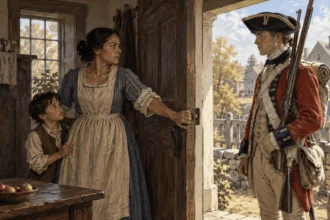
The First Amendment’s freedoms responded directly to political and religious realities in colonial America. Early settlers included Anglicans, Puritans, Quakers, Presbyterians, Roman Catholics, and Jewish communities. Many fled Europe to escape religious persecution, particularly groups like the Quakers and Presbyterians.
The New World offered limited tolerance. Government and religion remained intertwined in many colonies. The Church of England held “established” status in several southern colonies, meaning it received official state support. Anglican clergy sometimes collected taxes for the government. Those who refused to pay these taxes or preached without government licenses faced criminal prosecution.
This direct experience with state-enforced religious orthodoxy created demand for the First Amendment’s two religion clauses: prohibiting government “establishment” of religion and protecting its “free exercise.”
Press and petition freedoms had deep roots in English legal history. American colonists considered themselves inheritors of English rights codified in the Magna Carta of 1215 and the English Bill of Rights of 1689. Both documents protected the right to petition the monarch for redress of grievances.
The Declaration of Independence referenced this tradition, lamenting that “repeated Petitions have been answered only by repeated injury.” Colonial struggles against British censorship, particularly licensing laws and prosecutions for seditious libel, reinforced beliefs in press freedom as a “bulwark of liberty.”
Political Necessity: The Fight for a Bill of Rights
The First Amendment’s inclusion was not guaranteed. The original Constitution, drafted at the Philadelphia Convention in 1787, contained no bill of rights. Some framers, including Alexander Hamilton, argued it was unnecessary. In Federalist No. 84, Hamilton asked, “Why declare that things shall not be done which there is no power to do?”
This omission became the Constitution’s greatest ratification obstacle. Anti-Federalists opposed the new framework, arguing that a strong central government without explicit limitations would trample individual liberties. The debate involved practical politics and the nation’s future.
Key states like Massachusetts, Virginia, and New York ratified the Constitution only after Federalists promised that the new Congress would immediately add amendments protecting individual rights. The First Amendment emerged from this critical political compromise.
The Bill of Rights preamble stated that amendments were proposed “in order to prevent misconstruction or abuse of its powers” and to extend “the ground of public confidence in the Government.” These freedoms represented the price of national unity.
From Federal to Local Protection
James Madison, a key founding figure and first Congress member, largely drafted the promised amendments. Drawing heavily on existing state constitutions, particularly George Mason’s Virginia Declaration of Rights (1776), Madison introduced proposals to the House of Representatives in June 1789.
His initial draft for speech and press clauses read: “The people shall not be deprived or abridged of their right to speak, to write, or to publish their sentiments; and the freedom of the press, as one of the great bulwarks of liberty, shall be inviolable.” Both the House and Senate debated, revised, and condensed this language before reaching the final 45 words.
When ratified, the First Amendment applied only to the federal government. The text begins, “Congress shall make no law…,” explicitly limiting the national legislature. State and local governments were not bound by its restrictions and often limited speech or established religious practices.
This changed after the Civil War with the Fourteenth Amendment’s ratification in 1868, which declared that no state shall “deprive any person of life, liberty, or property, without due process of law.” The Supreme Court gradually engaged in “incorporation,” ruling that the “liberty” protected by the Fourteenth Amendment’s Due Process Clause includes most Bill of Rights freedoms, making them applicable to state and local governments.
This transformation began with Gitlow v. New York (1925), where the Court stated that “freedom of speech and of the press…are among the fundamental personal rights and ‘liberties’ protected by the due process clause of the Fourteenth Amendment from impairment by the States.”
Other First Amendment freedoms were incorporated in subsequent cases: freedom of assembly in De Jonge v. Oregon (1937), free exercise of religion in Hamilton v. Regents of U.C. (1934), and the Establishment Clause in Everson v. Board of Ed. (1947). The First Amendment evolved from a check solely on federal power to a nationwide guarantee against infringement by any government level.
Freedom of Religion: A Tale of Two Clauses
The First Amendment’s religious freedom guarantee operates through two distinct but related clauses: the Establishment Clause and the Free Exercise Clause. Together, they ensure government neutrality toward religion, but their relationship creates complex constitutional debates.
The Establishment Clause: Building a “Wall of Separation”
The Establishment Clause states that “Congress shall make no law respecting an establishment of religion.” This clause prohibits government from creating an official, state-sponsored church like the Church of England that colonists knew well. More broadly, it forbids government from endorsing or preferring one religion over another, or religion over non-religion.
This principle is known as “separation of church and state.” The famous phrase “a wall of separation between church and State” does not appear in the Constitution. President Thomas Jefferson first used it in an 1802 letter to the Danbury Baptist Association to explain his understanding of the First Amendment’s intent.
The Supreme Court later adopted this metaphor as a guide to interpreting the Establishment Clause, most notably in the 1947 case Everson v. Board of Education, which applied the clause to states.
For nearly half a century, the Supreme Court’s primary tool for analyzing Establishment Clause cases was the Lemon Test, derived from the 1971 case Lemon v. Kurtzman. To be constitutional under the Lemon test, government action involving religion had to satisfy three requirements:
- It must have a secular (non-religious) legislative purpose
- Its principal or primary effect must be one that neither advances nor inhibits religion
- It must not foster “excessive government entanglement” with religion
The Lemon test proved difficult to apply consistently and drew criticism from some justices for creating a rigid and hostile barrier between government and religion. This led to a significant shift in the Court’s methodology.
In the 2022 case Kennedy v. Bremerton School District, involving a high school football coach’s post-game prayers, the Supreme Court formally abandoned the Lemon test. The majority opinion, authored by Justice Neil Gorsuch, stated that Establishment Clause cases should instead be interpreted by “reference to historical practices and understandings.”
This new standard suggests a more accommodationist approach, where government actions with some connection to religion may be permissible if they are consistent with the nation’s history and tradition. This doctrinal shift represents one of the most dynamic areas of First Amendment law today.
The Free Exercise Clause: The Right to Believe and Practice
The second religion clause protects the “free exercise” of religion. This guarantees every individual the right to hold any religious belief they choose—or no belief at all—without government coercion or penalty. This freedom of belief is absolute.
The freedom to act on those beliefs, however, is not. The Supreme Court has consistently held that while government cannot regulate belief, it can regulate conduct. Religious practices can be limited if they run afoul of neutral, generally applicable laws that serve a “compelling governmental interest,” such as public health, safety, and order.
For instance, in Prince v. Massachusetts (1944), the Court held that a state could require vaccination of children even if their parents’ religious beliefs forbade it, reasoning that the state’s interest in protecting public health overrode the parents’ free exercise claim in that context.
Navigating the Tension: When the Two Clauses Collide
The Establishment and Free Exercise Clauses work together to ensure religious liberty, but they often pull in opposite directions, creating natural tension. The Supreme Court has noted that the two clauses “forbid two quite different kinds of governmental encroachment upon religious freedom.”
Consider a public school. If the school requires students to recite a prayer, it violates the Establishment Clause by endorsing a religious practice. But if the school prohibits a student from praying silently in the cafeteria during lunch break, it could infringe on that student’s Free Exercise rights.
Similarly, if a town government provides special funding and security for a church festival, it may be accused of “establishing” that religion. But if it refuses to provide basic services like fire and police protection to a church, it could be seen as “prohibiting” the free exercise of that religion.
The Supreme Court has acknowledged that there must be “room for play in the joints” between the two clauses. The goal is not absolute separation or absolute accommodation but what the Court has called “benevolent neutrality”—an approach that “will permit religious exercise to exist without sponsorship and without interference.”
Freedom of Speech: The Cornerstone of Public Discourse
Treason Test
Pick a kind of act to see what each part of the Constitution’s definition of treason requires, and which related federal crimes can apply instead. It illustrates the law and never assesses any real person or event.
How to answer this
The Constitution says treason against the United States consists only in levying war against it, or in adhering to its enemies, giving them aid and comfort. No one can be convicted of treason except on the testimony of two witnesses to the same overt act, or on a confession in open court. Constitution Annotated
An American citizen owes allegiance to the United States wherever he lives, and dual nationality doesn’t change that. The Supreme Court has also declared that noncitizens, while domiciled in the United States, owe it a temporary allegiance, though it has never directly ruled on whether only citizens can commit treason. Constitution Annotated
Every result that can fit treason explains who owes allegiance, so citizens and noncitizens answer this the same way.
Military information sent to a country at war with the United States: choose Helping, which leads to the aid and comfort result; that result also notes the wartime defense information law.
Information that isn’t national defense information, such as a company’s trade secrets: choose Sharing, then say who received it.
Membership in a group that teaches overthrowing the government by force: choose Speech.
An armed secession or uprising against the government: choose Using force.
Fighting for a foreign country at war with the United States: choose Fighting against the United States.
Speech or broadcasts made for a country at war with the United States: choose Helping.
Speech that only argues for overthrowing the government, with no plan or agreement to carry it out: choose Speech.
Pick the kind of act, not a news story. This explainer describes the law, not any real person or event.
| Crime and law | What it covers, and the penalty |
|---|---|
| Treason (Constitution, Art. III, Sec. 3; 18 U.S.C. 2381) | The Constitution says treason against the United States consists only in levying war against it, or in adhering to its enemies, giving them aid and comfort. No one can be convicted of treason except on the testimony of two witnesses to the same overt act, or on a confession in open court. Under federal law, anyone owing allegiance to the United States who levies war against it, or adheres to its enemies and gives them aid and comfort, in the United States or elsewhere, is guilty of treason. The penalty is death, or at least five years in prison and a fine of at least $10,000, and the person can never hold federal office. Congress sets the punishment for treason, but a treason conviction can’t work “corruption of blood,” and any forfeiture ends with the convicted person’s life. Constitution AnnotatedU.S. CodeConstitution Annotated |
| Misprision of treason (18 U.S.C. 2382) | Misprision of treason is the crime of someone owing allegiance who knows of treason against the United States and conceals it, rather than reporting it as soon as possible to the president, a federal judge, or a state governor or judge. The penalty is a fine, up to seven years in prison, or both. U.S. Code |
| Rebellion or insurrection (18 U.S.C. 2383) | Anyone who incites, starts, assists or engages in a rebellion or insurrection against the authority of the United States or its laws, or gives it aid or comfort, faces a fine, up to 10 years in prison, or both, and can never hold federal office. U.S. Code |
| Seditious conspiracy (18 U.S.C. 2384) | Seditious conspiracy is the crime of two or more people in any state or territory, or anywhere else under U.S. jurisdiction, conspiring to overthrow or destroy the U.S. government by force, to levy war against it, to oppose its authority by force, to use force to prevent, hinder or delay carrying out any federal law, or to seize U.S. property by force. Each faces a fine, up to 20 years in prison, or both. U.S. Code |
| Advocating overthrow of government (18 U.S.C. 2385) | Federal law makes it a crime to knowingly or willfully advocate or teach the duty, necessity, desirability or propriety of overthrowing any government in the United States by force or violence; to publish or distribute such material intending to cause an overthrow; or to organize, or knowingly join, a group that teaches or advocates it. The penalty is a fine, up to 20 years in prison, or both, plus five years barred from federal jobs. The Smith Act, now 18 U.S.C. 2385, bans advocating the overthrow of the U.S. government by force and violence. The Supreme Court upheld it in Dennis v. United States (1951), and in Yates v. United States (1957) read it to require advocacy of unlawful action, urging people to do something now or in the future, rather than advocacy of forcible overthrow as an abstract doctrine. In Scales v. United States, the Supreme Court upheld the Smith Act’s membership clause as the court interpreted it: a felony only for an active member of a group advocating violent overthrow who shares that specific intent. In Brandenburg v. Ohio (1969), the Supreme Court reformulated its earlier rulings on advocating force, including Yates and Scales: the government may punish advocacy of force or lawbreaking only when it is directed to inciting or producing imminent lawless action and is likely to do so. U.S. CodeConstitution AnnotatedConstitution AnnotatedConstitution Annotated |
| Gathering or passing defense information (18 U.S.C. 793) | The Espionage Act makes it a crime to gather national defense information intending, or having reason to believe, that it will be used to injure the United States or to help any foreign nation. It also covers anyone who has national defense documents or information, lawfully or not, and willfully passes them to someone not entitled to receive them. For information rather than documents, the person must have reason to believe it could be used to injure the United States or to help a foreign nation. The penalty is a fine, up to 10 years in prison, or both. U.S. Code |
| Delivering defense information to a foreign government (18 U.S.C. 794) | Delivering national defense information to any foreign government, with intent or reason to believe it will be used to injure the United States or to help a foreign nation, is punishable by death or by prison for any term of years or life. Death is allowed only in listed cases, such as a disclosure that led to the death of a U.S. agent or that directly concerned nuclear weapons or war plans. In time of war, collecting or passing on information about U.S. forces, operations or defenses, intending that it reach the enemy, is punishable by death or by prison for any term of years or life. U.S. Code |
| Material support to terrorists (18 U.S.C. 2339A) | Providing material support or resources, such as money, lodging, training, weapons, personnel or transportation, knowing or intending it will be used to prepare for or carry out listed terrorism crimes, is punishable by a fine, up to 15 years in prison, or both, or any term of years or life if someone dies. Medicine and religious materials don’t count. U.S. Code |
| Material support to a designated foreign terrorist organization (18 U.S.C. 2339B) | Knowingly providing material support or resources to a designated foreign terrorist organization, or trying or conspiring to, is punishable by a fine, up to 20 years in prison, or both, or any term of years or life if someone dies. The person must know the group is a designated terrorist organization, or that it has engaged in terrorist activity or terrorism. U.S. Code |
Perhaps the most well-known and debated First Amendment protection, freedom of speech is a bedrock principle of American self-government. It rests on the belief that a free society depends on citizens’ ability to express ideas, criticize government, and engage in open debate without fear of punishment.
The Core Principle: A “Marketplace of Ideas”
The Free Speech Clause’s fundamental purpose is to ensure that public debate is “uninhibited, robust, and wide-open.” This concept is often called the “marketplace of ideas,” a metaphor suggesting that the best way to find truth is to allow all ideas, popular and unpopular, to compete freely in public discourse.
As James Madison argued, in a republic, “the censorial power is in the people over the government, and not in the government over the people.”
The legal standard for when government can restrict inflammatory speech has evolved dramatically over time, reflecting a clear trend toward greater protection. The journey began with controversy over the Sedition Act of 1798, which criminalized “false, scandalous and malicious writing” against the government and was used by the Adams administration to prosecute political opponents.
Though the Supreme Court never ruled on it, the Act was widely condemned as unconstitutional and helped crystallize the “central meaning of the First Amendment” as the right to criticize public officials.
In the early 20th century, the Court adopted the “clear and present danger” test. First articulated by Justice Oliver Wendell Holmes in Schenck v. United States (1919), this test allowed government to punish speech if it created a “clear and present danger” of bringing about “substantive evils that Congress has a right to prevent,” such as obstructing the military draft during wartime.
This standard was seen as too permissive of government censorship. It was ultimately replaced by a much more speech-protective standard in the landmark 1969 case Brandenburg v. Ohio.
The Court in Brandenburg established the “imminent lawless action” test, which remains law today. Under this test, government can only punish advocacy of force or law-breaking if that advocacy is:
- Directed to inciting or producing imminent lawless action, and
- Likely to incite or produce such action
This is an extremely high bar, protecting abstract calls for revolution or violence unless they are specifically intended and likely to cause immediate illegal acts. This evolution from the Sedition Act to Schenck to Brandenburg demonstrates a deliberate, centuries-long legal journey toward a more expansive understanding of free speech.
The Line in the Sand: Categories of Unprotected and Less-Protected Speech
Despite its breadth, First Amendment protection is not absolute. The Supreme Court has recognized a few “well-defined and narrowly limited classes of speech” that receive little or no constitutional protection because their value is seen as being “outweighed by the social interest in order and morality.”
These categories include:
Incitement to Imminent Lawless Action: As defined by the Brandenburg test, this is speech that is intended and likely to cause immediate illegal activity.
Defamation (Libel and Slander): These are false statements of fact that harm another person’s reputation. The standard for proving defamation against a public official is exceptionally high, requiring proof of “actual malice.”
True Threats: These are statements where the speaker “means to communicate a serious expression of an intent to commit an act of unlawful violence to a particular individual or group of individuals.” The Supreme Court clarified in Counterman v. Colorado (2023) that to convict someone for a true threat, government must show that the speaker had some subjective understanding of the threatening nature of their words, acting with at least a mental state of recklessness.
Fighting Words: This is a very narrow category of speech defined in Chaplinsky v. New Hampshire (1942) as words “which by their very utterance inflict injury or tend to incite an immediate breach of the peace.” It applies to face-to-face, personally abusive epithets that are likely to provoke a violent reaction from an ordinary person.
Obscenity: This is not the same as profanity or indecency. To be legally obscene, material must meet all three prongs of the test established in Miller v. California (1973): it must appeal to a prurient (shameful or morbid) interest in sex; it must be patently offensive under contemporary community standards; and it must lack serious literary, artistic, political, or scientific value.
Child Pornography: The production, distribution, and possession of child pornography is illegal and receives no First Amendment protection.
Commercial Speech: Speech for business purposes, such as advertisements, receives less protection than political speech. Government can regulate commercial speech to prevent false, misleading, or illegal advertising.
Symbolic Speech: When Actions Speak Louder Than Words
Freedom of speech is not limited to spoken or written words. The First Amendment also protects symbolic speech—actions that are intended to convey a particular message or idea.
Two landmark cases are central to understanding this doctrine. The first is Tinker v. Des Moines Independent Community School District (1969). Several public school students, including Mary Beth Tinker, were suspended for wearing black armbands to school to protest the Vietnam War.
The Supreme Court sided with the students in a 7-2 decision, famously declaring that students and teachers do not “shed their constitutional rights to freedom of speech or expression at the schoolhouse gate.” The Court established the Tinker test, which holds that school officials cannot censor student expression unless they can reasonably forecast that it will cause a “material and substantial disruption” of the educational environment or invade the rights of others.
The second key case is Texas v. Johnson (1989). During a protest at the 1984 Republican National Convention, Gregory Lee Johnson burned an American flag. He was convicted under a Texas law that prohibited desecration of a venerated object.
The Supreme Court, in a narrow 5-4 decision, reversed his conviction, holding that flag burning is a form of expressive conduct protected by the First Amendment. The Court reasoned that government cannot mandate respect for the flag by punishing those who disrespect it.
“If there is a bedrock principle underlying the First Amendment,” the majority wrote, “it is that the government may not prohibit the expression of an idea simply because society finds the idea itself offensive or disagreeable.”
Offensive and “Hate Speech”: The High Bar for Restriction
One of the most challenging aspects of American free speech law is its strong protection for speech that is offensive, unpopular, or hateful. Unlike many other Western democracies, the United States does not have a legal category for “hate speech” that can be broadly banned.
Speech that is racist, sexist, homophobic, or otherwise bigoted is generally protected, unless it crosses the line into one of the unprotected categories, such as true threats, incitement to imminent lawless action, or targeted harassment.
The foundational case for this principle is Cohen v. California (1971). Paul Cohen was convicted of disturbing the peace for wearing a jacket in a Los Angeles courthouse that bore the words “F— the Draft.”
The Supreme Court overturned his conviction, ruling that the state could not criminalize the public display of a single offensive expletive simply to maintain public decorum. Justice John Marshall Harlan II, writing for the majority, powerfully defended the protection of even vulgar speech, noting that “while the particular four-letter word being litigated here is perhaps more distasteful than most others of its genre, it is nevertheless often true that one man’s vulgarity is another’s lyric.”
The Court recognized that speech serves both a cognitive function (conveying ideas) and an emotive function (expressing the intensity of feeling), and the First Amendment protects both. Government cannot cleanse public debate of offensive content to protect the sensibilities of unwilling listeners.
Content-Neutral Regulations: Time, Place, and Manner
While government is heavily restricted from regulating the content or viewpoint of speech, it has more leeway to regulate the logistics of how speech occurs. These are known as time, place, and manner restrictions.
To be constitutional, a time, place, or manner regulation must meet four criteria:
It must be content-neutral: It cannot be based on the subject matter or message of the speech. A rule that bans all protests in a hospital zone is content-neutral; a rule that bans only anti-abortion protests is not.
It must serve a significant governmental interest: This typically involves interests like ensuring public safety, maintaining the free flow of traffic, or protecting against excessive noise.
It must be narrowly tailored: The restriction cannot be broader than necessary to achieve the government’s interest.
It must leave open ample alternative channels for communication: The restriction cannot effectively silence the speaker; it must allow them to convey their message in other reasonable ways.
For example, a city can require a protest group to obtain a permit to hold a march on a major street during rush hour. This serves the significant government interest of traffic control, is content-neutral (it applies to all groups), and leaves open alternative channels (the group could march on a different street, at a different time, or on a sidewalk).
However, the city could not deny the permit simply because officials disagree with the group’s message.
| Case Name | Year | Freedom(s) Addressed | Key Question | Established Doctrine/Test |
|---|---|---|---|---|
| Schenck v. U.S. | 1919 | Speech | Can the government punish speech that undermines a war effort? | “Clear and Present Danger” Test |
| Gitlow v. New York | 1925 | Speech, Press | Does the First Amendment apply to state governments? | Incorporation Doctrine |
| New York Times Co. v. Sullivan | 1964 | Press, Speech | What is the standard for a public official to win a libel suit? | “Actual Malice” Standard |
| Tinker v. Des Moines | 1969 | Speech (Symbolic) | Do students retain free speech rights in public schools? | “Substantial Disruption” Test |
| Brandenburg v. Ohio | 1969 | Speech | When can the government punish inflammatory advocacy? | “Imminent Lawless Action” Test |
| Cohen v. California | 1971 | Speech | Is offensive language that is not a “fighting word” protected? | Protection for Offensive Speech |
| Lemon v. Kurtzman | 1971 | Religion | When does government aid to religion violate the Establishment Clause? | The Lemon Test |
| New York Times Co. v. U.S. | 1971 | Press | Can the government stop the press from publishing classified information? | Heavy Presumption Against Prior Restraint |
| Texas v. Johnson | 1989 | Speech (Symbolic) | Is burning the American flag a protected form of speech? | Flag burning is protected symbolic speech |
Freedom of the Press: The Fourth Estate as a Watchdog
The First Amendment explicitly singles out “freedom…of the press” for protection, recognizing its unique role in democratic society. The founders understood that a free and independent press is a vital check on government power, serving as a “watchdog” that can investigate official conduct, expose wrongdoing, and inform the public.
This freedom is not a special privilege reserved for professional journalists; it is a right that belongs to everyone and serves the public’s broader “right to receive information.” The Supreme Court has fortified this freedom by erecting two powerful legal barriers that protect the press’s ability to report on government: a near-absolute ban on prior restraint and an exceptionally high standard for libel suits brought by public officials.
Prior Restraint: A Heavy Presumption Against Censorship
Prior restraint is government action that stops speech or publication before it occurs. It is, in essence, government censorship. The Supreme Court has called it the “most serious and the least tolerable infringement on First Amendment rights” and has established a “heavy presumption against its constitutional validity.”
The quintessential case on prior restraint is New York Times Co. v. United States (1971), famously known as the Pentagon Papers Case. In 1971, military analyst Daniel Ellsberg leaked a top-secret Department of Defense study on the history of U.S. involvement in Vietnam to The New York Times and The Washington Post.
The documents, known as the Pentagon Papers, showed that the government’s own assessments of the war’s scope and prospects differed from what successive administrations told the American public.
The Nixon Administration sought a court order—an injunction—to block the newspapers from publishing further excerpts, arguing that it would cause “irreparable injury” to national security. In a swift and dramatic legal battle, the case reached the Supreme Court.
In a 6-3 decision, the Court sided with the newspapers. The Court’s brief per curiam (by the court as a whole) opinion held that the government had failed to meet its “heavy burden of showing justification for the enforcement of such a restraint.”
The individual concurring opinions further illuminated the high bar. Justice Hugo Black wrote that the press was meant “to serve the governed, not the governors” and that its freedom is absolute. Justice William Brennan Jr. argued that government must prove that publication would “surely result in direct, immediate, and irreparable damage to our Nation or its people”—a standard the government’s vague claims about “security” did not meet.
The Pentagon Papers case firmly established that government can almost never stop the press from publishing information, even if it is classified and embarrassing.
Libel and the High Price of Falsehood
While government can rarely censor the press beforehand, news organizations can be held accountable for harm they cause after publication, most notably through lawsuits for defamation. Defamation involves the publication of false statements of fact that damage a person’s reputation. For much of American history, libel laws made it relatively easy for powerful figures to sue and silence their critics.
This changed forever with the landmark decision in New York Times Co. v. Sullivan (1964). The case arose from a full-page advertisement placed in the Times by civil rights supporters that contained several minor factual errors in its description of police response to protests in Montgomery, Alabama.
L.B. Sullivan, a Montgomery city commissioner, sued for libel and won a large judgment in Alabama courts.
The Supreme Court unanimously reversed the decision, revolutionizing libel law in the process. The Court ruled that for a public official to win a defamation lawsuit, they must prove that the statement was false and damaging and that it was published with “actual malice.”
“Actual malice” does not mean ill will or spite; it is a specific legal term meaning that the publisher knew the statement was false or acted with “reckless disregard of whether it was false or not.”
This incredibly high standard was deliberately created to protect the press and the public. The Court recognized that if critics of government had to guarantee the absolute truth of every assertion, they would engage in “self-censorship” out of fear of lawsuits, chilling the “uninhibited, robust, and wide-open” debate on public issues that is essential to democracy.
Together, the rulings in the Pentagon Papers case and Sullivan form the twin pillars of modern press freedom. One protects against censorship before publication, and the other protects against punishment after publication, especially when the subject is the conduct of government officials.
The People’s Voice: Assembly and Petition
Bill of Rights Explorer
Pick a situation, such as a police search, a school punishing a post or the government taking land, to see which amendment covers it, what the Supreme Court has held and where the limits are. It covers the general rules, and each result names key exceptions and open questions.
How to answer this
A criminal charge over something said or posted, such as a threats charge, is a speech question: choose Speech.
Police questioning and forfeiture are each listed under two topics. Either path leads to the same answer.
A ticket or penalty for sleeping outside: pick A criminal case, then The sentence or penalty.
The Supreme Court applies Bill of Rights protections to state and local governments one right at a time, through the 14th Amendment, a process called selective incorporation. Constitution Annotated
As of 2024, the court had applied most Bill of Rights protections to the states, but not all; where it hasn’t, a state may do what would be unconstitutional for the federal government. Constitution Annotated
| Amendment | What it says | Does it bind the states? |
|---|---|---|
| First: religion, speech, press, assembly, petition | The First Amendment bars laws establishing a religion or prohibiting its free exercise, and laws abridging freedom of speech, freedom of the press, the right to assemble peaceably and the right to petition the government. U.S. Constitution | Every First Amendment freedom applies to state and local governments, starting with free speech in Gitlow v. New York (1925). Constitution Annotated |
| Second: arms | The Second Amendment says the right of the people to keep and bear arms shall not be infringed, after a clause about a well-regulated militia. U.S. Constitution | The Second Amendment applies to the states: the Supreme Court so held in McDonald v. City of Chicago (2010). Constitution Annotated |
| Third: soldiers in homes | The Third Amendment bars housing soldiers in a home in peacetime without the owner’s consent, and in wartime except in a way the law sets. U.S. Constitution | The Supreme Court has never considered whether the Third Amendment applies to the states; a federal appeals court held it does in Engblom v. Carey (1982). Constitution Annotated |
| Fourth: searches and seizures | The Fourth Amendment bars unreasonable searches and seizures of people, houses, papers and belongings, and requires that a warrant rest on probable cause, sworn to, and describe the place to be searched and the people or things to be seized. U.S. Constitution | The Fourth Amendment has applied to the states since Wolf v. Colorado (1949), and the rule excluding evidence obtained in violation of it has applied since Mapp v. Ohio (1961). Constitution Annotated |
| Fifth: charges, self-incrimination, due process, takings | The Fifth Amendment requires a grand jury indictment for serious crimes (outside military cases), bars trying a person twice for the same offense and forcing a person to be a witness against themselves in a criminal case, requires due process of law before taking life, liberty or property, and requires just compensation when private property is taken for public use. U.S. Constitution | The grand jury requirement does not apply to the states: the Supreme Court rejected applying it in Hurtado v. California (1884). The right against self-incrimination has applied to the states since Malloy v. Hogan (1964), and the ban on double jeopardy has applied since Benton v. Maryland (1969). Against the states, the due process right comes from the 14th Amendment’s own Due Process Clause. The Takings Clause has applied to the states since Chicago, Burlington & Quincy Railroad v. City of Chicago (1897). Constitution Annotated |
| Sixth: criminal trials | The Sixth Amendment gives a person accused of a crime a speedy and public trial by an impartial local jury, notice of the charge, the right to confront the witnesses against them, a way to compel favorable witnesses to appear, and the assistance of a lawyer. U.S. Constitution | The right to a criminal jury trial has applied to the states since Duncan v. Louisiana (1968). The other Sixth Amendment trial rights have also applied to the states: a public trial and notice of the charge since In re Oliver (1948), an impartial jury since Irvin v. Dowd (1961), confronting witnesses since Pointer v. Texas (1965), a speedy trial since Klopfer v. North Carolina (1967), and compelling favorable witnesses to appear since Washington v. Texas (1967). The right to a lawyer has applied in state courts in capital cases since Powell v. Alabama (1932), and in all felony cases since Gideon v. Wainwright (1963). In a misdemeanor case, the right to appointed counsel turns on the sentence actually imposed: no one may be sentenced to jail after a conviction without counsel unless the right was validly waived. Scott v. Illinois (1979) modified Argersinger v. Hamlin (1972), which had required counsel whenever jail was possible. The Sixth Amendment’s requirement of a jury from the district where the crime happened has not been applied to the states; the Supreme Court hasn’t considered it, and lower federal courts have rejected it. Constitution AnnotatedConstitution Annotated |
| Seventh: civil juries | The Seventh Amendment preserves the right to a jury trial in suits at common law where more than $20 is at stake, and limits how courts of the United States may reexamine facts a jury decided. U.S. Constitution | The Seventh Amendment’s civil jury right does not apply to the states: the Supreme Court rejected applying it in Walker v. Sauvinet (1876). Constitution Annotated |
| Eighth: bail, fines, punishment | The Eighth Amendment bars excessive bail, excessive fines, and cruel and unusual punishments. U.S. Constitution | The ban on excessive bail applies to the states: the Supreme Court assumed so in Schilb v. Kuebel (1971) and later recognized that case as applying it. The Excessive Fines Clause applies to the states: the Supreme Court so held in Timbs v. Indiana (2019). The ban on cruel and unusual punishments has applied to the states since Robinson v. California (1962). Constitution Annotated |
| Ninth: rights not listed | The Ninth Amendment says that listing certain rights in the Constitution does not deny or weaken other rights the people keep. U.S. Constitution | The Ninth and 10th amendments list no specific rights, so the Supreme Court has recognized they are not subject to incorporation, the process that applies Bill of Rights protections to the states. Constitution Annotated |
| 10th: powers left to states or people | The 10th Amendment reserves to the states, or to the people, the powers the Constitution neither gives the federal government nor denies the states. U.S. Constitution | The Ninth and 10th amendments list no specific rights, so the Supreme Court has recognized they are not subject to incorporation, the process that applies Bill of Rights protections to the states. Constitution Annotated |
For more on a court appointing a lawyer, use the tool: choose A criminal case, then Getting a lawyer.
While the freedoms of religion, speech, and press protect individual thought and expression, the final two freedoms of the First Amendment—assembly and petition—provide the practical tools for citizens to act on those thoughts collectively and direct their concerns to government. They are the “action arms” of the First Amendment, transforming individual opinion into collective political influence.
The Right to Peaceably Assemble: From Protests to Picket Lines
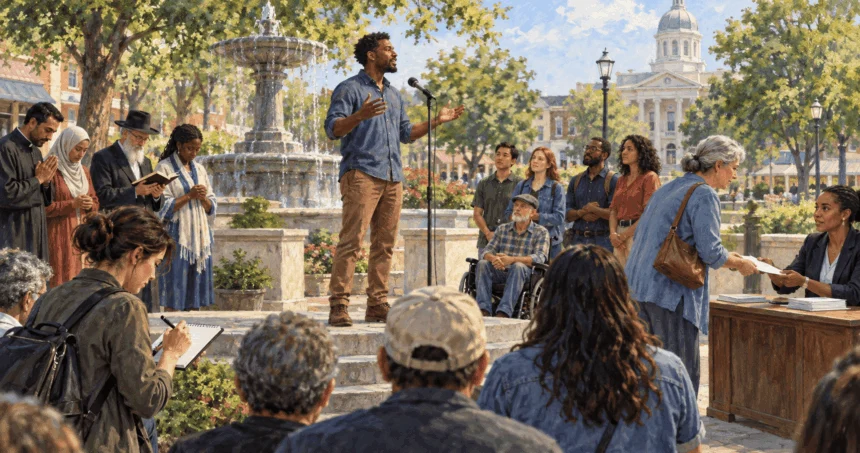
The First Amendment protects “the right of the people peaceably to assemble.” This is a collective right; one cannot assemble alone. It secures the ability of individuals to gather for peaceful and lawful purposes, turning individual voices into a powerful group statement.
Assembly can be formal, like membership in an advocacy organization, or informal and spontaneous, like a protest that erupts in response to a court decision.
This right has been indispensable to nearly every major social and political movement in American history. Abolitionists, women’s suffragists, labor organizers, and civil rights activists all relied on the freedom of assembly to build their movements and demand change.
The Civil Rights Movement of the 1950s and 1960s provides a powerful example, from the Montgomery bus boycott organized by the Montgomery Improvement Association to the iconic 1963 March on Washington for Jobs and Freedom.
The right remains vibrant today. Modern examples of freedom of assembly span the political spectrum, including:
- The March for Life, an annual anti-abortion protest held in Washington, D.C., since 1973
- Black Lives Matter demonstrations, which began as a hashtag and grew into a nationwide movement protesting racial injustice and police brutality
- The March for Our Lives, a student-led protest against gun violence organized after the 2018 school shooting in Parkland, Florida
- Protests against COVID-19 restrictions and vaccine mandates in 2020 and beyond
- Large-scale demonstrations related to the Israel-Hamas war, with marches supporting both Palestinian and Israeli causes taking place across the country
Like speech, the right to assemble is not absolute. The key word is “peaceably.” Government can restrict assemblies that are violent or incite imminent lawless action. Furthermore, assemblies are subject to the same content-neutral “time, place, and manner” regulations as speech.
A city can require a permit to manage the logistics of a march, but it cannot deny that permit based on the group’s viewpoint.
The Right to Petition: A Direct Line to Government
The final freedom guaranteed by the First Amendment is the right “to petition the Government for a redress of grievances.” This right ensures that citizens can formally ask government to right a wrong, correct a problem, or change a policy without fear of punishment.
The founders considered this a vital function of a republic, a mechanism to ensure that elected officials would remain responsive to the general public and not just to powerful interests.
While the historical image of petitioning involves gathering signatures on a scroll, the right is exercised in many different ways in the modern era. These include:
Lobbying: Directly communicating with legislators and other government officials to influence policy.
Lawsuits: Suing government in court to challenge the legality of its actions.
Ballot Initiatives and Referendums: Circulating petitions to place proposed laws or constitutional amendments directly on the ballot for a public vote.
Public Testimony: Speaking at hearings held by legislative bodies or government agencies.
Contacting Representatives: Writing letters, sending emails, or making phone calls to elected officials.
While in Congress and many state legislatures, the formal process of submitting a petition has become largely a formality with no requirement for a response, the spirit of the right to petition thrives through these other diverse channels. It remains a crucial tool for citizen engagement, providing a direct line of communication between the governed and their government.
The First Amendment in the Modern Age: Frequently Asked Questions
The principles of the First Amendment, drafted in the 18th century, face new and complex challenges in the 21st. The rise of the internet, social media, and a polarized political climate has raised novel questions about the scope and application of these five freedoms.
Many of the most common questions today revolve around a crucial distinction that is often misunderstood: the First Amendment restricts government, not private individuals or companies.
Does the First Amendment apply to social media companies like Facebook and Twitter? Can they censor my posts?
No. The First Amendment’s prohibitions apply to government actors—federal, state, and local. It does not apply to private entities. Social media companies like Facebook (now Meta), X (formerly Twitter), and YouTube are private businesses.
As such, they have their own First Amendment rights to determine what speech is permissible on their platforms. When they remove a post, suspend an account, or enforce their terms of service, they are not violating your constitutional rights; they are exercising their own rights as private publishers to control their content.
Do students have First Amendment rights in public schools?
Yes, but those rights are not identical to the rights of adults in other settings. The Supreme Court in Tinker v. Des Moines (1969) affirmed that students do not “shed their constitutional rights…at the schoolhouse gate.”
Public schools can, however, restrict student speech if they can show that it would “materially and substantially disrupt” the educational environment or invade the rights of others. Schools also have greater authority to regulate speech that is part of the school curriculum or a school-sponsored activity, such as a student newspaper, as established in Hazelwood School District v. Kuhlmeier (1988).
These rules apply to public schools, which are government actors. Private schools are not bound by the First Amendment and have much broader authority to regulate student speech.
Can my private employer fire me for something I said or posted online?
In most cases, yes. The First Amendment protects you from being punished by government for your speech; it does not protect you from being fired by a private employer. Most employment in the United States is “at-will,” meaning an employer can terminate an employee for any reason, or no reason at all, as long as it is not an illegal reason (such as discrimination based on race or religion).
Speech, especially off-duty speech that an employer finds objectionable, is generally not a protected category in the private employment context, unless you are covered by a specific employment contract or a collective bargaining agreement that states otherwise.
What’s the difference between protected offensive speech and illegal harassment?
This is a complex legal area, but the key distinction often lies in the pattern and targeting of the speech. A single offensive or hateful statement, while reprehensible, is almost always protected by the First Amendment.
Illegal harassment, on the other hand, typically involves a course of conduct that is so severe, pervasive, and objectively offensive that it creates a hostile or abusive environment for the targeted individual.
For example, a person expressing a racist opinion in a public park is engaging in protected speech. A person who repeatedly follows a specific individual of a different race, shouting racial slurs at them and making them fear for their safety, may have crossed the line into unprotected conduct like harassment or true threats.
How does the First Amendment apply to campaign finance?
This is one of the most controversial areas of First Amendment law. In a series of landmark cases, including Buckley v. Valeo (1976) and more recently Citizens United v. FEC (2010), the Supreme Court has ruled that spending money to influence elections is a form of protected political speech.
The Court’s reasoning is that restricting the ability to spend money on political advertising or advocacy effectively limits the quantity and volume of speech. These rulings have led to the dismantling of many federal and state campaign finance laws that limited contributions and spending by individuals, corporations, and unions.
Critics argue that this approach has allowed wealthy donors and special interests to have outsized influence on politics, while supporters contend that limiting spending is a form of government censorship that stifles political debate.
Can I say whatever I want without any consequences?
No. This is a common misconception. The First Amendment protects you from being jailed, fined, or otherwise punished by government for your speech (with the narrow exceptions noted above). It does not protect you from the consequences of your speech in your personal or professional life.
Your words can still damage your reputation, harm your relationships, or cost you your job. Freedom of speech is not freedom from the social consequences of that speech.