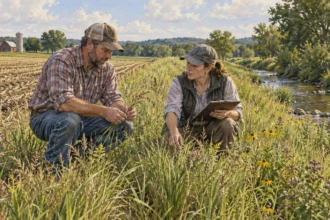
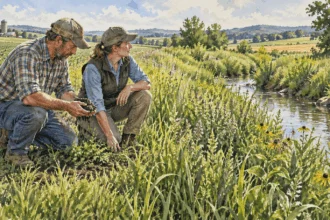
U.S. agriculture faces critical environmental challenges including climate change, greenhouse gas emissions, water overuse, soil degradation, and pest pressures. The sector contributes about 10.5% of the nation’s greenhouse gases and consumes over 70% of groundwater, underscoring the need for sustainable resource management. Addressing these issues is essential to protecting both agricultural productivity and the environment.
Water and Resource Management
Groundwater depletion is a major concern, especially in areas dependent on aquifers like the Ogallala. Crops such as wheat, corn, and cotton heavily impact water resources. Farmers can adopt conservation strategies to use water more efficiently. Explore USDA tools and resources for water management on the farm to support responsible irrigation and protect future water supplies.
Soil Health and Sustainable Practices
Maintaining healthy soil is vital for long-term farm sustainability. Techniques such as cover cropping help reduce erosion, improve soil moisture retention, and suppress weeds. Understanding soil health through USDA guidance enables farmers to enhance land productivity and environmental resilience.
Pest and Weed Management
Weeds, insects, and diseases cause significant crop losses, with weeds alone responsible for about a third of damage worldwide. Climate change can worsen pest pressures. Using Integrated Pest Management (IPM) strategies promoted by USDA helps reduce pesticide reliance while protecting crop health and water quality.
Federal Conservation Programs
USDA conservation programs provide valuable support for farmers adopting sustainable practices. The Conservation Reserve Program (CRP) assists landowners in preserving sensitive lands. Additionally, programs like CRP, EQIP, and CSP offer diverse options for environmental stewardship, helping farmers balance productivity with conservation goals.
What are pesticides? Pesticides are substances used to prevent, repel, or control unwanted organisms such…
View All →Soil conservation is essential for preserving the health and productivity of America’s agricultural lands. The…
Water is essential to American agriculture, supporting crop production across more than 53 million acres…
View All →Water is the lifeblood of American agriculture, essential for growing crops and raising livestock. Recognizing this critical role, the U.S.…
Introduction Managing pests is a constant challenge in agriculture, impacting both the bottom line and the health of the farm…
The Conservation Reserve Program (CRP) is a cornerstone voluntary federal initiative administered by the U.S. Department of Agriculture's (USDA) Farm…
Farmers, ranchers, and private forest landowners manage vast landscapes that provide food, fiber, and vital ecosystem services. The U.S. Department…
When we think about the ground beneath our feet, we might just see dirt. But the United States Department of…
Cover crops represent a fundamental practice in sustainable agriculture, shifting the focus from solely harvesting a product to nurturing soil…