Voting rights are the foundation of American democracy, protecting every citizen’s right to participate in elections. From landmark civil rights legislation like the Civil Rights Act of 1964 to ongoing battles in modern courts, these rights remain central to equal representation.
Yet voting remains difficult for millions of Americans, and the Supreme Court continues to shape what voting rights mean for communities across the nation.
Representation and Redistricting
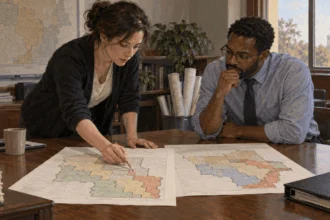
How political districts are drawn directly affects whose voices get counted. The Supreme Court is weighing major questions about how states handle congressional redistricting and whether voting rights protections remain valid. Explore how states can redraw political maps and understand legal battles over fair representation for voters of color.
Voting Rights and Civil Rights in Schools
Voting rights intersect with broader civil rights in education. Current Supreme Court cases examine how Title IX protections apply across American schools and whether students have the same civil rights protections as workers. These decisions shape equal protection and participation rights for all.
The Supreme Court heard oral arguments on January 13, 2026, in two cases that could change how every school in…
The Supreme Court will decide in 2026 whether schools can separate bathrooms, locker rooms, and dorms by sex—or whether doing…
At stake is more than athletics. How the justices frame these cases will shape how schools handle bathrooms, locker rooms,…
The Supreme Court ruled on the Texas redistricting case in December 2025. The decision allows states to redraw congressional maps…
The Civil Rights Act of 1964 is one of the most transformative laws in American history. Signed on July 2,…
Voting is the cornerstone of American democracy, a fundamental right that allows citizens to shape their government. However, the process…