- nsarchive2.gwu.edu3 links
- brookings.edu2 links
- academic.oup.com2 links
- brown.edu
- watson.brown.edu
- en.wikipedia.org11 links
- cfr.org6 links
- pewresearch.org4 links
- responsiblestatecraft.org2 links
- fpri.org2 links
- carnegie.org
- chathamhouse.org
- carnegieendowment.org
- noradarealestate.com2 links
- apnews.com13 links
- indianexpress.com2 links
- time.com2 links
Last updated 1 month ago. Our resources are updated regularly but please keep in mind that links, programs, policies, and contact information do change.
The 2025 conflict with Iran is not an isolated crisis but an echo of the 2003 invasion of Iraq. The parallels are striking, extending from the public justifications for war to the geopolitical aftershocks that reshape the Middle East.
The recurring patterns show how the United States justifies, prosecutes, and grapples with the consequences of preventive war in the region. By placing these events side-by-side, we can see the evolution of American strategy, the persistence of certain political narratives, and the lessons that were, or were not, learned from a generation of conflict.
Both conflicts represent defining moments in American foreign policy, each reshaping not only the Middle East but America’s relationship with the world. The Iraq War marked the zenith of American unilateral power in the post-Cold War era, while the Iran conflict revealed the limits of that power two decades later. Together, they tell the story of how a superpower can become trapped in a cycle of its own making.
The Case for War: Two “Imminent Threats”
A close look at the justifications for the 2003 Iraq War and the 2025 U.S. military strikes on Iran reveals a consistent playbook: the construction of an “imminent threat” narrative to secure public and political support for preventive military action. While the specifics of each case differ, the underlying strategy of leveraging intelligence—or the perception of intelligence—to create a sense of urgency remains a powerful parallel.
The evolution of this playbook from 2003 to 2025 demonstrates both continuity and adaptation in how American leaders sell war to the public. The basic formula remains the same: identify a worst-case scenario, present it as inevitable without immediate action, and dismiss contrary evidence as dangerously naive. Yet the methods have grown more sophisticated, the timelines more compressed, and the international context more challenging.
The Iraq War Pretext: WMDs and Fabricated Terror Links
The George W. Bush administration’s case for the 2003 invasion of Iraq was built on two primary pillars, which were systematically and repeatedly communicated to the American public and the world. The official intent, as articulated in the congressional resolution authorizing force, was to “disarm Iraq of weapons of mass destruction, to end Saddam Hussein’s support for terrorism, and to free the Iraqi people.”
These claims, however, rested on a foundation of flawed intelligence and a concerted public relations campaign that exaggerated threats and created false connections.
The public campaign to build support for the war was relentless and highly effective. A study by the Center for Public Integrity found that President Bush and seven of his top officials made at least 935 false statements about the threat posed by Iraq in the two years leading up to the invasion. This “orchestrated campaign” aimed to generate a sense of imminent danger and rally public opinion behind military action.
The administration’s messaging was carefully coordinated and relentlessly on-message. Senior officials appeared on every major news program, often using identical talking points and even identical phrases. The famous “Saddam Hussein is a grave and gathering danger” formulation appeared in speech after speech, creating the impression of a unified intelligence assessment when, in reality, the intelligence community was deeply divided.
Senior officials were unequivocal in their certainty. In an August 2002 speech, Vice President Dick Cheney stated with absolute confidence: “Simply stated, there is no doubt that Saddam Hussein now has weapons of mass destruction. There is no doubt he is amassing them to use against our friends, against our allies, and against us.”
Cheney’s categorical language set a pattern that would be repeated throughout the pre-war period.
National Security Advisor Condoleezza Rice famously warned of a potential “mushroom cloud,” arguing that waiting for definitive proof of a nuclear program was too great a risk. Her formulation that “we don’t want the smoking gun to be a mushroom cloud” became one of the most memorable and effective lines in the entire pre-war campaign, crystallizing the administration’s argument that absolute certainty was a luxury America could not afford.
Perhaps most consequentially, the administration successfully blurred the lines between Iraq and the September 11th attacks. President Bush, in October 2002, claimed, “We know that Iraq and the al-Qaida terrorist network share a common enemy… We know that Iraq and al-Qaida have had high-level contacts that go back a decade.”
While never explicitly claiming Saddam Hussein planned the 9/11 attacks, these vague but repeated associations led a substantial majority of Americans to believe a connection existed. By February 2003, 57% of the public believed Hussein had helped the 9/11 terrorists.
The administration used a technique that intelligence professionals call “stovepiping”: bypassing normal analytical processes to present raw intelligence directly to policymakers and the public. The Pentagon’s Office of Special Plans, led by Undersecretary of Defense Douglas Feith, developed alternative intelligence assessments that supported the administration’s conclusions.
Secretary of State Colin Powell’s February 2003 presentation to the UN Security Council represented the culmination of this campaign. Powell, whose reputation for integrity gave weight to the administration’s claims, presented what he called “a conservative estimate” of Iraq’s WMD capabilities. The presentation included satellite photos, intercepted communications, and detailed technical specifications.
Yet virtually every major claim in Powell’s presentation would later be proven false. The alleged mobile biological weapons labs were actually for making weather balloons. The supposed nuclear centrifuge components were conventional rocket parts. The chemical weapons stockpiles did not exist. Powell himself would later call the presentation a “blot” on his record.
The intelligence that formed the basis of these powerful claims was, in reality, deeply flawed and highly contested within the U.S. government itself. The Central Intelligence Agency’s initial reports that Iraq was actively pursuing WMDs were later acknowledged to be “in error.”
Shortly after the invasion, the CIA and Defense Intelligence Agency began to discredit the very evidence they had previously promoted. The crucial October 2002 National Intelligence Estimate (NIE), which asserted that Iraq possessed chemical and biological weapons and was reconstituting its nuclear program, was not a consensus document. It contained significant dissents, particularly from the State Department’s Bureau of Intelligence and Research (INR) and the Department of Energy, which questioned the interpretation of key evidence, such as whether aluminum tubes sought by Iraq were for centrifuges or conventional rockets.
The aluminum tubes became a particular point of contention. Nuclear experts at the Department of Energy concluded that the tubes were “poorly suited” for centrifuges and were most likely intended for conventional rockets. Yet administration officials continued to cite them as evidence of a nuclear program, with Condoleezza Rice calling them “only really suited for nuclear weapons programs.”
The intelligence community’s doubts extended far beyond technical details. The Defense Intelligence Agency had concluded that there was “no reliable information” that Iraq was producing or stockpiling chemical weapons. The Energy Department had rejected claims about nuclear reconstitution. Even within the CIA, analysts were expressing significant reservations about the strength of the evidence.
These dissenting voices were systematically marginalized or ignored. When CIA analyst Paul Pillar later wrote about the pre-war intelligence process, he described an environment where policymakers “went shopping” for intelligence that supported their predetermined policy preferences while dismissing analysis that contradicted their assumptions.
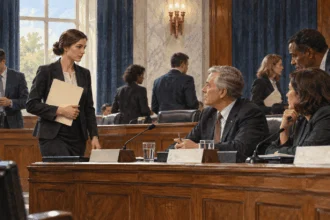
When post-invasion searches by the Iraq Survey Group failed to uncover any stockpiles of WMDs, the entire premise of the war collapsed. David Kay, the chief U.S. weapons inspector, delivered a stunning verdict before the Senate Armed Services Committee in January 2004: “we were almost all wrong.”
Kay’s admission was particularly damaging because he had been a hawk on Iraq’s WMD programs before the war. His conclusion that Iraq had indeed abandoned its weapons programs in the 1990s, as UN inspectors had claimed, vindicated the very experts the administration had dismissed as naive or worse.
With the primary justifications disproven, the administration pivoted, emphasizing secondary rationales that had been present but less prominent before the war, such as Saddam Hussein’s brutal human rights record and the broader goal of promoting democracy in the Middle East. This post-hoc rationalization would become a template for justifying interventions even after their original premises collapse.
The Iraq WMD debacle had profound consequences for American intelligence gathering and analysis. It led to major reforms in how intelligence is produced and presented, including the creation of the Director of National Intelligence position. Yet many observers argue that the fundamental problems—the politicization of intelligence and the pressure to support predetermined policy conclusions—were never fully addressed.
The Iran Conflict Pretext: The Nuclear “Ticking Time Bomb”
Two decades later, the justification for U.S. military action against Iran in June 2025 followed a similar, albeit evolved, script. The central pretext was the prevention of an imminent nuclear threat. The military strikes, initiated by Israel under “Operation Rising Lion” and quickly joined by the United States, were framed as an urgent and necessary defensive measure to stop Iran from acquiring a nuclear weapon.
President Donald Trump and Israeli leaders argued that Iran could “quickly assemble a nuclear weapon, making it an imminent threat.” The language was deliberately evocative of the pre-Iraq War rhetoric, with terms like “imminent,” “urgent,” and “existential” dominating official statements.
The public campaign was waged in the modern theater of social media and rapid-fire news cycles. Unlike the methodical, months-long buildup to the Iraq War, the Iran crisis unfolded over weeks, with decisions made and justified in real-time. President Trump declared the strikes “a spectacular military success” that had “completely and fully obliterated” Iran’s nuclear sites, demanding that Iran must now “make peace.”
The narrative was not one of a U.S.-initiated war, but of a necessary intervention to support a key ally, Israel, against an existential threat, thereby safeguarding global security. This framing allowed the administration to present American involvement as reactive rather than proactive, responding to Iranian aggression rather than initiating conflict.
Israeli Prime Minister Benjamin Netanyahu’s presentation to the Israeli Knesset echoed Colin Powell’s 2003 UN presentation in its use of detailed technical slides and satellite imagery.
The Israeli intelligence presentation relied heavily on the concept of “breakout time”—the period it would take Iran to produce enough weapons-grade uranium for a single nuclear device. Israeli officials claimed this time had shrunk to “a matter of weeks,” creating an atmosphere of immediate crisis that demanded immediate action.
Trump administration officials reinforced this narrative with their own intelligence briefings to Congress.
The administration’s case was strengthened by Iran’s own actions in the months leading up to the conflict. Tehran had indeed expanded its nuclear program significantly beyond the limits of the 2015 Joint Comprehensive Plan of Action (JCPOA), enriching uranium to 60% purity—a level with no civilian justification and uncomfortably close to the 90% needed for weapons. Iranian officials had also reduced cooperation with international inspectors and disabled monitoring cameras at key facilities.
This narrative of an imminent nuclear breakout, however, was in direct tension with the official, unclassified assessments of the U.S. intelligence community. The 2024 and 2025 Annual Threat Assessments from the Office of the Director of National Intelligence (ODNI) explicitly stated that “Iran is not currently undertaking the key nuclear weapons-development activities necessary to produce a testable nuclear device” and that the government in Tehran had “not made a decision to develop nuclear weapons.”
The intelligence community’s assessment was nuanced and technical, distinguishing between Iran’s growing technical capability to produce weapons-grade material and its actual decision to weaponize that material. While Iran had accumulated enough highly enriched uranium that, if further processed, could fuel multiple nuclear weapons, the intelligence community saw no evidence that Iran was taking the additional steps necessary to actually build those weapons.
These additional steps—which intelligence professionals call “weaponization activities”—include developing an implosion device, manufacturing a nuclear trigger, and solving the complex engineering challenges of miniaturizing a nuclear warhead to fit on a ballistic missile. The ODNI assessment concluded that Iran had not resumed these activities, which it had apparently suspended in 2003.
While intelligence confirmed that Iran had expanded its nuclear program well beyond the limits of the 2015 Joint Comprehensive Plan of Action (JCPOA) and possessed enough highly enriched fissile material for “more than a dozen nuclear weapons” if it were to be further enriched, this technical capability was distinct from an active weaponization program.
The distinction was crucial because it suggested that Iran was pursuing a “threshold” nuclear capability—positioning itself to build weapons quickly if it chose to, while stopping short of actually building them. This strategy would give Iran many of the deterrent benefits of nuclear weapons while avoiding the massive international costs of actually crossing the nuclear threshold.
This critical nuance was dismissed at the highest level. When confronted with his own DNI’s assessment during a press conference, President Trump’s response was blunt: “I don’t care what she said. I think they were very close to having it.” Trump’s dismissal of his own intelligence community’s assessment echoed George W. Bush’s similar dismissal of dissenting views on Iraq WMDs two decades earlier.
A crucial difference from the Iraq War lies in the conflict’s genesis. The U.S. intervention in 2025 was not the initiating event. Instead, the U.S. entered an ongoing war started by its ally, Israel. This provided a powerful catalyst and a fundamentally different framing for American involvement. It was presented less as a unilateral war of choice and more as a reactive, and arguably necessary, intervention to manage a spiraling crisis and support a partner under attack.
The Israeli operation, dubbed “Rising Lion,” had begun with targeted strikes on Iranian nuclear facilities, using advanced bunker-busting bombs to attack deeply buried enrichment sites. Israeli officials argued they were acting in self-defense against Iran’s proxy network, which had been attacking Israeli cities with rockets and missiles for months.
This context made the “imminent threat” narrative more immediately plausible to many, lowering the political threshold for direct U.S. military action. Unlike in 2003, when the Bush administration had to convince the American public that a distant dictator posed an urgent threat, the 2025 crisis involved an active conflict with immediate and visible consequences.
The war’s rapid escalation also compressed the timeline for decision-making. Where the Iraq War was preceded by months of UN debates, congressional hearings, and public discourse, the Iran conflict moved from initial Israeli strikes to full U.S. involvement in a matter of days. This accelerated timeline made careful intelligence analysis more difficult and gave greater weight to dramatic claims and worst-case scenarios.
The “Imminent Threat” Playbook
The parallels in the justifications for war in 2003 and 2025 reveal the enduring power of the “imminent threat” narrative in American foreign policy. In both instances, the executive branch presented a simplified, worst-case scenario to the public as a near-certainty to build a compelling case for preemptive military action.
For Iraq, it was the specter of Saddam Hussein’s WMDs being transferred to terrorists. For Iran, it was the fear of an imminent nuclear breakout that would fundamentally alter the regional balance of power. In both cases, the administration constructed a narrative of urgency that demanded immediate action and brooked no delay for further diplomacy or investigation.
This strategy necessitates sidelining or publicly refuting more nuanced, and often contradictory, intelligence assessments from within the government’s own expert agencies. The dissent from the State Department’s INR regarding Iraq’s aluminum tubes in 2002 is a direct precursor to the ODNI’s 2025 assessment that Iran had not yet decided to build a weapon. In both cases, these cautious, evidence-based analyses were overridden by a politically driven narrative of immediate danger.
The playbook’s effectiveness rests on several psychological and political dynamics. Fear is a more powerful motivator than hope, making worst-case scenarios more politically compelling than measured assessments. The public’s natural deference to classified intelligence creates space for officials to make claims that cannot be easily verified or challenged. And the media’s focus on dramatic developments rather than subtle analysis amplifies alarming claims while marginalizing more complex realities.
The playbook, however, evolved significantly over two decades. The Iraq threat had to be actively constructed and painstakingly, if falsely, linked to the national trauma of the 9/11 attacks to generate the necessary public urgency. The threat from Iran, in contrast, was built upon a decades-long, publicly accepted narrative of Iranian nuclear ambition, making the argument for preemption easier to sell.
The 2015 JCPOA, despite its verification measures, was portrayed by critics as merely delaying the inevitable, reinforcing the idea of a persistent threat. When the Trump administration withdrew from the agreement in 2018, it argued that Iran had never abandoned its nuclear weapons ambitions and would inevitably cheat on any constraints. This created a narrative that Iran was inherently untrustworthy and that only military action could permanently resolve the nuclear threat.
Furthermore, the 2025 conflict was catalyzed by the actions of a regional ally, Israel. This allowed the United States to frame its involvement not as a proactive, unilateral invasion, but as a reactive, stabilizing measure in a crisis it did not start. This framing proved to be a more effective path to military intervention, as it leveraged a pre-existing threat narrative and the momentum of an ongoing conflict, thereby lowering the domestic and international political barriers to war.
The Israeli dimension also provided the administration with a powerful emotional and political argument. Supporting Israel has been a bipartisan principle in American politics for decades, and the threat to America’s closest Middle Eastern ally resonated with many Americans in ways that abstract geopolitical concerns about regional balance did not.
The evolution of the playbook also reflects changes in the information environment. In 2003, the administration had months to build its case through traditional media channels, relying on carefully staged presentations and formal briefings. By 2025, social media and 24-hour news cycles demanded constant messaging and real-time response to events. This faster pace made nuanced intelligence analysis more difficult but also made dramatic claims more impactful.
The High Price of War
The decision to go to war carries immense and often incalculable costs. A comparative analysis of the Iraq War and the 2025 Iran conflict reveals two distinct models of wartime consequence. The Iraq War’s legacy is one of a staggering, long-tail financial burden on the U.S. taxpayer and a devastating, protracted human toll on the ground. The Iran conflict, by contrast, threatened an immediate and acute shock to the entire global economy, with the potential for a rapid and widespread human catastrophe.
These different cost structures reflect not only the different nature of the conflicts but also changes in the global economy and America’s position within it. The Iraq War was fought at the height of American hegemony, when the U.S. could absorb massive costs with limited immediate global consequences. The Iran conflict occurred in a more interconnected and fragile global system, where even limited military action could trigger worldwide economic disruption.
The Staggering Cost of the Iraq War
The financial and human costs of the 2003 invasion and subsequent occupation of Iraq far exceeded the sanguine projections offered by its architects. The war became a multi-generational burden, with costs accumulating for decades in the form of direct spending, long-term veterans’ care, and interest on debt.
Initial White House projections were wildly optimistic, with figures like $50-60 billion being floated publicly. Deputy Defense Secretary Paul Wolfowitz even suggested that Iraqi oil revenues would pay for much of the reconstruction, telling Congress that Iraq could “finance its own reconstruction, and relatively soon.” These estimates proved to be a fraction of the true cost.
The optimistic projections reflected both genuine miscalculation and deliberate political strategy. Administration officials genuinely believed that the war would be brief and that Iraq’s substantial oil reserves would quickly generate revenue for reconstruction. But they also had strong political incentives to minimize cost estimates, knowing that higher figures would generate greater congressional and public resistance to the war.
The administration’s cost estimates were based on the assumption that major combat operations would end quickly and that Iraq would transition smoothly to democratic governance. They did not account for the possibility of a prolonged insurgency, the collapse of Iraqi institutions, or the need for extended American occupation. When these scenarios materialized, costs exploded beyond all projections.
The most comprehensive accounting comes from the Costs of War Project at Brown University’s Watson Institute for International and Public Affairs. Their research, which seeks to document the full scope of post-9/11 military operations, estimates the total cost of these wars at a staggering $8 trillion as of 2021. Of this total, the wars in the Iraq and Syria theater alone are estimated to have cost $2.9 trillion through Fiscal Year 2022.
This monumental figure includes far more than just the Pentagon’s direct war-fighting expenditures. The costs encompass everything from military personnel salaries and equipment to reconstruction aid and diplomatic operations. The complexity of modern warfare makes it difficult to draw clear lines between war costs and broader defense spending, but the Costs of War Project uses conservative methodologies to ensure their estimates reflect only incremental costs directly attributable to the conflicts.
A critical component is the future cost of care for veterans. The Costs of War Project allocates an estimated $2.2 trillion for future medical and disability care for veterans of the post-9/11 wars, a financial obligation that will extend through 2050. This represents perhaps the war’s most enduring financial legacy, as the government will be paying for Iraq War veterans’ care for decades to come.
The veterans’ care costs reflect both the duration of the conflict and the nature of modern warfare. Improved body armor and medical care meant that many service members survived injuries that would have been fatal in previous conflicts. While this was a humanitarian triumph, it also created long-term care obligations that previous wars had not generated. Traumatic brain injury, PTSD, and other “invisible wounds” of war created complex medical needs that will require lifetime treatment for many veterans.
Furthermore, these wars were financed almost entirely through borrowing, which adds substantial interest payments to the total ledger. Unlike World War II, which was largely financed through war bonds and higher taxes, the Iraq War was fought on credit. This “guns and butter” approach allowed the administration to wage war without asking the American public to make immediate financial sacrifices, but it transferred the cost burden to future generations.
The funding mechanism itself drew criticism; the war was paid for largely through emergency supplemental appropriations requests, which are outside the normal budgetary process and often receive less congressional oversight. This approach allowed the administration to avoid difficult budget trade-offs and made it harder for Congress and the public to track the war’s true costs.
The Government Accountability Office (GAO) and Congressional Budget Office (CBO) frequently noted difficulties in tracking these funds with precision. The emergency supplemental process created a parallel budget system that was less transparent and accountable than normal appropriations. Money was often transferred between accounts, contracts were awarded on shortened timelines, and oversight mechanisms were weakened.
The war’s economic impact extended beyond direct government spending. The conflict contributed to higher oil prices, which imposed costs on American consumers and businesses. It also diverted resources from domestic priorities like infrastructure and education, creating opportunity costs that are difficult to quantify but nonetheless real.
Some economists argue that the Iraq War contributed to the conditions that led to the 2008 financial crisis. The war spending stimulated demand and contributed to inflationary pressures, leading the Federal Reserve to raise interest rates. Combined with other factors, this created the bubble in housing prices that eventually burst and triggered the worst economic downturn since the Great Depression.
The human toll of the Iraq War is even more devastating and harder to quantify precisely. For the United States and its allies, the costs were significant but manageable in military terms. According to official Department of Defense figures, the U.S. military suffered a combined 4,493 deaths and 32,291 wounded in action during Operation Iraqi Freedom (OIF) and its successor, Operation New Dawn (OND).
These figures, while tragic, represent a relatively small fraction of the forces deployed to Iraq. The American military’s technological superiority and professional training kept casualties lower than in previous major conflicts. However, the numbers only tell part of the story.
Beyond these battlefield statistics lies a deeper crisis: the Costs of War Project has highlighted that suicides among post-9/11 veterans have occurred at a rate four times higher than combat deaths, a testament to the lasting psychological trauma of the conflicts. This epidemic of veteran suicide reflects the complex moral and psychological toll of fighting in an unconventional war where distinguishing combatants from civilians was often impossible and where the mission’s purpose became increasingly unclear.
The Iraq War was particularly psychologically challenging because it involved urban warfare against an insurgency that deliberately blurred the lines between combatants and civilians. Soldiers found themselves simultaneously serving as warriors, police officers, social workers, and diplomats, often in the same day. The repeated deployments—many service members served multiple tours in Iraq—compounded the psychological stress and made readjustment to civilian life more difficult.
For the Iraqi people, the war was a cataclysm that shattered their society and created suffering on a massive scale. Estimating the number of Iraqi deaths is a complex and disputed field, with different methodologies yielding vastly different figures. The challenge lies in counting deaths in a chaotic war zone where record-keeping collapsed and access for researchers was severely limited.
The Iraq Body Count project, which relies on cross-checked media reports and public records, documents between 186,901 and 210,296 violent civilian deaths from 2003 to 2020. This methodology is conservative because it only counts deaths that were reported in multiple sources, meaning the true number is likely higher.
The Costs of War Project provides a broader estimate of 268,000 to 295,000 total violent deaths in Iraq through October 2018, a figure that includes civilians, security forces, and insurgents. This estimate attempts to account for unreported deaths and provides a more comprehensive picture of the war’s human toll.
Population-based surveys have suggested even higher numbers. A controversial but widely cited study published in The Lancet in 2006 estimated as many as 655,000 excess deaths (both violent and non-violent) attributable to the war by June of that year. This study used cluster sampling methodology to estimate deaths that were not captured in official records, but its findings were hotly disputed and remain controversial.
Crucially, these figures only account for direct deaths from violence. The Costs of War Project emphasizes that indirect deaths—caused by the collapse of healthcare systems, destruction of infrastructure, disease, and malnutrition—are several times higher. When accounting for both direct and indirect deaths across all post-9/11 war zones (including Iraq, Afghanistan, Syria, etc.), the total death toll is estimated to be at least 4.5 to 4.7 million people.
The indirect deaths reflect the broader social and economic collapse that followed the invasion. Iraq’s public health system, once among the best in the Middle East, was devastated by the war and its aftermath. Hospitals were damaged or destroyed, medical professionals fled the country, and medical supplies became scarce. The breakdown of basic services like electricity and water treatment created conditions for disease outbreaks and malnutrition.
The war also created a massive refugee crisis that persists to this day. The UN estimates that over 4 million Iraqis were displaced by the conflict, with some 2 million fleeing to neighboring countries and another 2 million displaced within Iraq itself. This displacement tore apart communities and families while imposing huge costs on neighboring countries like Jordan and Syria.
| Category | Number / Range | Source |
|---|---|---|
| U.S. Military Deaths (OIF/OND) | 4,493 | Department of Defense |
| U.S. Military Wounded in Action (OIF/OND) | 32,291 | Department of Defense |
| Iraqi Civilian Deaths (Violent – Documented) | 186,901 – 210,296 | Iraq Body Count |
| Total Iraqi Deaths (Violent – All Parties) | 268,000 – 295,000 | Costs of War Project |
| Total Deaths (Direct & Indirect – Post-9/11 Wars) | 4.5 – 4.7 million | Costs of War Project |
| Iraqi Refugees (Peak) | 4+ million displaced | UN estimates |
| Veteran Suicides (Post-9/11 Veterans) | 4x combat deaths | Costs of War Project |
| Cost Category | Amount (in U.S. Dollars) | Source |
|---|---|---|
| Pre-War White House Estimate | $50 billion – $60 billion | Brookings Institution, CFR |
| Direct U.S. Spending (Iraq/Syria, FY2003-2022) | $2.9 trillion | Costs of War Project |
| Future Veterans’ Care (Obligated, Post-9/11 Wars) | $2.2 trillion | Costs of War Project |
| Total Estimated Cost of Post-9/11 Wars | $8 trillion | Costs of War Project |
| Interest on War Debt (projected through 2050) | $2.1 trillion | Costs of War Project |
The Iran Conflict: An Immediate Global Economic Shock
In stark contrast to the slow-burning fiscal drain of the Iraq War, the 2025 conflict with Iran presented an immediate and acute threat to the entire global economy. The primary economic danger was not the long-term cost of U.S. military operations, but the potential for a catastrophic disruption to global energy supplies and financial markets.
The conflict’s epicenter was the Strait of Hormuz, the world’s most critical oil chokepoint. Approximately 20% of all globally traded oil passes through this narrow waterway, making it an artery for the world economy. Iran has long threatened to close the strait in response to military pressure, and the 2025 conflict brought this threat to the forefront.
The strait is only 21 miles wide at its narrowest point, making it vulnerable to closure through military action or even the threat of action. Iran’s Islamic Revolutionary Guard Corps (IRGC) has developed an extensive arsenal of anti-ship missiles, naval mines, and fast attack boats specifically designed to threaten shipping in the strait. The IRGC has conducted numerous exercises demonstrating their ability to disrupt maritime traffic, and Iranian officials have repeatedly threatened to close the waterway if their country comes under attack.
The immediate market reaction to the conflict was severe. Oil prices spiked from around $70 per barrel to over $95 within days of the first Israeli strikes, with futures markets pricing in even higher peaks if the conflict expanded. Gold prices surged as investors fled to safe-haven assets, while stock markets around the world experienced sharp declines.
Analysts warned that a sustained blockade or significant disruption could cause oil prices to spike dramatically, with some projections exceeding $100 per barrel. More pessimistic scenarios suggested prices could reach $150 or even $200 per barrel if the conflict expanded to include other regional oil producers or if Iran succeeded in closing the Strait of Hormuz entirely.
The energy markets’ reaction reflected not just the immediate supply threat but also the broader regional risks. The conflict raised fears that other oil-producing countries might be drawn into the fighting or that critical infrastructure beyond Iran might be targeted. Saudi Arabia’s oil facilities, which had been attacked by Iranian proxies in previous years, were seen as particularly vulnerable.
Such an oil price shock would have immediate, cascading effects worldwide. It would fuel global inflation, increase production and transportation costs for nearly all goods, and slow economic growth, directly impacting consumers in the United States and across the globe. The inflationary impact would be particularly severe for developing countries, many of which were already struggling with food and energy costs.
The timing of the conflict made its economic impact particularly dangerous. The global economy in 2025 was still recovering from the disruptions of the COVID-19 pandemic and dealing with persistent inflation in many countries. Central banks had raised interest rates to combat inflation, leaving little room for monetary policy responses to an energy shock. A sustained spike in oil prices could have pushed many countries into recession.
The conflict also threatened global supply chains beyond energy. The Persian Gulf region is a critical transit route for container shipping between Asia and Europe. Any disruption to maritime traffic would affect not just oil tankers but also the cargo ships that carry manufactured goods between the world’s major economic centers.
Insurance markets immediately began pricing in higher risks for shipping in the region. War risk insurance premiums for vessels transiting the Persian Gulf spiked from typical levels of a few thousand dollars to hundreds of thousands of dollars per voyage. Some shipping companies temporarily suspended operations in the region entirely, preferring to reroute around Africa rather than risk their vessels and crews.
This stands in sharp contrast to the Iraq War, where the economic impact was primarily a domestic, long-term fiscal issue for the U.S. government, funded by debt that would be paid by future generations. The Iran conflict threatened to impose an immediate and painful cost on the entire world simultaneously.
The different economic impact models reflect changes in the global economy between 2003 and 2025. In 2003, the U.S. economy was less dependent on global supply chains, energy markets were less integrated, and financial markets were less interconnected. The 2025 conflict occurred in a world where economic interdependence meant that regional conflicts could quickly become global economic crises.
The speed of the economic impact also reflected changes in how markets operate. High-frequency trading algorithms and 24-hour global markets meant that price movements occurred within minutes of news reports, amplifying volatility and making economic disruption more immediate and severe.
The human cost of the Iran conflict also had the potential to escalate with terrifying speed. In just the first week of Israeli strikes in June 2025, one human rights group reported that at least 657 people had been killed and over 2,000 wounded inside Iran. Iran’s retaliatory missile strikes on Israel reportedly wounded over 80 people in the initial barrages.
These early figures, from a conflict that involved long-range air and missile strikes rather than a ground invasion, signaled the potential for a rapid and severe human toll should the war expand. The casualty numbers were particularly concerning because they came from precision strikes on military and nuclear targets rather than the broader urban warfare that characterized much of the Iraq conflict.
The potential for escalation was enormous. Iran’s ballistic missile arsenal, one of the largest in the Middle East, could strike targets across the region including U.S. military bases, oil facilities, and civilian population centers. Israel’s sophisticated air force and missile defense systems provided some protection, but no defense is perfect against massive missile barrages.
The conflict also raised the specter of weapons of mass destruction. While Iran claimed it was not pursuing nuclear weapons, the strikes on its nuclear facilities raised fears that Tehran might accelerate any covert weapons program or might resort to chemical or biological weapons in desperation. The destruction of nuclear facilities also created environmental risks, with radioactive contamination possible if reactor cores or waste storage areas were damaged.
Perhaps most ominously, the conflict threatened to expand beyond Iran and Israel to include the broader region and even global powers. Iran’s network of proxy militias across the Middle East possessed thousands of rockets and missiles that could target American and allied forces. Russia and China, both with close ties to Iran, faced pressure to support their partner against what they saw as Western aggression.
The World’s Verdict: From Coalition to Condemnation
The international political landscape surrounding the 2003 Iraq War and the 2025 Iran conflict could not be more different. The comparison reveals a dramatic erosion of U.S. diplomatic power and its ability to build international consensus for military action. Where the Bush administration was able to assemble a “Coalition of the Willing,” however flawed, the Trump administration in 2025 found itself almost entirely isolated, facing a global chorus of condemnation and calls for restraint.
This transformation reflects not just changing geopolitical circumstances but fundamental shifts in how the international community views American power and intervention. The Iraq War itself played a central role in this transformation, damaging American credibility and creating skepticism about U.S. claims of urgent threats requiring military action.
Iraq 2003: The “Coalition of the Willing” and Its Limits
In the lead-up to the 2003 invasion, the Bush administration heavily promoted the idea of a broad international “Coalition of the Willing” to lend legitimacy to its military plans. The White House released lists of supporting nations, eventually totaling 48 countries. In reality, this coalition was a diplomatic façade that masked deep international divisions and the fundamentally unilateral nature of the decision to go to war.
The administration’s promotion of the coalition reflected its recognition that international legitimacy mattered, even for the world’s dominant superpower. The White House worked intensively to recruit partners, offering various incentives including foreign aid, trade benefits, and diplomatic support.
Of the nearly 50 countries on the list, only four—the United States, the United Kingdom, Australia, and Poland—contributed troops to the initial invasion force. The vast majority of partners offered only political support or minor, non-combat contributions. Many coalition members provided little more than symbolic support, such as allowing the use of airspace or providing a few hundred non-combat troops for post-war reconstruction.
The coalition was derided by critics as a “coalition of the billing,” suggesting that the support of many smaller nations was secured through promises of foreign aid rather than genuine conviction about the war’s necessity. Countries like Palau, Marshall Islands, and Micronesia—with combined populations smaller than many American cities—were prominently featured on coalition lists despite their inability to contribute anything meaningful to the military effort.
As one analysis from the Brookings Institution noted at the time, the administration’s desperate efforts to inflate the size of the coalition only served to “emphasize the extent of its own isolation.” The fact that the world’s only superpower had to court micro-states for political cover highlighted how few major powers were willing to support the war.
The most significant feature of the diplomatic landscape was the staunch opposition from key traditional U.S. allies. The United States failed to secure a second UN Security Council resolution explicitly authorizing the use of force, facing the determined opposition of France and Germany, as well as Russia. This diplomatic failure represented a major rupture in the transatlantic alliance and signaled a deep international skepticism about the war’s justification and legality.
The dispute over UN authorization became particularly bitter. French President Jacques Chirac declared that France would veto any resolution authorizing force under the current circumstances, leading to an unprecedented diplomatic confrontation between traditional allies. German Chancellor Gerhard Schröder was equally firm in his opposition, despite intense American pressure including threats to relocate U.S. military bases from Germany.
The rift extended beyond governments to public opinion. Even in countries whose governments supported the war, public opinion was overwhelmingly opposed. In the UK, which provided the largest coalition contingent after the U.S., polls consistently showed that 60-70% of the public opposed military action without UN authorization. Prime Minister Tony Blair’s support for the war proved to be one of the most controversial decisions of his tenure and contributed to his eventual resignation.
Furthermore, even within the countries that officially joined the coalition, public opinion was overwhelmingly against the war, with massive anti-war protests taking place in cities across the globe, including London and Rome. On February 15, 2003, an estimated 6-10 million people participated in anti-war demonstrations in over 600 cities worldwide, making it perhaps the largest coordinated protest in human history.
The protests were particularly significant because they occurred in countries across the political spectrum. In Rome, over a million people demonstrated despite their government’s support for the war. In London, between one and two million protesters filled the streets in the largest demonstration in British history. Even in the United States, hundreds of thousands participated in anti-war rallies, though American protests were smaller than those in other countries.
The scale and global nature of the protests demonstrated that the administration’s case for war had failed to convince world public opinion, even where it had succeeded in securing government support. This disconnect between elite support and popular opposition would prove to be a recurring theme in American foreign policy adventures.
The diplomatic damage from the Iraq conflict extended far beyond the immediate crisis. The bitter disputes over the war created lasting tensions within NATO and the European Union. The transatlantic relationship, which had been the cornerstone of the post-World War II international order, was severely strained and never fully recovered.
Iran 2025: A Chorus of Calls for Restraint
In 2025, when the United States launched strikes against Iran’s nuclear facilities, there was no attempt to build a coalition. The U.S. acted in support of an ongoing Israeli military campaign, and the international reaction was one of near-universal alarm and calls for de-escalation. Instead of a “coalition of the willing,” the U.S. and Israel faced a world united in its fear of a wider regional war.
The absence of coalition-building efforts reflected both the rapid pace of events and the Trump administration’s general skepticism of multilateral diplomacy. Unlike the Bush administration, which at least attempted to build international legitimacy for its actions, the Trump team made little effort to consult allies or seek international support before joining the Israeli operation.
The reactions from key global and regional actors were stark and immediate:
United Nations: Secretary-General António Guterres was “gravely alarmed” by the U.S. action and warned of a conflict spiraling “out of control,” stressing that “The only path forward is diplomacy.” Guterres called for an immediate ceasefire and offered UN mediation services. The UN Security Council convened in emergency session, with most members expressing deep concern about the escalation.
The UN’s response reflected not just opposition to the specific military action but broader concerns about the erosion of international law and the UN’s role in maintaining peace. Many members saw the strikes as a violation of the UN Charter’s prohibition on the use of force except in self-defense or with Security Council authorization.
European Allies: The United Kingdom, the staunchest U.S. partner in 2003, now urged restraint. Prime Minister Keir Starmer, while acknowledging the threat of a nuclear Iran, called for all sides to “negotiate a diplomatic end to the crisis.” This represented a dramatic shift from Britain’s role as America’s primary partner in the Iraq invasion.
The British response was particularly significant because the UK had been Israel’s strongest European supporter and had consistently taken a hard line on Iran’s nuclear program. Starmer’s call for restraint reflected both Labour Party skepticism about military intervention and broader British wariness about Middle Eastern conflicts following the Iraq and Afghanistan experiences.
This sentiment was echoed across the European Union, with leaders from Italy, the European Council, and others calling for de-escalation and a return to the negotiating table.
The European response reflected both principled opposition to unilateral military action and practical concerns about the consequences for European interests. Europe imports significant amounts of energy from the Middle East and has substantial economic investments in the region. A wider war would directly threaten these interests while potentially triggering a refugee crisis as Middle Eastern civilians fled the conflict.
Russia and China: Both powers, which had also opposed the Iraq War, issued strong and immediate condemnations of the 2025 strikes. Russia’s Foreign Ministry labeled them a “gross violation of international law,” and China called for an immediate cease-fire.
China’s reaction was more measured but equally critical. President Xi Jinping called for “all parties to exercise maximum restraint” and offered Chinese mediation services. China’s Foreign Ministry warned that the conflict could disrupt global energy supplies and economic stability, directly threatening Chinese economic interests.
The Russian and Chinese responses reflected both their opposition to American unilateralism and their specific relationships with Iran. Russia and China had significant economic and security partnerships with Iran, and both saw the strikes as threatening their broader strategic interests in the region.
Regional Powers: Perhaps most telling was the reaction from the Middle East itself. Key U.S. partners like Saudi Arabia and Qatar expressed “deep concern” and “regret,” respectively, urging all parties to avoid escalation. Egypt warned of “grave repercussions.”
The Saudi response was particularly significant given the kingdom’s deep animosity toward Iran. Despite viewing Iran as its primary regional rival, Saudi officials feared that a wider war would destabilize the entire region and threaten Saudi energy infrastructure. Crown Prince Mohammed bin Salman reportedly told American officials that Saudi Arabia would not allow the use of its airspace for strikes against Iran.
Egypt’s warning of “grave repercussions” reflected concerns that the conflict could spread to other fronts, including the ongoing tensions in Gaza and the Red Sea. Egyptian officials worried that Iran might activate its proxy networks to attack Israeli and American targets throughout the region, potentially drawing Egypt into a wider conflict.
Turkey, despite its NATO membership, strongly condemned the strikes and called for an immediate ceasefire.
Iraq, whose airspace was violated by Israeli jets en route to Iran, condemned the U.S. strikes, highlighting its precarious position between its two powerful allies, Washington and Tehran. The Iraqi government summoned the American ambassador to protest the violation of its sovereignty while also calling for Iranian restraint.
The Iraqi position was particularly delicate because the country hosted both American troops and Iranian-backed militias. Prime Minister Mohammed Shia al-Sudani faced pressure from parliament to expel American forces while also trying to prevent Iranian proxies from using Iraqi territory to attack U.S. targets.
Isolated Support: The only substantive international support for the military action came from Israel itself and a few ideologically aligned governments, such as the right-wing administration in Argentina. Even traditional U.S. allies in the region, such as Jordan and the UAE, called for de-escalation while carefully avoiding direct criticism of American actions.
The Argentine support came from President Javier Milei, who had positioned himself as a strong supporter of both Israel and the United States. However, even Argentina’s support was largely symbolic, as the country lacked the capacity to provide any meaningful military or economic assistance.
The isolation of American support was unprecedented in the post-Cold War era. Even during the Iraq War, the U.S. had managed to secure support from dozens of countries, however nominal. In 2025, virtually no major power was willing to endorse American actions, leaving the U.S. diplomatically isolated to a degree not seen since the early Cold War.
| Country / Organization | Stance on Iraq War (2003) | Stance on Iran Conflict (2025) |
|---|---|---|
| United States | Led invasion force | Joined Israeli strikes |
| United Kingdom | Key military partner in invasion | Called for diplomacy and restraint |
| France | Opposed war in UN Security Council | Urged de-escalation |
| Germany | Opposed war in UN Security Council | Urged de-escalation |
| Russia | Opposed war in UN Security Council | Strongly condemned U.S. strikes |
| China | Opposed war | Strongly condemned U.S. strikes |
| United Nations | Did not authorize force; inspectors withdrawn | Secretary-General “gravely alarmed”; called for diplomacy |
| Saudi Arabia | Provided logistical support | Expressed “deep concern”; called for restraint |
| Turkey | Denied use of territory for northern front | Increased border security; expressed concern |
| Iraq | Target of invasion | Condemned U.S. strikes; warned of regional instability |
| Egypt | Neutral/concerned | Warned of “grave repercussions” |
| Jordan | Provided some support | Called for de-escalation |
| UAE | Provided some support | Called for restraint |
| European Union | Divided | United in opposition |
The Erosion of U.S. Diplomatic Capital
The stark contrast between the international reactions in 2003 and 2025 illustrates more than just two different diplomatic scenarios; it reveals a profound degradation of American soft power and its capacity to legitimize military intervention on the world stage. The “unipolar moment” of the post-Cold War era, which gave the United States the hegemonic influence to assemble the 2003 coalition—however thin—has clearly passed. By 2025, the U.S. found itself acting in a more contested, multipolar world where such actions are met with broad and immediate opposition.
The decline of American diplomatic capital reflects several interconnected trends. The Iraq War itself was a primary catalyst, but other factors including the 2008 financial crisis, the rise of China, the resurgence of Russia, and American domestic polarization all contributed to the erosion of U.S. global leadership.
The Iraq War itself was a primary catalyst for this decline. The invasion, predicated on false intelligence and leading to a chaotic and destabilizing occupation, severely damaged American credibility. The gap between American promises and reality in Iraq created lasting skepticism about U.S. claims and competence.
The war demonstrated that American intelligence could be wrong, American planning could be flawed, and American power could be insufficient to achieve political objectives even after military victory. These lessons were absorbed by allies and adversaries alike, making them more skeptical of future American claims about urgent threats requiring immediate action.
It created a perception of “double standards,” where powerful states could bend or disregard international law to suit their interests, undermining faith in the global order. This trust deficit has had lasting consequences, making other countries more willing to challenge American leadership and less willing to support American initiatives.
The 2008 financial crisis further damaged American prestige by revealing weaknesses in the American economic model that many countries had sought to emulate. The crisis originated in the United States and spread globally, forcing countries around the world to pay the costs of American financial mismanagement. This experience made many countries more skeptical of American economic leadership and more interested in developing alternative financial systems.
By 2025, the international environment had fundamentally shifted. Russia and China had become more assertive global actors, and regional powers in the Middle East and elsewhere had begun to diversify their alliances, hedging their bets rather than relying solely on the United States as the ultimate security guarantor.
China’s rise was particularly significant in shifting global dynamics. By 2025, China had become the world’s largest economy by some measures and was offering countries an alternative model of development that didn’t require adherence to Western political and economic norms. China’s Belt and Road Initiative provided developing countries with infrastructure investment without the political conditionality that often accompanied Western aid.
Russia, despite its smaller economy, had demonstrated its willingness to challenge the U.S.-led order through military interventions in Georgia, Ukraine, and elsewhere. Russia’s actions showed other countries that American dominance was not absolute and that there were alternatives to aligning with Washington.
Regional powers also became more assertive and independent. Countries like Turkey, Saudi Arabia, and India began pursuing foreign policies that diverged significantly from American preferences, confident that their own economic and strategic importance gave them leverage that they had previously lacked.
The proliferation of alternative international institutions also reduced American influence. Organizations like the BRICS grouping, the Shanghai Cooperation Organization, and the Asian Infrastructure Investment Bank provided countries with alternatives to American-dominated institutions like NATO, the World Bank, and the International Monetary Fund.
The global reaction to the U.S. strikes on Iran reflects this new reality. Washington was no longer seen as a reluctant hegemon acting to preserve global order, but as a direct participant in a dangerous regional escalation that threatened global stability. With almost no major power willing to offer political cover, the United States found itself diplomatically isolated with its embattled ally, Israel.
The journey from the “Coalition of the Willing” to a coalition of two demonstrates a clear and precipitous decline in U.S. global standing over two decades. This decline has profound implications for American foreign policy, making unilateral action more costly and multilateral cooperation more necessary but also more difficult to achieve.
Geopolitical Earthquakes: Remaking the Middle East, Twice
Military interventions on the scale of the Iraq War and the Iran conflict do not merely resolve crises; they create new geopolitical realities. The consequences of the 2003 invasion of Iraq fundamentally reshaped the Middle East, setting in motion a series of events that led directly to the strategic landscape in which the 2025 Iran conflict erupted. The first war’s aftershocks created the conditions for the second, revealing a vicious cycle of intervention and unintended consequences.
This pattern illustrates one of the fundamental challenges of great power intervention: the impossibility of controlling the long-term consequences of military action. Both the Iraq invasion and the Iran strikes were launched with specific, limited objectives, but both unleashed forces that their architects could neither predict nor control.
The Legacy of the Iraq War: An Unintentional Gift to Tehran
The 2003 U.S. invasion of Iraq is now widely regarded by strategists and historians as a monumental blunder that, ironically, achieved the opposite of its intended long-term goals. By overthrowing Saddam Hussein’s Sunni-dominated Ba’athist regime, the United States single-handedly removed Iran’s most significant and threatening regional adversary.
Saddam’s Iraq, for all its brutality, had served as a strategic counterweight to the Islamic Republic of Iran, a role cemented during the brutal eight-year Iran-Iraq War in the 1980s. The two countries had fought to exhaustion in that conflict, with hundreds of thousands of casualties on both sides and neither achieving decisive victory. The mutual antagonism that resulted from this war had been a central feature of Middle Eastern geopolitics for two decades.
The Iran-Iraq War had established a rough balance of power in the Persian Gulf that served American interests. Both countries were sufficiently focused on their mutual rivalry that neither could threaten broader American interests in the region. The United States had even provided support to Iraq during the 1980s conflict, seeing Saddam’s regime as a useful check on Iranian influence despite its obvious flaws.
The removal of Saddam eliminated this balance entirely, creating a power vacuum that Tehran was uniquely positioned to fill. Iraq’s Shiite majority, which had been oppressed under Saddam’s Sunni-dominated regime, naturally looked to Shiite Iran for support and guidance. Iran’s religious and cultural ties to Iraqi Shiites gave it enormous influence that no other external power could match.
In the post-Saddam era, Iran’s influence in Iraq grew exponentially. Tehran cultivated deep ties with Iraq’s new Shiite-led political establishment, flooded the country with cheap goods, and became a critical supplier of electricity and natural gas. Iran’s economic penetration of Iraq was systematic and comprehensive, extending from energy supplies to consumer goods to financial services.
Most importantly, Iran armed, trained, and funded a powerful array of Shiite proxy militias. These groups, such as the Badr Organization and Kata’ib Hezbollah, became deeply embedded within the Iraqi state’s official security apparatus (the Popular Mobilization Forces) while often maintaining primary loyalty to Tehran.
The proxy militias gave Iran enormous leverage within Iraq while providing plausible deniability for Iranian actions. When these groups attacked American forces or threatened Iraqi politicians, Iran could claim they were independent actors while everyone understood they were following Iranian direction. This created a situation where Iran could effectively control much of Iraq’s security policy without formal responsibility.
This dramatic shift in the regional balance of power, empowering Iran as never before, was a direct and foreseeable consequence of the U.S. invasion. Intelligence analysts had warned before the war that removing Saddam would likely increase Iranian influence, but these warnings were dismissed by policymakers focused on the immediate goal of regime change.
The transformation was remarkably rapid. Within just a few years of the invasion, Iran had gone from being contained by hostile neighbors to dominating the regional landscape. Iran’s “Axis of Resistance”—its network of state and non-state allies—expanded to include not just traditional partners like Syria and Hezbollah but also new clients in Iraq and eventually Yemen.
The war also unleashed other destabilizing forces that Iran was able to exploit. The U.S. occupation and the political system it established—a sectarian spoils system that allocated top government posts along ethnic and religious lines—exacerbated tensions between Iraq’s Sunni, Shia, and Kurdish communities.
The sectarian political system created by the Americans was designed to prevent any single group from dominating the others, but it institutionalized ethnic and religious divisions that had previously been less politically relevant. Politicians had incentives to appeal to their sectarian base rather than build broad coalitions, leading to the fragmentation and paralysis that plagued Iraqi governance.
The resulting instability, widespread corruption, and Sunni marginalization created a fertile breeding ground for a violent insurgency. Initially, this insurgency was led by former Ba’athist officials and Sunni tribal leaders who felt excluded from the new political order. But it gradually became dominated by jihadist groups who saw the American occupation as an opportunity to establish an Islamic state.
This insurgency eventually morphed into the transnational jihadist movement known as the Islamic State (ISIS), which seized a third of Iraq’s territory in 2014, forcing a return of U.S. troops to the country they had only recently departed.
The rise of ISIS represented perhaps the most catastrophic unintended consequence of the Iraq invasion. The group’s territorial control, brutal governance, and international terrorist attacks created a crisis that threatened the entire region and beyond. Paradoxically, the fight against ISIS actually increased Iranian influence in Iraq, as Iranian-backed militias played a crucial role in defeating the jihadist group.
The Iraqi government’s dependence on Iranian-backed militias to fight ISIS deepened Tehran’s influence over Iraqi security policy. These groups not only received Iranian weapons and training but also developed direct command relationships with Iranian officers. By the time ISIS was defeated, Iran had become the dominant external influence in Iraqi security affairs.
Finally, the war shattered America’s credibility as a promoter of democracy and stability. The false pretense of WMDs and the chaotic, bloody aftermath of the invasion destroyed the image of the United States as a competent and benevolent hegemon. Across the Middle East, popular uprisings for freedom, such as the Arab Spring, would later erupt, but their participants were deeply wary of American interference, associating U.S. “democracy promotion” with violence and occupation.
The Iraq experience discredited the entire neoconservative project of promoting democracy through military intervention. Countries throughout the region became more skeptical of American promises and more resistant to American pressure. This made it much harder for the United States to build coalitions for future interventions or to persuade allies to support American initiatives.
The Iran Conflict: A War in a Region Shaped by the Last One
The 2025 conflict with Iran did not occur in a vacuum. It was a direct confrontation with the regional order that the Iraq War had created. Iran’s primary instrument of power projection in the post-2003 Middle East was its “Axis of Resistance”—a network of state and non-state allies and proxies designed to challenge U.S. and Israeli influence.
This network, which included Hezbollah in Lebanon, the Houthi movement in Yemen, the Assad regime in Syria, and various militias in Iraq, was the very threat that the 2025 Israeli and U.S. strikes sought to dismantle. The irony is that this network existed primarily because the Iraq War had eliminated the regional balance that had previously contained Iranian ambitions.
The Axis of Resistance represented Iran’s adaptation to its changed strategic environment after 2003. Unable to compete with American military power directly, Iran developed asymmetric capabilities through proxy relationships that allowed it to project power throughout the region while maintaining plausible deniability. This strategy was highly effective in advancing Iranian interests while imposing costs on the United States and its allies.
Hezbollah in Lebanon had been Iran’s most important proxy since the 1980s, but after 2003 it became the model for similar relationships throughout the region. Hezbollah demonstrated how a well-armed and trained militia could effectively challenge both internal rivals and external enemies while maintaining enough political legitimacy to participate in formal governance.
The Houthis in Yemen became Iranian proxies during the Saudi-led intervention that began in 2015. Iran provided the group with increasingly sophisticated weapons, including ballistic missiles and drones capable of striking targets throughout the Arabian Peninsula. The Houthi relationship showed how Iran could exploit regional conflicts to establish new proxy relationships even in areas where it had previously lacked influence.
In Syria, Iran’s support for the Assad regime during the civil war that began in 2011 demonstrated its commitment to its allies and its willingness to invest heavily in maintaining them. Iran deployed thousands of Revolutionary Guards forces to Syria and coordinated the involvement of Hezbollah and Iraqi militias in the conflict. This intervention was crucial in preventing Assad’s defeat and maintaining Syria as part of the Axis of Resistance.
By June 2025, this network was described by analysts as “exhausted” and “unraveling” after years of attritional conflict, particularly since the Hamas attack of October 7, 2023. Hezbollah had been severely degraded by an Israeli military campaign, Hamas was battered in Gaza, and Iran’s key state ally, the Assad regime in Syria, had collapsed.
The October 7 attack and its aftermath had imposed enormous costs on Iran’s proxy network. Israel’s response in Gaza devastated Hamas, while its campaign against Hezbollah in Lebanon destroyed much of that group’s military infrastructure. The Syrian regime’s collapse eliminated one of Iran’s most important state allies and severed crucial supply lines to other proxies.
As a result, when Iran came under direct attack, its proxies were largely unable or unwilling to provide meaningful support, exposing the limits of Tehran’s deterrence strategy. The “ring of fire” that Iran had constructed around Israel proved to be more fragile than either Iranian leaders or their adversaries had anticipated.
The failure of the proxy network to respond effectively to the attacks on Iran revealed fundamental weaknesses in Iran’s regional strategy. The proxies had been designed primarily to threaten Israeli and American interests, not to defend Iran itself. Many of the groups lacked the capability to strike targets inside Israel from their positions, while those that did possess such capabilities were reluctant to expose themselves to Israeli retaliation.
Despite being weakened, this network still posed a grave threat of regional escalation. A central fear during the 2025 conflict was that Iran, facing what it perceived as an existential threat to its regime, would activate its remaining proxies to launch widespread attacks on U.S. and allied interests. This risked plunging already fragile states, especially Iraq and Lebanon, into a much wider and more destructive war.
The proxy network’s most dangerous capability was its potential to attack American forces throughout the region. Iranian-backed militias in Iraq possessed rockets and missiles capable of striking U.S. bases, while Houthi forces in Yemen could threaten American naval vessels in the Red Sea. Even without direct Iranian orders, these groups might attack American targets in solidarity with Tehran or in hopes of drawing the United States into a wider conflict that would benefit Iranian interests.
Iraq, in particular, was caught in an impossible position. As a nation navigating a delicate balance between its alliances with Washington and Tehran, it became the involuntary central chessboard for the conflict. Israeli jets reportedly used Iraqi airspace to conduct strikes on Iran, while Iran-backed militias on Iraqi soil vowed to attack the 2,500 U.S. troops stationed there if America intervened.
The Iraqi government faced an impossible dilemma. It needed American support for economic reconstruction and security assistance against remaining ISIS cells, but it also depended on Iran for energy supplies and faced pressure from Iranian-backed militias that had significant representation in parliament. Any attempt to fully align with either side risked triggering a confrontation with the other.
The 2025 conflict threatened to turn Iraq into the primary battleground for a U.S.-Iran war, destroying the fragile stability that had been painstakingly rebuilt since 2003. Iraqi Prime Minister Mohammed Shia al-Sudani struggled to maintain neutrality while facing pressure from both his American partners and his Iranian neighbors to choose sides.
The transformation of Iraq from a strategic buffer between Iran and the Arab world into a potential battlefield between Iran and the United States represents perhaps the most significant geopolitical consequence of the 2003 invasion. The country that was supposed to become a stable, democratic ally had instead become a source of regional instability and a potential trigger for wider conflict.
A Vicious Cycle of Intervention
The most critical realization when comparing the two conflicts is the direct causal chain linking them. The 2003 Iraq War was not merely a historical precedent for the 2025 Iran crisis; it was a primary cause. The United States, in 2025, found itself embroiled in a new conflict to contain the very geopolitical forces it had unleashed in 2003.
The sequence of events is clear and undeniable. The U.S. invaded Iraq in 2003 with the stated goal of enhancing regional stability and eliminating threats. The principal outcome, however, was the strategic empowerment of its chief adversary, Iran, which filled the power vacuum in Iraq and built a formidable regional proxy network. This new reality—a regionally powerful Iran, pursuing a nuclear program and commanding a network of militant proxies—became the defining threat in the Middle East for the subsequent two decades. It was this very threat that served as the explicit justification for the Israeli and U.S. military actions in 2025.
Therefore, the 2025 conflict is not a new and distinct problem but the second act of a drama that began in 2003. It represents a profound failure of American strategic foresight. An intervention designed to solve one problem—the threat from Saddam Hussein’s Iraq—created a larger and more complex one in the form of an empowered Iran. Two decades later, this new problem seemingly required another, even more dangerous, military intervention.
This pattern reveals a reactive, crisis-driven policy cycle where the consequences of one war become the casus belli for the next, trapping the United States and the region in a perpetual state of conflict. Each intervention is justified by the need to address threats created by previous interventions, creating a cycle that becomes increasingly difficult to break.
The pattern also illustrates the fundamental unpredictability of military intervention’s long-term consequences. Policymakers in 2003 believed they could control the aftermath of Saddam’s removal and shape Iraq’s political development according to American preferences. Twenty years later, policymakers in 2025 similarly believed they could eliminate Iran’s nuclear threat through military action without triggering wider regional chaos.
Both assumptions proved to be dangerously naive. Military force is an effective tool for destroying existing structures but a poor instrument for building new ones. The United States has repeatedly demonstrated its ability to overthrow hostile regimes but has consistently struggled to create stable, friendly successor governments.
The cycle of intervention also reflects the institutional memory problems that plague American foreign policy. Many of the officials involved in the 2025 Iran crisis had not been involved in the Iraq invasion and thus did not fully appreciate how their current crisis had been created by previous American actions. This generational turnover in government means that lessons from previous interventions are often forgotten or ignored.
The Middle East’s experience since 2003 suggests that military intervention, even when successful in achieving immediate tactical objectives, often creates more problems than it solves. The region today is less stable, more violent, and more threatening to American interests than it was before the Iraq invasion. Yet American policymakers continue to reach for military solutions to problems that are fundamentally political in nature.