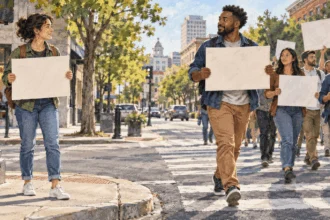
Democratic participation and renewal are at the heart of how American democracy functions and adapts over time. When citizens engage actively in their government—whether through voting, attending local meetings, or making their voices heard—they help strengthen democratic institutions and hold elected officials accountable. Yet many Americans wonder how their participation truly matters, what forms it can take, and how to navigate the complex landscape of civic engagement in today’s world. Understanding these fundamentals is essential for anyone looking to participate meaningfully in American democracy.
Voting and Electoral Participation
Elections form the foundation of democratic participation, and voting remains one of the most direct ways Americans influence their government. Does Your Vote Matter? The Impact of Voting in American Elections explores how individual votes aggregate into meaningful electoral outcomes and why voter participation rates matter at every level. Beyond traditional voting, citizens can shape their communities through direct budget decisions—learn more in Understanding Participatory Budgeting vs. Traditional Budget Process, which shows how some cities and states are expanding democracy by letting residents vote directly on how public funds are spent.
Education and Civic Engagement
An informed citizenry is essential for healthy democratic renewal. Schools play a key role in preparing young Americans to participate in democracy. Civics Education vs. Patriotic Education in America examines different approaches to teaching students about government and citizenship. Americans today engage through multiple channels. Digital vs. Traditional Civic Engagement: How Americans Participate in Democracy Today explores how technology and social media have reshaped how citizens organize and advocate on issues they care about.
Advocacy and Protected Expression
Democratic renewal depends on protecting citizens’ right to advocate for change. Civil Disobedience vs. Lawful Protest: Your Rights and Responsibilities clarifies the legal distinctions and practical implications of different forms of advocacy. Understanding how democracies address threats to participation matters too. How Other Countries Have Reduced Political Violence examines international approaches to building resilient democracies and reducing polarization.
Whether through voting, serving on local boards, engaging online, or advocating for causes, American democracy depends on sustained participation and renewal.
One of the primary reasons for founding America's public education system was to prepare young people for active participation in…
The gunshot that killed Charlie Kirk at 12:20 p.m. on September 10, 2025, at Utah Valley University was more than…
In a democracy as vast as the United States, casting a single ballot can feel like a small gesture in…
Public budgets are the financial blueprints that shape our communities, determining how taxpayer money is collected and spent on everything…
The way Americans engage with their communities and government is changing dramatically. For generations, civic participation meant voting, attending town…
Protest sits at the heart of American democracy. From the Boston Tea Party to the Civil Rights Movement to today's…