- wastedive.com2 links
Last updated 5 months ago. Our resources are updated regularly but please keep in mind that links, programs, policies, and contact information do change.
Every day, Americans generate a staggering amount of trash. From morning coffee cups to evening food packaging, discarded items embark on a complex journey that most people never see. In 2018, the United States generated 292.4 million tons of Municipal Solid Waste, a significant increase from 208.3 million tons in 1990.*
This equals 4.9 pounds of waste per person, per day, considerably higher than many other developed nations, including Sweden (2.4 pounds per day) and the United Kingdom (2.6 pounds per day). This immense volume fuels a massive, multi-billion-dollar industry responsible for collection, transport, and ultimate disposal.
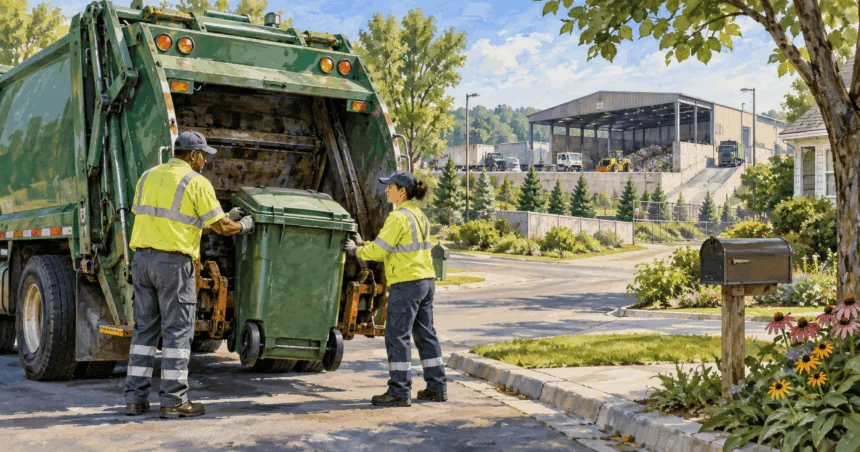
Once the garbage truck rounds the corner, trash follows a branching path to one of four primary destinations: engineered landfills, advanced recycling facilities, waste-to-energy plants, or composting operations.
*The EPA does not have an updated figure for the total amount of Municipal Solid Waste generated in the U.S. There is no national mandate for communities to report this figure.
What’s in America’s Trash
Before following trash’s path, it’s essential to understand what it contains. The composition of the national waste stream is the most important factor determining how it can and should be managed.
Understanding Municipal Solid Waste
Municipal Solid Waste (MSW) is the official term for what most people call trash or garbage. It includes items discarded daily from homes, schools, hospitals, and businesses, like offices and retail stores. The U.S. Environmental Protection Agency categorizes this waste in two ways: by raw material composition and by original product type.
Product categories are defined by lifespan:
Durable Goods are items designed to last three years or more, such as appliances, furniture, and tires.
Nondurable Goods generally last less than three years and include paper products, clothing, and footwear.
Containers and Packaging are assumed to be discarded in the same year purchased and include bottles, cans, boxes, and plastic wrap.
This dual classification allows more detailed analysis of the waste stream, informing strategies for both waste reduction and material recovery for recycling.
The Numbers Behind America’s Waste
The volume of waste generated in the United States is immense and has been on a long-term upward trend. In 2018, the most recent year with comprehensive EPA data, Americans generated 292.4 million tons of MSW. This represents a 93 percent increase in total waste generation since 1980.
Individually, the average American generated 4.9 pounds of waste per day in 2018. This per capita rate has climbed 34 percent since 1980, meaning that while the population has grown, each person is also producing more waste than previous generations.
The total MSW figure jumped from 268.7 million tons in 2017 to 292.4 million tons in 2018 – an increase of nearly 9 percent in a single year. This sharp rise doesn’t reflect sudden increased wastefulness but rather a methodology change. The EPA explicitly states this increase is “mainly the result of EPA’s inclusion of additional wasted food management pathways,” indicating the 2018 data provides a more accurate picture of the nation’s waste, particularly food waste scale.
What’s Inside America’s Garbage
A detailed look inside the national garbage reveals that organic materials are the dominant component. Food, paper, yard trimmings, and wood collectively make up the majority of what Americans throw away.
By material, the 2018 waste stream was composed of:
Paper and Paperboard: 23.1% (67.4 million tons) Food: 21.6% (63.1 million tons)
Yard Trimmings: 12.1% (35.4 million tons) Plastics: 12.2% (35.7 million tons) Metals: 8.8% Wood: 6.2% Glass: 4.2% Textiles: 5.8%
When analyzed by product category, containers and packaging represent the largest single portion of MSW at 28.1 percent of the total, or over 82 million tons. This highlights the profound impact of consumer goods packaging on the nation’s waste footprint.
| Material | Tons Generated (millions) | Percentage of Total MSW |
|---|---|---|
| Paper and Paperboard | 67.4 | 23.1% |
| Food | 63.1 | 21.6% |
| Yard Trimmings | 35.4 | 12.1% |
| Plastics | 35.7 | 12.2% |
| Metals | 25.7 | 8.8% |
| Wood | 18.1 | 6.2% |
| Glass | 12.3 | 4.2% |
| Textiles | 17.0 | 5.8% |
| Rubber and Leather | 9.2 | 3.1% |
| Other | 4.5 | 1.5% |
| Miscellaneous Inorganic Wastes | 4.1 | 1.4% |
| Total | 292.4 | 100% |
The data is clear: organic and fibrous materials (paper, food, yard trimmings, wood) make up over 63 percent of the entire waste stream. This composition has enormous implications for waste management, as these materials generate harmful greenhouse gases when landfilled but can be transformed into valuable resources through composting.
Collection and Transportation
Once trash is placed in a bin at the curb or dumpster behind a business, it begins a carefully orchestrated journey through a complex logistical network. This initial phase of collection and transport is governed by a mix of public oversight and private enterprise, where economics begin to dictate the ultimate destination, often hundreds of miles away.
Public-Private System
In the United States, waste management operates on a tiered responsibility system. Local governments, including cities and counties, are primarily tasked with ensuring waste is collected from residents and businesses. They develop comprehensive waste management plans, establish recycling and composting programs, and set service rules for their jurisdictions.
For example, the City and County of Denver’s Solid Waste Division provides residents with weekly collection for trash and compost, and bi-weekly collection for recycling.
While municipalities provide oversight, the physical work of collection, transportation, and disposal is predominantly handled by the private sector. The waste industry has undergone significant consolidation over the past few decades. Large, publicly traded companies have grown by acquiring smaller, local operators, creating vertically integrated giants that control vast networks of collection trucks, transfer stations, recycling facilities, and landfills.
This shift is reflected in market data: in 1992, municipal governments controlled an estimated 38 percent of the waste sector’s revenue; by 2021, that share had fallen to just 19 percent. Today, the industry’s top five publicly traded companies control an estimated 61 percent of all MSW landfill volume in the country.
This consolidation is directly linked to the regionalization of waste disposal. Decades ago, most trash was disposed of in small, local landfills. However, as federal environmental regulations became stricter, many smaller facilities found it economically unfeasible to upgrade and were forced to close.
This created opportunities for large, well-capitalized companies to build massive, regional “megafills” that serve wide geographic areas and benefit from enormous economies of scale. Because these large companies often own the entire waste management chain – from curb trucks to landfills hundreds of miles away – it’s frequently more cost-effective to transport waste across state lines to their own facilities rather than pay “tipping fees” to competitors’ closer landfills.
Economics of Disposal
The primary economic driver in the waste disposal market is the “tipping fee” which is the price per ton that waste haulers must pay to dump loads at disposal facilities like landfills or waste-to-energy plants. These fees are major costs for haulers and primary revenue sources for facility operators.
Nationally, the average tipping fee has hovered in the $55 to $58 per ton range in recent years. However, this national average masks significant regional disparities. Tipping fees are typically highest in the densely populated Northeast, where land is scarce and environmental regulations stricter. Fees are often much lower in parts of the Midwest and Southeast, where there’s more available land for large landfills.
In some metropolitan areas, tipping fees can approach $150 per ton. This price differential creates powerful economic incentives to transport waste from high-cost areas to low-cost areas, even across state lines.
Interstate Waste Market
The economic logic of tipping fees has given rise to a robust interstate market for municipal solid waste. The most comprehensive analysis, conducted by the Congressional Research Service, found that over 42 million tons of MSW were shipped across state lines for disposal in 2005. This represented more than 25 percent of all waste disposed of in landfills and incinerators that year, a figure that had grown 147 percent over the preceding decade.
The dynamics remain broadly consistent. States with high population densities, high land values, and high tipping fees tend to be net exporters of waste. States with available landfill capacity and lower tipping fees tend to be net importers.
| Rank | Top 5 Net Importers | Tons | Top 5 Net Exporters | Tons |
|---|---|---|---|---|
| 1 | Pennsylvania | 7,593,719 | New York | -7,219,655 |
| 2 | Virginia | 5,498,753 | New Jersey | -5,800,000 |
| 3 | Michigan | 5,342,189 | Illinois | -2,326,781 |
| 4 | Wisconsin | 1,880,007 | Missouri | -2,171,007 |
| 5 | Oregon | 1,743,533 | Massachusetts | -1,817,100 |
Source: Congressional Research Service, 2005 Data (most recent comprehensive state-by-state data available)
A similar, more tightly regulated interstate system exists for hazardous waste. This material is tracked from generation to final disposal using a “cradle-to-grave” manifest system overseen by the EPA. Data from 2019 shows complex shipping patterns, with states like Ohio being both among the largest shippers and recipients of hazardous waste, highlighting the specialized nature of treatment and disposal networks.
Destination: Landfills
Despite growing efforts in recycling and composting, the landfill remains the primary destination for America’s trash. It’s a critical, often misunderstood piece of the nation’s infrastructure: no longer a simple dump, but a highly engineered system designed to contain waste and manage its environmental consequences.
America’s Primary Endpoint
In 2018, more than 146 million tons of MSW were sent to landfills in the United States. This accounts for exactly 50 percent of all trash generated that year, making landfilling the single most common waste management method by a wide margin. This waste is deposited in more than 1,250 active MSW landfills currently operating across the country.
The composition of landfilled material is crucial to environmental impact. The single largest component of waste in landfills is food, making up 24 percent of the total. This is followed by plastics at 18.5 percent, and paper and paperboard at 11.8 percent. The high concentration of organic materials – food, paper, and yard waste – is particularly problematic, as their decomposition in landfill environments is the primary source of harmful greenhouse gas emissions.
Modern Sanitary Landfills
The open, uncontrolled dumps of the past were significant sources of environmental pollution. The passage of the Resource Conservation and Recovery Act in 1976 fundamentally changed this practice. Subtitle D of RCRA banned open dumping and established stringent minimum federal standards for the design, operation, and closure of all Municipal Solid Waste Landfills.
Today’s landfills are complex engineering projects designed to isolate trash from the surrounding environment.
The Liner System: The foundation of a landfill’s containment system is a composite liner, often compared to a giant, durable bathtub. It’s installed on the bottom and sides of the landfill cell before any waste is deposited. This barrier is typically constructed with two layers: a flexible, synthetic plastic sheet called a geomembrane (often 40-mil LLDPE) placed on top of at least three feet of dense, compacted clay soil.
The Leachate Collection System: Built directly on top of the liner is a drainage system designed to capture contaminated water, known as leachate. As rainwater and moisture from waste percolate through garbage, they pick up dissolved pollutants, creating a toxic liquid. A network of perforated pipes embedded in gravel or sand collects this leachate, which is then pumped out and transported to specialized wastewater treatment facilities.
Daily Operations: To control odors, prevent litter from blowing away, and deter pests, waste deposited in landfills is compacted and covered with soil or alternative materials at the end of each operating day.
Closure and Post-Closure Care: Once landfill cells reach capacity, they’re permanently sealed with final covers or caps. These caps are engineered systems, similar to bottom liners, designed to keep water out. Under RCRA, landfill operators are required to set aside funds to maintain and monitor sites for 30 years or more after closure, ensuring long-term integrity of containment systems.
Managing Landfill Byproducts
The very design that makes modern landfills effective at protecting local groundwater creates different environmental challenges. By sealing waste in airtight environments, landfills create perfect conditions for anaerobic decomposition: the breakdown of organic matter by bacteria in the absence of oxygen. This process generates two primary byproducts that must be managed:
- Leachate. This “garbage juice” is continuously collected and treated to prevent escape from landfill containment systems.
- Methane. The anaerobic decomposition of organic materials like food scraps, paper, and yard waste produces large quantities of landfill gas, composed of roughly 50 percent methane and 50 percent carbon dioxide. Methane is a potent greenhouse gas, with at least 28 times the heat-trapping power of CO2 over a 100-year period. MSW landfills are the third-largest source of human-related methane emissions in the United States.
This reveals fundamental tension in modern waste management. The engineered systems mandated by RCRA to solve historic groundwater contamination problems work by creating sealed, oxygen-free environments. This very solution directly creates ideal conditions for methane generation, a powerful greenhouse gas. This illustrates how solving one environmental problem can inadvertently create another, necessitating further technological interventions like landfill gas capture systems.
Landfill Gas-to-Energy
To address methane emissions, most large landfills are required to install gas collection systems. While this gas can simply be flared (burned off) to convert methane to less potent CO2, it can also be captured and used as a valuable energy source.
As of September 2024, there were 542 operational landfill gas-to-energy projects in the U.S., with an additional 444 landfills identified as strong candidates for future projects.
These projects utilize captured LFG in several ways:
- Electricity Generation. Accounting for about 63 percent of projects, this is the most common use. LFG is piped to reciprocating engines or turbines that burn gas to spin generators, producing electricity for landfill operations or sale to local utility grids. A single project at a Missouri landfill generates enough electricity to power approximately 547 homes each year.
- Direct Use. In about 17 percent of projects, LFG is used as direct fuel by nearby industrial facilities, such as factories, kilns, or greenhouses. This displaces the need for fossil fuels like natural gas or coal.
- Renewable Natural Gas. A growing trend, seen in about 20 percent of projects, involves processing LFG to remove CO2 and other impurities. This upgrades gas to pipeline-quality biomethane, which is a direct substitute for fossil natural gas and can be injected into national pipeline networks or used as vehicle fuel.
Social and Economic Impact
Beyond environmental considerations, landfills have tangible impacts on surrounding communities. Research has shown that proximity to large landfills can decrease neighboring residential property values by an average of 14 percent, an effect that diminishes with distance.
Furthermore, the siting of these facilities raises significant environmental justice concerns. Multiple studies have concluded that MSW landfills are disproportionately located in counties with higher rates of poverty and larger populations of racial minorities. While establishing direct causation is complex, some research has suggested possible correlations between living near landfills and certain adverse health outcomes, including respiratory conditions and negative birth outcomes.
Destination: Recycling
Recycling represents a critical pathway for diverting materials from disposal, conserving natural resources, and reducing greenhouse gas emissions. However, the journey from blue bin to new product is a complex industrial process fraught with economic and logistical challenges that have placed the entire system under significant stress.
The Recycling Process
In 2018, the United States recycled approximately 69 million tons of MSW and composted another 25 million tons, achieving a combined national diversion rate of 32.1 percent. This process keeps substantial volumes of material out of landfills and incinerators while reducing the need to extract and process virgin raw materials.
The recycling process generally follows five key steps:
- Collection. Materials are collected from homes and businesses. The vast majority of U.S. cities with curbside programs, 82 percent, use a “single-stream” system, where all recyclables like paper, plastic, and metal are mixed together in one bin.
- Delivery. Collection trucks transport mixed recyclables to processing plants.
- Processing at a MRF. Materials arrive at Materials Recovery Facilities, specialized plants designed to sort commingled items.
- Sorting and Baling. Inside MRFs, automated machinery and manual labor separate materials into individual, clean streams (aluminum cans, PET plastic bottles, cardboard). These sorted materials are then compressed into large, dense bales.
- Remanufacturing. Bales are sold as commodities on open markets to mills and manufacturing facilities, which use them as raw material feedstock to create new products.
Inside Materials Recovery Facilities
The heart of the modern recycling system is the MRF. The U.S. is home to more than 1,300 public and private MRFs, which have become increasingly sophisticated to handle complex mixes of materials found in single-stream collection.
A typical sorting line at an MRF employs a sequence of technologies:
Pre-Sort: Manual sorters stand alongside conveyor belts to pull out large, obvious contaminants. These include plastic bags and films that jam machinery, textiles, wood, and hazardous items like propane tanks or batteries.
Screens: Material moves onto large, rotating disc screens. These separate two-dimensional items (paper and cardboard), which ride over the top, from three-dimensional containers (bottles and cans), which fall through gaps.
Magnets: Powerful overhead magnets pull ferrous metals, such as steel and tin cans, out of the container stream.
Eddy Current Separators: To separate non-ferrous metals, remaining containers pass over rapidly spinning magnetic rotors. This induces electrical “eddy currents” in aluminum cans, creating temporary magnetic fields that repel cans, launching them into separate collection bins.
Optical Sorters: This is the most advanced MRF technology. As plastic containers pass under scanners at high speed, cameras identify plastic resin types (PET #1, HDPE #2) based on how they reflect light. Computers then trigger precise puffs of compressed air to blast targeted bottles into correct sorting chutes.
Quality Control: Human sorters often perform final quality checks on separated material streams to remove remaining contaminants before materials are baled for shipment.
Recycling Performance Varies Dramatically
The effectiveness of the recycling system varies dramatically depending on material. Some items have robust, well-established markets and high recycling rates, while others are recycled at alarmingly low levels.
High Performers (by recycling rate, 2018):
- Lead-Acid Batteries: 99%
- Corrugated Boxes: 96.5%
- Major Appliances: 60%
- Aluminum Beer and Soft Drink Cans: 50.4%
Poor Performers (by recycling rate, 2018):
- Plastics (overall): 9%
- PET Plastic Bottles and Jars: 29.1%
- Glass Containers: 25-39%
- Textiles: 15.3%
- Furniture: 0.3%
| Material/Product | Generation (Million Tons) | Recycling Rate (%) |
|---|---|---|
| Corrugated Boxes | 33.9 | 96.5% |
| Aluminum Beer & Soft Drink Cans | 1.3 | 50.4% |
| PET Plastic Bottles & Jars | 2.9 | 29.1% |
| HDPE Natural Bottles | 1.8 | 29.3% |
| Glass Containers | 7.6 | 39.7% |
| Plastic Bags, Sacks & Wraps | 4.2 | 10.0% |
| Clothing & Footwear | 13.0 | 13.0% |
Recycling System Under Stress
The U.S. recycling system is facing what many experts describe as a systemic crisis. This crisis isn’t due to a single failure but rather a cascade of interconnected problems involving public confusion, material contamination, challenging economics, and geopolitical shocks that exposed the system’s underlying vulnerabilities.
The chain of failure begins with the public. While most Americans report wanting to recycle, many are deeply confused about rules, which often vary from town to town and are communicated through inconsistent labeling. This leads to “wish-cycling,” where well-intentioned residents toss non-recyclable items like plastic bags, food waste, garden hoses, or soiled containers into recycling bins, hoping they can be recycled.
This wish-cycling directly results in high contamination levels, identified as the primary reason for the recycling industry’s struggles. Contaminated materials are difficult and expensive for MRFs to process. Contaminants, especially plastic bags and other “tanglers,” can jam sorting machinery, causing costly shutdowns and creating safety hazards for workers.
Furthermore, resulting bales of sorted material are of low quality and have little to no market value. This cripples recycling economics, driving up processing costs and making final products unattractive to manufacturers, who can often purchase cheaper virgin materials instead.
China’s National Sword Policy
For decades, the U.S. recycling industry was able to mask these fundamental problems by exporting significant portions of low-quality, mixed recyclables to China. China’s vast and low-cost labor force could manually sort these materials in ways that weren’t economically viable in the U.S. This reliance on foreign outlets created dependency that stifled investment in much-needed domestic recycling infrastructure and technology.
The system’s fragility was exposed in 2018 when China implemented its “National Sword” policy. This policy effectively banned imports of most post-consumer plastic waste and imposed extremely strict 0.5 percent contamination limits on other materials like mixed paper. The U.S. recycling system, built on exporting highly contaminated material, was unable to meet this new standard.
With its primary end market suddenly gone, the system buckled. MRFs were left with mountains of unsellable material, forcing many to close or send bales of recyclables directly to landfills. Municipalities across the country faced soaring costs and were forced to renegotiate contracts with haulers, with some suspending or canceling curbside recycling programs altogether.
One study found that in the wake of National Sword, the amount of plastic being landfilled in the U.S. increased by 23 percent. China’s policy didn’t cause the American recycling crisis, but it was the shock that laid bare the system’s deep, pre-existing flaws.
Destination: Waste-to-Energy
A smaller but significant portion of America’s trash is not buried but burned. Waste-to-Energy (WTE) facilities, also known as incinerators, use controlled combustion to dramatically reduce waste volume while simultaneously generating electricity. This pathway offers a different set of benefits and challenges compared to landfilling and recycling.
WTE in America
The core technology of a WTE plant involves burning MSW in furnaces at extremely high temperatures, often exceeding 2,000°F. The intense heat boils water, creating high-pressure steam used to spin turbines and generate electricity, much like conventional power plants. This process is highly effective at volume reduction, shrinking original trash mass by 70-85 percent and volume by about 87 percent.
In 2018, nearly 35 million tons of MSW, or 11.8 percent of the national total, were processed in WTE facilities. As of 2022, there were 60 operational WTE plants in the United States, which together generate less than 1 percent of the nation’s total electricity.
The vast majority of these facilities are concentrated in the Northeast and Florida. This geographic distribution is no accident; these are regions where high population density makes land for new landfills both scarce and expensive. Most of the current WTE fleet was constructed between the early 1980s and mid-1990s as alternatives to landfilling.
Pros and Cons of Incineration
WTE presents a complex set of trade-offs, making it a subject of ongoing debate in waste management circles.
Benefits:
Volume and Weight Reduction: Its primary advantage is a dramatic reduction in material requiring final disposal in landfills.
Energy Generation: It creates reliable, continuous (baseload) electricity from a fuel source – trash – that is consistently available and low-cost.
Dual Revenue Stream: WTE plants earn revenue from both electricity sales to grids and tipping fees charged to accept waste.
Greenhouse Gas Reduction: When compared to landfilling, WTE avoids methane generation. Proponents argue that on a life-cycle basis, processing waste in WTE facilities results in net reductions of greenhouse gas emissions.
Drawbacks:
High Capital and Operating Costs: WTE plants are extremely expensive to build and maintain, largely due to sophisticated and costly air pollution control systems required by law.
Public Opposition: Strong community opposition (“Not In My Backyard” or NIMBYism), driven by concerns about air pollution and health impacts, has made it exceptionally difficult to site and build new facilities since the mid-1990s.
Air Emissions: While heavily regulated, the combustion process inherently produces pollutants like nitrogen oxides, sulfur dioxide, and heavy metals that must be captured and controlled.
Toxic Ash Management: The process generates two distinct ash streams. One of these, fly ash, is classified as hazardous waste and requires careful and costly special disposal.
Advanced Pollution Control
Modern WTE facilities bear little resemblance to incinerators of the past. This transformation was driven largely by federal regulation. The Clean Air Act Amendments of 1990 led the EPA to establish strict Maximum Achievable Control Technology standards for incinerators. These regulations forced the closure of hundreds of older, polluting facilities and mandated that remaining plants install state-of-the-art air pollution control systems.
The results were dramatic. Between 1990 and 2005, the U.S. WTE industry achieved stunning reductions in key pollutants:
- Dioxins and Furans: down 99%
- Mercury: down 96%
- Cadmium and Lead: down 96-97%
- Particulate Matter: down 96%
This success demonstrates how well-enforced, technology-forcing federal environmental regulations can drive innovation and achieve significant improvements in public health and environmental protection.
Today, flue gas from WTE furnaces passes through multi-stage cleaning processes before release:
Acid Gas Scrubbers: Lime slurry is sprayed into gas streams to neutralize acidic compounds like sulfur dioxide and hydrochloric acid.
Activated Carbon Injection: Powdered activated carbon is injected to absorb and capture heavy metals like mercury and persistent organic pollutants like dioxins.
Selective Catalytic Reduction: In many plants, ammonia is injected into gas streams as they pass over catalysts, converting smog-forming nitrogen oxides into harmless nitrogen and water.
Fabric Filters (Baghouses): Finally, gas is forced through large fabric filters, which act like highly efficient vacuum cleaner bags, capturing over 99 percent of all particulate matter.
Managing Ash Residue
After combustion, two types of solid residue, or ash, remain and must be managed:
Incinerator Bottom Ash: This is heavier, coarse material remaining on furnace grates after combustion. It consists of non-combustible materials like glass, stone, and metal, mixed with ash. The IBA is processed to recover valuable metals; powerful magnets remove ferrous metals (steel), and eddy current separators remove non-ferrous metals (aluminum). Remaining aggregate material is often beneficially reused in construction applications, such as road base or as concrete block components.
Air Pollution Control Residue / Fly Ash: This is fine, powdery material captured by baghouse filters. Because pollution control systems are designed to concentrate toxins from flue gas, fly ash contains high levels of heavy metals and other hazardous compounds. It’s therefore classified as hazardous waste.
Fly ash must be managed with extreme care. It’s typically stabilized, often by mixing with cement to solidify it, and then disposed of in specially permitted hazardous waste landfills or in monofills – dedicated landfill cells designed to isolate it from the environment and prevent toxic components from leaching into groundwater.
Destination: Composting and Organics
The heaviest and most abundant category of material in America’s trash is organic waste. Diverting this stream from landfills through composting represents one of the most significant opportunities to reduce the environmental impact of waste management, turning a major source of greenhouse gas emissions into a valuable resource for soil health.
America’s Heaviest Waste Stream
Organic materials are anything that was once living. These are the dominant component of MSW. Food scraps (21.6%) and yard trimmings (12.1%) alone constitute more than a third of everything Americans discard. When paper and wood are included, this figure rises to over 60 percent.
The primary problem with sending this material to landfills is methane production. In oxygen-deprived landfill environments, these materials decompose anaerobically, releasing methane, a greenhouse gas that is over 80 times more potent than carbon dioxide at warming the atmosphere over a 20-year timeframe. Consequently, diverting organic waste is a top-tier climate mitigation strategy.
The solution is composting: controlled decomposition of organic matter in the presence of oxygen. This aerobic process avoids methane creation and instead produces nutrient-rich soil amendments that can improve soil structure, water retention, and fertility.
Pioneering City Programs
Recognizing the immense potential of organics diversion, cities across the country have begun implementing collection programs. The number of U.S. households with access to these services has grown exponentially, from just over half a million in 2005 to nearly 15 million in 2023. Several cities have become national models for successful organics management.
San Francisco, California, is widely regarded as a pioneer in this field. In 2009, it became the first major U.S. city to pass a Mandatory Recycling and Composting Ordinance, requiring every resident and business to separate their waste. The city’s iconic “Fantastic Three” program provides separate bins for recyclables (blue), compostables (green), and landfill trash (black).
The green bin accepts all food scraps, including meat and dairy, along with food-soiled paper and yard trimmings. The program has been a resounding success, helping the city achieve a waste diversion rate of 80 percent in 2012, the highest of any major city in the nation. San Francisco has collected over two million tons of organic material, processed into certified organic compost sold to local farms, vineyards, and orchards, creating a true closed-loop system.
Seattle, Washington began its journey with a “Zero Waste Resolution” in 2007, making participation in food and yard waste collection mandatory for residential properties in 2009. The city took a crucial further step in 2015 by enacting an outright ban on disposing of organic waste in landfills.
Previously, Seattle had been shipping approximately 100,000 tons of food waste annually to a landfill 300 miles away in Oregon. Following the ban, the city now diverts about 125,000 tons of organic waste each year to composting facilities, with finished product used to enrich soil in local parks and gardens.
New York City, New York demonstrates the scalability of these programs. New York City is currently rolling out what will become the largest municipal composting program in the United States. Following a highly successful pilot program in Queens in 2022, the city passed the “Zero Waste Act” in 2023, which will make curbside organics separation mandatory for all residents. Once fully implemented, the program is expected to divert up to 8 million pounds of organic waste from landfills every single day.
Scaling Up Challenges
Despite these successes, scaling up organics diversion nationwide faces significant hurdles. Even in cities with well-established programs, low resident participation rates and contamination of compost streams with non-organic items like plastic bags remain persistent challenges. On a national level, infrastructure is still developing; only half of the U.S. states have any statewide policies encouraging residential food waste diversion, and more processing facilities are needed.
Furthermore, a case study from Boston’s municipal composting program highlights a critical, often overlooked challenge: final product quality and safety. A multi-year study of Boston’s compost found that it was consistently contaminated with lead at levels exceeding safety standards for use in urban agriculture. This lead doesn’t come from food scraps but from legacy environmental pollution – such as lead from old paint and gasoline – present in urban soils and yard trimmings co-collected with food waste.
This creates a serious dilemma. One key benefit of urban composting is its potential to support local food systems through community gardens and urban farms. However, if the compost produced is unsafe for growing food, it defeats this purpose and forces urban farmers to source more expensive compost from suburban areas.
This case reveals that successful organics programs cannot focus solely on collection. They must address the entire life cycle, including rigorous testing for contaminants, developing methods to mitigate them, and establishing clear, federally supported safety standards for compost, which are currently lacking.
How Waste Management Is Governed
The entire system of waste collection, transport, and disposal in the United States operates within a complex legal and regulatory framework. This architecture is built on partnerships between federal, state, and local governments, each with distinct but overlapping responsibilities, all grounded in landmark environmental legislation of the 1970s.
Federal Foundation
The cornerstone of U.S. waste law is the Resource Conservation and Recovery Act (RCRA), passed by Congress in 1976. This act gives the Environmental Protection Agency authority to regulate the management and disposal of both solid and hazardous waste. RCRA’s primary goals are protecting human health and the environment, conserving energy and natural resources, reducing waste generation, and ensuring all waste is managed in environmentally sound manners.
RCRA is divided into several key sections, known as subtitles, that govern different types of waste:
Subtitle D (Solid Waste). This part of the law applies to non-hazardous municipal solid waste – everyday trash from homes and businesses. Subtitle D was revolutionary because it effectively banned open dumping practices. It established minimum federal criteria that all MSW landfills must meet for location, design, operation, and closure.
This includes requirements for liners, leachate collection, and long-term monitoring. Subtitle D establishes a framework, but largely empowers states to develop and implement their own solid waste management plans.
Subtitle C (Hazardous Waste). This section is far more prescriptive and stringent. It establishes a comprehensive federal system for controlling hazardous waste from “cradle to grave.” This system includes:
- Defining Hazardous Waste. The EPA creates and maintains lists of specific wastes automatically considered hazardous and establishes criteria (ignitability, corrosivity, reactivity, toxicity) for identifying others.
- Tracking System. Manifest documents must accompany every hazardous waste shipment, tracking custody from the generator, to transporter, and finally to permitted Treatment, Storage, and Disposal Facilities.
- Strict Standards. Subtitle C sets rigorous standards for anyone who generates, transports, treats, stores, or disposes of hazardous waste.
Other federal laws also play roles. The Hazardous Materials Transportation Act governs the physical transport of waste, and the Comprehensive Environmental Response, Compensation, and Liability Act (CERCLA), better known as Superfund, provides mechanisms for cleaning up sites contaminated by hazardous waste in the past.
State and Local Implementation
The American waste management system is a prime example of cooperative federalism. While the EPA sets national standards, day-to-day implementation and enforcement are largely handled at the state and local levels.
The State’s Role. States are primary regulators of waste management. The EPA can authorize states to run their own RCRA programs, as long as state rules are at least as protective as federal ones. Most states have this authority. State environmental agencies are responsible for issuing permits to landfills, incinerators, and other waste facilities, conducting inspections, and enforcing compliance with both state and federal laws. States can also choose to enact stricter regulations than federal minimums, such as California’s mandatory organics diversion law.
The Local Government’s Role. Cities and counties are on the front lines, responsible for practical delivery of waste services to the public. Their duties include:
- Ensuring Collection. Arranging for the collection of trash, recycling, and organics, either through municipal public works departments or, more commonly, by franchising or contracting with private hauling companies.
- Program Management. Implementing and managing local recycling and composting programs to meet diversion goals set by states.
- Public Education. Creating outreach campaigns to educate residents and businesses on proper waste sorting, what can be recycled, and how to participate in programs.
- Planning. Developing comprehensive local solid waste management plans outlining how communities will meet obligations under state and federal law.
This layered system allows for combinations of national consistency and local flexibility. The EPA sets environmental protection “floors,” preventing races to the bottom where states might compete for business by weakening standards. States then act as primary regulators, customizing programs to fit specific needs and geographies. Finally, local governments act as service providers, making systems function for citizens.
This explains why waste and recycling services can look so different from one city to another, even though all operate under the same federal legal umbrella. The multi-tiered approach balances the need for consistent environmental protection with the practical realities of local service delivery and regional economic conditions.
Regional Variations and Economic Drivers
The waste management landscape varies dramatically across different regions of the United States, shaped by factors including population density, land availability, regulatory environments, and regional economic conditions. These variations create the complex interstate waste flows and different disposal strategies that characterize the American waste system.
Northeast. High population density, limited available land, and strict environmental regulations create high tipping fees and strong incentives for waste export. This region relies heavily on waste-to-energy facilities and exports significant volumes to lower-cost disposal areas.
Southeast. Lower land costs and more permissive regulatory environments have made this region a major destination for imported waste, with large regional landfills serving multi-state areas.
West Coast. Strong environmental policies and high land values have driven innovation in recycling and composting programs, with California leading national efforts in organics diversion and extended producer responsibility.
Midwest. A mix of urban areas with space constraints and rural areas with available land creates diverse waste management approaches, from urban recycling programs to large regional landfills.
These regional differences reflect the complex interplay of environmental policy, economic incentives, and geographic constraints that shape how America manages its 292 million tons of annual waste. Understanding these variations is crucial for developing effective national waste reduction and environmental protection strategies.