- headstart.gov2 links
- fns.usda.gov
Last updated 10 months ago. Our resources are updated regularly but please keep in mind that links, programs, policies, and contact information do change.
Head Start is a federal program designed to promote school readiness of young children, from birth up to age five, from families with low incomes. Since its inception in 1965 as part of the War on Poverty initiative, Head Start has served millions of children and families across the United States.
The program’s fundamental goal is to prepare children for success not just in kindergarten, but in life, by enhancing their development across multiple domains: cognitive, social, and emotional.
- A Warm Welcome: Starting the Head Start Day
- Fueling Learning: Breakfast and Healthy Habits
- Exploring, Playing, Growing: Morning Learning Activities
- Nourishment and Rest: Lunch and Quiet Time
- Afternoon Adventures: Continuing the Discovery
- Supporting the Whole Child: Health and Development in the Day
- Typical Head Start Center-Based Daily Flow (Ages 3-5)
- Partnership with Families: End of Day and Beyond
- Different Settings, Same Goals: Early Head Start & Home-Based Options
- The People Who Make It Happen: Head Start Staff
What makes Head Start distinct is its comprehensive approach, built upon three essential pillars:
- Early Learning: Fostering readiness for school through varied activities and interactions
- Health: Ensuring children receive necessary screenings (vision, hearing, dental), nutritious meals, and support for physical, oral, and mental health
- Family Well-being: Recognizing that children thrive when their families are supported, offering resources and partnership opportunities to help parents achieve their own goals
While Head Start receives federal funding and direction, programs are operated locally by various agencies, allowing them to tailor services to meet specific community needs. However, all programs must adhere to the rigorous Head Start Program Performance Standards (HSPPS).
These federal regulations ensure a consistent level of high-quality service delivery, covering everything from curriculum and staff qualifications to safety and family engagement. This blend of local responsiveness and national standards ensures that a day in Head Start is designed to nurture the whole child within the context of their family and community.
A Warm Welcome: Starting the Head Start Day
The Head Start day begins with a focus on creating a smooth and positive transition from home to the center. Children may arrive in various ways – some ride designated buses, while others are dropped off by family members or walk.
Recognizing that transportation can be a significant barrier for some families, programs may provide transportation services directly or assist families in making arrangements. Specific provisions within the program standards address the need to utilize community resources, where possible, to ensure transportation for children experiencing homelessness.
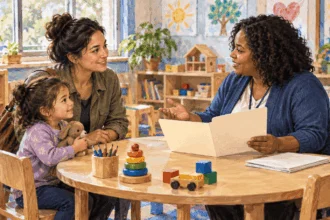
Upon arrival, each child and their parent or caregiver is met with a warm greeting from teachers and staff. This interaction serves not only to welcome the child but also to strengthen the connection between the program and the family, laying the groundwork for a trusting partnership.
The physical environment itself is intentionally designed to be welcoming, safe, and well-organized, helping children feel secure and ready to engage. This careful attention to the arrival process helps ease the separation from caregivers and establishes the center as a predictable and supportive place.
As part of this arrival routine, staff may conduct a quick, informal health check, visually assessing the child’s well-being or briefly checking in with the parent about how the child is feeling.
Once inside, children typically transition into initial activities, often involving free-choice play in various learning centers. This allows them to settle in at their own pace, choose an activity that interests them, and begin their day with a sense of autonomy and comfort.
Fueling Learning: Breakfast and Healthy Habits
Soon after arrival, the focus shifts to nourishment with the serving of breakfast. Head Start programs provide nutritious meals – typically breakfast, lunch, and snacks – that meet the dietary guidelines established by the U.S. Department of Agriculture (USDA). These meals are provided at no cost to eligible families.
Breakfast is often served “family-style,” where children and adults sit together at tables, and children are encouraged to serve themselves with appropriate support. This approach transforms mealtime into a valuable learning experience, fostering social skills like sharing and conversation, promoting language development as children talk about the food, and building self-help skills as they manage serving spoons and pass bowls.
Integral to meal routines are practices that promote good health and hygiene. Handwashing before and after eating is a standard procedure, taught and reinforced daily. Many programs also incorporate supervised tooth brushing into the routine after meals. This practice directly supports the oral health component of the program’s comprehensive health services, helping to establish lifelong healthy habits.
Staff utilize these meal and snack times as opportunities to connect nutrition with learning. They might engage children in conversations about the different types of foods being served, discuss where food comes from, introduce new vocabulary related to tastes and textures, and model positive social interactions and table manners. Nutrition education for both children and families is a key service component.
By embedding these health and learning opportunities within the routine of breakfast, Head Start demonstrates its holistic approach, recognizing that physical well-being and cognitive development are interconnected.
Exploring, Playing, Growing: Morning Learning Activities
The heart of the Head Start morning is dedicated to learning experiences designed to foster development across all domains. The program’s educational philosophy strongly emphasizes learning through play, recognizing it as a primary way young children explore their world, build understanding, and develop essential skills.
Activities are carefully planned to be developmentally appropriate, meaning they are suitable for the age range of the children while also being responsive to the unique needs, interests, and cultural backgrounds of each individual child.
A typical morning involves a dynamic balance of different types of activities:
- Child-initiated play within well-organized learning centers. These centers might focus on areas like building with blocks, engaging in dramatic play, creating art, exploring science and nature materials, or looking at books in a cozy library corner.
- Teacher-guided activities in small groups where teachers work with a few children on specific skills or concepts tailored to their developmental levels.
- Large group times (often called “circle time”) that help build a sense of classroom community and are used for activities like reading stories aloud, singing songs, engaging in movement activities, and introducing new ideas or themes for exploration.
All activities, whether planned or spontaneous, are intentionally designed to support children’s growth across the five central developmental domains outlined in the Head Start Early Learning Outcomes Framework:
- Approaches to Learning: Nurturing curiosity, persistence, and creativity
- Social and Emotional Development: Helping children understand and manage their feelings, build positive relationships, and develop self-regulation skills
- Language and Literacy: Building vocabulary, developing listening comprehension, fostering print awareness, and encouraging early writing attempts
- Cognition: Developing early math concepts, scientific reasoning, problem-solving abilities, and general knowledge about the world
- Physical Development: Supporting the refinement of both large motor skills (running, jumping, climbing) and fine motor skills (drawing, cutting, manipulating small objects)
A cornerstone of the Head Start approach is individualization. Teachers continuously observe children’s progress and interests, using this information to adapt activities and provide targeted support. Lesson plans are developed based on these observations and utilize research-based curricula that align with both the Head Start framework and state early learning guidelines.
Furthermore, programs are committed to cultural and linguistic responsiveness. Learning materials, books, and activities reflect the diverse backgrounds of the children and families served, incorporating their home languages and cultural traditions in meaningful ways.
The daily schedule also typically includes ample time for physical activity, both indoors and outdoors (weather permitting), recognizing the importance of movement for physical health and overall development.
Nourishment and Rest: Lunch and Quiet Time
As the morning transitions into the afternoon, the focus turns again to nourishment and the essential need for rest. Lunch, like breakfast, is a key part of the Head Start day, offering another opportunity for children to enjoy a nutritious meal provided by the program.
Served family-style, lunch reinforces the healthy eating habits, social skills, and self-help abilities practiced earlier in the day. Children continue to learn about making healthy choices, engage in conversations with peers and adults, and practice skills like pouring drinks or clearing their own plates.
Following lunch, the daily schedule typically incorporates a designated rest or nap time. This period is crucial for young children’s physical and emotional well-being, allowing their bodies and minds to recharge after a busy morning of learning and playing.
Recognizing that sleep needs vary among preschoolers, the approach to rest time is flexible. Children who need to sleep are provided with a quiet, comfortable space, often with individual cots or mats. Those who do not fall asleep, or who wake early, are guided towards quiet, restful activities such as looking at books, working on puzzles, or drawing.
The duration, environment, and supervision during rest time adhere to state child care licensing regulations and the health and safety requirements outlined in the Head Start Program Performance Standards. This period of calm allows children to relax and rejuvenate, ensuring they have the energy and focus needed for the afternoon’s activities.
Afternoon Adventures: Continuing the Discovery
After the quiet interlude of rest time, the Head Start afternoon offers renewed opportunities for exploration, learning, and engagement. The structure often mirrors the morning, providing a familiar rhythm to the day, but the focus might shift towards deepening understanding or extending activities started earlier.
Children may return to learning centers to continue projects, collaborate with peers on building structures, or delve further into dramatic play scenarios.
The afternoon frequently emphasizes creative expression and physical activity. Children might participate in planned art projects, explore musical instruments and movement activities, or engage in more extended outdoor play sessions, weather permitting. These activities continue to support development across all five domains, from fine motor skills used in painting to gross motor skills developed while running and climbing.
A nutritious afternoon snack is also provided, offering another moment for reinforcement of healthy habits and informal conversation. Similar to breakfast and lunch, snack time can be leveraged for learning, perhaps discussing the food groups or practicing counting skills.
As the day winds down, some programs may gather the children for a brief group time to reflect on their experiences, share something they learned or enjoyed, or listen to a final story before preparing for departure.
Supporting the Whole Child: Health and Development in the Day
Head Start’s commitment to the whole child extends far beyond the scheduled learning activities and meals. Health and developmental support are woven into the fabric of the entire day, reflecting the program’s comprehensive model.
Teachers and staff are trained to continuously observe children’s physical, social, emotional, and cognitive well-being during everyday interactions and play. These ongoing observations are a critical part of the assessment process, helping staff identify children’s strengths and any potential areas where additional support might be needed.
Soon after a child enrolls, Head Start programs facilitate comprehensive health and developmental screenings. These screenings, typically completed within the first 45 to 90 days of enrollment, cover crucial areas such as vision, hearing, dental health, nutritional status, and overall developmental milestones.
While the screenings themselves are specific events, the information gathered informs daily practice. Staff use the results to tailor activities, provide necessary accommodations, and work with families to ensure children receive any needed follow-up care or treatment. The program assists families in navigating the healthcare system and connecting with medical, dental, and mental health providers, ensuring children have a “medical home”.
Mental health and social-emotional well-being are actively promoted every day through positive teacher-child interactions, a supportive classroom climate that helps children build resilience, and guidance in developing self-regulation and social skills. Programs often employ or contract with mental health consultants who can provide guidance to staff and families and support children with specific behavioral or emotional needs.
Furthermore, Head Start is dedicated to the inclusion of children with disabilities. Programs must ensure that at least 10 percent of their enrollment slots are available to children with disabilities who are eligible for services under the Individuals with Disabilities Education Act (IDEA). Teachers collaborate with specialists (such as speech therapists or occupational therapists) and families to implement individualized strategies and supports within the daily routine, ensuring all children can participate fully and reach their potential.
Typical Head Start Center-Based Daily Flow (Ages 3-5)
To provide a clearer picture, the following table outlines a sample flow for a typical full day in a center-based Head Start program serving preschool-aged children. Keep in mind that specific times and activities can vary between centers based on local needs and schedules.
| Time Segment (Approx.) | Key Activities & Routines | Main Focus/Learning Areas | Related Head Start Pillars |
|---|---|---|---|
| Early Morning (Arrival) | Greetings, Informal Health Check, Transition, Free Play in Learning Centers | Social-Emotional, Transition, Self-Regulation, Choice Making | Early Learning, Family Engagement |
| Breakfast Time | Family-Style Meal, Handwashing, Social Interaction | Nutrition, Health, Self-Help Skills, Social Skills, Language | Health, Early Learning |
| Mid-Morning | Circle Time (Stories, Songs, Group Discussion), Learning Center Exploration, Outdoor Play | Cognitive, Language, Literacy, Social, Emotional, Physical (Gross & Fine Motor) | Early Learning, Health |
| Lunchtime | Family-Style Meal, Handwashing, Tooth Brushing (often), Conversation | Nutrition, Health, Social Skills, Self-Help Skills, Oral Health | Health, Early Learning |
| Early Afternoon (Rest) | Nap or Quiet Activities (Books, Puzzles) | Physical Well-being, Emotional Regulation, Individual Needs | Health |
| Mid-Afternoon | Learning Centers, Small Group Activities, Long-Term Projects, Outdoor Play | Cognitive, Creative Expression, Social Collaboration, Problem Solving, Physical | Early Learning, Health |
| Snack Time | Nutritious Snack, Handwashing, Conversation | Nutrition, Health, Social Skills, Language | Health, Early Learning |
| Late Afternoon (Departure) | Clean-up, Pack-up Routines, Final Story/Reflection, Communication with Parents/Caregivers | Responsibility, Transition, Language, Family Communication, Social-Emotional | Early Learning, Family Engagement |
This table illustrates how various activities throughout the day are intentionally designed to support multiple areas of development and align with the core pillars of Head Start: Early Learning, Health, and Family Well-being.
Partnership with Families: End of Day and Beyond
The Head Start day concludes much like it begins: with a focus on connection and communication between the program and the family. During the departure routine, staff take the opportunity to share brief, positive updates about the child’s day with the arriving parent or caregiver. This daily touchpoint reinforces the partnership and keeps families informed.
Communication extends beyond these brief daily exchanges. Programs are required to use effective and accessible forms of communication to keep families engaged and informed. This might involve daily notes sent home, communication apps, regular newsletters, phone calls, or scheduled parent-teacher conferences to discuss a child’s progress in more detail.
This emphasis on communication stems from a core Head Start principle: parents are recognized and respected as their child’s first and most important teachers. The home is viewed as the child’s primary learning environment. Therefore, the program actively works to build strong relationships with families, supporting positive parent-child interactions and encouraging parental involvement in their child’s education.
Families are offered various opportunities to participate, which might include:
- Volunteering in the classroom
- Attending workshops on child development or parenting skills
- Taking on leadership roles through participation in the program’s Policy Council, which gives parents a formal voice in program decision-making
Head Start’s commitment to families extends to supporting their overall well-being. Recognizing that family stability and success directly impact a child’s development, programs work with parents to identify and achieve their own goals. This might involve assistance with finding stable housing, pursuing further education or job training, improving financial literacy, or accessing other necessary community resources.
Family service workers often play a key role in connecting families with these supports. Additionally, Head Start programs provide support during key transitions, such as helping families navigate the move from Early Head Start to Head Start, or preparing both children and parents for the transition into kindergarten.
Different Settings, Same Goals: Early Head Start & Home-Based Options
While the description above focuses on a typical day in a center-based Head Start program for preschoolers (ages 3-5), Head Start services are also delivered through other models designed to meet the diverse needs of families and younger children, all while adhering to the same core principles and goals.
Early Head Start (EHS) programs serve pregnant women and families with infants and toddlers from birth up to age three. A typical day in an EHS center shares the same foundational pillars but looks different due to the age group. The focus is heavily on building strong, nurturing relationships between caregivers and very young children.
Routines such as feeding, diapering, and napping are highly individualized, following each child’s unique schedule and needs. Learning occurs through responsive caregiving – talking, singing, cuddling, and engaging in sensory exploration and play appropriate for infants and toddlers.
Environments are meticulously designed for safety and exploration by the youngest learners, often featuring smaller group sizes and lower staff-to-child ratios than preschool classrooms, as guided by program standards. Family partnership is especially critical in EHS, with a strong emphasis on supporting parents in their role, providing developmental guidance, and offering comprehensive support, including prenatal education and services for expectant families.
Another key delivery model is the Home-Based Option. Instead of children attending a center daily, this model involves a trained Head Start home visitor making weekly visits (typically lasting about 90 minutes) to the child’s home.
During these visits, the home visitor partners with the parent(s), coaching them on how to use their home environment and everyday materials to engage in developmentally appropriate learning activities with their child. The parent is actively involved as the child’s primary educator during the visit.
The home visitor also provides information and support related to health, nutrition, and family well-being, connecting the family with resources as needed. To ensure children also benefit from peer interaction, home-based programs supplement the weekly visits with group socialization opportunities (often held twice a month) where children and families gather, usually at the Head Start center or another community location.
Although the daily structure and setting differ significantly between center-based Head Start, Early Head Start, and the home-based option, the overarching goals remain consistent: promoting school readiness, ensuring child health and development, and supporting family well-being through comprehensive services and strong partnerships. This flexibility allows Head Start to adapt its high-quality services to best meet the needs identified within each local community.
The People Who Make It Happen: Head Start Staff
The quality and success of the Head Start experience rely heavily on the dedicated individuals who work with children and families each day. Head Start programs employ teachers, assistant teachers, family service workers, home visitors, health coordinators, cooks, bus drivers, and administrators, all of whom play a vital role.
Federal regulations, the Head Start Program Performance Standards, mandate specific educational qualifications and competencies for key staff positions, particularly for teachers and home visitors, ensuring they possess the knowledge and skills needed to support early childhood development effectively.
Staff are often described as the “cornerstone” of the Head Start mission. Their daily interactions, the relationships they build with children, and the partnerships they forge with families are central to achieving positive outcomes. They are responsible for implementing the curriculum, creating nurturing environments, observing and assessing children’s progress, communicating with families, and connecting them to necessary services.
To support them in this complex work, programs provide ongoing training, coaching, and professional development opportunities, keeping staff updated on best practices in early childhood education, health, and family engagement.
Recognizing the demanding nature of this work and the critical importance of a stable, qualified workforce, there has been an increasing focus on supporting staff well-being. Recent updates to the program standards aim to improve compensation and benefits for Head Start employees, including requirements for programs (with exceptions for smaller agencies) to provide or facilitate access to health insurance, offer paid leave, and connect staff with resources like behavioral health services and assistance with child care costs or student loan forgiveness.
By investing in the workforce, Head Start aims to attract and retain skilled professionals, ensuring consistent, high-quality experiences for the children and families they serve every day.