- eac.gov5 links
- usa.gov2 links
- voterstatus.sos.ca.gov
Last updated 10 months ago. Our resources are updated regularly but please keep in mind that links, programs, policies, and contact information do change.
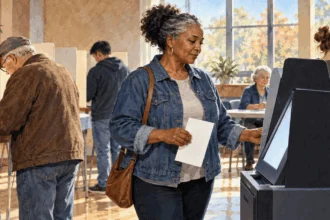
When you walk into a polling place on Election Day, you expect to receive a ballot, vote, and leave knowing your voice was heard.
But sometimes the process isn’t quite that straightforward. You might encounter terms like “regular ballot” or “provisional ballot” that can cause confusion and concern.
Understanding the difference between these ballot types is essential for every American voter. Regular ballots represent the standard voting experience for most people, while provisional ballots serve as a crucial safety net when questions arise about a voter’s eligibility. Both play important roles in ensuring elections are both secure and accessible.
This guide explains what each ballot type means, when you might encounter them, and what happens after you vote.
Regular Ballots: The Standard Voting Experience
The vast majority of votes cast in U.S. elections use regular ballots. These represent the normal, straightforward path from registration to counted vote.
What Makes a Ballot “Regular”
A regular ballot is the official ballot given to voters whose eligibility is clearly established at the polling place or through mail-in voting. It contains all federal, state, and local contests for which the voter is entitled to vote based on their registered address.
Unlike provisional ballots, regular ballots are typically processed and counted without additional verification steps after being cast, assuming they’re filled out correctly and submitted according to procedures. The “regular” designation simply means the voter has met all standard requirements without immediate questions about their eligibility.
Who Gets Regular Ballots
To receive a regular ballot, voters must meet several key criteria, though specifics vary by state. The foundational requirements across the U.S. include:
U.S. citizenship is required for federal and state elections. Some local elections may have exceptions for non-citizens, but this is uncommon.
Residency requirements must be met according to state law. This usually means living in the election district for a certain period before the election.
Age requirements mandate voters be at least 18 by Election Day. Many states allow 17-year-olds to register if they’ll turn 18 by Election Day, and some permit voting in primary elections.
Voter registration is required in almost all states (North Dakota being the primary exception). Registration details, including name and address, must be current and match official voter rolls at the polling place.
Individuals typically ineligible to vote include non-citizens, some people with felony convictions (rules vary significantly by state), and in some cases, individuals deemed mentally incapacitated by courts.
Voters can check their eligibility and registration status through their local election office or state election websites.
How Regular Ballots Work
The process for casting and counting regular ballots is designed to be straightforward and secure, though procedures vary by location and voting method.
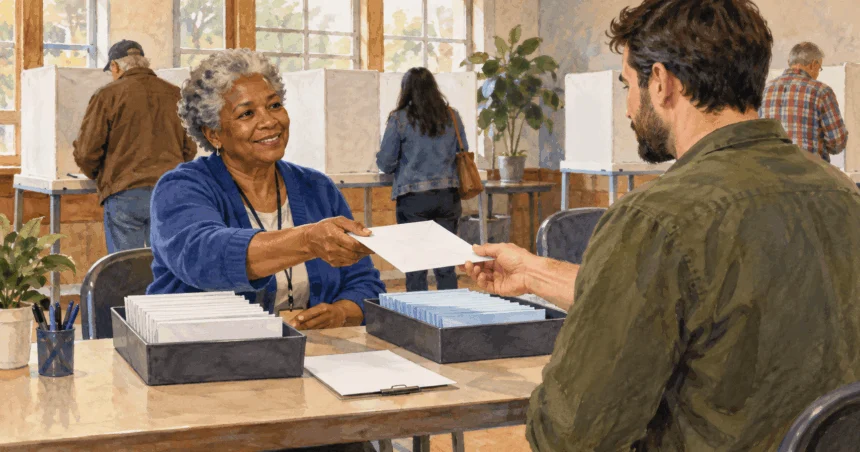
In-person voting begins when you arrive at your designated polling place. An election official checks your name against the official registered voter list. Some states require acceptable identification. Once registration is confirmed, you receive a regular ballot.
You mark choices in a private voting booth, then submit your ballot through an optical scanner, ballot marking device, or direct recording electronic machine, depending on your area’s voting system.
Mail-in voting involves receiving your ballot by mail, marking choices at home, placing the ballot in provided secrecy and return envelopes, and signing the return envelope for verification purposes. You can return the ballot by mail or through secure drop boxes where available.
Counting regular ballots happens after polls close on Election Day or as mail-in ballots are received according to state law.
Most paper ballots are counted through optical scanners that tabulate votes. These machines undergo accuracy testing before and after elections. Electronic votes are recorded and aggregated digitally.
Election officials then conduct canvassing, reconciling vote totals, reviewing records, and ensuring ballot numbers match voter numbers. Many states also conduct post-election audits, which may involve hand-counting ballot samples to verify machine counts.
Once all regular ballots are counted and discrepancies resolved, election results are certified by officials. This process can take days or weeks, especially with high mail-in ballot volumes.
Security measures throughout include chain of custody protocols, bipartisan oversight, and secure storage. The U.S. Election Assistance Commission provides voluntary voting system guidelines that many states use to ensure security and integrity.
Provisional Ballots: The Safety Net
Sometimes voters arrive at polls with questions about their eligibility that can’t be immediately resolved. Rather than turning these voters away, federal law provides a crucial safeguard: the provisional ballot.
What Provisional Ballots Are
A provisional ballot—called an “affidavit” or “challenge” ballot in some states—is cast when a voter’s eligibility is uncertain on Election Day. It allows the voter to record their vote, which is kept separate from regular ballots until officials can investigate and determine if the voter is eligible and the ballot should be counted.
The HAVA Connection
Widespread provisional ballot availability results directly from the Help America Vote Act of 2002 (HAVA). Passed by Congress in response to issues during the 2000 presidential election, HAVA aimed to improve election administration nationwide.
One key HAVA mandate required states to offer provisional ballots in federal elections, ensuring no eligible voter is disenfranchised due to administrative errors or registration list inaccuracies. Before HAVA, only 17 states and the District of Columbia offered provisional voting in 2000. HAVA standardized this protection nationwide, with only a few states exempt under specific conditions.
When You Might Need a Provisional Ballot
Election officials must offer provisional ballots when uncertainty exists about voter eligibility that can’t be resolved at the polling place. Common reasons include:
Name not on voter rolls represents the most frequent cause. The voter’s name doesn’t appear on the official registered voter list for that precinct, or eligibility can’t be immediately established.
Incorrect precinct occurs when voters are at polling places not designated for their registered address, especially if they’re in different counties or precincts where they’re not eligible for all local races.
ID issues arise when voters lack specific identification required by their state’s voter ID laws.
Registration problems include questions about registration status, such as outdated addresses when voters moved within counties without updating registration, or party affiliation discrepancies in primary elections.
Absentee ballot complications happen when voters requested mail-in ballots but claim they didn’t receive them, didn’t cast them, or don’t have them to surrender at polling places.
Voter challenges can come from poll workers, election officials, or in some states, other voters questioning an individual’s eligibility.
Same-day registration in states offering this option might require provisional ballots if voters can’t immediately provide all required registration documentation.
Court-ordered extended hours typically require provisional ballots for votes cast during extended polling hours.
Being offered a provisional ballot doesn’t automatically mean your vote won’t count—it means your eligibility needs further review.
Casting a Provisional Ballot
The provisional ballot process maintains vote secrecy while allowing later verification. While specifics vary by state, it generally involves:
Affirmation requires voters to complete and sign a provisional ballot application or envelope, including a sworn statement that they believe they’re registered and eligible to vote in that election and jurisdiction.
Receiving the ballot means getting the same ballot as regular voters for that precinct, or one containing all federal races and statewide or district-wide races for which they might be eligible.
Marking the ballot happens privately, just like with regular ballots.
Sealing the ballot involves placing the voted ballot into a special provisional ballot envelope, often with voter information and affirmation on the outside while keeping the ballot itself secret.
Submitting the ballot means giving the sealed provisional ballot envelope to an election official for separate storage from regular ballots.
Poll workers receive training to handle this process and should provide clear instructions to voters.
After You Vote: What Happens to Provisional Ballots
Once polls close, election officials begin meticulously reviewing each provisional ballot to determine voter eligibility. This critical step ensures election integrity while protecting legitimate votes.
Eligibility verification involves election officials—often bipartisan boards or local election staff—researching each provisional voter’s information. This includes checking state voter registration databases, Department of Motor Vehicles records, Social Security Administration data where permitted, and other official sources to confirm registration and eligibility for that election and precinct. Officials also verify voters haven’t already cast ballots by mail or at other locations.
Ballot curing allows voters in some states to provide missing information or required identification after Election Day. If provisional ballots lack required information like signatures, or if voters needed to provide ID post-election, some states offer short periods for voters to supply missing elements so ballots can be counted. Availability and rules for ballot curing differ significantly among states.
Counting eligible ballots happens when investigations confirm voter eligibility and that they haven’t already voted. Provisional ballots are removed from envelopes and counted. If voters were in wrong precincts but correct counties, some states count votes for contests where voters were eligible—federal and statewide races, but not local precinct-specific contests.
Rejecting ineligible ballots occurs when voters are found ineligible—not registered in the state, already voted, or registered in different counties. The most common historical rejection reason has been non-registration in the state. Other common reasons include wrong precincts or jurisdictions, or issues with required identification or signatures.
This verification process takes time, which is why provisional ballots are typically counted after Election Day, often contributing to delays in finalizing official election results. State laws dictate specific timelines for reviewing and counting provisional ballots.
Key Differences at a Glance
| Feature | Regular Ballot | Provisional Ballot |
|---|---|---|
| Voter Status | Eligibility confirmed at voting time | Eligibility uncertain, requires later verification |
| Issuance | Standard ballot for confirmed registered voters | Issued when questions arise about registration, ID, precinct, etc. |
| Casting Process | Direct tabulation by scanner/machine after marking | Involves completing affirmation/envelope; ballot kept separate |
| Counting Timeline | Counted on Election Day or as processed | Counted after Election Day, once eligibility verified |
| Certainty of Count | High certainty if properly cast | Depends on successful post-election eligibility verification |
| Legal Basis | General election laws | Primarily mandated by HAVA for federal elections |
| Follow-up Required | Generally none after casting | Voter may need to provide additional information and can check if counted |
Your Rights When Offered a Provisional Ballot
Being offered a provisional ballot can be unexpected, but understanding your rights and knowing what steps to take can reduce confusion and help ensure your vote has the best chance of being counted.
Know Your Voting Rights
Under HAVA and various state laws, you have specific provisional voting rights:
Right to be offered a provisional ballot applies when your name isn’t on voter lists, or other eligibility questions arise in federal elections that can’t be resolved immediately. You must be offered this option rather than being turned away.
Right to affirm eligibility means you’ll be asked to sign an affirmation or affidavit stating you believe you’re registered and eligible to vote.
Right to information requires election officials to provide information about the provisional voting process, including why you’re voting provisionally and what you might need to do afterward.
Right to find out if your ballot was counted is guaranteed by HAVA, which requires states to establish free access systems—toll-free numbers or websites—allowing you to determine whether your provisional ballot was counted and, if not, why.
If you believe your rights were violated, report issues to local election officials or non-partisan voter protection hotlines like 1-866-OUR-VOTE.
Questions to Ask Poll Workers
If offered a provisional ballot, get as much clarity as possible from poll workers. Consider asking:
“Why am I being asked to vote a provisional ballot?” Understanding the specific reason—name not on rolls, ID issue, wrong precinct—is crucial for knowing potential next steps.
“Can you double-check my registration information or see if I’m at the correct polling place?” Sometimes issues can be resolved by confirming spelling or checking supplemental lists or databases.
“Is there anything I need to do after casting this ballot to ensure it’s counted?” For example, ID issues might require presenting identification to election offices by certain deadlines as part of “ballot curing” processes in some states.
“How can I find out if my provisional ballot was counted?” Ask for specific information about your state’s free access system—website addresses or phone numbers for checking ballot status.
“Can I have written instructions about this process?” Some polling places provide informational handouts for provisional voters.
Being polite but persistent in getting this information empowers you in the voting process and turns potential uncertainty into informed action.
Following Up: Checking Your Ballot Status
HAVA mandates that states provide ways to check provisional ballot status—a critical transparency measure.
Obtain information at polls by getting tracking details from poll workers when casting provisional ballots. This might be paper slips with website addresses, phone numbers, or unique ballot tracking numbers.
Use state and local resources through online portals or toll-free numbers most states provide. California, for example, provides voterstatus.sos.ca.gov for ballot status checks. Find your state’s election website and local office contact information through the U.S. Election Assistance Commission.
Be patient but persistent since researching eligibility and counting provisional ballots takes time. Status may not be available immediately after Election Day. Check poll worker information for expected timelines. North Carolina, for instance, doesn’t make status available until 10 days after elections.
Knowing whether your vote was counted—and why if it wasn’t—is fundamental to transparent election processes.
Dispelling Common Myths
Several misconceptions circulate about provisional ballots. It’s important to rely on factual information:
Myth: Provisional ballots are only counted if elections are close.
Reality: This is false. Validly cast provisional ballots are reviewed by election officials, and those determined eligible are counted in every election, regardless of victory margins. Verification and counting are standard parts of election administration.
Myth: Provisional ballots allow ineligible people to vote.
Reality: This is incorrect. Provisional ballots safeguard potentially eligible voters from disenfranchisement due to administrative errors. The entire purpose of post-election verification is determining eligibility before counting ballots. Only confirmed eligible voter ballots are added to official tallies.
Myth: If you cast a provisional ballot, your vote probably won’t count.
Reality: While not all provisional ballots are ultimately counted—primarily when voters are found ineligible, often due to non-registration in the state—significant percentages are verified and included in final results. The key factor is whether election officials can confirm your eligibility.
Understanding these realities builds confidence in provisional voting system integrity.
The Numbers: How Provisional Ballots Are Used
Data from the U.S. Election Assistance Commission’s Election Administration and Voting Survey provides valuable insights into provisional ballot usage in federal elections. This survey represents the most comprehensive U.S. election data source, covering all 50 states, the District of Columbia, and five territories.
According to EAC analysis of data from 2006 to 2016:
Frequency of use varies by election type. Provisional ballots accounted for approximately 1.8% of all ballots cast during presidential election years, compared to about 1.1% during midterm elections. This difference suggests that presidential elections’ higher turnout and influx of new or infrequent voters may lead to more eligibility questions at polls.
Numbers issued and counted totaled more than 10 million provisional ballots issued from 2006 to 2016, with more than 7.3 million counted in full or in part.
Count rates differ between election types. Nearly 79% of provisional ballots were counted during midterm years (2006-2014), while approximately 69% were counted during presidential years (2008-2016).
Rejection reasons most commonly involved voters not being registered in the state, accounting for about 44% of approximately 2.4 million rejected provisional ballots from 2006 to 2016. Other significant reasons included ballots cast in wrong jurisdictions (10.6%) or wrong precincts (7.7%).
State-level variations significantly influence provisional ballot usage and acceptance rates. California alone accounted for over 1.3 million provisional ballots in 2016, largely due to state laws permitting provisional voting for voters who moved within counties without re-registering.
Policy changes can dramatically reduce provisional ballot use. Colorado saw significant decreases after implementing all-mail voting options and same-day registration at voter service centers, helping resolve eligibility issues immediately.
These state-specific dynamics underscore U.S. election administration’s decentralized nature, meaning voter experiences with provisional ballots can differ considerably by location.
More recent EAVS reports, including 2022 election data, continue providing election administration trends, including provisional voting aspects. For current information specific to your area, contact your local or state election office.
Making Informed Voting Decisions
Understanding the difference between regular and provisional ballots empowers you to navigate the voting process with confidence. Regular ballots represent the standard experience for most voters whose eligibility is clear and confirmed. Provisional ballots serve as crucial safety nets, ensuring that administrative errors or registration issues don’t prevent eligible citizens from voting.
Both ballot types play essential roles in maintaining election security while preserving voting accessibility. Regular ballots provide the efficient, straightforward voting experience most people expect. Provisional ballots ensure that questions about eligibility don’t result in disenfranchisement, while verification processes maintain election integrity.
The key is preparation. Check your registration status, confirm your polling place, understand your state’s ID requirements, and know your rights. If you encounter issues on Election Day, remember that provisional ballots exist to protect your fundamental right to vote.
Whether you cast a regular or provisional ballot, your participation in democracy matters. The systems and safeguards exist to ensure every eligible voter’s voice can be heard, even when complications arise. Understanding these processes helps you vote with confidence and advocate for accessible, secure elections in your community.
For the most current information about voting in your area, including registration requirements, polling locations, and ID laws, visit your state election office website or contact the U.S. Election Assistance Commission.