- jgrj.law.uiowa.edu2 links
- extension.usu.edu2 links
Last updated 10 months ago. Our resources are updated regularly but please keep in mind that links, programs, policies, and contact information do change.
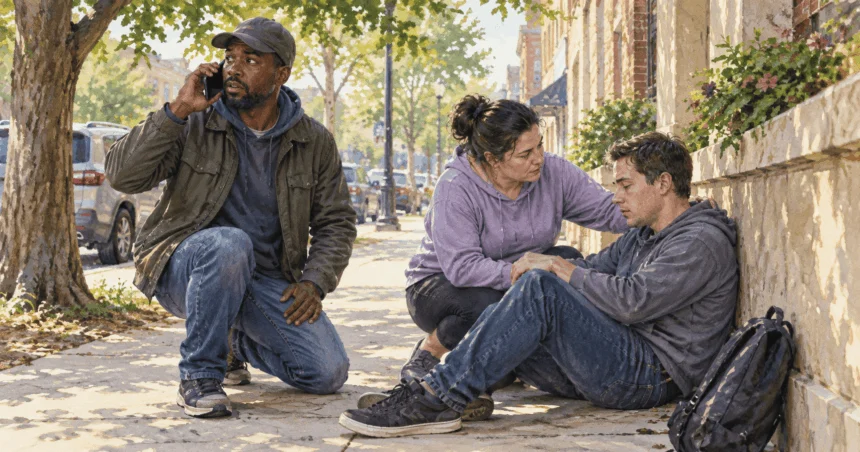
In a drug overdose emergency, one phone call can mean the difference between life and death. But for decades, fear of arrest stopped people from making crucial 911 calls.
Today, 49 states have passed Good Samaritan overdose laws designed to remove this barrier by protecting people who seek emergency medical help.
- The Overdose Crisis That Sparked Legal Change
- Fear of Police: The Biggest Barrier to Getting Help
- Harm Reduction: A New Approach to Drug Policy
- What Good Samaritan Overdose Laws Actually Do
- Who Gets Protected and From What
- Critical Limitations and Exclusions
- State-by-State Breakdown: A Patchwork of Protection
- Do These Laws Actually Save Lives?
- The Naloxone Partnership
- Real-World Barriers to Effectiveness
These laws represent a major shift in how America responds to its overdose crisis. Instead of prioritizing punishment, they prioritize saving lives.
That said, the protection they offer varies dramatically from state to state. And significant gaps remain.
The Overdose Crisis That Sparked Legal Change
The scale of America’s overdose epidemic makes Good Samaritan laws a public health necessity. In 2021 alone, an estimated 107,622 people died from drug overdoses, marking a nearly 15% increase from 2020. The crisis officially became a public health emergency in 2017.
What began in the 1990s with over-prescribed pain medications has evolved into something far deadlier. Fentanyl now dominates the illicit drug supply, and this synthetic opioid is 50 to 100 times more potent than morphine. Many people don’t even know they’re consuming it, leading to accidental overdose deaths across all demographics.
The tragedy is that many of these deaths are preventable. Research shows that in nearly 40% of fatal overdoses, another person was present. This creates a critical window for intervention if bystanders feel safe enough to act.
Fear of Police: The Biggest Barrier to Getting Help
The primary reason people hesitate to call 911 during an overdose is fear of police involvement and arrest. This fear stems from decades of punitive drug policies that prioritized criminalization over public health.
The “War on Drugs” led to millions of arrests, predominantly for low-level possession. This created deep distrust of law enforcement, particularly among people who use drugs and communities of color.
When faced with a medical emergency, bystanders were forced to weigh a person’s life against their own risk of arrest and prison time. This conflict created by the legal system itself led to fatal delays or complete failure to seek help.
Good Samaritan laws acknowledge that punitive policies created this lethal side effect. They represent a reactive attempt to fix harm caused by prior policies.
Harm Reduction: A New Approach to Drug Policy
Good Samaritan laws are part of a public health philosophy called “harm reduction.” This approach aims to reduce negative health, social, and economic consequences of drug use rather than eliminating drug use entirely.
Harm reduction accepts that some level of drug use will exist in society. The goal is keeping people alive and safe rather than condemning them. During an overdose, the immediate priority is saving the person’s life, not punishing the drug use that led to the crisis.
This philosophy also supports expanding access to naloxone and needle exchange programs to prevent infectious disease transmission.
What Good Samaritan Overdose Laws Actually Do
A Good Samaritan overdose law provides limited legal immunity to people who seek emergency medical help during a suspected drug or alcohol overdose. The protection encourages bystanders to call 911 without fearing arrest for certain drug-related offenses discovered as a result.
The “Good Faith” Requirement
These laws require callers to act in “good faith.” This generally means having a reasonable belief that someone is experiencing a medical emergency and that saving their life is the primary motivation for calling authorities.
The good faith clause prevents people from using the law to shield themselves during unrelated police encounters. Many laws exclude protection if the call occurs during execution of an arrest or search warrant.
Legislative History and Spread
New Mexico became the first state to enact a Good Samaritan overdose law in 2007. As the opioid crisis intensified in the 2010s, similar legislation spread rapidly across the country.
As of 2024, 49 states and Washington D.C. have some form of Good Samaritan overdose law. Wyoming remains the only state without such protection.
This state-by-state approach creates an inconsistent patchwork of protections. The legal risk someone faces when calling 911 depends entirely on their location. A person could cross state lines and unknowingly move from strong protection to weak protection.
Different from General Good Samaritan Laws
Overdose-specific Good Samaritan laws differ from traditional Good Samaritan laws. General Good Samaritan laws protect people from civil liability – being sued for damages – when they voluntarily provide emergency aid like CPR.
Overdose Good Samaritan laws protect from criminal liability for specific drug-related offenses.
Who Gets Protected and From What
The strength and scope of immunity varies dramatically between states. Understanding these details is crucial for knowing how much protection a law actually provides.
Who Is Covered
The Caller: Virtually every Good Samaritan overdose law protects the person who calls for help. This is the most basic component.
The Victim: Most states also protect the person experiencing the overdose. This prevents someone from being arrested in their hospital bed after being saved. However, some states like Alabama only protect the caller, creating a flawed system where the victim remains legally vulnerable.
Other Bystanders: The most comprehensive laws extend immunity to anyone helping at the scene, not just the caller. Some states limit the number of protected people – North Dakota caps it at three people, while Colorado and Nebraska only protect the first caller.
What Charges Are Covered
Possession of Controlled Substances: All 49 laws provide some immunity for possessing illegal drugs for personal use. The protected amount often falls under specific thresholds – New York’s law covers possession under eight ounces.
Possession of Drug Paraphernalia: Most laws grant immunity for possessing drug paraphernalia, including syringes, pipes, and testing strips.
Expanded Protections: The strongest laws go further. A critical expansion is protection from probation or parole violations. Many people with substance use disorders have criminal justice involvement, and the threat of returning to prison is a powerful deterrent to calling 911.
Other expanded protections include immunity for restraining order violations or underage drinking if alcohol is involved in the overdose.
Types of Legal Protection
The type of protection offered represents the most critical aspect of these laws.
Immunity from Prosecution or Charge: The majority of Good Samaritan laws offer this level. People can still be arrested and taken to jail, but prosecutors cannot file formal charges for covered offenses.
Immunity from Arrest: A smaller number of states provide stronger laws preventing arrest itself. Police cannot take people into custody for protected offenses.
This distinction is crucial because the primary goal is eliminating fear of arrest. For someone at an overdose scene, the immediate trauma of being arrested is the main deterrent. Job loss, housing problems, or child protective services intervention can begin the moment handcuffs are applied, regardless of whether charges are later dropped.
Laws that only protect from prosecution fail to address the most acute fear motivating hesitation. Research confirms this isn’t just theoretical – laws providing immunity from arrest are more effective at reducing overdose deaths.
Critical Limitations and Exclusions
Good Samaritan overdose laws don’t provide blanket immunity. They offer narrow, targeted protection with significant limitations.
Common Exclusions
Outstanding Warrants: If someone has a pre-existing arrest warrant for any crime, police can arrest them at the overdose scene. This creates a major barrier since people with substance use disorders are more likely to have criminal justice history.
Drug Manufacturing, Sales, or Trafficking: The laws protect personal drug possession but not serious offenses like manufacturing, distribution, or possession with intent to sell.
Other Crimes: Immunity is limited to specific drug offenses listed in the statute. It doesn’t protect against other crimes discovered at the scene, such as weapons possession, assault, or driving under the influence.
Probation and Parole Violations: This represents a critical inconsistency. While effective laws explicitly protect against supervision violations, many state laws offer no such protection. For someone on supervision, a 911 call could still mean returning to prison.
Conditional Requirements
Many states attach conditions that people must meet to qualify for protection. These requirements can reintroduce the uncertainty and fear the laws aim to eliminate.
Remaining at the Scene: Many laws require callers to stay with the victim until responders arrive.
Cooperating with Law Enforcement: Some statutes require cooperation with police and providing identification. The term “cooperate” is subjective and can be interpreted differently by someone in crisis versus an officer at the scene.
The “First-Caller” Rule: States like Colorado and Nebraska only protect the first person who reports the emergency, penalizing others who might also try to help.
Limited Use Clauses: Some states have particularly punitive limitations. Iowa’s law provides immunity only once to the caller and victim. Texas doesn’t apply to anyone with a prior felony record or who has called 911 for an overdose in the past 18 months.
These conditions create impossible dilemmas for people who have sought help before, forcing them to risk their freedom to save a life again.
State-by-State Breakdown: A Patchwork of Protection
The absence of federal Good Samaritan overdose legislation has created a complex patchwork of 49 different state laws. This inconsistency complicates public awareness campaigns and creates a landscape where compassionate action is legally protected in one state but criminal across the border.
The following table compares key provisions across states. The difference between immunity from arrest and only immunity from prosecution can determine whether a bystander makes a life-saving call.
Disclaimer: This information is for general purposes and is not legal advice. Laws change and interpretations vary. Consult current law text and legal resources for detailed information.
| State | Law Citation | Protects Caller? | Protects Victim? | Immunity from ARREST? | Immunity from Parole/Probation? | Key Limitations |
|---|---|---|---|---|---|---|
| Alabama | Ala. Code § 20-2-281 | Yes | No | No | No | Must be first to seek help, use own name, remain on scene |
| Alaska | Alaska Stat. § 12.55.158 | Yes | No | Yes | No | Must remain on scene, identify self |
| Arizona | Ariz. Rev. Stat. § 13-3423 | Yes | Yes | No | No | Must act in good faith |
| Arkansas | Ark. Code Ann. § 5-64-1101 | Yes | Yes | Yes | Yes | Must act in good faith |
| California | Cal. Health & Safety Code § 11376.5 | Yes | Yes | Yes | No | Personal use only, must not obstruct personnel |
| Colorado | C.R.S. § 18-1-711 | Yes | Yes | Yes | No | Must report in good faith, remain on scene, identify self, cooperate |
| Connecticut | Conn. Gen. Stat. § 21a-279(k) | Yes | Yes | Yes | No | Must reasonably believe person needs help |
| Delaware | Del. Code Ann. tit. 16, § 4769 | Yes | Yes | Yes | Yes | Must provide medical info and name, remain on scene |
| D.C. | D.C. Code § 48-921.01 | Yes | Yes | Yes | Yes | Must act in good faith |
| Florida | Fla. Stat. § 893.21 | Yes | Yes | Yes | Yes | Must act in good faith, doesn’t cover trafficking amounts |
| Georgia | Ga. Code Ann. § 16-13-5 | Yes | Yes | Yes | Yes | Evidence must result from seeking help |
| Hawaii | Haw. Rev. Stat. § 329-43.6 | Yes | Yes | Yes | Yes | Must act in good faith, remain on scene, protects from civil forfeiture |
| Idaho | Idaho Code § 37-2739C | Yes | Yes | No | No | Must act in good faith |
| Illinois | 720 Ill. Comp. Stat. 570/414 | Yes | Yes | No | No | Limited to specific drug quantities |
| Indiana | Ind. Code § 16-42-28 | Yes | No | No | No | Must remain on scene, cooperate, identify self |
| Iowa | Iowa Code § 124.418 | Yes | Yes | No | Yes | Can only be used ONCE |
| Kansas | Kan. Stat. Ann. § 21-5718 | Yes | Yes | No | No | Effective July 2024, provides affirmative defense |
| Kentucky | Ky. Rev. Stat. Ann. § 218A.133 | Yes | Yes | Yes | No | Protects against drug-induced homicide charges |
| Louisiana | La. Rev. Stat. Ann. § 40:989.1 | Yes | Yes | Partial | Yes | Caller protected from charge/prosecution, not arrest |
| Maine | Me. Stat. tit. 22, § 2353-B | Yes | Yes | Yes | Yes | Very broad; protects from arrest for all but serious violent crimes |
| Maryland | Md. Code Ann., Crim. Law § 5-601.1 | Yes | Yes | Yes | Yes | Must act in good faith and assist responders |
| Massachusetts | Mass. Gen. Laws ch. 94C, § 34A | Yes | Yes | No | Yes | Must seek help in good faith |
| Michigan | Mich. Comp. Laws § 333.7403 | Yes | Yes | Yes | No | Must act in good faith |
| Minnesota | Minn. Stat. § 604A.05 | Yes | Yes | Yes | Yes | Must be first to seek help |
| Mississippi | Miss. Code. Ann. § 41-29-149.1 | Yes | Yes | Yes | Yes | Must act in good faith |
| Missouri | Mo. Rev. Stat. § 195.205 | Yes | Yes | Yes | Yes | Must act in good faith |
| Montana | Mont. Code Ann. § 50-32-609 | Yes | Yes | Yes | Yes | Seeking help is a mitigating factor |
| Nebraska | Neb. Rev. Stat. § 28-472 | Yes | Yes | Yes | No | Only protects first person to seek help |
| Nevada | Nev. Rev. Stat. § 453C.200 | Yes | Yes | Yes | Yes | Also protects from civil forfeiture |
| New Hampshire | N.H. Rev. Stat. Ann. § 318-B:28-b | Yes | Yes | No | No | Must report in good faith |
| New Jersey | N.J. Stat. Ann. § 2C:35-30 | Yes | Yes | Yes | Yes | Must seek help in good faith |
| New Mexico | N.M. Stat. Ann. § 30-31-27.1 | Yes | Yes | Yes | Yes | First state to enact GSL (2007) |
| New York | N.Y. Penal Law § 220.78 | Yes | Yes | No | No | Doesn’t protect A1 felony possession (8oz+) or parole violations |
| North Carolina | N.C. Gen. Stat. § 90-96.2 | Yes | Yes | Yes | Yes | Must be first to call, provide name, not subject to warrant |
| North Dakota | N.D. Cent. Code § 19-03.1-23.4 | Yes | Yes | Yes | No | Limited to 3 people per event, can only be used once |
| Ohio | Ohio Rev. Code Ann. § 2925.61 | Yes | Yes | No | No | Requires treatment screening within 30 days, limited to two uses |
| Oklahoma | Okla. Stat. tit. 63, § 2-413.2 | Yes | No | No | No | Must remain on scene and cooperate |
| Oregon | Or. Rev. Stat. § 475.898 | Yes | Yes | Yes | Yes | Also protects from warrants related to covered offenses |
| Pennsylvania | 35 Pa. Stat. Ann. § 780-113.7 | Yes | Yes | Yes | Yes | Must remain with victim and cooperate |
| Rhode Island | R.I. Gen. Laws § 21-28.9-4 | Yes | Yes | Yes | Yes | Must act in good faith |
| South Carolina | S.C. Code Ann. § 44-53-1910 | Yes | Yes | No | No | Can only be used once, must be first to seek help |
| South Dakota | S.D. Codified Laws § 34-20G-1 | Yes | Yes | Yes | No | Can only be used twice in lifetime |
| Tennessee | Tenn. Code Ann. § 63-1-156 | Yes | Yes | Yes | Yes | Can only be used once |
| Texas | Tex. Health & Safety Code Ann. § 481.1151 | Yes | Yes | No | No | Ineffective law; doesn’t apply with felony record or previous calls |
| Utah | Utah Code Ann. § 58-37-8(10) | Yes | Yes | No | No | Provides affirmative defense |
| Vermont | Vt. Stat. Ann. tit. 18, § 4254 | Yes | Yes | Yes | Yes | Protects against drug-induced homicide charges |
| Virginia | Va. Code Ann. § 18.2-251.03 | Yes | Yes | Yes | No | Must remain on scene and identify self |
| Washington | Wash. Rev. Code § 69.50.315 | Yes | Yes | Yes | No | Doesn’t protect from parole violations or outstanding warrants |
| West Virginia | W. Va. Code § 16-47-4 | Yes | Yes | Yes | Yes | Requires meeting specific treatment requirements |
| Wisconsin | Wis. Stat. § 961.443 | Yes | No | No | No | Must remain on scene and cooperate, victim protection ended 2020 |
| Wyoming | N/A | No | No | No | No | Only state without a Good Samaritan overdose law |
Do These Laws Actually Save Lives?
With nearly every state having adopted some form of Good Samaritan overdose law, the critical question is whether they work. Evaluating a single policy’s impact on a complex public health crisis is challenging, but research provides valuable insights.
Overall Evidence Points to Success
A comprehensive 2021 Government Accountability Office report reviewed 17 studies and concluded the findings “collectively suggest a pattern of lower rates of opioid-related overdose deaths among states that have enacted Good Samaritan laws.”
Multiple analyses have associated Good Samaritan law passage with up to a 15% reduction in overdose deaths. This represents thousands of lives saved.
Stronger Laws Work Better
The most important finding from recent research is that law design matters immensely. The effectiveness follows a dose-response relationship – the more comprehensive the legal protection, the greater the life-saving effect.
A landmark 2022 study in the International Journal of Drug Policy analyzed county-level overdose data nationwide. Good Samaritan laws protecting from arrest were associated with a 7% reduction in all overdose deaths and a 10% reduction in opioid-specific deaths.
Laws that only offered weaker protection from charge or prosecution showed no statistically significant reduction in overdose mortality. This confirms that to be effective, laws must address bystanders’ most immediate fear: being arrested.
Mixed Findings Reflect Implementation Challenges
Some earlier studies didn’t find statistically significant effects. The impact can be difficult to separate from other harm reduction efforts implemented simultaneously, such as expanding naloxone access.
However, the research trend points toward positive effects, especially for well-designed laws.
Behavioral Change: More 911 Calls
Even where the direct mortality link is complex, there’s strong evidence these laws succeed in their primary behavioral goal: encouraging 911 calls.
A New York study found that people with accurate law knowledge were three times more likely to call 911 compared to those with incorrect knowledge. This demonstrates that when the law’s promise reaches its intended audience, it effectively changes behavior in life-or-death moments.
The Naloxone Partnership
Good Samaritan overdose laws don’t operate alone. Their effectiveness is enhanced when paired with Naloxone Access Laws (NALs). Together, these policies represent a shift from professional-only to community-based overdose response.
What is Naloxone?
Naloxone (often called Narcan) is a safe, life-saving medication that rapidly reverses opioid overdose effects. It works by binding to opioid receptors in the brain, knocking opioids off and reversing life-threatening respiratory depression.
Naloxone is not a controlled substance, has no abuse potential, and has no effect on people without opioids in their system. This makes it incredibly safe for anyone to use.
How Naloxone Access Laws Work
All 50 states and D.C. have passed Naloxone Access Laws to get this medication to people most likely to witness overdoses. These laws typically:
Expand Dispensing: Allow pharmacists to dispense naloxone without patient-specific prescriptions, often through “standing orders” that act as community-wide prescriptions.
Allow Community Distribution: Permit organizations like harm reduction centers and health departments to obtain and distribute naloxone directly to people who use drugs, their friends, and families.
Provide Liability Protection: Grant civil and criminal liability protection to healthcare professionals who prescribe naloxone and to laypeople who administer it in good faith.
The Synergistic Effect
NALs put life-saving tools in bystanders’ hands, empowering them as immediate first responders. Good Samaritan laws then provide legal permission to activate official emergency response without fear.
This second step is vital because naloxone’s effects are temporary, typically lasting 30 to 90 minutes. The opioids that caused the overdose remain in the body longer, meaning people can fall back into non-breathing states after naloxone wears off. Calling 911 for professional medical follow-up is always recommended, even after successful naloxone administration.
Research shows the strongest mortality reductions occur when Good Samaritan laws are enacted alongside Naloxone Access Laws. This partnership effectively decentralizes overdose response, acknowledging that the first responder is often a peer, not a paramedic.
Real-World Barriers to Effectiveness
Despite clear public health rationale and evidence of positive effects, Good Samaritan overdose laws face formidable real-world challenges that prevent their promise from being fully realized.
The Awareness Gap
The most fundamental barrier is lack of knowledge. If people don’t know Good Samaritan laws exist or misunderstand their protections, the laws can’t influence crisis decision-making.
Studies document alarmingly low awareness levels among target populations and law enforcement officers. A Seattle police survey conducted one year after Washington’s law passed found only 16% of officers had heard of it.
A Maryland study found most people who inject drugs were unaware of their state’s law specifics. This knowledge gap represents a critical implementation failure that renders even well-written laws ineffective.
The Trust Gap
Even when people know about the law, they may not trust police to honor it. This skepticism is a direct legacy of the “War on Drugs” and is often rooted in negative personal or community experiences with law enforcement.
Qualitative research captures this sentiment. One Vermont study participant explained: “For a lot of people, they’re just, it’s like poo-poo, yeah right, that’s set up, you know what I mean? People get jaded around this stuff. They don’t trust authority.”
This trust gap isn’t uniform. Due to long-documented racially discriminatory drug policies – from early anti-opium laws targeting Chinese immigrants to disparate crack versus powder cocaine sentencing that devastated Black communities – people of color may be justifiably more fearful of police interactions.
Implementation Failures
The final challenge is the gap between law and real-world application. Personal stories and news reports document instances where the law’s spirit or letter is violated, sending chilling messages to communities.
Loopholes and Weak Laws: Laws with punitive loopholes create tragic scenarios. The Iowa Harm Reduction Coalition shares the story of a woman whose husband has overdosed before. Because she’s already called 911 for him once, she now faces choosing between calling again and risking his arrest, or not calling and risking his death.
Arrests on Other Charges: One Illinois case provides a stark example. After calling 911 to save her friend’s life, a woman was arrested and charged with drug delivery, a crime not covered by Illinois’s Good Samaritan law, because she had allegedly helped her friend inject drugs. Such high-profile arrests negate public messaging that it’s safe to call for help.
Conflicting Laws: Drug-induced homicide laws in over 30 states create legal minefields. These laws allow prosecutors to charge people who supply drugs leading to fatal overdoses with manslaughter or murder. Someone calling 911 could theoretically be immune from possession charges under Good Samaritan law but simultaneously investigated for homicide.
A Good Samaritan law operates within a much larger, often hostile legal and social ecosystem. To be truly effective, it requires robust public education, dedicated law enforcement training to change institutional culture, repeal of conflicting punitive laws, and long-term commitment to building trust between communities and authorities.