- supreme.justia.com3 links
Last updated 11 months ago. Our resources are updated regularly but please keep in mind that links, programs, policies, and contact information do change.
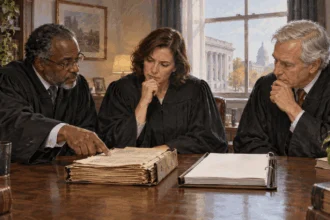
When Congress or your state legislature passes a law, you might think its meaning is straightforward. However, the words on the page don’t always provide a clear answer for every situation that arises. This is where “statutory interpretation” comes in—the crucial process courts undertake to determine what a law means and how it applies in real-world scenarios.
As Chief Justice John Marshall declared in the landmark case Marbury v. Madison (1803): “it is emphatically the province and duty of the judicial department to say what the law is.” This isn’t about judges creating new laws from scratch, but rather about faithfully interpreting the laws enacted by the legislative branch.
The need for interpretation arises for several reasons. Words themselves can be imperfect tools for communication; they can be ambiguous, and their meanings can even shift over time. For instance, the word “let,” which today means ‘allow,’ once commonly meant ‘prevent’ or ‘hinder’. Furthermore, lawmakers cannot foresee every possible future situation or technological advancement when they draft legislation. Consider how a law written before the widespread use of the internet might apply to online commerce or communication. Sometimes, ambiguities in a statute are the result of necessary compromises made during the complex legislative process.
This article explores two of the most fundamental and frequently debated approaches to statutory interpretation: the Plain Meaning Rule and the use of Legislative History. The Plain Meaning Rule essentially advises judges to “stick to the words on the page”; if the language of the law appears clear, that is what the law means. In contrast, the approach of using Legislative History prompts the question, “what were the lawmakers thinking?”
This method involves examining the documents, debates, and reports generated during the law-making process to understand the statute’s intended purpose or the meaning of specific terms.
The Plain Meaning Rule: “Just Read the Words!”
What is the Plain Meaning Rule?
At its core, the Plain Meaning Rule directs that statutes should be interpreted using the ordinary, common-sense meaning of the words and phrases used in the law’s text. It operates on the principle that a statute means what it explicitly says, word for word. If the language is deemed clear and unambiguous, courts are generally bound to apply that meaning, even if the outcome seems harsh or different from what some might have anticipated or desired.
A fundamental tenet of this rule is the “if it’s plain, that’s the end of it” principle. This means that if a statute’s meaning is considered “plain” from its text, then other sources of information, such as legislative history, are generally not consulted to alter or contradict that plain meaning. The statutory text itself is viewed as the most reliable evidence of Congress’s intent.
The rule distinguishes between ordinary and technical language. Generally, words are given their common, everyday meanings. However, if a statute employs terms that have a specific technical meaning within a particular field (like science, finance, or law itself), those terms are typically interpreted according to that specialized understanding. The “plain meaning” is generally understood as the meaning that competent speakers of the language, who are part of the statute’s intended audience and recognize it as a legal document, would assign to the words.
It’s also important to note the role of statutory definitions. If a law includes a specific section defining key terms used within that statute, those definitions are controlling. This is true even if the statute’s definition of a term varies from its ordinary dictionary meaning or common usage.
Why Use the Plain Meaning Rule? The Arguments For It
Several rationales support the use of the Plain Meaning Rule in statutory interpretation.
First, it is argued to promote predictability and consistency in the law. When laws are interpreted based on the common understanding of their words, citizens and legal professionals can, in theory, anticipate how a court will read a statute, leading to more stable legal expectations.
Second, proponents contend that the rule upholds legislative supremacy and the separation of powers. Judges are tasked with applying the law as Congress wrote it, not with rewriting it based on their own notions of what Congress might have intended or what would constitute better public policy. Adhering to the text is seen as respecting the legislature’s constitutional role.
Third, the rule is said to enhance the accessibility of law. Laws are intended to guide the conduct of the public, not just legal specialists. Interpreting statutes based on their plain language makes them more understandable to the ordinary citizens who are expected to abide by them.
Finally, focusing on the text can be more efficient and cost-effective than engaging in potentially lengthy and expensive research into legislative history.
A notable case illustrating the application of the Plain Meaning Rule is Caminetti v. United States (1917). This case involved the Mann Act, which criminalized the transportation of women across state lines for “prostitution, debauchery, or any other immoral purpose.” The defendants argued that the law was intended to apply only to commercialized vice. However, the Supreme Court, applying the Plain Meaning Rule, held that the phrase “any other immoral purpose” was broad enough on its face to include non-commercial, consensual sexual activity if that activity was deemed “immoral” by prevailing societal standards. The Court stated, “Where the language is plain and admits of no more than one meaning the duty of interpretation does not arise and the rules which are to aid doubtful meanings need no discussion.” The Court emphasized that if the statutory language is plain and does not lead to absurd results, it must be accepted as the sole evidence of legislative intent.
When “Plain” Isn’t So Plain: Criticisms and Challenges
Despite its appeal, the Plain Meaning Rule faces significant criticisms. A primary challenge is the illusion of “plainness” itself. Language is inherently flexible, and words can possess multiple meanings depending on their context. What appears “plain” to one judge may seem ambiguous or unclear to another. As scholars from the University of Chicago Law Review have pointed out, the rule’s structure is puzzling: “Information that is relevant shouldn’t normally become irrelevant just because the text is clear. And vice versa: irrelevant information shouldn’t become useful just because the text is less than clear.” This highlights the conditional nature of considering other interpretive aids based on an initial, potentially subjective, assessment of clarity.
Another significant concern is the risk of absurd or unintended results. A strict, literal interpretation of statutory language can sometimes lead to outcomes that are bizarre, impractical, or clearly contrary to what Congress likely intended. An often-cited example from English law, Whiteley v. Chappel, involved a statute making it an offense to impersonate “any person entitled to vote.” The court acquitted the defendant who had impersonated a deceased voter, reasoning that a dead person, literally speaking, is not “entitled to vote”.
To mitigate such outcomes, courts sometimes employ a “soft” plain meaning rule or invoke the “absurdity doctrine.” These allow for a departure from the literal meaning if a strict application would produce a “cruel or absurd” result. An early U.S. Supreme Court case, Rector, Holy Trinity Church v. United States (1892), noted that a law punishing “whoever drew blood in the streets” would not logically apply to a surgeon rendering aid to an injured person, illustrating that literalism has recognized limits.
Furthermore, an exclusive focus on the text might lead to ignoring important context that legislative history or an understanding of the statute’s broader purpose could provide, potentially resulting in a misapplication of the law. Critics also argue that the initial determination of whether a statute’s language is plain is itself an act of interpretation and can be subjective. This subjectivity can undermine the rule’s stated goals of enhancing predictability and constraining judicial discretion.
The case of Griffin v. Oceanic Contractors, Inc. (1982) provides an interesting example of the Plain Meaning Rule in action, even with potentially severe consequences. The case concerned a maritime law (46 U.S.C. § 596) that mandated a penalty of “two days’ pay for each and every day during which payment is delayed” for wages unpaid to a seaman “without sufficient cause.” Mr. Griffin was owed $412.50, but the delay in payment was substantial. A literal application of the statute meant the penalty could exceed $300,000. The Supreme Court, in an opinion by Justice Rehnquist, held that the “words chosen by Congress, given their plain meaning, leave no room for the exercise of discretion either in deciding whether to exact payment or in choosing the period of days by which the payment is to be calculated”. The Court found the statutory language to be mandatory. While acknowledging the harshness of the potential penalty, the Court determined that this was not a situation where a literal application would “thwart its obvious purpose,” which was to ensure prompt payment of wages and protect seamen from arbitrary employer actions. Interestingly, the Court noted that the legislative history, in this instance, actually confirmed that Congress intended the statute to have punitive sanctions to deter delays in payment. This case demonstrates that the plain meaning can be upheld even when it leads to severe consequences, particularly if the statute’s purpose is not undermined and legislative history does not offer a strong contradiction.
The initial judgment of whether a statute’s text is “plain” serves as a critical gatekeeper. If a court deems the language plain, the interpretive inquiry often concludes at that point, precluding consideration of other potentially relevant information, such as legislative history. This power to declare statutory language “plain” is substantial because it dictates the entire interpretive path that follows. However, “plainness” is not an objective, universally agreed-upon quality of language; judges can, and often do, disagree on whether a particular text is plain or ambiguous. This means the “gate” to considering extrinsic materials can open or close based on a judgment that may be influenced by a judge’s background, interpretive philosophy, or even unconscious biases. This reality challenges the notion that the Plain Meaning Rule is a purely objective or mechanical process, suggesting instead that significant judicial discretion is exercised even at this preliminary stage of interpretation.
Legislative History: “What Were They Thinking?”
What is Legislative History?
Legislative history refers to the collection of documents and records generated by a legislature, such as the U.S. Congress or a state legislature, during the intricate process of drafting, debating, amending, and ultimately enacting a law. It essentially forms the “paper trail” that chronicles a bill’s journey to becoming a statute.
The primary purpose of researching legislative history is to ascertain “legislative intent.” This involves trying to understand what the lawmakers were aiming to achieve with the legislation, what specific problems they intended to address, or how they understood particular terms or phrases, especially if the final language of the statute is unclear or ambiguous.
Several key types of documents constitute legislative history, each with varying degrees of perceived reliability in shedding light on legislative intent:
Committee Reports: These are formal reports issued by the congressional committees (e.g., the House Committee on Ways and Means or the Senate Committee on the Judiciary) that were tasked with studying, holding hearings on, amending, and ultimately recommending a bill for consideration by the full legislative body. These reports typically explain the bill’s purpose, its various provisions, the reasons for any amendments made by the committee, and why the committee believes the bill should be passed. Committee reports are often considered the most authoritative and reliable type of legislative history. This is because they usually reflect the collective understanding and considered judgment of the committee members who have most thoroughly examined the bill and its implications.
Congressional Debates: These are verbatim transcripts of discussions, speeches, and debates that take place on the floor of the House of Representatives or the Senate, as recorded in the Congressional Record. Debates can reveal arguments made for and against a bill, explanations of specific amendments, and the views of individual legislators on the bill’s meaning or purpose. However, floor statements are sometimes viewed as less reliable indicators of overall legislative intent because the remarks of a single legislator may not represent the consensus of the entire body, or statements might be strategically made for political purposes rather than to clarify the bill’s meaning.
Bill Versions and Amendments: Tracking the evolution of a bill as it moves through the legislative labyrinth—from its initial introduction, through committee markups, to floor amendments, and potentially to a conference committee to reconcile differences between House and Senate versions—can offer valuable clues about legislative intent. Changes made, language added or deleted, and proposed amendments that were rejected can all indicate compromises made and the evolving understanding or focus of the legislation.
Sponsor Statements: Remarks made by the primary sponsor(s) of a bill, particularly statements made when introducing the bill or explaining its core purpose, can be considered indicative of the bill’s intended goals.
Committee Hearings: These are formal proceedings where congressional committees gather testimony from experts, government officials, industry representatives, public advocates, and other interested parties on a proposed bill or a particular issue. Transcripts of these hearings can provide extensive background information and context on the problems the bill seeks to address. While rich in information, hearing testimony is generally considered less direct evidence of congressional intent regarding the specific wording or meaning of the final statute compared to committee reports.
Presidential Signing Statements: Occasionally, when a President signs a bill into law, the White House issues a signing statement. These statements might explain the President’s interpretation of the law, highlight certain provisions, or indicate how the executive branch intends to enforce it. The use and weight of presidential signing statements in judicial interpretation are subjects of ongoing debate and are generally considered less authoritative than congressional documents.
Researchers seeking legislative history can turn to several key resources. ProQuest Congressional is a comprehensive database for federal legislative history. Congress.gov, the official website for U.S. federal legislative information, provides access to bills, committee reports, and the Congressional Record. Govinfo.gov, from the U.S. Government Publishing Office, also offers access to official legislative documents. Additionally, HeinOnline’s U.S. Federal Legislative History Library compiles full-text legislative histories for significant legislation.
Why Look at Legislative History? The Arguments For It
The practice of consulting legislative history is supported by several arguments, primarily centered on its potential to illuminate the meaning and purpose of statutes.
One of the main reasons is for clarifying ambiguity. When the words of a statute are vague, unclear, or susceptible to multiple reasonable interpretations, legislative history can provide crucial context and evidence to help understand what Congress intended those words to mean.
Legislative history is also valuable for understanding legislative purpose. It can help reveal the broader goals Congress was trying to achieve with the law or identify the specific “mischief” or problem the statute was designed to remedy. This is particularly important for a “purposive” approach to statutory interpretation, which seeks to ensure the law is applied in a way that fulfills its underlying objectives.
In some instances, legislative history can help in avoiding absurd results. If a literal reading of the statute would lead to an outcome that seems nonsensical or clearly contrary to common sense, legislative history might demonstrate that such a result was not what Congress intended, thereby guiding the court to a more rational interpretation.
Finally, legislative history can sometimes be used to confirm the ordinary meaning of the statutory text. If the plain language of a statute points to a particular interpretation, legislative history might provide additional support by showing that this interpretation is consistent with Congress’s understanding and intent.
A classic case exemplifying the use of legislative history and statutory purpose to guide interpretation is Rector, Holy Trinity Church v. United States (1892). The case involved an Act of Congress from 1885 that made it unlawful for any person or company to prepay the transportation of aliens into the United States to perform “labor or service of any kind.” The Holy Trinity Church in New York had contracted with an English clergyman to come to the U.S. and serve as its rector and pastor. On its face, this agreement seemed to fall within the literal prohibition of the statute.
However, the Supreme Court, in an influential opinion by Justice David J. Brewer, looked beyond the literal words of the Act. The Court famously articulated the principle that “a thing may be within the letter of the statute and yet not within the statute, because not within its spirit, nor within the intention of its makers”. To discern this “spirit” and “intention,” the Court delved into the legislative history. It examined the title of the Act, which specifically referred to prohibiting contracts for “labor,” a term commonly understood at the time to mean manual labor rather than professional services like those of a minister. The Court also considered the “evil to be remedied” by the Act, concluding from historical context that Congress was concerned with the importation of large numbers of cheap, unskilled manual laborers, not with professionals like clergymen. Crucially, the Court reviewed congressional committee reports. The Senate Committee on Education and Labor’s report on the bill explicitly stated that the committee believed the bill, even without being amended to say “manual labor,” would be construed by the courts to apply only to manual labor and not to professional occupations. Based on this comprehensive review of legislative history and the broader purpose of the Act, the Supreme Court concluded that Congress did not intend to prohibit contracts like the one made by the church. This case stands as a landmark example of a court prioritizing legislative intent and statutory purpose, as gleaned from legislative history, over a strictly literal interpretation of the statutory text.
Digging Through the Past: Criticisms and Challenges
Despite its potential utility, the use of legislative history in statutory interpretation is fraught with criticisms and challenges.
The most fundamental objection is that legislative history is not “the law.” Under the U.S. Constitution, laws are made through a specific process: a bill must be passed by both the House of Representatives and the Senate (bicameralism) and then presented to the President for signature (presentment). Only the statutory text that successfully navigates this process is enacted into law. Ancillary materials like committee reports, floor statements, or hearing transcripts are not voted on by the full legislature and do not carry the force of law.
Another major concern revolves around the unreliability and potential for “manufactured” history. Legislative history can be voluminous, internally contradictory, and itself unclear. Different legislators might have expressed different intentions or understandings of a bill. More critically, there is a persistent worry that legislative history can be strategically “gamed” or manipulated. Legislators, their staff, or even lobbyists might insert specific statements into committee reports or floor debates with the express purpose of influencing future judicial interpretations, even if those statements do not reflect a broad consensus or the actual understanding of most lawmakers. The late Supreme Court Justice Antonin Scalia was a prominent and vocal critic of relying on legislative history, often citing these concerns about its unreliability and susceptibility to manipulation.
The “whose intent?” problem, sometimes referred to as the “Congress is a ‘they,’ not an ‘it'” problem, further complicates reliance on legislative history. Congress is a large, collective body composed of hundreds of individuals with diverse viewpoints and motivations. Attributing a single, unified “intent” to such a body is often a conceptual stretch, if not a fiction. If legislative history is consulted, whose statements should be given weight? Those of a committee chair, a single influential senator, the bill’s original sponsor, or the members who voted for it (who may have done so for varied reasons)?
There is also the risk of judicial cherry-picking. Faced with a vast and often conflicting record of legislative history, judges might be tempted to selectively highlight statements or documents that support their preferred outcome or pre-existing interpretation, rather than engaging in an objective and comprehensive search for genuine legislative understanding.
Finally, issues of accessibility and cost arise. Conducting thorough legislative history research can be a time-consuming and expensive endeavor, requiring access to specialized databases and considerable expertise. This can potentially disadvantage litigants with limited resources, creating an uneven playing field. This practical barrier contrasts with the theoretical accessibility of relying solely on the plain text of a statute.
The skepticism towards legislative history is a hallmark of textualist jurisprudence. Many textualist judges, deeply influenced by Justice Scalia, argue that resorting to legislative history is a flawed interpretive practice that grants judges undue discretion and undermines the democratic legitimacy of the lawmaking process by looking beyond the words actually enacted by Congress. For example, in the 2018 Supreme Court case Digital Realty Trust, Inc. v. Somers, Justices Thomas, Alito, and Gorsuch issued a separate concurring opinion specifically to critique the majority’s use of a congressional committee report in interpreting the statute. They explicitly stated that they joined the majority’s opinion only to the extent that it relied on the statute’s text, underscoring a profound reluctance among some influential jurists to give weight to such materials.
The use of legislative history implies that statutory interpretation is, at least in part, an effort to engage in a dialogue with the past intentions and purposes of the legislature. This contrasts sharply with the Plain Meaning Rule’s focus on the statutory text as a fixed and self-contained command. Consulting documents like committee reports and floor debates is akin to trying to understand the “mind” or “purpose” of the lawmakers at the time the statute was created. This suggests that the meaning of a law is not solely encapsulated in its literal words but is also informed by the context of its creation and the specific problems it was designed to address. However, this “conversation” with the past can be inherently messy and one-sided, as the original legislators are not present to clarify their statements or intentions. Critics argue that this makes legislative history an unreliable foundation for determining statutory meaning. The debate, therefore, touches upon whether a statute should be viewed as a static set of instructions or as a more dynamic instrument whose background and original purpose remain relevant to its application.
The Great Debate: Plain Meaning vs. Legislative History in Action
When Do These Approaches Clash? The Role of Ambiguity
The tension between relying on the plain meaning of a statute and consulting its legislative history often comes to a head when the apparent “plain meaning” of the statutory text seems to conflict with what the legislative history suggests Congress actually intended.
A critical concept in this debate is the “ambiguity gateway.” Many traditional judicial approaches, including the classic formulation of the Plain Meaning Rule, stipulate that legislative history and other extrinsic (outside-the-text) aids should only be consulted if the statutory text is first found to be ambiguous, unclear, or vague. If the text is deemed “plain” and its meaning clear on its face, the interpretive inquiry often stops there. In such cases, legislative history is considered off-limits, even if it strongly indicates a different meaning or purpose.
This “ambiguity threshold” is itself a significant point of contention. As discussed earlier, determining what constitutes “ambiguous” language can be a subjective exercise, heavily influenced by the individual judge’s perspective and interpretive leanings. The critique that “Information that is relevant shouldn’t normally become irrelevant just because the text is clear. And vice versa: irrelevant information shouldn’t become useful just because the text is less than clear,” directly challenges this conditional use of evidence.
Consider a hypothetical law stating: “No animals are permitted in the library.”
A Plain Meaning approach might find this clear: dogs, cats, birds, hamsters – all are animals and thus prohibited. However, what if the Legislative History (e.g., committee reports or floor debates) reveals that the law was passed specifically because of a recurring problem with loud, disruptive pets like barking dogs and roaming cats? What if these documents explicitly stated that the law was not intended to cover quiet, contained animals like fish in a bowl, or, more significantly, professionally trained service animals assisting individuals with disabilities? In such a scenario, a judge strictly adhering to the Plain Meaning Rule, having found the term “animals” plain and unambiguous, might conclude that even service animals and fish are prohibited. Conversely, a judge willing to consult legislative history (perhaps after finding some ambiguity or to avoid an “absurd” application to service animals) might interpret the law to allow these exceptions, aligning the application with the apparent legislative purpose.
Textualism and Purposivism: The Broader Philosophies
The Plain Meaning Rule and the use of legislative history are often manifestations of two broader, sometimes competing, judicial philosophies regarding statutory interpretation: textualism and purposivism.
Textualism is an interpretive theory that champions the Plain Meaning Rule. Textualists believe that judges should focus primarily, and for some, exclusively, on the ordinary meaning of the words that Congress enacted into law. For a textualist, the text is the law. They are generally deeply skeptical of using legislative history as an interpretive tool because it was not formally enacted as law through the constitutional processes of bicameralism and presentment, and because they view it as an often unreliable and potentially misleading guide to what the statute means.
Key Proponents/Figures: The late Supreme Court Justice Antonin Scalia was a leading and highly influential advocate for textualism. His jurisprudence significantly shifted American legal practice towards a greater emphasis on statutory text. Other current Supreme Court Justices often associated with textualist approaches include Justice Neil Gorsuch and Justice Brett Kavanaugh.
Purposivism, in contrast, is an interpretive theory holding that judges should interpret statutes in a way that best advances the law’s underlying purpose or the goals Congress was trying to achieve when it enacted the legislation. Purposivists are generally more willing than textualists to consult legislative history to discern that purpose, particularly if the statutory text is ambiguous, or if a strictly literal reading of the text would undermine or contradict the law’s apparent objectives.
Key Proponents/Figures: Historically, legal scholars Henry Hart and Albert Sacks, through their development of the “legal process school” of thought in the mid-20th century, emphasized interpreting statutes as the products of reasonable legislators pursuing reasonable public purposes through reasonable means. Among more contemporary figures, recently retired Supreme Court Justice Stephen Breyer is a notable proponent of a pragmatic, purpose-oriented approach to interpretation, often considering a statute’s purpose, its legislative history, and the real-world consequences of different interpretations.
It is important to recognize that these categories represent a spectrum. Not all judges fit neatly into a purely textualist or purely purposivist camp. Many employ a mix of interpretive tools and techniques. However, a judge’s underlying interpretive philosophy often dictates which tools they prioritize and the weight they assign to each when faced with an interpretive question. Justice Elena Kagan famously remarked, “we’re all textualists now,” suggesting that the statutory text has become the universal starting point for nearly all judges. The divergence occurs in deciding when, why, and how to look beyond that text.
Modern Battlegrounds: How Courts Grapple Today
The debate between these interpretive approaches is far from settled and continues to animate significant Supreme Court cases, shaping the development of American law.
A prominent recent example is Bostock v. Clayton County, Georgia (2020).
The Interpretive Issue: The central question was whether Title VII of the Civil Rights Act of 1964, which prohibits employment discrimination “because of…sex,” extends protection to gay and transgender employees.
The Majority Opinion (Authored by Justice Gorsuch, a textualist): The Court, in a 6-3 decision, held that it does. Justice Gorsuch’s opinion applied a textualist methodology, focusing on the ordinary public meaning of the phrase “because of sex” as it would have been understood at the time Title VII was enacted in 1964. The Court reasoned that discriminating against an individual for being gay or transgender inherently involves treating that individual differently based on their sex. For example, if an employer fires a male employee because he is attracted to men, but would not fire a female employee who is attracted to men, the employer is making a distinction based on the male employee’s sex. The majority acknowledged that Congress in 1964 likely did not specifically anticipate this application of the statute to LGBTQ+ individuals. However, Justice Gorsuch asserted that the Court’s duty is to apply the law as written, and the plain language of the statute compelled this result. Because the language was deemed unambiguous, legislative history or the original expectations of the drafters were given no weight in the majority’s analysis.
The Dissenting Opinions (Authored by Justices Alito and Kavanaugh): The dissenting Justices argued that the majority’s textualism was flawed. They contended that the “ordinary meaning” of the word “sex” in 1964 referred exclusively to biological distinctions between male and female and did not encompass concepts of sexual orientation or gender identity. The dissents emphasized what they believed was the original legislative intent and the societal understanding prevalent at the time Title VII was passed, suggesting that the Court was effectively “updating” or amending the statute—a role they argued belongs to Congress, not the judiciary.
Significance of Bostock: This landmark case vividly illustrates how different applications of textualist principles can lead to starkly different outcomes. It underscores that the debate over “plain meaning” versus original legislative expectations and societal understanding continues to be a central battleground, even among judges who identify with the same broad interpretive philosophy.
The tension between these approaches remains a dynamic feature of statutory interpretation. Courts continuously grapple with these issues. Some judges demonstrate a greater willingness to employ legislative history, particularly when interpreting older statutes or those with clearly ambiguous provisions. Others adhere more rigidly to the text, viewing it as the sole legitimate source of law. The initial determination of “clarity versus ambiguity” remains a critical and often contested first step in the interpretive process, frequently shaping the entire subsequent analysis.
The rise of what is often termed “New Textualism,” largely propelled by the work of Justice Scalia, has not resolved all interpretive debates but has, in many respects, shifted their focus. While textualism gained prominence as a reaction against perceived judicial overreach associated with broad purposivism and extensive reliance on legislative history, and while it promised greater objectivity and constraint by focusing on the enacted text, its application has revealed its own complexities. As the Bostock case demonstrates, even self-proclaimed textualists can arrive at profoundly different conclusions based on how they derive meaning from the same statutory text. This involves choices about which aspects of “text” or “meaning” to prioritize—for example, the semantic meaning of individual words versus the meaning of phrases as a whole, or contemporary understanding versus original public meaning. Thus, the “great debate” in statutory interpretation today is not just a simple contest between Plain Meaning and Legislative History, but also encompasses intricate discussions about how to properly apply Plain Meaning and textualist principles.
Even in an era where textualism holds considerable sway, legislative history has not entirely vanished from the interpretive toolkit. Its role, however, may be evolving. Instead of being a primary source for divining a broad, overriding legislative “intent” that can trump clear text, it might be shifting towards a more confirmatory or contextual role. Strict textualists generally argue against using legislative history to determine a statute’s meaning if the text is plain. Nevertheless, some textualists might find it useful for limited purposes, such as understanding the historical context in which a statute was passed, or the specific “mischief” or problem the statute was designed to correct, which can, in turn, inform the understanding of the text itself. Legislative history might also be consulted to demonstrate that a seemingly “absurd” interpretation based on plain text was indeed not what Congress intended, thereby justifying a departure from strict literalism under the absurdity doctrine. The Griffin case, for instance, saw the Court note that legislative history confirmed the punitive intent suggested by the plain language of the wage penalty statute. This suggests that a more nuanced, often secondary, role for legislative history may be emerging, even as its use as a primary tool to uncover a definitive “intent” remains disfavored by many contemporary judges.
Because these interpretive methodologies are deeply rooted in judicial philosophies, the composition of courts, particularly the Supreme Court, significantly influences which approach tends to prevail in specific cases and how the broader landscape of statutory interpretation evolves over time. Different judges subscribe to different overarching theories of interpretation—textualism, purposivism, pragmatism, and variations thereof. The appointment of new judges, especially to the Supreme Court, can shift the ideological and philosophical balance on the bench, thereby impacting interpretive trends. This means that the “rules of the road” for statutory interpretation are not static but can evolve based on the judiciary’s makeup. Landmark cases like Bostock can reflect these shifts, where a textualist-oriented majority reached a conclusion that a previous Court, perhaps more inclined towards purposivism or a different understanding of original intent, might not have. This makes the study of statutory interpretation not just about abstract rules and doctrines but also about the real-world impact of judicial philosophy and the individuals who occupy the bench.
Plain Meaning Rule vs. Legislative History: A Quick Comparison
| Feature | Plain Meaning Rule | Legislative History |
|---|---|---|
| Primary Focus | The actual words of the statute as written and enacted. | Documents and discussions generated during the law-making process (e.g., committee reports, debates). |
| Source of Meaning | The ordinary (or, if applicable, technical) meaning of the statutory text itself. | The inferred intent or purpose of the lawmakers who drafted and passed the statute. |
| When Typically Used (Traditional View) | When the language of the statute is deemed clear, unambiguous, and plain on its face. | When statutory language is found to be ambiguous, or to understand the statute’s purpose, context, or the problem it aimed to solve. |
| Main Rationale/Goal | To uphold legislative supremacy by enforcing the text that was actually enacted; to promote predictability, consistency, and accessibility of the law. | To fulfill the legislature’s intended goals; to ensure the law achieves its underlying purpose; to avoid absurd or unintended results from a literal reading. |
| Key Criticisms | The concept of “plainness” can be subjective and inconsistently applied; a strict literal reading can lead to absurd or unjust results; it may ignore important broader context or purpose. | Legislative history is not the enacted “law”; it can be unreliable, internally contradictory, or even strategically manipulated; it can be difficult to ascertain a single “intent” from a collective body; it can be costly and time-consuming to research. |
Why This Matters for You: Making Sense of Your Government
Understanding the difference between the Plain Meaning Rule and the use of Legislative History is not just an academic exercise; it has real-world implications for every citizen. The laws passed by Congress and state legislatures are merely the starting point. How judges interpret these laws, using one approach or another, determines their actual impact on individuals, businesses, and government agencies.
The interpretation of a statute can directly define the scope of your rights and responsibilities. For example, as seen in the Bostock case, the interpretation of “because of…sex” in an employment discrimination law determined whether LGBTQ+ individuals were protected under that federal statute. Similarly, how tax laws, environmental regulations, or criminal statutes are interpreted can have profound consequences for what you are required to do, what you are entitled to, and what actions may result in penalties.
The choice of interpretive method often involves a trade-off between predictability and what might be perceived as fairness or fidelity to a law’s underlying purpose. The Plain Meaning Rule aims to make the law predictable, so that people can, theoretically, understand their legal obligations simply by reading the words of a statute. However, as discussed, a strict adherence to plain meaning can sometimes lead to results that seem unfair, counterintuitive, or misaligned with the law’s apparent broader goals. Consulting legislative history, on the other hand, might lead to an outcome that feels “fairer” or more consistent with the legislature’s original purpose. But this approach can make the law less predictable if its meaning can only be fully understood after extensive research into historical documents that are not easily accessible to the public.
Understanding these interpretive debates empowers citizens to better scrutinize judicial decisions and comprehend the reasoning that underlies them. It allows for a more informed evaluation of whether judges are acting as neutral arbiters applying established legal principles or if their interpretations appear to be influenced by other factors or personal philosophies.
Ultimately, making government more accessible—the goal of resources like this article—hinges on demystifying such processes. When you understand that the literal words of a law are not always the final say, and that there is a complex process and differing judicial philosophies for determining their meaning, the actions of government and the decisions of courts become less opaque. This knowledge enables individuals to ask more pointed questions, engage more thoughtfully in civic discussions about the law and its effects, and appreciate the profound importance of clear legislative drafting in the first place. If laws are written with greater clarity and precision, the need for extensive and contentious interpretation diminishes.
While these are complex legal doctrines often debated by scholars and judges, the discussion frequently revolves around how an “ordinary person” would, or should, understand the law. In theory, public understanding and expectations of what laws mean are part of this ongoing conversation about how our legal system functions.
The choice of interpretive methodology directly affects a citizen’s ability to comprehend their rights and obligations, to anticipate legal outcomes with some degree of certainty, and to perceive the law as fair and legitimate. Laws are the primary instruments governing citizens’ behavior and their interactions with the state. If the methods used to interpret these laws are obscure or appear arbitrary, public trust in the legal system can erode. An approach that relies on “plain meaning” ostensibly makes the law more accessible. However, if that “plain meaning” is itself contested or leads to results widely perceived as unjust, then mere textual accessibility is insufficient. Conversely, a system that delves deeply into legislative history might aim for a truer understanding of legislative “intent” but can make the law seem like a secret code, decipherable only by legal experts, thereby reducing practical accessibility for the average citizen. Thus, the ongoing debate about interpretive methods is fundamentally intertwined with core democratic principles of transparency, predictability, and the rule of law as it is experienced by the general populace.
Furthermore, judicial interpretations, and the methodologies employed to arrive at them, can create a feedback loop, sending signals back to Congress regarding how to draft laws more effectively in the future. If courts consistently struggle with ambiguous language in statutes, it underscores the need for clearer and more precise drafting by the legislature. If courts frequently resort to legislative history because statutory text is unclear, it might incentivize Congress to create more robust and unambiguous legislative records. Conversely, it might also encourage legislators to be more cautious about the content of such records if they know these materials will be closely scrutinized by courts. If courts strictly adhere to plain meaning even when it seems to miss the intended mark, it could pressure Congress to be exceptionally precise in its wording or to amend statutes more frequently to clarify its intent. This dynamic interplay means that judicial interpretation can influence future legislative behavior, ideally contributing to the development of clearer and more effective laws over time.