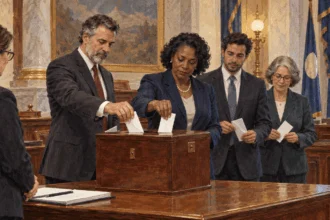
The Electoral College

The Electoral College is the constitutional system used to elect the president and vice president of the United States. Instead of a direct popular vote, voters select electors who then cast official votes for these offices. There are 538 electors nationwide, and a candidate must win at least 270 electoral votes to secure the presidency. This system shapes how Americans choose their leaders and why some states hold more sway in presidential elections.

How the Electoral College Works

Each state is allocated a number of electors equal to its total congressional representation—the sum of its House members plus two senators. On Election Day, voters in each state select a slate of electors pledged to a presidential candidate. These electors meet in their state capitals in December to cast their votes, which Congress officially counts in early January. This process is detailed in How the Electoral College Works: The Guide to America’s Presidential Election System.

Electoral College vs. Popular Vote

The Electoral College can produce a different outcome than the nationwide popular vote. It is possible for a candidate to win the presidency without winning the most votes nationwide because electoral votes are awarded mostly on a state-by-state basis. This important distinction and its implications are explained in The Electoral College vs. Popular Vote: How America Elects Its President.

Swing States and Elector Behavior

Some states consistently play a decisive role in elections due to their competitive nature, influencing campaign strategies and voter attention. The reasons why certain states hold this power are explored in Why Some States Decide Presidential Elections (And Others Don’t). Additionally, while electors typically vote as pledged, rare cases of “rogue electors” who vote differently have occurred, adding an element of drama to the process described in The Electoral College’s Hidden Drama: When Electors Go Rogue.

An Independent Team to Decode Government

GovFacts is a nonpartisan site focused on making government concepts and policies easier to understand — and programs easier to access.

Our articles are referenced by .gov and .mil websites as well as trusted think tanks and publications including Brookings, CNN, Forbes, Fox News, Pew Research, Snopes, The Hill, and USA Today.

All Articles on The Electoral College

How the Electoral College Works: The Guide to America’s Presidential Election System

The Electoral College determines who becomes president of the United States, but most Americans don't understand how it actually works.…

The Electoral College’s Hidden Drama: When Electors Go Rogue

Every four years, Americans cast their ballots for president, believing they're voting directly for their chosen candidate. They're not. Instead,…

Why Some States Decide Presidential Elections (And Others Don’t)

Every four years, America's electoral map lights up in red, blue, and purple. This isn't just about party colors—it reveals…

The Electoral College vs. Popular Vote: How America Elects Its President

Every four years, Americans cast their ballots for president, but the winner isn't always the candidate who gets the most…