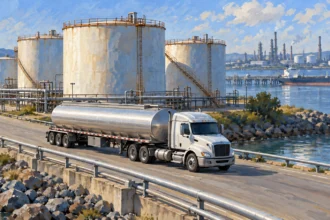
Fossil Fuels
Fossil fuels are coal, oil, and natural gas, the energy sources formed from ancient plants and animals. They are used for power, heating, and transportation fuel. Government shapes the industry through leasing of public land and waters, environmental rules, taxes, and trade policy.
Readers usually ask how fossil fuels are produced and who controls access to them. They want to know how drilling and mining rights are granted, how pollution and safety rules apply, and how public policy affects supply and prices. They also ask how debate over these fuels weighs jobs, costs, and the environment.
An independent team explaining how government works
Referenced by Brookings, CNN, Forbes, Fox News, Pew Research, Snopes, The Hill and USA Today.
The Webby-recognized AI behind our articles »
All Articles on Fossil Fuels
Diesel Export Bans: How They Affect U.S. Fuel Prices
Diesel export bans can change fuel prices by shifting supply and refinery output. Their effects depend on shipping, regional shortages and legal limits.